

Protecting a young tree from browsing deer or a garden bed from nighttime raids calls for more than a flimsy barrier. You may need trunk guarding, a physical perimeter, or a motion-activated deterrent, and each approach suits a different yard, budget, and level of maintenance. The six options below cover ultrasonic devices and garden netting that can reduce deer exposure around trees, vegetables, orchards, trash areas, and other vulnerable outdoor spaces.
The Leading Options At A Glance
ZLieatmp Sonic Fortress Raccoon Repellent
ZLieatmp Solar Animal Repellent
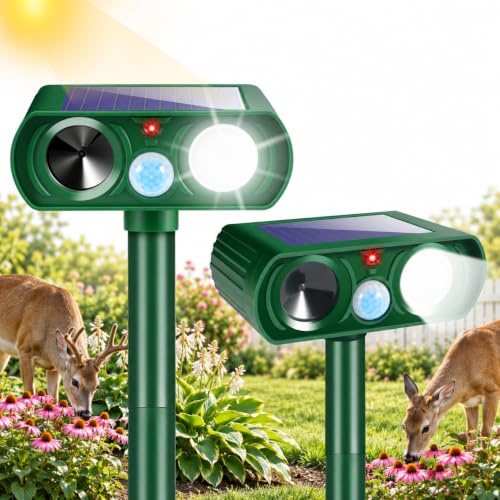
Sonic Fortress Pro Deer Repellent
Qinheesiu 4 x 75ft Heavy-Duty Deer Fence, 55GSM Reinforced Edges

KXCOFTXI 3-Pack Garden Netting

TENAX Black Deer Netting 7 x 100ft
Inside Each Recommended Option
A tipped-over trash can near a patio can point straight to the kind of nighttime activity this unit is designed to discourage. Its motion sensor covers a 110-degree field up to 30 feet away, then activates ultrasonic sound and LED strobes around garbage stations, pet-food areas, gardens, or entry routes.
You get more placement flexibility than a solar-only model because the battery can recharge through the top-mounted solar panel or a USB connection. For most yards, that makes it easier to keep the device operating through cloudy stretches, although it targets raccoons and skunks rather than serving as a tree wrap for deer.
The Upside
- Solar and USB charging support two practical ways to maintain power.
- The 30-foot detection range covers a useful area around trash cans and patios.
- Strobes add a visible response to supplement the ultrasonic frequencies.
- IP65 sealing helps protect the unit from rain, wind, and dust.
Things To Consider
- The stated target animals are raccoons and skunks, not deer.
- Solar placement still needs useful daylight, while USB placement requires cable access.
Key Specs
Made For
This option suits households dealing with raccoon or skunk activity around garbage containers, patios, and pet-food areas.
Consider Something Else When
Choose ZLieatmp Solar Animal Repellent instead when deer and several other animals are your main concern.
Unlike the raccoon-focused unit before it, this four-piece system is built to spread solar acoustic deterrence around a broader garden. Its auto-cycle changes through ultrasonic frequencies, while a passive infrared, or PIR, sensor detects moving animals within a 110- to 150-degree field up to 25 feet away.
You can distribute the units around vegetable patches, lawns, or an orchard without running charging cables. The design does not rely on flashing strobes, but the audible response means the unit is not completely silent, which may matter near a quiet patio or bedroom window.
Practical Advantages
- Four units make perimeter placement more practical across a large garden.
- Automatic frequency cycling removes the need for manual sound adjustment.
- Solar-only power suits isolated beds and rural planting areas.
Trade Offs
- Audible alerts may be noticeable in a quiet residential setting.
- Solar units need two full days of direct sunlight before first use.
- Four units still require careful spacing across a broad property.
Right Fit For
You need broad, cable-free coverage for deer, raccoons, cats, squirrels, or rabbits around a garden.
A Better Fit Elsewhere
Sonic Fortress Pro Deer Repellent offers a stronger visual deterrent for beds where sound alone may not discourage deer.
Hostas and low flower beds can suffer repeated browsing before you notice the damage, making placement-sensitive deterrence useful. This two-unit system combines multi-frequency ultrasonic sound with high-intensity LED strobes after its PIR sensor detects movement within 25 feet.
Compared with ZLieatmp Solar Animal Repellent, this model adds a visible response and flexible mounting through ground stakes or a wall bracket. Each unit weighs 0.6 pounds, which makes repositioning manageable, but you may find the active signal less suitable beside an open window.
What Stands Out
- Sound and light create two distinct response types.
- The 25-foot detection range covers useful garden areas.
- Stakes or wall mounting suit beds, fences, and barns.
- Solar power removes battery replacement and charging cables.
- The stated temperature range runs from -20°C to 65°C.
Minor Gripes
- The audible and flashing response may be distracting in a quiet seating area.
Technical Sheet
Built With In Mind
This option best fits gardeners protecting hostas, flower beds, hedges, and other frequently browsed plants.
Where Another Pick Shines
Qinheesiu Heavy-Duty Deer Fence provides a physical barrier where you prefer not to rely on sound or light.
A mesh fence takes a different approach from the preceding electronic unit: it physically interrupts access rather than responding to movement. Each 75-foot section gives you a total of 300 feet of coverage for raised beds, trees, and garden edges that need a visible boundary.
The 55GSM HDPE mesh is heavier than basic garden netting, while reinforced rope edges help the perimeter hold together. You will still need posts, stakes, or another support system, and it does not wrap closely around a trunk like a fitted tree guard.
What It Does Well
- Provides 300 total feet for a long enclosure.
- The 55GSM mesh provides more material than lightweight netting.
- Reinforced edges support tension along supported boundaries.
- HDPE construction resists corrosion and UV exposure.
Practical Considerations
- Posts and anchors are necessary for a stable deer barrier.
- The open mesh protects larger plants rather than forming a close trunk wrap.
Feature Snapshot
Who Should Grab It
This fence suits gardeners enclosing several raised beds, a row of trees, or a larger vegetable plot.
Reach For A Different Pick When
Choose TENAX Black Deer Netting for a smaller seasonal enclosure where simpler folding storage matters more.
Fine mesh serves a more delicate purpose than the heavier fencing before it. This three-piece set uses 40-mesh nylon to isolate small animals from potted plants, young fruit trees, and tender shoots without blocking sunlight or irrigation water.
The transparent construction blends into a garden better than dark mesh, while drawstring closures help secure netting around containers. You will need to check the included dimensions before planning a perimeter, since this set is more closely associated with plant-level protection than large deer enclosures.
Everyday Wins
- Fine mesh protects small branches from being crushed.
- Transparent material allows light and water through.
- Drawstring closures simplify fitting around pots.
Things That May Matter
- The 40-mesh openings are intended for small pests rather than deer.
- Three separate pieces may not cover one large garden bed.
- Coverage dimensions are worth confirming before purchase.
The Right Fit
This set suits gardeners protecting potted trees, young fruit plants, and other vegetation from small browsing pests.
Look Elsewhere When
Choose TENAX Black Deer Netting when you need a continuous barrier sized for deer movement around a seasonal garden area.
This black polypropylene mesh offers a straightforward seasonal barrier for small gardens. Its 7-by-100-foot roll can cover plants, trace a garden edge, or extend along the ground, with a 0.63-by-0.75-inch opening sized for excluding deer.
Unlike the three fine-mesh plant covers before it, this roll favors continuous coverage and simple folding between seasons. You will need posts or supports to hold the net in position, and the open grid makes it a garden enclosure rather than a close-fitting tree wrap.
Everyday Perks
- A single roll provides 700 feet of material.
- Black plastic blends into many garden settings.
- The flexible material folds for seasonal storage.
- The mesh spacing targets deer-sized exclusions.
Details To Watch
- Separate stakes or posts are needed to support the netting.
Quick Facts
Made For
This option suits gardeners needing a foldable seasonal deer barrier around a small planting area.
Swap It Out When
Qinheesiu Heavy-Duty Deer Fence offers a heavier mesh and reinforced edges for a longer, more supported enclosure.
Matching Protection to Your Garden Layout
Start by identifying the animal and the plant you need to protect. Raccoon and skunk deterrents concentrate on trash zones and nighttime routes, while deer-focused units use multi-frequency sound, light, or a physical mesh barrier. Fine plant mesh handles small pests, not mature deer, so a close-fitting trunk guard remains necessary when rubbing is the main concern.
Sound and light versus physical barriers
An electronic deterrent needs a suitable location and some maintenance, but it can cover a broader area without constructing a full fence. A physical barrier works continuously once properly supported and can be less noticeable in a quiet neighborhood, although it takes more space, posts, and installation effort.
Coverage and detection range
Detection figures describe a device’s specified reach, not guaranteed coverage across an entire yard. Dense shrubs, walls, corners, and uneven terrain can change how motion sensors perceive movement, so you should position each unit along the routes animals commonly use rather than concentrating them in one convenient corner.
Power, placement, and maintenance
Solar units reduce cable clutter, yet they still need adequate sunlight and an initial charging period. A dual-power model offers more flexibility for shaded locations, while a USB-powered installation works well near an outlet. For netting, confirm the total length, mesh dimensions, and available support points before ordering.
Choosing for a tree rather than a bed
Tree wrap must fit closely enough to discourage rubbing without trapping moisture against the bark. None of these six options is a fitted trunk wrap, so you should measure trunk diameter and height separately before treating any of them as a direct substitute.
Avoiding Protection Mistakes
Mistakes Worth Dodging
A common mistake is treating detection range as total yard coverage. Another is choosing fine plant netting for deer or a broad electronic unit for one small pot. Measure the protected area, identify the target animal, and check installation support before purchasing.
What Separates Premium From Basic
Higher-tier options often add stronger materials, reinforced edges, broader power options, or more units. Those features matter most when you need wider coverage, repeated seasonal handling, or dependable placement in exposed areas.
Frequently Asked Questions
Can tree wrap protect a tree from deer?
Tree wrap can discourage rubbing and browsing when it fits closely around the trunk. The ultrasonic and netting options here provide broader yard deterrence rather than a fitted trunk covering.
Are solar animal repellents easier to install?
Solar repellents remove the need for power cables once the units receive sufficient sunlight. You must still position them near animal routes and allow the specified initial charging period.
How many deterrent units do you need?
Coverage depends on your property layout, detection range, and the paths animals use. A four-unit set offers more placement flexibility than a pair, while a physical fence may suit a clearly bounded garden more efficiently.
Do ultrasonic deer deterrents make noise?
Some models use ultrasonic sound alone, while others add an audible signal or LED strobes. You should place noisier units away from open windows when you want a quiet patio experience.
What support does deer netting require?
The mesh needs stakes, posts, frames, or another structure to remain taut. Confirm the enclosure dimensions and available anchoring points before installation.
Final Thoughts
The right choice depends on what is entering your yard and what you want to protect. Acoustic devices suit flexible coverage around active routes, fine mesh protects tender plants from small pests, and heavier netting creates a physical boundary around a garden. Measure the area, confirm the target animal, and account for installation before choosing.
