

A crowded February windowsill creates an immediate seed-starting problem: you need organized cells, controlled watering, and enough light without turning the space into a storage headache. This lineup covers trays for small indoor batches, larger propagation runs, and dense sowing schedules, plus two related garden-support items for securing posts and protecting palm roots in cold weather.
A Closer Look At The Lineup
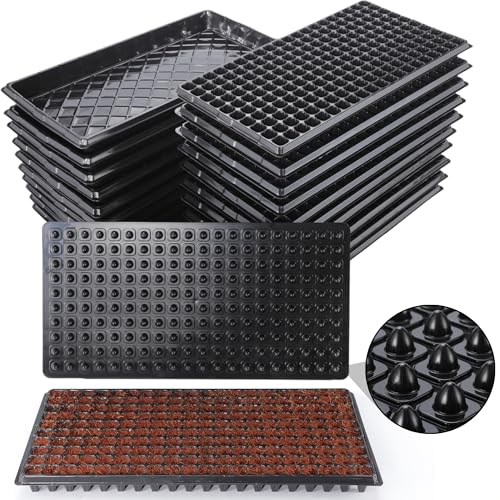
LARNORJE 200-Cell Seed Starter Trays with Dibber, 20-Pack Kit

LARNORJE 27-Inch Ground Anchor

LARNORJE 72-Cell Seed Starter Trays with Dibber, 20-Pack Kit

LARNORJE 2-Pack Thermal Palm Root Bags

GOONMILL 12-Cell Seed Starter Trays with Grow Lights and Domes, 5-Pack

Adawook 72-Cell Seed Starter Trays, Grow Lights, 3 Modes, 4 Timers
More Details On Our Top Picks
The 200-cell layout suits a serious sowing session where you want many individual starts rather than a few large compartments. Each reusable tray divides the growing medium into small cells, giving you a neat way to sow, label, and move seedlings as they develop.
Compared with the 72-cell LARNORJE kit, this version prioritizes capacity over cell size, which may matter for dense batches of flowers or vegetables. The matching base trays catch excess water, while the 200-hole dibber helps you prepare the full grid consistently.
Where It Helps
- Two hundred cells support large batches without requiring dozens of separate containers.
- The dibber matches the full 200-hole layout, reducing the need for a separate soil tool.
- Ten base trays give water overflow a place to collect during indoor watering.
- Twenty plant labels help keep different varieties organized.
Small Caveats
- Smaller cells leave less room per seedling than the 72-cell LARNORJE arrangement.
- Ten growing trays and ten base trays require a substantial storage and drying area between rounds.
Key Specs
Built With In Mind
This kit fits experienced home growers managing large seasonal sowings where individual cells and orderly labeling matter.
A Better Fit Elsewhere
Choose the GOONMILL 12-Cell Seed Starter Trays with Grow Lights and Domes, 5-Pack for a smaller indoor setup with integrated lighting.
A fence post or mailbox does not belong in a seed-starting tray, but this ground anchor solves a different part of the garden setup. Its 27-inch U-shaped steel stake is designed to hold a 4×4 post while avoiding a deep excavated hole or a concrete footing.
That makes it useful in yards where roots make digging awkward or you prefer a quicker installation method. The pair also gives you two anchors for matching supports around a property.
Real-World Strengths
- The screw-in design removes the need for a deep post hole.
- Each 27-inch stake provides ample length for securing a 4×4 post.
- Powder coating adds a protective finish to the metal surface.
- Two pieces support matching fence, gate, or mailbox posts.
Practical Considerations
- Confirm that your post measures 4×4 before installation.
- The exposed ground stake remains part of the finished support, so its placement should look intentional.
- This item supports garden structures rather than starting or propagating seeds.
Quick Facts
Made For In-Depth Posts
These anchors suit homeowners installing light fence sections, mailboxes, or similar 4×4-supported structures around root-filled areas.
Another Choice May Suit
The LARNORJE 200-Cell Seed Starter Trays with Dibber, 20-Pack Kit is the relevant option for seed germination rather than post installation.
Seventy-two cells create a practical middle ground between the compact GOONMILL setup and the very dense 200-cell LARNORJE kit. You get enough separated planting spaces for a home batch without committing to the smallest cell format in the lineup.
That balance makes this arrangement appealing for a regular windowsill propagation routine. The kit includes seedling trays, base trays, a matching 72-hole dibber, and plant labels, covering the basic steps from preparing cells to distinguishing varieties.
What Helps Most
- Seventy-two cells balance batch size with more space per seedling than the 200-cell tray.
- The included dibber is sized for the complete 72-cell arrangement.
- Base trays collect excess liquid after watering.
- Labels make mixed-variety sowing easier to manage.
Room For Improvement
- Plant lights and humidity domes are separate additions, so indoor growers may need another part of the setup.
Right Fit For
Home gardeners seeking a moderate number of reusable cells for vegetables, herbs, flowers, or cuttings will find this layout easy to organize.
Look Elsewhere When
The Adawook 72-Cell Seed Starter Trays, Grow Lights, 3 Modes, 4 Timers suit you better when built-in lighting and timer controls are priorities.
Winter protection becomes relevant after propagation, especially for palms whose lower trunk and root area face cold conditions. These bags use non-woven fabric with an aluminum-coated inner layer to add insulation around that vulnerable section of the plant.
The drawstring opening and hook-and-loop straps make the cover easier to position without forcing it through branches. Seven ground anchors help hold the fabric in place, while the two-pack covers more than one palm.
Strengths Worth Knowing
- The coated inner layer adds insulation around roots and the lower trunk.
- Non-woven fabric gives the cover a flexible shape around the plant.
- Drawstring and hook-and-loop closures simplify installation around foliage.
- Seven ground anchors help keep the covers from shifting in wind.
Things That May Matter
- Check the opening against the trunk diameter before pulling the drawstring closed.
- Ground anchors require suitable anchoring space around the base.
- These covers belong around established palms, not around newly germinated seedlings.
Who Will Love This
Palm owners in colder regions will appreciate the focused coverage and fastening system for protecting two root areas through winter.
Where A Sibling Pick Shines
The GOONMILL 12-Cell Seed Starter Trays with Grow Lights and Domes, 5-Pack is the better fit for indoor propagation rather than winter protection.
Five 12-cell trays create a manageable starter station for an apartment shelf or a small home growing area. The integrated grow lights remove the need to arrange separate lamps above the seedlings, which is a meaningful convenience in a confined space.
Adjustable dome vents let you regulate humidity as the seedlings change. Compared with the larger Adawook setup, this option uses fewer cells and simpler controls, making it easier to scale for a modest batch.
A Few Strong Suits
- Five trays provide 60 starting cells across the set.
- Integrated lights make the arrangement more self-contained.
- Adjustable vents help manage humidity within each dome.
- Twelve-cell trays keep larger batches from becoming unwieldy.
Minor Gripes
- Five separate trays and domes require enough shelf space for the complete setup.
- The light controls are less extensive than the three modes and four timer settings offered by the Adawook kit.
Feature Snapshot
Whose Shelf It Belongs On
Apartment growers and beginners benefit from the small cell count, integrated lights, and straightforward humidity controls.
Reach For A Different Pick When
The Adawook 72-Cell Seed Starter Trays, Grow Lights, 3 Modes, 4 Timers suit a larger propagation run with more precise lighting schedules.
A larger indoor propagation project calls for more than basic illumination. The Adawook setup combines six 12-cell trays, six grow lights, and high-humidity control domes, creating 72 starting positions with a light above each tray.
Three lighting modes provide white, blue, and red selections, while four timer settings offer a scheduled alternative to switching lights manually. For gardeners managing many young plants, those controls reduce daily decision-making.
Why It Works Well
- Six 12-cell trays provide 72 separated growing spaces.
- Six lights give each tray a dedicated light position.
- White, blue, and red options support different lighting preferences.
- Four timer settings simplify recurring illumination schedules.
- Humidity domes create a covered environment for young seedlings.
- The modular tray arrangement supports organized plant handling.
Trade Offs
- Six trays, lights, and domes demand more space than a compact 12-cell station.
- The added lighting controls create more setup choices than a basic tray-and-dome arrangement.
- A 72-cell batch requires planning for watering and plant-labeling tasks.
Core Details
Built For In Mind
Dedicated indoor growers benefit from the larger capacity, individual tray lighting, and timer-based control.
Swap It Out When
The GOONMILL 12-Cell Seed Starter Trays with Grow Lights and Domes, 5-Pack is more practical for a small apartment growing area.
What Matters Before You Fill a Tray
Cell count should follow the size of your sowing plan. A 12-cell tray suits a handful of herbs or flowers, a 72-cell layout handles a larger propagation session, and the 200-cell option serves dense batches where maximum separation matters most.
Water Management Comes First
Base trays add useful control by collecting excess liquid beneath the seedling cells. A watering routine still needs attention, especially beneath domes, where adjustable vents let you reduce trapped humidity as seedlings grow.
Lights and Domes Add Control
Integrated lighting removes the guesswork of positioning separate lamps, while dome vents offer another layer of control. Larger systems with multiple modes and timer settings suit growers who want scheduled routines and a substantial batch.
Plan the Storage Area
Ten seedling trays, base trays, domes, and lights take more room than a small countertop setup. Measure your shelf before choosing a multi-pack, and leave space to separate, clean, and dry components between growing cycles.
Avoiding Common Seed-Starting Errors
Mistakes Worth Dodging
A common mistake is choosing the highest cell count without considering shelf space and watering time. Another is leaving domes closed after seedlings develop, rather than using the adjustable vents to manage humidity.
When Paying More Pays Off
Higher-tier kits tend to add integrated lights, timer settings, larger batches, or humidity controls. Those extras suit dedicated growers, while a small tray and separate grow light may be enough for a modest indoor project.
Frequently Asked Questions
Are Reusable Seed Starting Trays Suitable for Home Gardens?
Yes, the LARNORJE 200-cell and 72-cell trays are designed for seed germination and cuttings. Their base trays also help manage excess water during indoor or sheltered growing.
How Many Seeds Can the Trays Hold?
The LARNORJE 200-cell model has 200 cells, and its 72-cell model has 72. GOONMILL provides 60 cells across five 12-cell trays, while Adawook provides 72 cells across six trays.
Do Reusable Seed Starting Trays Need Grow Lights?
A grow light becomes useful when your seeds lack a strong natural light source. The GOONMILL and Adawook systems include integrated lights, while the LARNORJE trays focus on cells, base trays, a dibber, and labels.
What Is the Purpose of the Base Trays?
The base trays catch water that drains or overflows from the planting cells. They also make the seed-starting setup easier to handle during watering and plant movement.
Which Grow-Light System Offers More Control?
The Adawook 72-Cell Seed Starter Trays, Grow Lights, 3 Modes, 4 Timers provide three lighting modes and four timer settings. The GOONMILL 12-Cell setup is simpler and more compact, with an integrated light and adjustable humidity vent.
Bottom Line
The LARNORJE 200-cell kit handles dense sowing, while the 72-cell version balances capacity with more room per seedling. GOONMILL works for compact illuminated batches, and Adawook suits larger setups with scheduled lighting. The ground anchor and palm bags serve later garden tasks rather than propagation, so match each item to the stage of your gardening routine.
