A fern beside a sunny window can look perfectly healthy while the soil beneath the surface stays too dry. For plants that enjoy consistently moist soil, the growing medium and your watering habits work together, so this roundup focuses on practical soil mixes and moisture meters for indoor gardens, bonsai, and terrariums.
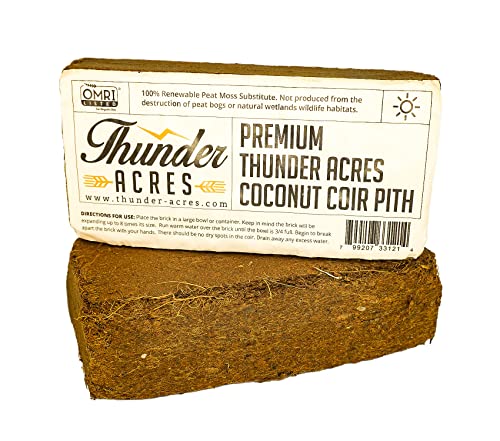
Coco coir is a compressed growing medium that expands with water, making the brick format convenient to store until you need it. The Thunder Acres pack is labeled OMRI Listed for organic use, and each 1.5-pound brick supplies a manageable amount of coir for containers, seed starting, or mixing into another medium.
Unlike the specialized blends later in the list, this option offers one primary material rather than a finished mixture of bark, sand, pumice, or charcoal. That simplicity suits gardeners who already know how they want to amend a planting mix, especially for indoor plants that appreciate moisture retention and aeration.
Well-Handled Touches
✓The compressed bricks take little shelf space until they are hydrated.
✓Coir can support moisture retention while leaving room for root aeration.
✓Three bricks provide convenient quantities for potting or mixing.
Small Caveats
•The bricks require hydration and expansion before you can use the loose medium.
•Coir alone is less structured than the pre-mixed bonsai and terrarium options.
Feature Snapshot
Feature
Specification
Why It Matters
Pack quantity
3 bricks
Offers several compressed units for potting or mixing.
Brick weight
1.5 pounds each
Helps you anticipate the quantity available after expansion.
Primary material
Coco coir
Provides a moisture-conscious growing base with aeration.
Organic designation
OMRI Listed for organic use
Matches the labeling requirements of organic growing projects.
Made For
This brick is best for organic-minded container gardeners who want a compact, adaptable base for plants that consistently moist soil.
A Better Fit Elsewhere
Soil Sunrise Terrarium Soil Mix is the better fit for closed terrariums that need coir, charcoal, and pumice already combined for drainage.
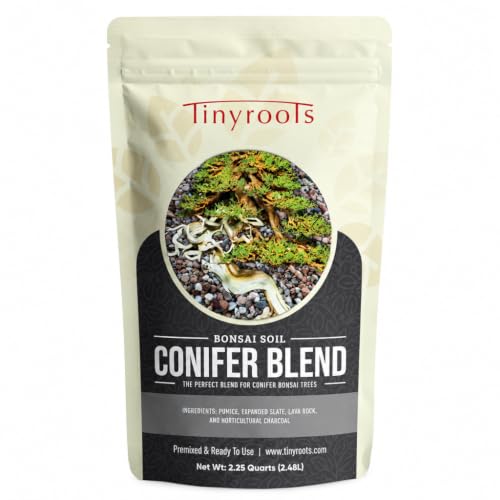
Tinyroots takes the guesswork out of preparing a conifer bonsai medium by combining pine bark fines, coarse river sand, calcine clay, and pumice. The result is a dry, pre-mixed blend intended for junipers, Japanese black pines, white pines, cedars, cypress, and other conifers.
That coarse structure separates it from the softer coco coir brick. Coir emphasizes moisture retention, while this blend uses multiple mineral and bark components to create air space around bonsai roots, although the exact watering pattern still depends on your tree, pot, and local conditions.
Good Reasons To Consider
✓The included ingredients remove the need to proportion a bonsai mix yourself.
✓Double-sifted pine bark fines help protect fine roots from oversized particles.
✓Coarse sand, clay, and pumice create a well-draining base for shallow bonsai pots.
✓The blend specifically targets several popular conifer bonsai groups.
Practical Considerations
•The conifer-focused formula is less relevant to broadleaf houseplants and standard potting soil.
•A 2.25-quart quantity suits ongoing bonsai work better than a large-scale potting project.
Key Details
Feature
Specification
Why It Matters
Volume
2.25 quarts
Provides a focused quantity for bonsai repotting.
Plant focus
Junipers, pines, cedars, and cypress
Matches the medium with common conifer bonsai needs.
Preparation
Pre-mixed and dried
Saves measuring and combining separate soil components.
Right Fit For
This blend fits beginners and experienced growers maintaining juniper, pine, cedar, or cypress bonsai in shallow containers.
Another Choice May Suit
Thunder Acres Coco Coir Brick suits general container planting where you prefer to build or amend your own moisture-retentive medium.
Moving from bonsai to terrariums changes the container problem completely. Closed or partially closed terrariums hold humidity around the planting area, so Soil Sunrise combines coco coir, horticultural charcoal, and pumice to balance drainage, moisture retention, and nutrient retention without relying on ordinary garden soil.
Unlike the conifer bonsai blend, this mixture is designed for small indoor landscapes and fairy gardens rather than root pruning or training. Its four-quart volume is listed as enough for three six-inch pots, which makes the amount easier to judge before you begin.
Useful Touches
✓Coco coir helps the limited soil volume retain moisture between watering sessions.
✓Pumice creates space for drainage within a densely planted container.
✓Horticultural charcoal supports the blend’s filtration and breakdown processes.
✓The ready-mixed format simplifies assembly for terrarium planting.
Where It May Fall Short
•The specialized texture is less useful for ordinary room-temperature houseplant pots.
•Four quarts may be more than you need for one small terrarium.
Who Will Love This
This mix is a strong fit for terrarium and fairy garden hobbyists creating humid, carefully planted miniature environments.
Consider Something Else When
Tinyroots Conifer Bonsai Soil Blend suits larger bonsai pots where coarse drainage and a structured root zone matter more.
Soil mixes can help you create the right growing conditions, but checking moisture still calls for a probe you can insert into the pot. This XLUX meter provides a simple way to inspect indoor or outdoor soil without batteries, and its standard format suits the routine watering checks associated with compact pots.
Compared with the long-probe models that follow, this meter places more emphasis on straightforward use around smaller containers and garden beds. The honest read is that matching the probe to the pot matters more than choosing a model based on appearance alone.
Points In Its Favor
✓Battery-free operation removes charging and disposable battery upkeep.
✓One meter can move between indoor plants, patio containers, and garden soil.
✓The compact format is convenient for routine checks near the soil surface.
Things To Weigh
•The standard probe may not reach the lower soil in a deep planter.
•Readings should be considered alongside the plant, pot size, and medium rather than used alone.
At A Glance
Feature
Specification
Why It Matters
Power source
Battery-free
Keeps the meter ready for use without charging.
Use areas
Indoor and outdoor
Allows the same tool to serve houseplants and garden containers.
Best Suited To
This meter is well suited to new plant owners managing several small indoor pots or a compact patio collection.
Look Elsewhere When
XLUX Long-Probe Moisture Meter is the better fit for tall floor planters where the lower root zone needs checking.
The standard XLUX meter checks moisture near the upper soil, while this long-probe version addresses a different problem in large planters. Its probe extends 5.5 inches beyond a regular style, giving it greater reach toward the bottom of deeper pots where surface conditions may not reflect the root zone.
That extra depth is the meaningful difference from the earlier standard meter. You still receive an easy-to-read moisture reading without batteries, but you can place the tool more deeply in a large container and obtain a more useful view of the soil surrounding lower roots.
Notable Gains
✓The extended probe reaches deeper soil in tall flower pots.
✓Deep readings help distinguish a dry surface from moisture retained below.
✓Battery-free construction keeps the tool ready without routine charging.
✓One meter works across indoor and outdoor growing spaces.
Possible Compromises
•The longer body takes more room to store than the standard meter.
•Its extra reach is unnecessary for many shallow windowsill pots.
Built With In Mind
This meter is made for growers with deep planters, large houseplant pots, or garden beds where the root zone sits well below the surface.
Where A Sibling Pick Shines
XLUX Soil Moisture Meter is the more convenient choice for small pots, seedlings, and a compact watering station.
One long probe solves the depth problem in a large pot, and the second meter prevents a round trip across the room. This two-pack keeps the same extended-probe design and battery-free operation as the single XLUX Long-Probe Moisture Meter, making it useful for separating indoor and outdoor plant-care routines.
Compared with the single-meter version, the benefit is convenience rather than a different reading method. You can leave one meter beside a deep planter and another near a windowsill collection, though the standard XLUX model remains less cumbersome for small containers.
Standout Benefits
✓Two extended probes reduce the need to carry one meter between plant zones.
✓Long reach supports moisture checks in deeper pots and garden soil.
✓Both meters operate without batteries, simplifying routine use.
Details To Watch
•Two long probes require more storage space than a single standard-format meter.
Technical Highlights
Feature
Specification
Why It Matters
Quantity
2 meters
Supports simultaneous checks in separate plant areas.
Probe style
Long probe
Extends the reading depth for larger containers.
Additional reach
5.5 inches beyond regular styles
Helps reach moisture conditions near the bottom of deep pots.
Power
Battery-free
Removes battery replacement and charging from the routine.
Environment
Indoor and outdoor
Allows both meters to serve different growing spaces.
Whose Shelf It Belongs On
This two-pack belongs with plant owners who regularly move between indoor pots, outdoor containers, and deeper planters.
Swap It Out When
XLUX Soil Moisture Meter is the simpler choice when your plants occupy mostly small pots and extra probe length adds little value.
## Building A Moisture-Friendly Planting Setup
### Start With The Plant’s Water Requirements
Plants for moist soil benefit from a growing medium that holds water without becoming waterlogged. Check the mature size of your plant and the container’s drainage before choosing a mix, since a compact pot dries differently from a deep planter or an open garden bed.
### Match The Medium To The Container
Coco coir offers a compact, moisture-retentive base for ordinary containers. Terrarium mixes prioritize drainage in closed miniature landscapes, while coarse bonsai blends create air space around tree roots in shallow pots.
### Use Measurements To Support Watering
A moisture meter is a decision aid rather than a watering schedule. Insert it at the depth relevant to the pot, compare the reading with the plant’s needs, and inspect the medium before adding water.
## Common Mistakes Worth Dodging
Choosing a water-retentive mix for a shallow bonsai pot can leave roots sitting in a dense medium. Using a coarse bonsai blend in a tiny terrarium may also leave the limited soil volume less stable, so match the particle structure to the container before considering volume or price.
## The Upgrade Payoff
A pre-mixed bonsai or terrarium blend saves measuring several materials. A long-probe meter adds useful reach in deeper containers, while a two-pack adds convenience across separate plant zones. Pay more for those specific benefits rather than assuming a larger purchase improves every setup.
## Frequently Asked Questions
### Do plants for moist soil need a special growing medium?
Moisture-loving plants benefit from a medium that retains water while allowing air around the roots. Container drainage and the plant’s specific requirements still determine the best mix.
### Can coco coir bricks be used for houseplants?
Yes, coco coir works well as a growing base or amendment for many container plants. Hydrate and expand the bricks before mixing or potting, and add other components when your plant needs more structure or drainage.
### Is a pre-mixed bonsai soil better than combining your own?
A pre-mixed blend saves time and gives you a known combination of bark, sand, clay, and pumice. Combining your own medium offers more control but requires accurate proportions and suitable particle sizes.
### Do moisture meters work in large planters?
A long-probe meter is better suited to large or deep planters because it can reach farther below the surface. The reading still depends on where the probe is placed and the structure of the soil.
### Should I buy one moisture meter or two?
One meter covers most plant collections and can be moved as needed. Two meters are more convenient for separate indoor and outdoor zones or for checking large containers without carrying the tool back and forth.
## Wrap Up
The right setup depends on where your plants grow and how much control you want over moisture. Use a coco coir brick for adaptable container mixes, choose specialized blends for bonsai or terrariums, and choose probe depth based on pot size. For the most practical results, let the container and plant guide every material choice.