A lemon tree in a patio pot has different needs from one planted in a warm backyard. The right fertilizer depends on whether the tree is grown in a container, how the soil drains, and when feeding fits the tree’s growth cycle. I compare organic granules, water-soluble powders, concentrated liquids, and general-purpose plant foods below, with special attention to their stated nutrient profiles and practical application methods.
The Leading Options At A Glance
PickWhy I Picked ItBest ForAction
Editor’s Choice
Espoma Organic Citrus-Tone 5-2-6 Fertilizer, 4 lb. Bag
Espoma Citrus-Tone starts from the actual planting rather than a general fertilizer promise. Its 5-2-6 analysis, a ratio of nitrogen, phosphorus, and potassium, gives lemon trees a more citrus-specific profile than the broader 5-3-3 mix found in Plant-Tone. I favor this pick for gardeners feeding established lemon, lime, orange, avocado, or nut trees outdoors.
The application schedule suits trees that receive seasonal care: late winter before bloom, spring after bloom, and fall. The granules go around the drip line, the area where rain or irrigation tends to wet the soil most, and require thorough watering afterward. For most backyard trees, that simple routine is easier to manage than preparing a liquid feed.
Everyday Wins
✓Formulated for lemons and other citrus rather than every flowering plant.
✓Ready-to-use granules eliminate measuring and mixing.
✓The 4 lb. bag suits repeated seasonal applications.
✓Includes 5% calcium, a mineral relevant during fruit development.
✓Contains no sludges or fillers according to the label.
Things To Consider
•It is not formulated for indoor containers, where watering frequency and root volume differ.
•Three seasonal applications require attention to the local growth cycle.
Key Specs
Feature
Specification
Why It Matters
Nutrient analysis
5-2-6
Provides a citrus-oriented balance of primary nutrients.
Calcium
5%
Adds calcium alongside the main fertilizer nutrients.
Format
Ready-to-use granules
Allows direct soil application without mixing.
Application area
Around the drip line
Places nutrients in the soil region receiving regular moisture.
Made For
This fertilizer best fits backyard growers maintaining mature lemon or other citrus trees in the ground.
Another Choice May Suit
GrowThrive Lemon Tree Liquid Plant Food offers a better fit for gardeners feeding a container-grown tree with liquid nutrition.
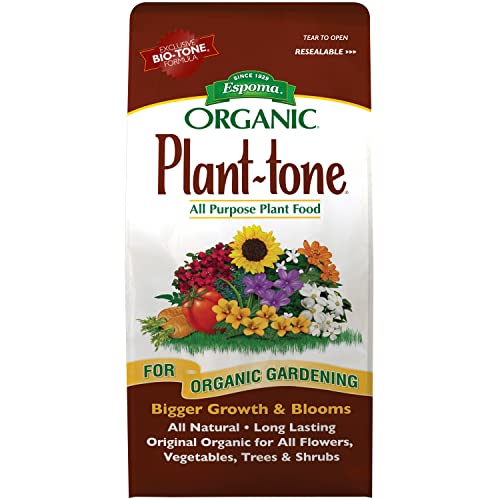
Plant-Tone serves a different purpose from Citrus-Tone: it supports a wide collection of trees, shrubs, vegetables, and flowers under one feeding plan. That makes it the practical option for a mixed property where a lemon tree shares a bed with roses, peppers, or young shrubs. The 5-3-3 analysis includes more phosphorus than the 5-2-6 citrus formula.
Its slow-release organic ingredients suit gardeners who prefer soil-applied nutrition that remains available over time. Trees and shrubs receive applications in spring and fall, while flowers and vegetables can be fed monthly during active growth. Compared with Jack’s Classic water-soluble powder, this product asks for less mixing and settles into routine seasonal care.
Practical Pluses
✓One product covers fruit trees, ornamentals, vegetables, and shrubs.
✓Slow-release ingredients support a steadier nutrient reservoir.
✓The 4 lb. package works well for several planting areas.
✓Ready-to-use granules simplify application around drip lines.
Worth Noting
•The general-purpose analysis lacks the citrus-specific positioning of Espoma Citrus-Tone.
•Monthly feeding for vegetables and flowers creates more frequent work than a seasonal tree schedule.
•Granular material takes up more storage space than a small liquid bottle.
Right Fit For
This pick suits households that want one organic plant food for citrus and a varied collection of flowers, vegetables, trees, and shrubs.
Look Elsewhere When
Espoma Organic Citrus-Tone 5-2-6 Fertilizer is the better match for a gardener focused only on lemon and other citrus trees.
Jack’s Classic brings greater application flexibility through its water-soluble powder. The 20-10-20 analysis is higher in nitrogen and potassium than the two Espoma blends, making it a practical feed for tropical fruiting plants that receive active care. I consider it especially useful for container trees, where measured liquid applications are easy to control.
The powder can be applied to leaves, roots, or through a continuous feeding system. That gives a grower more than one route for the same nutrient mix. A 1.5 lb. package and included measuring spoon make portioning straightforward, although the supplied leaf and root directions still need to be followed rather than combined indiscriminately.
A Few Strong Suits
✓Works as a foliar, root, or continuous-feed option.
✓The included spoon simplifies measurement.
✓Water-soluble powder stores compactly and mixes only the needed amount.
✓Added micronutrients round out the 20-10-20 base.
Small Caveats
•Mixing and dilution add steps compared with ready-to-use granules.
•The concentrated 20-10-20 analysis calls for careful measurement.
Quick Facts
Feature
Specification
Why It Matters
Analysis
20-10-20
Provides a nitrogen-rich, high-potassium nutrient profile.
Format
Water-soluble powder
Allows measured dilution for different application methods.
Application
Foliar or root feeding
Provides flexibility for container and tropical plants.
Who It Suits Best
This fertilizer fits active growers who want measured liquid nutrition for container-grown citrus or other tropical fruiting plants.
Another Choice May Suit
Espoma Organic Citrus-Tone 5-2-6 Fertilizer is easier for gardeners who prefer direct soil application without mixing.
Miracid addresses a different part of the garden from the citrus-specific options. It is a water-soluble food made for acid-loving plants such as azaleas, hydrangeas, and rhododendrons, with feeding through both roots and leaves. That makes it useful in a mixed landscape, but it is a poor match for a dedicated lemon-tree feeding program.
The package contains two 4-pound containers, which is substantial for gardeners tending several large beds. Its water-soluble format allows precise dilution, and the root-and-leaf approach offers convenient coverage. I would keep it for compatible acid-loving plants rather than select it solely because another garden product uses a familiar brand name.
A Strong Showing
✓Water-soluble nutrients can be delivered through roots or leaves.
✓The two-container package suits multiple large acid-loving shrubs.
✓Liquid feeding can reach container plants and outdoor beds with one format.
Points To Note
•Its stated purpose is acid-loving plants rather than citrus.
•Water-soluble use requires dilution and careful watering.
•The two-pack takes more storage space than a single bag or bottle.
Best Suited To
This product suits gardeners maintaining established azaleas, hydrangeas, rhododendrons, and other acid-loving plants.
A Better Fit Elsewhere
Jack’s Classic Citrus FeED 20-10-20 serves container citrus growers who need a product formulated for tropical fruiting plants.
Fruit & Bloom Booster is built around a particular window: late summer and early fall. That timing gives it a clear role after the main spring flush, when gardeners may be supporting blossoms and fruit development across several plant types. The formula is intended for fruiting and flowering vegetables, flowers, and citrus rather than trees alone.
The super-concentrated 8 oz. container reduces the amount of liquid that needs storing. I see its strongest value in a mixed garden that includes roses, annual flowers, vegetables, and citrus. It is less decisive for a gardener who wants a complete, year-round feeding schedule for a single lemon tree.
Bright Spots
✓Targets the late-summer and early-fall growth window.
✓Works across fruits, vegetables, and flowering plants.
✓Concentrated packaging keeps the stored volume small.
✓Citrus is included among the stated compatible plants.
Trade Offs
•Its seasonal focus is narrower than a general tree fertilizer.
•Concentrated liquids require accurate dilution.
Feature Snapshot
Feature
Specification
Why It Matters
Container size
8 oz.
Provides a compact concentrated format.
Intended season
Late summer and early fall
Targets a specific stage of flower and fruit production.
Made For
This booster fits mixed gardeners who want late-season nutrition for citrus and other flowering or fruiting plants.
Where Another Pick Shines
Farmer’s Secret Citrus Tree Booster 32oz is the stronger choice for a gardener focused on recurring weekly citrus feeding.
This liquid formula puts lemon-tree nutrition at the center of the product rather than treating citrus as one plant among many. The stated liquid nutrient solution is intended to support growth, flowering, and fruit production by delivering nutrients through the root area. That format feels sensible for patio trees where watering can carry a measured dose directly into the pot.
The organic micronutrient angle distinguishes it from the broader Espoma options, although citrus remains the deciding factor. In my view, the main appeal is simple application around a compact root zone. Gardeners maintaining a lemon tree beside annual flowers may prefer this focused approach to a product intended for the entire mixed bed.
What Makes Sense
✓Formulated specifically for lemon and other citrus plants.
✓Liquid nutrients suit the limited root volume of containers.
✓Supports growth, flowering, and fruit production goals.
✓Organic micronutrients provide a distinct feeding angle.
Practical Considerations
•Liquid feeding requires measuring and dilution.
•Container trees need a regular watering routine for nutrient delivery.
•The formulation is less versatile than a general-purpose plant food.
Built With In Mind
This liquid food suits home gardeners caring for potted lemon trees and other container-grown citrus.
Reach For A Different Pick When
Espoma Organic Citrus-Tone 5-2-6 Fertilizer is easier to apply around an established in-ground citrus tree.
A slow-release fertilizer reduces the need for frequent reapplications, and this liquid version wraps that approach in a compact 10 oz. package. The citrus-specific label gives it a clearer purpose than Plant-Tone, while the small bottle takes up less room than a granule bag. I would consider it for a compact collection of container citrus.
Liquid application still calls for dilution, so the format is not as effortless as a ready-to-spread granule. The slow-release approach can also make timing less visible than a liquid feed that shows up in the watering routine. For gardeners who value storage economy and fewer feeding sessions, the trade can be worthwhile.
Good Reasons To Consider
✓Slow-release nutrition suits a lower-frequency feeding approach.
✓The 10 oz. bottle stores compactly.
✓The product is formulated for citrus plants.
Less-Strong Areas
•Liquid use still requires dilution.
•The small container may need frequent replenishment.
•Slow release gives less immediate visual feedback than liquid feeding.
Core Details
Feature
Specification
Why It Matters
Format
Slow-release liquid
Combines a measured liquid application with extended nutrient release.
Container size
10 oz.
Keeps storage requirements compact.
Plant focus
Citrus trees
Provides a more focused alternative to all-purpose plant food.
Fertilizer type
Organic
Matches the preference of gardeners selecting organic inputs.
Application form
Liquid
Allows measured distribution through the container or root area.
The Right Fit
This product suits space-conscious growers maintaining a small collection of container citrus trees.
Swap It Out When
GrowThrive Lemon Tree Liquid Plant Food is a better fit for gardeners who prioritize a straightforward liquid citrus formula.
Citrus Tree Booster is built for a regular feeding rhythm. Its 32 oz. bottle concentrates into a diluted solution, with the directions calling for one teaspoon per gallon and application along the drip line. Mature trees may receive up to two teaspoons per week, giving experienced growers a clear way to scale the application.
Unlike the broad Fruit & Bloom Booster, this formula focuses on lemons, limes, and oranges in both outdoor and indoor container settings. I find that specificity useful for a household with several citrus trees. The weekly routine is the main commitment, and accurate dilution remains important.
Strong Points
✓Formulated for lemons, limes, and oranges.
✓Supports outdoor and container-grown trees.
✓The 32 oz. bottle accommodates repeated weekly dilution.
✓Directions scale between first-season and mature trees.
Things That May Matter
•Weekly applications require a consistent routine.
## What Matters Before Fertilizing a Lemon Tree
### Match the Format to the Root Zone
Granules work naturally around an established tree planted in soil, where they can be spread near the drip line and watered into the ground. Liquid food is more convenient for a container because the limited root volume makes measured applications easier to distribute evenly. The container itself also changes how quickly moisture and nutrients move through the root zone.
### Read the Nutrient Analysis
A fertilizer analysis lists nitrogen, phosphorus, and potassium in that order. Citrus-Tone uses 5-2-6, while Jack’s Classic uses 20-10-20. The numbers do not describe plant quality by themselves, but they reveal how differently the products are balanced. A high-nitrogen liquid feed may suit actively growing tropical plants, while a granular soil food offers a more measured seasonal approach.
### Check the Timing and Dilution
Seasonal granules depend on correct application windows, while concentrated liquids depend on accurate dilution. A weekly feeding schedule suits a gardener with a consistent routine, but a seasonal schedule takes fewer interventions. Reading the label before mixing prevents both underfeeding and excessive concentration.
### Account for the Wider Garden
A general-purpose food can simplify supply storage when the same plants include roses, vegetables, and shrubs. Dedicated citrus fertilizer offers a more focused match for lemon trees. The honest choice depends on how much of the landscape each gardener actually tends.
## Avoiding Fertilizer Mistakes
### Common Shopping Slip Ups
A citrus-specific label matters more than a generic claim about lush growth. Plant-food format, container size, and application frequency should match the planting site. I also check whether a product requires dilution, since concentrated liquids can make routine use less convenient.
### What Separates Specialized From Basic
A citrus-specific formula may provide a more relevant nutrient balance, while an all-purpose food can handle several plant types. Specialized products suit focused collections; broader formulas suit mixed gardens. The useful upgrade is the feature that removes an actual application problem, not simply a larger container.
## Frequently Asked Questions
### How Often Should a Lemon Tree Be Fertilized?
A lemon tree’s feeding schedule depends on the product and growing conditions. Espoma Citrus-Tone lists late winter, spring after bloom, and fall, while Farmer’s Secret Citrus Tree Booster uses a diluted weekly application.
### Is Organic Fertilizer Better for Lemon Trees?
Organic fertilizer can suit gardeners who prefer natural ingredients and a soil-focused feeding approach. Espoma Citrus-Tone also contains 5% calcium and avoids sludges and fillers, but the right choice still depends on planting method and application convenience.
### Can I Use an All-Purpose Fertilizer on a Lemon Tree?
Plant-Tone supports trees, shrubs, flowers, and vegetables and may suit a mixed garden. Espoma Citrus-Tone offers the more focused nutrient profile for gardeners who feed only citrus trees.
### Is Liquid Fertilizer Easier for Container Lemon Trees?
Liquid fertilizer allows precise dilution in a limited root zone. GrowThrive Lemon Tree Liquid Plant Food and Farmer’s Secret Citrus Tree Booster suit container growers, although accurate measurement remains essential.
### Should Fertilizer Be Applied to Lemon Tree Leaves?
Some products support leaf application, including Jack’s Classic Citrus FeED. Soil application remains the standard approach for Espoma Citrus-Tone, with thorough watering after the granules are placed around the drip line.
## Final Verdict
Espoma Organic Citrus-Tone 5-2-6 Fertilizer is my first choice for established outdoor citrus, while Jack’s Classic Citrus FeED 20-10-20 offers more flexibility for containers and tropical plants. GrowThrive’s liquid options suit home growers who prefer measured nutrition, and Farmer’s Secret Citrus Tree Booster fits a dependable weekly routine. The right decision comes down to planting site, feeding frequency, and the number of plant types requiring care.