A palm in a warm living room can struggle for reasons that have little to do with light. Dense soil, poor drainage, and a container without adequate drainage holes all restrict roots, while overly dry mixes can interrupt the steady moisture many indoor palms prefer. These picks range from ready-to-use houseplant soil to amendments you blend into a custom palm mix, giving you a practical way to match the medium to your plants and pots.
A coarse, open medium makes sense for palms kept in a bright, dry conservatory or a home that stays cool through winter. This mix is built around a loose structure that drains readily, with worm castings, beneficial fungi, and other microorganisms adding biological material to the planting medium. It works more naturally for drought-tolerant palms than for moisture-loving varieties.
Compared with Rosy Soil Biochar Booster, this product is a complete mix rather than an amendment, so there is no blending ratio to calculate. That convenience comes with a narrower moisture range. In a warm room, a thirsty palm may need more frequent watering than the mix provides.
A Few Strong Suits
✓The open texture supports drainage in large, freely draining containers.
✓Worm castings and microorganisms add organic matter without relying on synthetic fertilizer.
✓Two resealable 4-quart bags provide useful storage flexibility.
Points To Note
•Many indoor palms prefer steadier moisture than this dry, gritty profile provides.
•Its specialized formulation is less suitable for a mixed collection of moisture-loving houseplants.
Feature Snapshot
Feature
Specification
Why It Matters
Package
Two resealable 4-quart bags
Separate bags help protect unused mix between planting sessions.
Base
Chunky, peat-free growing medium
Open structure supports aeration and rapid drainage.
Biological components
Worm castings, beneficial fungi, and microorganisms
Adds living material around the root zone.
Planting guidance
Step-by-step instructions printed on the bag
Useful for first-time growers potting a plant.
Right Fit
This mix suits gardeners growing drought-tolerant palms in airy containers alongside succulents.
Where A Sibling Pick Shines
Rosy Soil Biochar Booster suits container palm growers who need more control over moisture retention and aeration.
Container palms rarely need the same soil recipe year after year, and this amendment gives you room to adjust an existing mix. Biochar is a stable, carbon-rich material produced by heating organic matter with limited oxygen, giving soil additional capacity to hold water and nutrients while preserving air spaces. For palms, that balance between moisture and aeration is especially useful.
The formula also includes mycorrhizae, beneficial fungi that associate with roots, along with worm castings, bokashi, and compost. Unlike Rosy Soil Houseplant Soil 8qt, this is not a ready-to-pot medium. You blend it into your own mix, which takes more effort but offers finer control for different palm varieties and pot sizes.
Advantages To Know
✓Sponge-like biochar can retain moisture while maintaining aeration.
✓Mycorrhizae and compost support a biologically active root zone.
✓A measured 5% application rate makes mixing straightforward.
✓The stable amendment can remain useful in soil for years.
Trade Offs
•You need another soil component to create a complete container medium.
•An 8-quart bag needs sealed storage between soil-blending sessions.
Quick Facts
Feature
Specification
Why It Matters
Main component
Biochar soil amendment
Supports water retention, aeration, and nutrient holding.
Biological blend
Mycorrhizae, worm castings, bokashi, and compost
Adds root-associated fungi and nutrient-bearing organic matter.
Application rate
About 1 cup per cubic foot, roughly 5%
Provides a clear starting point for custom soil mixes.
Coverage
Up to 5 cubic feet or about 32 square feet
Suits both containers and larger outdoor planting areas.
Base material
Peat-free with recycled-content packaging
Supports lower peat use and reduced packaging waste.
Built With In Mind
Experienced palm growers benefit most because this option rewards careful blending and attention to each pot’s drainage needs.
Another Choice May Suit
Rosy Soil Houseplant Soil 8qt suits beginners who want a complete medium without measuring an amendment.
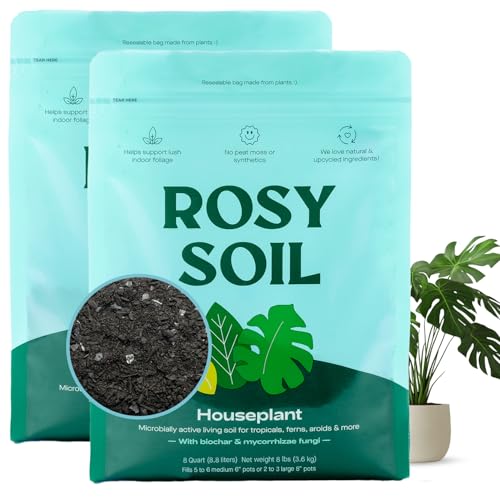
A large indoor palm collection calls for more medium than a small repotting job, and this two-pack provides a useful volume for several containers. The peat-free formula combines bark fines, compost, worm castings, biochar, and mycorrhizal fungi, creating a more complex growing base than plain garden soil. It can be used directly for a broad indoor planting.
The main advantage over Rosy Soil Houseplant Mix 4qt is quantity rather than a different planting approach. For palms that prefer reliable moisture, you may still want to adjust the medium with a moisture-retentive component. The mix seems most sensible for a varied houseplant shelf, where a versatile organic base is easier to manage than several custom formulas.
Benefits That Matter
✓Ready-to-use medium saves time during routine repotting.
✓Peat-free ingredients support a more natural indoor planting medium.
✓Two 8-quart bags cover several pots and reduce repackaging.
Small Caveats
•A general houseplant formula may need adjustment for a particularly moisture-loving palm.
•Open bags need a dry, sealed storage area between uses.
Whose Shelf It Belongs On
This option fits beginners and plant collectors managing several indoor containers where convenient volume matters.
Consider Something Else When
Rosy Soil Biochar Booster is the stronger choice for palms whose moisture and aeration needs require a custom blend.
Repotting a single palm does not always justify opening a large bag of planting medium. This 4-quart option keeps the supply manageable while providing a peat-free blend built around bark fines, compost, worm castings, biochar, and mycorrhizal fungi. The combination supports a mixed indoor setup where you want biological components without preparing each pot from scratch.
Compared with the larger Rosy Soil Houseplant Soil 8qt, this bag offers the same core approach in a more compact package. You may find the quantity limiting during a busy spring repotting session, though. Moisture still deserves attention because a general indoor mix can dry at different rates across a bright window and a shaded room.
Practical Advantages
✓The smaller bag suits a focused repotting session.
✓Peat-free components support an organic indoor planting routine.
Where It May Fall Short
•One bag may cover only a few medium-sized pots.
•Palms with higher moisture needs may require a more absorbent blend.
•Storage space matters once the bag has been opened.
Core Details
Feature
Specification
Why It Matters
Size
4 quarts
Provides a manageable amount for smaller repotting jobs.
Composition
Bark fines, compost, worm castings, biochar, and mycorrhizal fungi
Combines physical structure with biologically active components.
Made For
This size suits apartment growers repotting one or two indoor plants without storing a large quantity of soil.
Look Elsewhere When
Rosy Soil Houseplant Soil 8qt suits gardeners handling multiple palms or a large seasonal repotting project.
Orchids occupy a different corner of the plant world from palms. Their roots often grow in an open environment rather than dense soil, so this blend of orchid bark, pumice, and biochar is intentionally coarse and fast draining. That structure gives orchid roots abundant air, which is precisely why it is less convincing as a general palm medium.
Mycorrhizal fungi and beneficial microbes add biological support, making the mix more substantial than plain bark. Still, compared with Rosy Soil Biochar Booster, it is ready-made for a very specific rooting habit. A palm needing steadier moisture may look under-watered in this mix, particularly during warm weather.
Some growers want a dedicated medium for the edible herbs sharing their windowsill with a palm. This mix serves that purpose, with a formulation intended for basil, thyme, mint, parsley, cilantro, lavender, rosemary, and similar plants. Biochar, worm castings, and mycorrhizal fungi work together to support root development and nutrient access in indoor or outdoor containers.
Compared with Rosy Soil Houseplant Mix 4qt, its plant list is narrower and its purpose is clearer. The trade-off is that this is not a palm-specific medium, so a large palm pot still calls for a mix matched to the species and its watering routine. For a compact herb planter, though, the focused formula is a practical choice.
A Few Highlights
✓Formulated for common culinary and aromatic herbs.
✓Works in windowsill pots and outdoor containers.
✓Biochar supports moisture retention within the root zone.
✓Mycorrhizal fungi and worm castings enrich the planting medium.
Worth Noting
•Its herb focus does not match the requirements of most palms.
•The 4-quart quantity suits a small planter rather than a large palm pot.
Feature Facts
Feature
Specification
Why It Matters
Plant focus
Basil, thyme, mint, parsley, cilantro, lavender, and rosemary
Matches a broad range of edible and aromatic herbs.
Components
Biochar, worm castings, and mycorrhizal fungi
Supports water holding, nutrient uptake, and root activity.
Use settings
Indoor windowsills and outdoor planters
Allows the same blend to suit several growing arrangements.
The Right Fit
This mix suits home cooks growing herbs in small containers alongside a larger palm planting.
Swap It Out When
Rosy Soil Houseplant Soil 8qt is a better fit for a collection centered on palms and other indoor plants.
## What Palm Containers Actually Need
### Drainage Without Starvation
Palm roots need oxygen, but dry roots suffer quickly. A practical medium should drain excess water while retaining enough moisture for the root ball. Fine, compact soil restricts air, whereas an excessively coarse mix may become dry between waterings. The right balance depends on the palm species, pot size, and growing temperature.
### Moisture Matters by Plant
Many indoor palms prefer steadier moisture than desert-oriented mixes provide. The honest fit check is simple: compare the plant’s watering needs with the medium’s drainage rate. A pot in a bright room dries faster than one in a shaded corner, even when both contain the same mix.
### Amendments Offer More Control
Biochar is a stable, porous material that can increase water and nutrient retention. Mycorrhizae are root-associated fungi that can support nutrient access. Blending a measured amendment into a suitable base gives you more control than choosing a general-purpose medium, though it also requires accurate mixing and a little more setup.
## Two Details That Shape Your Decision
### Wrong Turns To Avoid
Avoid choosing the driest mix simply because palms can encounter root rot. Check the plant’s preferred moisture range and the pot’s drainage before buying. A sealed bottom without drainage holes can make nearly any medium too wet.
### What The Higher Tier Buys
Costlier mixes often add consistent texture and biological components such as biochar, compost, or mycorrhizal fungi. Those additions can be useful in a carefully blended palm mix, while a simpler soil may suit routine repotting. Pay for the components your setup needs rather than an elaborate ingredient list.
## Frequently Asked Questions for Potting Soil For Palm Trees
### Can I Use Cactus Mix for a Palm Tree?
You can use it for a drought-tolerant palm in a container that drains freely, but it is not the natural fit for every palm. Many indoor palms need steadier moisture than this gritty medium provides.
### Is General Houseplant Potting Soil Enough for Container Palms?
It can provide a convenient base, especially for a routine repotting. Adjust the mix for palms that need unusually high or low moisture.
### Does Biochar Replace Potting Soil?
No, biochar is an amendment rather than a complete growing medium. Mix it with a suitable soil base using the recommended application rate.
### What Should I Check in a Container Palm’s Pot?
Check that the pot has unobstructed drainage holes and a stable base. Its volume and the room’s temperature also affect how quickly the soil dries.
### Should Indoor and Outdoor Container Palms Use the Same Mix?
They can share a base, though outdoor pots often need more water-holding capacity. Adjust the recipe for heat, rainfall, and pot size.
## Final Verdict
Rosy Soil Biochar Booster gives you the most control over a custom palm medium, while the houseplant mixes offer a simpler path for routine repotting. Match the soil’s moisture profile to the palm, use a container that drains properly, and buy only the volume you can use and store.