

A tomato plant leaning toward the fence makes a familiar problem obvious: regular watering keeps it alive, yet pale leaves and sparse growth can still leave a garden short on energy. Plant food for outdoor plants comes in granules, liquids, worm castings, and mixes built around soil biology, so the right choice depends on what you grow and how you prefer to feed it. These options cover general beds, flowering plants, container gardens, and indoor pots without treating every plant the same.
A Fast Comparison Of The Options
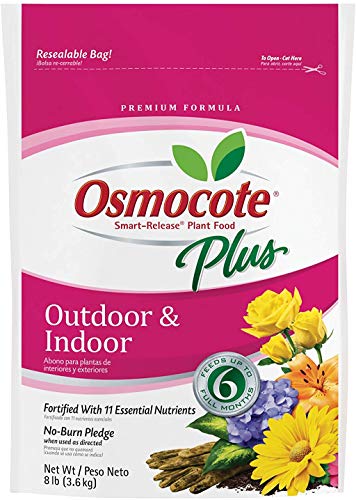
Osmocote Smart-Release Plant Food Plus Outdoor & Indoor 8 lb

Brut Organic Worm Castings for Plants 5 LB Natural Nutrients

FoxFarm Tiger Bloom Liquid Plant Food for Buds, Blooms, 2-8-4, 1 Pint

Bioactive Plant Fertilizer Genius+ 200g

Smart Grower Genius+ Potted Plant Food 8oz
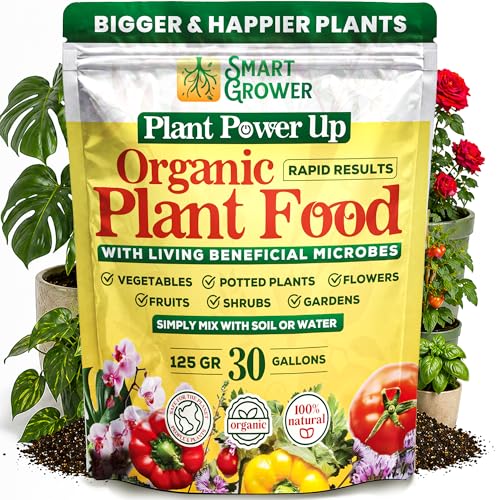
Smart Grower Organic Plant Food with Microbes 125GR
The Details Behind The Selections
Feeding a mixed garden bed often means balancing shrubs, flowers, and container plants without maintaining several separate products. Osmocote’s resin-coated granules offer a straightforward approach, providing a 15-9-12 NPK ratio, where nitrogen supports foliage, phosphorus supports roots and flowers, and potassium supports overall plant vigor.
Compared with the bloom-focused FoxFarm Tiger Bloom, this formula favors broad, everyday feeding. For most backyards with several plant types, that general coverage is more useful, although the 8 lb package takes more room than a small indoor product.
What It Does Well
- Each granule uses a controlled-release coating designed to feed plants for up to six months.
- Eleven nutrients make it a practical choice for mixed beds and container collections.
- It suits both in-ground gardens and potted plants across indoor and outdoor settings.
- The broad plant-type coverage avoids maintaining separate feeds for ordinary home gardens.
Trade Offs
- The general-purpose formula is less targeted for flowering plants than FoxFarm Tiger Bloom.
- The 8 lb container needs more storage space than the smaller houseplant options.
Key Specs
Made For
You benefit most from this option if you maintain mixed outdoor beds, patio containers, and houseplants and want one controlled-release feed.
Consider Something Else When
FoxFarm Tiger Bloom suits you better when flowering and fruiting are the main priorities and you want a phosphorus-centered liquid formula.
Repotting a patio planter often reveals tired potting soil before the plants show any dramatic decline. Brut Organic Worm Castings give you an organic soil amendment and plant food that can be mixed into garden soil or used with container plants, making them most useful for gardeners who prefer to improve the growing medium itself.
Unlike Osmocote’s coated nutrient granules, worm castings are incorporated into the soil rather than applied only as a measured surface feed. That distinction makes this the slower, soil-building choice, especially appropriate for new beds, refreshed potting mixes, and container projects.
Key Advantages
- Works in potting soil and garden soil across indoor and outdoor growing spaces.
- Organic castings support a soil-building approach rather than relying on one synthetic feed.
- The material is raised indoors in containers, keeping the source focused and controlled.
- The 5 lb package suits potting tasks and manageable amounts of bed preparation.
Practical Considerations
- Large garden beds can require more than 5 lb, making repeated additions a factor to consider.
- It serves gradual soil improvement better than a targeted nutrient-ratio routine.
Who Will Love This
This castings option best fits you if you routinely repot plants, refresh raised-bed soil, or prefer organic matter within your potting and garden mixes.
Another Choice May Suit
Smart Grower Genius+ Potted Plant Food is a closer fit for someone who wants a compact, dedicated indoor product rather than a multi-purpose soil amendment.
Tomatoes, peppers, and flowering ornamentals often need a feeding choice aimed at buds and fruit rather than an all-purpose balance. FoxFarm Tiger Bloom uses a 2-8-4 ratio, giving phosphorus the largest role alongside nitrogen and potassium, and its liquid format works in conventional soil and hydroponic growing systems.
Compared with Osmocote’s 15-9-12 granules, this is a more focused decision for a flowering phase. You may find it especially convenient when one crop dominates the bed, although the 1 pint container is sized more for targeted use than feeding a broad collection.
Features That Help
- The phosphorus-centered formula directly addresses a bud-and-bloom feeding goal.
- Liquid nutrients suit both soil-based and hydroponic cultivation.
- A high micronutrient formula adds support beyond the three primary NPK nutrients.
- The 1 pint format keeps the product manageable for flower beds and fruiting crops.
Some Limits To Know
- Its specialized nutrient ratio offers less value for mixed foliage-heavy plantings.
- Liquid feeding requires separate preparation compared with ready-to-apply granules.
Feature Snapshot
Right Fit For
This liquid food best serves you when flowers, tomatoes, peppers, or hydroponic crops need a bloom-focused formula.
Look Elsewhere When
Osmocote Smart-Release Plant Food Plus suits you better for mixed beds where a broad, slow-release granule is more practical.
Healthy soil depends on more than the nutrients a plant absorbs immediately, and this Smart Grower formula places soil biology at the center of its approach. Its 6-5-6 NPK ratio is joined by 24% active carbon, 5% humic acid, mycorrhizal fungi, and beneficial microbes, ingredients associated with root-zone activity and nutrient uptake.
Compared with Osmocote’s 11-nutrient, six-month release, this granular option carries a more elaborate soil-focused profile. The 200g size is compact, and for container-focused gardeners, that makes it easier to fit into a crowded utility shelf.
What Helps Most
- Active carbon and humic acid complement the balanced 6-5-6 nutrient ratio.
- Mycorrhizal fungi and beneficial microbes add a biological angle to routine feeding.
- The clean-release granular format supports steady nutrition over time.
- A 200g package is convenient for container collections and smaller gardens.
Points To Note
- The 200g package offers less material than the 8 lb Osmocote option for large beds.
- Its many components make it more specialized than a simple three-nutrient feed.
Built With In Mind
This formula fits you if you want controlled-release granules plus carbon, humic acid, fungi, and microbes in one soil-focused product.
A Better Fit Elsewhere
Smart Grower Organic Plant Food with Microbes fits you better when a larger batch and a straightforward indoor-outdoor preparation matter more than granular carbon features.
A windowsill crowded with ferns and tropical foliage does not need the same feeding program as a sprawling garden bed. Smart Grower Genius+ is designed specifically for houseplants, including tropical varieties, and focuses on root support, healthy foliage, and steady growth within indoor pots.
Compared with Smart Grower Organic Plant Food with Microbes, this 8oz package is more compact and directed toward indoor container plants. The trade-off is scope: you gain a convenient indoor formula, but its garden application is not the central purpose.
The Upside
- Designed for houseplants rather than treating an indoor pot like a lawn bed.
- Supports roots, foliage, and new growth in container-grown tropical plants.
- The 8oz size fits neatly into a small indoor gardening supply area.
- A focused format simplifies feeding for windowsills and plant shelves.
Small Caveats
- Its indoor focus makes it less aligned with large outdoor beds.
- The compact package may need replacing sooner across a substantial houseplant collection.
At A Glance
The Right Fit
This potted plant food best suits apartment residents and home gardeners who maintain foliage plants indoors and want a compact, dedicated formula.
Swap It Out When
Brut Organic Worm Castings suit you better when you want to mix organic matter into potting soil as part of repotting.
Mixing a plant food for both a houseplant shelf and a backyard planter calls for one preparation that can cross between environments. Smart Grower Organic Plant Food uses beneficial microbes and organic plant nutrients, and the 125g amount is intended to make 30 gallons, giving you a sizable batch for a mixed indoor and outdoor routine.
Compared with the 8oz Genius+ potted plant food, this option trades compact storage for broader reach. You may find the 30-gallon batch useful during spring planting, although preparing that much means keeping a suitable container and enough work area on hand.
Positive Points
- Beneficial microbes provide the main distinction from a basic nutrient feed.
- Organic plant nutrients suit both houseplants and outdoor garden plants.
- The 125g package prepares 30 gallons, reducing the need for frequent measuring.
- One batch can cover several watering routines across different growing areas.
Areas To Watch
- Making 30 gallons requires a container with enough room and a clear mixing routine.
- A large prepared batch may be less practical for a very small plant collection.
Quick Facts
Best Suited To
This food best serves you if you maintain both indoor and outdoor plants and want a single organic, microbe-based batch.
Reach For A Different Pick When
FoxFarm Tiger Bloom suits you better when a specific phosphorus-rich formula for buds and flowers is more important than broad organic preparation.
Matching Plant Food To The Job
Plant food works best when its format and nutrient profile match the planting situation. Start with the plants and the growing system, then narrow the choice by release method, application style, and the amount of storage space you have.
Read The Nutrient Ratio
NPK lists three primary nutrients: nitrogen for leafy growth, phosphorus for roots and flowers, and potassium for overall vigor. A higher-numbered nutrient is not automatically better, so match the ratio to the goal and follow the label directions for your particular plants.
A broad ratio such as 15-9-12 suits mixed beds, while 2-8-4 gives more emphasis to flowering and fruiting. The 6-5-6 formula in Smart Grower Genius+ is balanced but pairs that ratio with carbon and biological ingredients.
Match Granules To Liquids And Soil Amendments
Granules scatter over soil and are convenient for containers, patio plants, and mixed beds. Controlled-release coatings regulate nutrient delivery over time, reducing the frequency of surface applications compared with a conventional fast-release feed.
Liquids provide more control during each watering, although they require preparation. Worm castings take a different role again: they are incorporated into soil or potting media, making them most useful during planting and repotting rather than as a precisely targeted bloom feed.
Look Beyond The Nutrient Numbers
Carbon, humic acid, mycorrhizal fungi, and beneficial microbes each add a different layer to plant feeding. These features can appeal to gardeners who focus on soil biology, while a straightforward all-purpose formula may be easier to manage for a mixed household.
The 8 lb, 5 lb, 200g, 8oz, 1 pint, and 125g packages also create very different storage needs. A compact indoor formula is convenient near a plant shelf, while large beds and multiple containers reward a bulk package.
Practical Checks Before You Feed
Mistakes Worth Dodging
Choosing by package appearance or by the largest nutrient number can leave the actual planting need unmet. Match the formula to the crop, confirm the product suits containers or soil as appropriate, and follow the stated application directions. Treat worm castings as a soil amendment rather than assuming every plant food works in the same way.
What The Upgrade Payoff Means
A more involved formula may combine controlled release with carbon, humic acid, fungi, or microbes, so it can appeal to a soil-focused routine. A broader preparation can also make fewer batches for a mixed garden, though you still need the right container and mixing space. The useful upgrade is the one that solves a specific problem, not simply the most complex label.
Frequently Asked Questions
Can One Plant Food Feed Both Flowers and Vegetables?
Yes, a balanced formula can support many outdoor plants, including flowers and vegetables. FoxFarm Tiger Bloom makes more sense when bud, bloom, and fruit production are the main priorities.
Is Slow-Release Plant Food Better Than Liquid?
Slow-release granules reduce how often you reapply nutrients, while liquid food gives you more control over individual feedings. The better choice depends on convenience, plant type, and the growing system.
Can Worm Castings Be Mixed With Potting Soil?
Yes, Brut Organic Worm Castings are intended for potting soil and garden soil. Mixing them into growing media is especially useful during repotting or preparing a new bed.
What Does A 2-8-4 NPK Ratio Mean?
It means 2 parts nitrogen, 8 parts phosphorus, and 4 parts potassium by weight. The phosphorus emphasis makes the formula more relevant to buds, flowers, and fruit.
How Often Should Outdoor Plants Be Fed?
Follow the application directions on the product and account for the plant type, season, and growing conditions. Slow-release products feed for a stated period, while liquid and soil-amendment products follow different routines.
Closing Remarks
The strongest outdoor plant food is the one that matches your garden rather than simply carrying the longest feature list. Osmocote serves broad mixed beds, FoxFarm targets flowering crops, worm castings improve growing media, and the Smart Grower options suit compact indoor care or microbe-focused feeding. Match the format to the task, follow the label, and let the plants’ needs guide the choice.
