A waterlogged patio planter or compacted lawn bed can make routine care feel ineffective, even when you water and feed correctly. Soil conditioners address different parts of that problem, from improving drainage and aeration to adding organic material. These options suit everything from small houseplant collections to large garden projects, depending on the condition of your soil and the amount of space you have to work with.
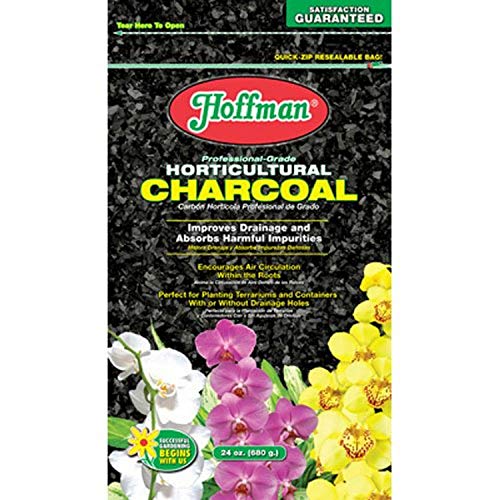
Porous charcoal gives you a focused answer to a common container problem: soil that stays wet and leaves roots with too little air. Hoffman 17502 uses that porous structure to support drainage, aeration, and natural filtration. It makes the most sense for potted plants and mixed growing media where excess moisture gathers around the root zone.
Unlike earthworm castings, which contribute organic material, this charcoal focuses more directly on the physical space between particles. The 24-ounce container is compact, although the amount needed will depend on your potting mix and the volume of soil you are treating.
Benefits That Matter
✓Porous charcoal helps excess moisture move away from the root zone.
✓Improved aeration supports oxygen flow around plant roots.
✓Natural filtration can help keep impurities out of the growing environment.
✓The compact package suits targeted container and indoor plant care.
Trade Offs
•Its drainage role depends on mixing it into the growing medium rather than leaving it as a surface layer.
•This option addresses soil structure more directly than nutrition, so your plants may still need a suitable feeding routine.
Key Specs
Feature
Specification
Why It Matters
Material
Porous charcoal
Creates drainage space within the growing medium
Main function
Drainage and aeration support
Helps roots receive air as excess water drains
Package size
24 ounces
Offers a manageable quantity for targeted mixing
Made For
This charcoal suits houseplant owners and container gardeners dealing with persistently dense or overly wet potting media.
Consider Something Else When
Espoma Organic Earthworm Castings fit you better when your main goal is adding ready-to-use organic material instead of focusing on drainage.
Earthworm castings offer a simple way to add organic material across a broad mix of plants. Espoma’s 4-quart bag works with indoor and outdoor plants, including vegetables, flowers, shrubs, trees, and houseplants. Its ready-to-use format keeps the application process straightforward for anyone building a basic care routine.
Where Hoffman 17502 emphasizes the physical drainage created by porous charcoal, this option focuses on soil structure through its castings composition. The 4-quart volume also gives you more material than a small amendment jar, although you still need suitable storage for the open bag.
Why It Works Well
✓Contains no additives or fillers, keeping the composition straightforward.
✓Ready to use without a separate mixing process.
✓Works across houseplants, vegetables, flowers, trees, and shrubs.
✓The 4-quart bag suits regular maintenance across several containers.
✓Can also serve as the base for fertilizer tea.
Small Caveats
•An open bag needs to be kept dry and secured against spills.
Feature Snapshot
Feature
Specification
Why It Matters
Composition
Pure earthworm castings without fillers
Provides a simple material choice for routine soil care
Volume
4-quart bag
Supports multiple plants and repeat applications
Who Will Love This
Beginning gardeners and plant collectors benefit from the clear application process and broad indoor-outdoor use.
Another Choice May Suit
POLIUMB Organic Perlite suits you better when drainage and aeration matter more than adding organic castings.
A liquid soil amendment fits neatly into a seasonal maintenance schedule. Farmer’s Secret Soil Revitalizer uses activated humic acid derived from organic sources to support soil biology, with monthly use recommended during the growing season. The 128-ounce format is sensible for gardeners treating several beds or a substantial collection of containers.
Compared with Espoma’s solid castings, this product takes a different route: it applies as a concentrated liquid rather than a surface layer of material. For a busy vegetable garden, that format can make routine applications less cumbersome, though you’ll need to follow the product directions for mixing and use.
Real Benefits
✓Activated humic acid supports biological activity within the soil.
✓Monthly applications fit many seasonal gardening routines.
✓The large container covers repeated use across multiple growing areas.
Points To Note
•The concentrated liquid format requires careful dilution according to its directions.
•A 128-ounce container needs a stable storage place away from temperature extremes.
The Right Fit
This format best serves vegetable growers and dedicated home gardeners who want repeatable liquid soil care across several beds.
Where A Sibling Pick Shines
Farmer’s Secret Soil Revitalizer 8 oz Liquid Humic Acid offers a smaller quantity for a more limited container-care routine.
Small-scale plant care does not require a large bottle. This 8-ounce version brings the same general soil-revitalizing approach as the 128-ounce Farmer’s Secret option, using activated humic acid derived from organic sources. It fits a home shelf better and gives you a practical choice for a few pots or a small indoor growing area.
The trade-off appears in replenishment frequency. A compact package is easier to handle and store, yet a larger garden can use it quickly, especially with monthly application during the growing season. Compared with Espoma castings, it also provides a liquid application rather than a dry material spread over the soil surface.
Useful Strengths
✓Supports soil biological activity with activated humic acid.
✓Compact size takes up little shelf or cabinet space.
✓Monthly use suits an organized growing-season routine.
✓Liquid format avoids the surface application used for solid castings.
Possible Compromises
•The small quantity may run out quickly across many beds.
•Correct dilution is essential for a concentrated formula.
•It addresses soil biology rather than the physical loosening associated with clay-focused gypsum.
Important Details
Feature
Specification
Why It Matters
Package size
8 ounces
Keeps storage compact for small plant collections
Format
Concentrated liquid
Allows controlled mixing for routine applications
Main ingredient
Activated humic acid from organic sources
Supports the soil-focused purpose of the amendment
Application timing
Monthly during the growing season
Creates a repeatable seasonal care schedule
Built With In Mind
This smaller bottle suits apartment gardeners and houseplant owners who prefer measured liquid applications without a large container.
Reach For A Different Pick When
Farmer’s Secret Soil Revitalizer 128 oz Humic Acid fits you better when you maintain several garden beds and want fewer refills.
Hard-packed clay has its own remedy. Kelly’s Green Team uses gypsum, a calcium sulfate material, to help loosen dense soil and improve the movement of water and air. The 50-pound bag is built for lawns, garden beds, and turf where a small container would be consumed too quickly.
Gypsum and perlite both support drainage, but they approach the problem differently. Perlite creates larger spaces within a growing medium, while gypsum targets the structure of compacted clay soil. The bulk bag also introduces a practical storage consideration, especially in a home where floor space is limited.
Advantages To Know
✓Targets the compaction and poor water movement associated with dense clay.
✓The 50-pound quantity suits lawn, turf, and larger garden projects.
✓Micro pellets can be distributed across broad growing areas.
Things That May Matter
•The 50-pound bag requires more storage and handling than a small amendment container.
•Clay-focused gypsum is not the most relevant choice for a small potting mix that mainly needs aeration.
Whose Shelf It Belongs On
This bag best serves homeowners and groundskeepers managing compacted clay across lawns, turf, or sizable garden beds.
Swap It Out When
POLIUMB Organic Perlite fits you better for lightweight aeration in containers and small quantities of potting mix.
Perlite is the familiar lightweight amendment for potting mixes, and this POLIUMB option comes in a practical 1-quart quantity. Made from volcanic rock, it creates open space in growing media and helps resist compaction around the root zone. Its neutral pH also makes it suitable for mixing without shifting the pH balance of the soil blend.
That makes it a natural companion to Espoma castings: perlite handles physical aeration, while castings add organic material. Compared with Kelly’s 50-pound gypsum bag, the smaller volume is easier to store and proportion, though you may need more for a large bed.
A Strong Showing
✓Lightweight volcanic material improves aeration and drainage in potting mixes.
✓Its neutral pH avoids altering the pH balance of a soil blend.
Details To Watch
•A 1-quart amount is modest for large beds or numerous containers.
•Perlite primarily changes soil structure rather than supplying organic material.
Quick Facts
Feature
Specification
Why It Matters
Material
Volcanic perlite
Creates lightweight space within growing media
pH
Neutral
Supports balanced soil blends without shifting their pH
Package size
1 quart
Suits small batches and targeted container mixing
Best Suited To
This perlite suits home gardeners blending small batches of potting mix for houseplants, starts, and containers.
Look Elsewhere When
Kelly’s Gypsum Soil Conditioner 50 lb, Fairway Pellets fits you better when your priority is loosening large areas of compacted clay.
## Matching the Amendment to Your Soil
Start with the problem visible in your garden. Slow drainage calls for a material that improves pore space, while compacted clay calls for an amendment aimed at breaking up dense soil. Your planting area and routine help determine whether a small bag, concentrated liquid, or 50-pound supply will fit the work.
### Drainage, Aeration, and Root-Zone Conditions
Perlite and porous charcoal serve different but related roles. Perlite creates open space in a blended potting medium, while charcoal is designed to support drainage and air circulation in growing media. For containers with drainage holes that still retain excess water, both may be worth comparing, though their handling and application differ.
### Organic Matter and Soil Biology
Earthworm castings and activated humic acid take a more soil-centered approach. Castings add organic material and can be spread across the soil surface, whereas humic acid comes as a concentrated liquid. You can think of these as different steps in a care plan, with one adding material and the other supporting biological activity.
### Bag Size and Application Effort
Package volume should match the area you maintain. A 4-quart bag can cover several pots, an 8-ounce bottle can fit into a cabinet, and a 50-pound sack suits broad lawn and garden work. Liquid formats also require accurate dilution, so read the directions before preparing an application.
## A Practical Look at Soil Amendment Formats
### Mistakes Worth Dodging
Don’t judge a soil conditioner by drainage alone. A product that improves porosity may not address compaction, organic matter, or soil biology, and one amendment rarely handles every condition. Check your soil, planting area, and existing care routine before choosing.
### When Paying More Pays Off
A larger package or more specialized material can be worthwhile when it replaces repeated purchases or targets a defined soil issue. The useful upgrade depends on coverage and application needs, not simply a larger container or more concentrated formula.
## Frequently Asked Questions
### How do I know which soil conditioner I need?
Start with your main problem: poor drainage, dense clay, depleted organic matter, or low soil biological activity. Each option addresses a different part of soil health.
### Can soil conditioner replace fertilizer?
No. Soil conditioners improve physical or biological soil conditions, but plants may still need nutrients appropriate to their needs. Use a balanced fertilization plan alongside soil care.
### Is charcoal safe for potted plants?
Charcoal can support drainage and aeration when mixed into suitable growing media. Follow the product directions and confirm that it is appropriate for the plants and potting mix you use.
### Is perlite suitable for clay soil?
Perlite is most useful in potting mixes where its lightweight, porous particles create space around roots. Dense clay garden soil is better matched to an amendment designed to loosen compaction.
### How often should earthworm castings be applied?
The product guidance recommends a one-quarter to one-half-inch surface layer every two months for actively growing plants. Adjust the amount to the container size and the plant’s condition.
## Final Verdict
Your best choice comes down to the problem in your soil: charcoal and perlite support drainage, castings add organic material, humic acid supports soil biology, and gypsum addresses compacted clay. Match the format to your planting area and routine, then use each amendment according to its directions. The most useful choice is the one that solves the specific issue sitting in front of you.