

A pH meter can reveal what your eyes cannot: nutrient drift in a hydroponic reservoir, acidity in a canned batch, or the concentration of sugar in a fermenting sample. Your choice depends on what you are measuring, how often you will use the instrument, and whether you need a portable pen, a food-focused meter, or a benchtop setup for demanding solutions. The six options below cover plants, kitchens, fermentation, brewing, aquariums, and laboratory-style work.
A Side-By-Side Look

Bluelab pH Pen and Care Kit

REED Instruments R9500 Brix Refractometer
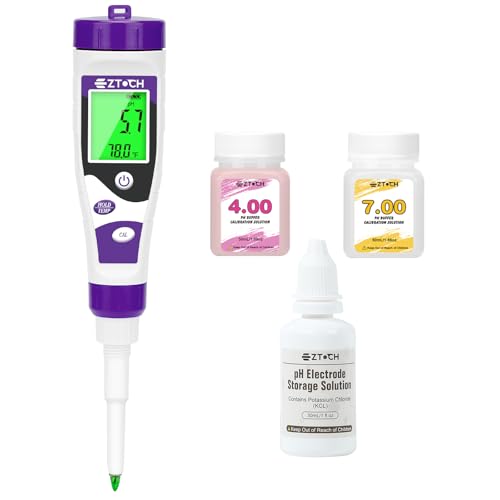
EZTOCH Food pH Meter
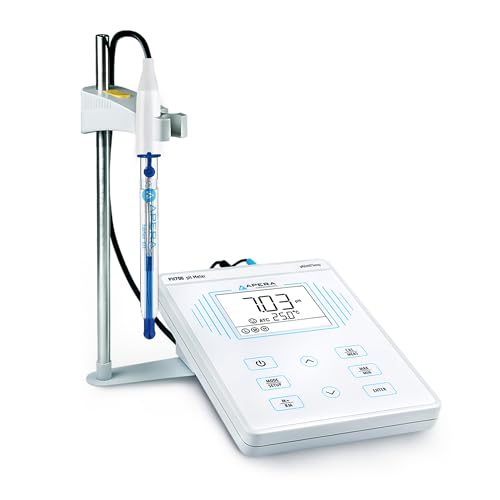
Apera PH700-HF Lab pH Meter for Strong Acids
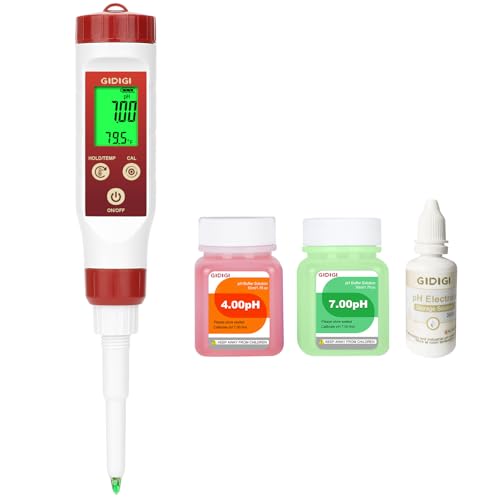
GIDIGI Fermentation pH Meter

EZTOCH Hydroponic pH, EC, TDS, PPM Meter
A Breakdown Of The Leading Choices
A pen-style meter makes practical sense for a busy grow tent, where you may dip a probe into a nutrient reservoir several times during a watering cycle. The Bluelab pH Pen is waterproof, has a backlit display, and uses automatic temperature compensation, meaning it adjusts its reading as the solution temperature changes.
The glass probe uses a double-junction design, where a second junction helps limit contamination from outside the measurement area. Compared with a basic food meter, this model comes with a fuller maintenance bundle, including calibration sachets, mixing cups, cleaner, and a small toothbrush for residue on the delicate probe.
Bright Spots
- The waterproof housing suits routine work around nutrient solutions, pools, and aquariums.
- Automatic temperature compensation supports more consistent readings in changing water temperatures.
- The backlit LCD remains easy to read in a dim grow tent or aquarium cabinet.
- Calibration reminders help you keep the probe on a sensible maintenance schedule.
- The care kit includes pH 4.0, pH 7.0, and KCl calibration solutions plus three mixing cups.
Points To Note
- Readings may be slow or unstable in tap, reverse-osmosis, or distilled water because those samples contain too few dissolved ions.
- The calibration sachets are single-use, so regular calibration adds ongoing consumable costs.
Quick Facts
Built With In Mind
This pen fits hydroponic growers, aquarium keepers, and home gardeners who want a waterproof meter with the supporting supplies already included.
A Better Fit Elsewhere
The EZTOCH Hydroponic pH, EC, TDS, PPM Meter suits you better when you also need nutrient-solution conductivity, temperature, and dissolved-solids readings.
A refractometer answers a different question from a pH meter. The REED Instruments R9500 measures Brix, a scale calibrated to the grams of cane sugar in 100 grams of solution, making it useful for fermenting fruit, monitoring a brew, or checking a sugar-rich sample.
Unlike the Bluelab pen, this instrument does not report acidity or alkalinity. Its role is soluble-solids concentration, and that distinction keeps it practical for hobbyists who want to follow sugar concentration without carrying a separate sample cup and probe.
Real Benefits
- Automatic temperature compensation adjusts the displayed Brix value for sample temperature changes.
- The 0 to 32 percent range covers common sugar concentrations in home brewing and fermentation.
- A direct Brix reading is easier to interpret than a general soluble-solids estimate for cane-sugar solutions.
- The compact instrument fits neatly into a small brewing or fermentation workspace.
Trade Offs
- It measures concentration rather than pH, so it cannot tell you whether a solution is acidic or alkaline.
- Brix corresponds most directly to cane sugar, making it less informative for samples dominated by other dissolved solids.
Feature Snapshot
Made For
This refractometer fits home brewers, winemakers, and fermenters who primarily need sugar concentration rather than acidity readings.
Another Choice May Suit
The Bluelab pH Pen and Care Kit suits you better when your grow, aquarium, or pool routine depends on tracking pH instead of Brix.
Canning season brings a practical reason to check acidity rather than guess from a recipe or a piece of fruit. The EZTOCH Food pH Meter is intended for checking meat, fruit, vegetables, tomato sauce, hot sauce, and salsa, including rechecking a prepared batch before canning.
The reference point for high-acid foods is 4.6 pH or below. Compared with the REED refractometer, this meter addresses acidity directly, although your canning process should also follow a validated recipe and established processing guidance rather than relying on one number alone.
Benefits That Matter
- The food-focused purpose makes it more relevant for home canning than a general aquarium or hydroponic pen.
- You can use it to check several sample types, including fruit, vegetables, meat, sauces, and salsa.
- Rechecking tomato sauce and hot sauce before canning gives you a point of reference for the prepared batch.
Practical Considerations
- Confirm that the probe and sample preparation suit the particular food, especially thick sauces or solid samples.
- A pH reading supports a canning decision but does not replace recipe-specific process guidance.
Right Fit For
This meter fits home canners and fermenters who want a dedicated food instrument for acidity checks during seasonal preserving.
Look Elsewhere When
The GIDIGI Fermentation pH Meter suits you better when included pH 4.0 and 7.00 calibration solutions are a more important priority than broad food examples.
Most kitchen pH meters focus on mildly acidic food samples, while this benchtop instrument addresses the opposite end of the scale. The Apera PH700-HF is built around a LabSen 833 pH and temperature electrode for solutions from 0 to 2 pH and samples containing hydrofluoric acid below 2,000 ppm.
That narrow purpose makes it more specialized than the EZTOCH food meter. For laboratory or technical work involving strongly acidic solutions, the dedicated electrode and benchtop format can be more appropriate than using a general-purpose household pen.
Features That Help
- The 0 to 2 pH range is tailored to strongly acidic samples rather than general food and water testing.
- The LabSen 833 electrode is intended for strong acids and solutions containing HF within the stated concentration limit.
- A simple electrode holder keeps the probe positioned during benchtop measurements.
- Three premixed calibration solutions support calibration at pH 4.00, 7.00, and 10.01.
Details To Watch
- Its low-pH focus makes it a specialist instrument rather than a broad household solution.
- HF-containing samples must remain below the stated 2,000 ppm limit, so concentration is a critical fit check.
Technical Highlights
Whose Shelf It Belongs On
This model fits laboratory and technical users who routinely work with strongly acidic or HF-containing solutions within its stated limits.
Reach For A Different Pick When
The EZTOCH Hydroponic pH, EC, TDS, PPM Meter suits you better for routine nutrient-solution work than low-pH chemical analysis.
Starting a ferment adds enough unfamiliar steps without requiring you to assemble a separate calibration kit. The GIDIGI Fermentation pH Meter includes pH 7.00 and 4.00 calibration solutions along with electrode protection solution, giving you the core supplies needed for routine setup.
Compared with the EZTOCH Food pH Meter, this package places more emphasis on fermentation and calibration. The straightforward bundle may suit a new food-fermenting household, while the broader food examples of the EZTOCH model make that option easier to assess for seasonal canning.
Everyday Advantages
- Two calibration solutions let you prepare the meter at pH 7.00 and 4.00.
- The included electrode protection solution supports routine probe maintenance between uses.
- A bundled setup reduces the need to purchase separate calibration and care items at the outset.
- The fermentation focus matches the needs of sourdough, vegetable ferments, and similar kitchen projects.
Some Limits To Know
- Calibration and electrode care remain recurring tasks even when the supplies arrive in the box.
- Its food focus makes it less useful for nutrient solutions, aquariums, or strong-acid laboratory work.
Who Should Grab It
This meter fits new fermenters who value an included calibration and electrode-care bundle for a straightforward kitchen setup.
Consider Something Else When
The EZTOCH Food pH Meter suits you better when checking tomato sauce, hot sauce, salsa, meat, fruit, and vegetables is your main need.
A hydroponic reservoir rarely needs only one number. The EZTOCH Hydroponic pH, EC, TDS, PPM Meter combines pH with electrical conductivity, a measurement of how well a solution carries an electrical current, plus temperature and dissolved-solids displays.
Its MODE control changes the visible combination between pH, EC, and temperature or pH, PPM, and temperature, while a lock function helps hold the display in place. Compared with the Bluelab pen, you gain broader nutrient-solution information in one device, although you give up the Bluelab package’s extensive probe-care supplies.
Strengths Worth Knowing
- Four-in-one monitoring reduces the number of instruments needed for basic reservoir checks.
- EC readings cover 0.00 to 19.99 mS/cm with a practical 0.01 mS/cm resolution.
- Simultaneous displays let you compare pH, EC or PPM, and temperature without switching between screens.
- The display lock is useful when you need to place the meter where you can read it more easily.
Potential Compromises
- TDS and PPM are unit presentations of the dissolved-solids measurement rather than separate physical properties.
- Conductivity shows the overall ion response of a solution, not the balance of each individual nutrient.
Core Details
Perfect Match For
This meter fits hydroponic beginners and enthusiasts who want pH, conductivity, temperature, and dissolved-solids readings in one routine tool.
Where A Sibling Pick Shines
The Bluelab pH Pen and Care Kit suits you better when a waterproof pH-only pen, calibration reminders, and a complete probe-maintenance bundle matter more.
Match The Instrument To Your Sample
Before choosing a meter, identify the measurement your routine actually needs. A pH meter reports acidity or alkalinity, while a Brix refractometer estimates sugar concentration. EC describes electrical conductivity, and TDS or PPM presents dissolved solids through another scale. Each measurement answers a different question.
Check The Measuring Range
A range that covers your sample is essential, especially for specialized work. The Apera PH700-HF focuses on 0 to 2 pH and can address HF-containing solutions below 2,000 ppm, while the REED R9500 covers 0 to 32 percent Brix. Match the instrument to the chemistry rather than choosing a broad range that does not improve your result.
Consider Calibration And Temperature Compensation
Calibration establishes the instrument’s reference point against known solutions. Automatic temperature compensation, often abbreviated ATC, adjusts readings as the sample temperature changes, which is useful in nutrient reservoirs and brewing work that do not remain at room temperature.
Think About The Sample And Care Routine
Thick sauces, solid foods, water, and nutrient solutions present different sampling challenges. Consider probe compatibility, the maintenance supplies included, and how often you will measure. The Bluelab package is notably maintenance-focused, while the GIDIGI kit emphasizes calibration and electrode protection for fermentation.
Practical Lessons Before You Measure
Mistakes Worth Dodging
Avoid choosing solely by display features when the measuring range does not match your sample. Check whether you need pH, Brix, EC, or several readings, and account for calibration supplies and probe-care needs. A feature-rich meter still gives weak results when its electrode or range suits the wrong material.
What Separates Premium From Basic
Higher-tier instruments may add specialized electrodes, tighter measurement ranges, automatic temperature compensation, or a more complete care kit. Those additions matter when you work with demanding solutions or need consistent readings across changing temperatures. For occasional kitchen checks, a simpler setup may cover the same decision without extra equipment.
Frequently Asked Questions
Do I need a pH meter for home canning?
A pH meter can help verify the acidity of foods and prepared batches during canning. Use the reading alongside a validated recipe and established process guidance rather than treating one measurement as the entire decision.
What is Brix used for?
Brix measures sugar concentration in a solution, with the scale calibrated to cane sugar. It is useful for brewing, wine, and fermentation monitoring, but it does not report whether a sample is acidic or alkaline.
Is a hydroponic pH meter the same as a food pH meter?
A hydroponic meter is designed for nutrient solutions and may also measure EC, TDS, PPM, and temperature. A food pH meter is intended for samples such as fruit, vegetables, sauces, and fermenting foods.
What does automatic temperature compensation do?
Automatic temperature compensation adjusts a reading to account for changes in the sample’s temperature. This can make results more consistent in reservoirs, brewing equipment, and other environments where the liquid does not remain at a constant temperature.
How often should a pH probe be calibrated?
Follow the instrument’s calibration reminders and your solution-change schedule. Calibration matters most when readings shift unexpectedly, after probe cleaning, or whenever you need a fresh set of reference measurements.
Final Verdict
The Bluelab pH Pen and Care Kit stands out for plant care and regular watering routines, while the EZTOCH hydroponic model covers more nutrient readings in one place. Food fermenters and home canners have focused alternatives, and the REED refractometer serves sugar-based projects rather than acidity checks. Choose the instrument that matches your sample, measurement range, and care routine first.
