

Fruit trees attract a stubborn mix of caterpillars, aphids, mites, ants, and tree-climbing pests, and a crowded canopy can hide damage until leaves or fruit already show stress. I focus on seven practical approaches for home orchards, from physical tree barriers to neem oil, spinosad concentrates, broad-spectrum sprays, and early-cycle fertilizer that supports vigorous trees without treating insects directly.
The Picks In Brief
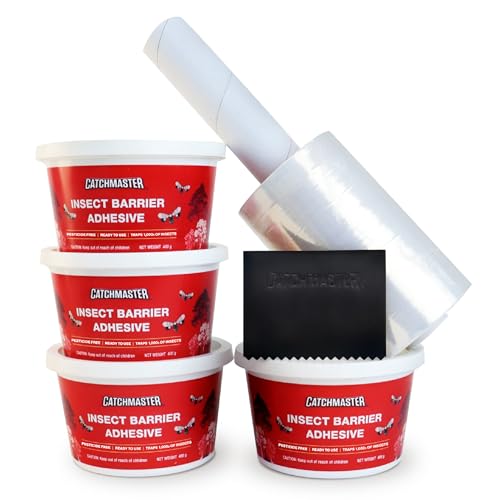
Catchmaster Tree Banding Insect Barrier DIY Kit 4Pk, 15oz., 1Kft Wrap

Garden Safe Neem Oil Fungicide3
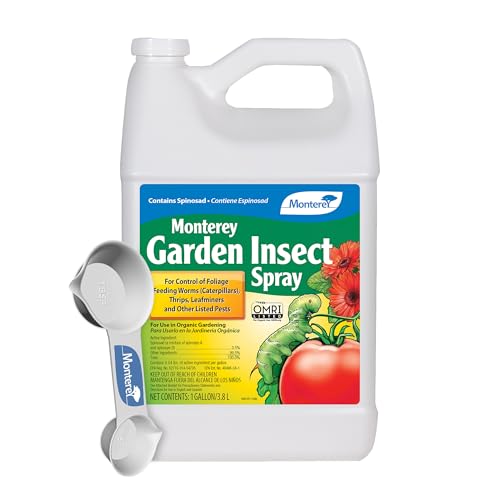
Monterey Spinosad 1 Gallon

Liquid Harvest 7.9% Bifenthrin Insecticide, 64 Ounces, Professional Use

Farmer’s Secret Fruit Tree Booster Fertilizer, Phosphorus Rich, 8oz
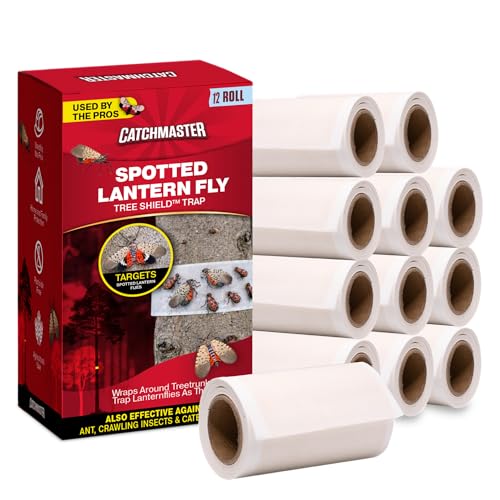
Catchmaster Tree Shield Lanternfly and Ant Trap, 12 Rolls, 30ft Each
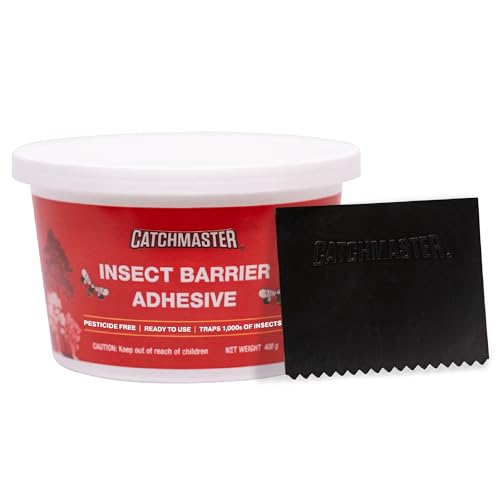
Catchmaster Tree Banding Insect Barrier Kit, 15oz Pail and Spreader
Meet The Standout Selections
Tree banding works by intercepting pests before they climb into the canopy, so I see it as a useful first line of defense in orchards prone to lanternflies, cankerworms, ants, or other trunk-climbing insects. This kit combines adhesive, spreaders, and 1,000 feet of plastic wrap for assembling physical barriers around multiple trees.
Compared with spraying, the approach leaves no treatment residue on foliage or fruit, though it depends on careful placement and maintenance. It fits growers who prefer a hands-on barrier system and want to monitor trunk activity, especially around a small group of fruit trees.
Noteworthy Benefits
- Four adhesive pails support repeated barriers across several trees.
- The 1,000-foot wrap roll accommodates substantial trunk coverage.
- Two spreader sizes suit different pests and band widths.
- A UV inhibitor helps the adhesive resist sun and weather exposure.
Things To Consider
- Placement near eye level reduces accidental contact with children and pets.
- The bands require cutting and removal rather than a permanent installation.
Feature Snapshot
Who It Suits Best
This kit best suits orchard keepers managing several trees where physical interception and pest monitoring matter more than foliar spraying.
Consider Something Else When
Gardeners needing treatment for pests within the canopy may find Garden Safe Neem Oil Fungicide3 more suitable.
Neem oil is useful when a fruit tree has more than one kind of problem. Garden Safe Fungicide3 combines fungal disease control, insect control, and mite control in a 32-ounce bottle, making it easier to manage than carrying three separate products around a mixed home garden.
The active ingredient is clarified hydrophobic neem oil, a neem-derived material processed to mix with water. It is listed for use around roses, flowers, houseplants, ornamental trees, shrubs, fruits, and vegetables, so it fits compact orchards where apples, pears, or ornamental fruit varieties grow alongside other plants.
Strong Points
- Controls listed fungal problems such as black spot, rust, and powdery mildew.
- Addresses aphids, whiteflies, spider mites, and listed insect stages.
- One bottle simplifies treatment across several plant types.
- The 32-ounce size suits recurring home-garden applications.
Worth Noting
- Use depends on following the label for target pests, plants, and application timing.
- Broad coverage does not make it suitable for every pest encountered on a tree.
Key Specs
Made For
This formula suits home growers dealing with a combination of listed insects, mites, and fungal diseases across fruit and ornamental plants.
Another Choice May Suit
Orchards focused on caterpillars, leafminers, and borers may prefer Monterey Spinosad 1 Gallon for its more targeted pest list.
Spinosad concentrate gives fruit growers a more selective approach than the broad-spectrum option in this group. Monterey lists it for caterpillars, leafminers, thrips, borers, fire ants, and several additional insects across vegetables, lawns, ornamentals, citrus, and fruit trees.
The active material comes from naturally occurring bacteria, and the product is OMRI Listed for organic gardening. Its gallon container and included spoon suit repeated use, while the concentrate format means application equipment and careful dilution according to the label are part of the job.
Bright Spots
- Targets several common foliage-feeding pests.
- Listed for apples, citrus, stone fruit, and vegetables.
- Fermentation-derived bacterial active material.
- Compatible with common garden spraying equipment.
Trade Offs
- Concentrate preparation requires following the label carefully.
- Its listed targets are narrower than those of a broad indoor and outdoor spray.
Technical Sheet
Right Fit For
This concentrate best suits organic-minded growers targeting caterpillars, leafminers, thrips, and similar listed pests in fruit and vegetable gardens.
Look Elsewhere When
Gardeners dealing with a broad indoor pest spectrum may find Liquid Harvest 7.9% Bifenthrin Insecticide more aligned with the label.
This bifenthrin concentrate is the broadest fit in the group for property-level insect control, with the label covering more than 75 indoor and outdoor pests. Fire ants, ticks, gnats, fleas, mosquitoes, cockroaches, wasps, and spiders appear among the listed targets, which makes it useful where several pest problems overlap.
Its 64-ounce container and 7.9 percent active ingredient make it a concentrated option rather than a simple ready-mix spray. I would reserve it for labeled outdoor applications, including mound treatment for fire ants where the label permits, and compare the full fruit-crop section before applying it to a fruiting tree.
Features That Help
- Covers a broad range of indoor and outdoor pests.
- Supports contact treatment and labeled fire-ant mound use.
- The 64-ounce container suits higher-volume application work.
- Useful around structures, lawns, and mixed outdoor spaces.
Practical Considerations
- Fruit-crop use depends entirely on the label directions.
- Concentrated material requires accurate mixing and suitable application equipment.
Built With In Mind
This option suits experienced property managers handling mixed pest populations across large outdoor areas.
Reach For A Different Pick When
Organic-garden growers with a focused caterpillar problem may prefer Monterey Spinosad 1 Gallon.
This entry belongs in a fruit-tree care roundup because healthy trees begin with sound nutrition, not because fertilizer controls insects. Farmer’s Secret Fruit Tree Booster is a phosphorus-rich, super-concentrated fertilizer intended for the early growth cycle after dormancy and before fruit buds develop.
That timing makes it a companion to later pest management. I see it as a seasonal support product for peach, apple, banana, and other fruit trees, with a concentrated format that requires dilution according to the instructions. It does not replace an insect treatment or address visible disease symptoms.
The Good Stuff
- Formulated specifically for fruit trees.
- Supports nutrition from post-dormancy through bud development.
- Includes peach, apple, and banana in its stated use range.
- The 8-ounce bottle suits measured, diluted applications.
Minor Gripes
- It is a fertilizer, not a direct pest-control treatment.
- Concentration makes following the dilution directions essential.
Core Details
Who Will Love This
This fertilizer suits fruit-tree growers focused on early nutrition after dormancy rather than immediate insect management.
Swap It Out When
Orchard keepers confronting active aphid or mite pressure will find more direct value in Garden Safe Neem Oil Fungicide3.
Tree Shield is built for coverage rather than a carefully measured liquid application. Each roll measures 30 feet, and the package contains 12 rolls, so gardeners can cut lengths to fit trunks, shrubs, ornamental plants, or rows of young fruit trees.
Compared with the four-pail banding kit, this option concentrates on long protective strips rather than a complete adhesive-and-spreader system. It therefore suits a property with many trees or sizable plants, where pre-cut coverage could reduce setup time, depending on trunk shape and the barrier placement method.
Where It Excels
- Twelve rolls provide a large quantity of barrier material.
- The 30-foot length can be trimmed for different plants.
- Suitable for trees, shrubs, and ornamental plants.
- Physical coverage avoids spraying pests throughout the canopy.
Details To Watch
- Long rolls need secure storage away from sharp objects.
- Coverage requires correct placement around each trunk or plant.
Quick Facts
Made For
This set suits orchard keepers protecting numerous trees or rows where 30-foot barrier lengths offer practical coverage.
Where A Sibling Pick Shines
Gardeners assembling a custom barrier with measured adhesive coats may prefer Catchmaster Tree Banding Insect Barrier DIY Kit 4Pk.
This single-pail kit serves the same core purpose as the larger Catchmaster bundle: combining adhesive with a tree-band system to intercept crawling insects before they reach the canopy. It suits a homeowner with one important tree or a small group of young fruit trees rather than a large orchard.
The 15-ounce pail and included spreader make the kit compact, but plastic wrap is still required to form the band. I see it as a practical starter setup for lanternfly, ant, moth, caterpillar, and other listed trunk-climbing pests, with regular placement near eye level to reduce accidental contact.
Useful Highlights
- Compact kit for individual trees or small plantings.
- Includes adhesive and a slotted spreader.
- Designed for listed climbing insects and monitoring.
- Works with standard plastic tree wrap.
Possible Compromises
- Separate plastic wrap is required for the complete setup.
- One pail offers less material than the four-pail kit.
Best Suited To
This kit suits first-time barrier users protecting a few individual trees or young fruit plants.
Not Your Match When
Orchard keepers needing wider, faster coverage across many trunks may prefer Catchmaster Tree Shield Lanternfly and Ant Trap.
What Matters Before Treating a Fruit Tree
The first decision is whether the pest is climbing the trunk or feeding within the canopy. Physical barriers work well against crawling insects but do not address pests already established among leaves, shoots, or fruit. Foliar products such as neem oil and spinosad suit different pest groups, so accurate identification comes before any purchase.
Match the product to the pest
A concentrate offers a large volume and dosing flexibility, but it requires careful mixing and suitable spray equipment. Ready-to-use garden products reduce preparation, which can be helpful for small plantings. I also compare the listed crops and target pests rather than relying on a general description of broad coverage.
Consider organic and conventional requirements
Organic gardening programs may point toward neem oil or OMRI Listed spinosad, but label directions still govern use, timing, and crop compatibility. Conventional products can offer wider pest coverage, though responsible application requires matching the label to the tree, site, and target pest. No product is automatically appropriate for every orchard.
Plan for the physical work
Tree bands demand wrapping, adhesive spreading, placement, and eventual removal. Their real advantage is interception rather than residue-free convenience, since the sticky surface must be handled carefully around children and pets. For a single tree, a compact kit makes sense; larger properties may favor long rolls that can be cut to fit.
Common Errors in Fruit Tree Pest Control
Mistakes Worth Dodging
Choosing a product before identifying the pest is the largest mistake, because barriers, concentrates, and neem blends do not address the same problems. I also check crop eligibility and application timing before treating, since a general garden label may not cover a particular fruit variety.
Why Larger Containers Cost More
Volume costs more, but larger containers can reduce repurchasing for extensive plantings or repeated applications. A gallon concentrate or 64-ounce bottle offers more working material, while an 8-ounce fertilizer bottle suits measured seasonal feeding. The right economy comes from matching package size to the actual job.
Frequently Asked Questions
What is the best insecticide for fruit trees?
The best fit depends on the pest and its location on the tree. Monterey Spinosad 1 Gallon targets several listed foliage-feeding insects, while Catchmaster barriers suit trunk-climbing pests.
Is Garden Safe Fungicide3 suitable for organic gardening?
Garden Safe Fungicide3 is formulated for organic gardening and contains clarified hydrophobic neem oil. Its label covers listed fungal diseases, insects, and spider mites across several home-garden plants.
Does spinosad control insects on fruit trees?
Monterey Spinosad 1 Gallon is listed for use on fruit trees, including apples, citrus, and stone fruit, against specified pests such as caterpillars, leafminers, thrips, and borers. Label directions determine the precise mix and application.
Are tree banding traps better than spraying?
Tree bands are better for intercepting crawling insects before they climb into the canopy. Spraying is more appropriate for pests feeding on leaves, shoots, or fruit, so the two methods can complement each other.
Does Farmer’s Secret Fruit Tree Booster control insects?
Farmer’s Secret Fruit Tree Booster is a phosphorus-rich fertilizer, not an insect treatment. It supports fruit trees during early growth after dormancy, while a labeled pest-control product addresses active insects or diseases.
Final Verdict
I find the strongest orchard strategy in this group combines prevention with targeted treatment. Tree banding limits trunk access, neem oil handles several listed garden pests and diseases, spinosad focuses on foliage feeders, and fertilizer supports trees at the right seasonal moment. Matching the product to the pest and following its label remains more useful than reaching for broad coverage by default.
