

Freshly sown grass needs protection from heavy rain, dry soil, wind, and uneven temperatures. A garden-straw cover creates a loose protective layer over new seed, while an erosion-control blanket targets slopes where soil tends to wash away, and seed-and-fertilizer mixes support the planting itself.
The right choice depends on the size of the job. Small seeded patches need a manageable amount of straw, large gardens benefit from a compressed bale, and sloping ground calls for a secured blanket. For homeowners managing established lawns, Scotts products deliver targeted seed, fertilizer, and moisture-supporting materials in convenient packages.
The Picks In Brief

Blue Mountain Hay Organic Seedless Garden Straw, 3 lb, 30 sq ft

Salt Hay Organic Mulch for Vegetable Gardens, 650 sq ft, 26 x 16 x 19 in Bale Box

Scotts Turf Builder Sun & Shade Grass Seed 5.6 lbs

Scotts Turf Builder Rapid Grass Seed 2.4 lbs

Farm Plastic Supply Straw Erosion Control Blanket, 2 ft x 112.5 ft
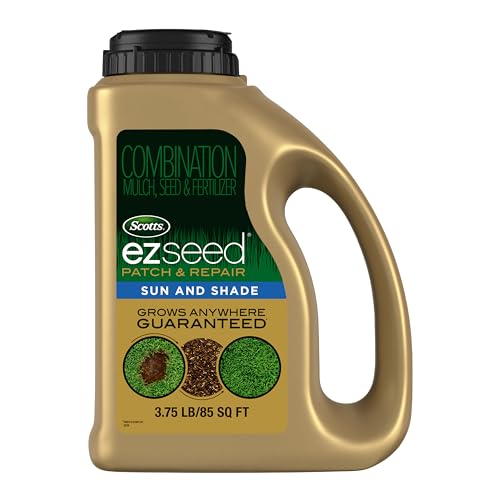
Scotts EZ Seed Patch & Repair Sun & Shade, 3.75 lbs
A Deeper Look At The Lineup
A newly seeded strip is vulnerable before its roots can hold the soil in place. Blue Mountain Hay’s loose garden straw provides a breathable cover that holds moisture, shades the surface, and reduces the force of rain, overwatering, and wind on emerging seed.
The 3-pound package covers up to 30 square feet, making it more manageable than the bulk option later in this list. For a small reseeding project, it is a straightforward way to add protection without committing to a large bale.
Noteworthy Benefits
- Helps keep newly seeded soil moist by slowing evaporation.
- Shades the ground, which can extend the growing period for cool-season crops.
- Softens rain impact and reduces seed displacement from wind.
- Returns organic matter to soil as the straw decomposes.
- The seedless composition suits gardeners avoiding added weed seeds.
Points To Keep In Mind
- The stated 30-square-foot coverage suits a small patch rather than a full yard.
- As a natural mulch, it is designed to break down gradually and may need refreshing.
Feature Snapshot
Who It Suits Best
This straw works best for homeowners seeding small lawn sections, flower beds, or vegetable rows that need moisture retention and light erosion protection.
Look Elsewhere When
The Farm Plastic Supply Straw Erosion Control Blanket suits you better when a long, narrow slope needs a fixed cover rather than loose mulch.
Salt Hay takes the basic mulch role and scales it up considerably. Unlike Blue Mountain Hay’s 3-pound bag, this compressed bale covers 650 square feet and arrives in a 26-by-16-by-19-inch box, making it a better fit for extensive vegetable beds or a substantial reseeding area.
Its light weight makes spreading less demanding, although you may find the bale less convenient to store than loose straw. The OMRI listing also gives gardeners working within organic production systems a defined material to check against their requirements.
The Good Stuff
- Covers 650 square feet, a much larger area than the first option.
- Contains no weed seeds, reducing an avoidable source of future weeds.
- Lightweight material is easier to distribute over vegetable rows.
- Slow decomposition makes it longer lasting than wood-chip mulch.
- Supports soil enrichment as the natural material breaks down.
Practical Considerations
- The compressed bale requires storage space before you spread it.
- Loose hay does not provide the same fixed structure as a stitched erosion blanket.
- Its broad coverage advantage becomes unnecessary for a tiny patch.
Quick Facts
Made For
Large-scale vegetable growers and homeowners tending broad garden beds will appreciate the substantial coverage and easy spreading.
Another Choice May Suit
Blue Mountain Hay Organic Seedless Garden Straw is the more practical choice for a small seeded patch where a 30-square-foot layer is enough.
This entry changes the task from covering seed to supplying it. Scotts Turf Builder combines grass seed, fertilizer, and a soil-improving component for a new lawn that receives both direct sun and partial shade.
That makes it useful when the same yard has open, bright areas beside trees or buildings. It does not replace a mulch cover, so sandy soil, exposed slopes, and heavy rainfall may still call for the straw options in this list.
A Few Strong Suits
- Combines seed, nutrition, and soil support in a single lawn-starting mix.
- Designed for yards containing both sunny and shaded sections.
- The 5.6-pound package supports a comparatively broad seeding job.
Worth Noting
- This product provides seed rather than a protective cover over existing seed.
- Its Root-Building Nutrition focuses on establishment, not erosion control.
Right Fit For
Homeowners starting or reseeding a mixed-light lawn benefit most from the combined seed, fertilizer, and soil-support formula.
Consider Something Else When
Scotts Turf Builder Rapid Grass Seed suits you better when your immediate goal is filling thin patches with a combined seed-and-fertilizer formula.
Where the standard Turf Builder mix approaches lawn creation, this Rapid formula concentrates on new grass in bare or thin sections. Its seed-and-fertilizer combination is designed to support visible establishment in weeks when applied at the appropriate rate and cared for properly.
The listing identifies a 2.4-pound pack of six, which can be useful for dividing a job across several small areas. Compared with the larger Scotts Turf Builder package, it offers a more focused repair format rather than a broad new-lawn supply.
Advantages To Know
- Combines grass seed with fertilizer for focused lawn repair.
- Targets both bare patches and thin areas within an existing lawn.
- Suits sunny and shaded conditions for mixed-light yards.
- The multipack format separates the supply into six smaller units.
Minor Gripes
- It remains a seeding product, so it does not form a mulch or erosion-control layer.
- Faster establishment still depends on suitable application timing and lawn care.
Feature Breakdown
Who Should Grab It
Homeowners repairing several small bare areas in a mixed-light lawn will find the multipack format especially convenient.
Swap It Out When
Scotts EZ Seed Patch & Repair is the better fit for a small, highly localized problem area that needs seed, lawn food, and moisture-supporting material together.
Where loose straw protects a broad bed, this stitched blanket addresses the more specific problem of soil moving down a slope. Agricultural wheat strands are mechanically joined into a 2-foot-wide roll that extends 112.5 feet, providing a fixed layer over vulnerable ground.
The material helps limit the effects of rainfall and sheet-flow runoff while retaining moisture around emerging vegetation. For a long drainage strip or newly seeded hillside, that structural focus makes more sense than applying a general-purpose garden mulch.
The Upside
- Mechanically stitched wheat fibers form a stable ground cover.
- Helps limit soil displacement from rainfall and stormwater runoff.
- Retains moisture around seed and emerging vegetation.
- The long roll suits extended rows and narrow slopes.
Where It May Fall Short
- The 2-foot width may require multiple runs across a broader bed.
- A fixed blanket is less flexible than loose straw for changing garden layouts.
Built With In Mind
This cover suits landscapers and homeowners stabilizing a long, narrow slope, drainage channel, or recently seeded strip exposed to runoff.
Reach For A Different Pick When
Salt Hay Organic Mulch is the better fit for broad vegetable beds where easy spreading and substantial loose coverage matter more than slope stabilization.
Scotts EZ Seed Patch & Repair concentrates on isolated trouble spots rather than an entire lawn. Its 3.75-pound package combines grass seed, slow-release lawn food, and a grooved, moisture-absorbing growing medium for targeted repairs.
The formulation is intended for full sun, dense shade, high-traffic areas, and slopes, giving you more flexibility than a basic seed blend. It still does not create a separate mulch barrier, so exposed soil still benefits from a loose or stitched cover.
Why It Works Well
- Targets bare spots without treating the entire lawn as a seeding project.
- Combines seed, lawn food, and moisture-supporting material.
- Handles both sunny and shaded repair locations.
- Its grooved growing medium supports seed placement and moisture retention.
- Suitable for worn paths, slopes, and other difficult patches.
Trade Offs
- It repairs grass rather than covering an existing seeded area.
- Separate erosion protection remains useful on steep or heavily washed ground.
Core Details
Who Will Love This
This product fits homeowners repairing small worn areas that need seed and moisture support without overseeding the entire lawn.
Where A Sibling Pick Shines
Scotts Turf Builder Sun & Shade Grass Seed suits you better when the repair extends across a broader lawn rather than one or two compact patches.
Match The Protection To Your Planting Job
Coverage area comes first because it determines whether you need a small bag, a bulk bale, or a long roll. Blue Mountain Hay covers up to 30 square feet, while Salt Hay handles 650 square feet. Measure the seeded area before ordering, and remember that slopes and irregular beds may need extra material around their edges.
Next, decide whether you need a loose cover or a fixed structure. Loose garden straw spreads easily across level beds and gradually adds organic matter as it decomposes. A mechanically stitched blanket makes more sense where rainwater tends to carry soil downhill.
Seed products solve a different part of the lawn job. Scotts Turf Builder mixes supply seed with fertilizer and soil-supporting ingredients, while Rapid Grass and EZ Seed Patch emphasize repair. Choose these for the planting material, then add straw or a blanket when the location also needs moisture retention or erosion control.
Material handling can be the deciding detail for daily lawn work. A 3-pound bag is easy to carry and store, a compressed bale needs room but covers much more ground, and a 112.5-foot roll works best along a long strip. Match the format to your storage space, bed shape, and typical watering exposure.
Everyday Mistakes To Avoid
Mistakes Worth Dodging
The most common error is treating seed, mulch, and erosion blankets as interchangeable products. Seed initiates grass growth, loose straw shades and protects the soil, and a stitched blanket addresses runoff. Buying the wrong category leaves one part of the planting process uncovered.
Another mistake is ignoring the shape of the site. A 2-foot-wide blanket may fit a narrow slope perfectly but cover a square bed awkwardly, while a large bale can be excessive for a repair patch. Measure both area and dimensions before deciding.
What Separates Premium From Basic
A larger bale, longer roll, or integrated seed-and-fertilizer formula may carry a higher upfront cost because it provides more material or combines several lawn-care components. That added expense makes sense for a broad garden, an eroding slope, or a lawn needing several connected repairs.
For a tiny seeded section, a compact bag can be more useful than a larger system. Pay for the format that matches the job rather than the largest amount of material.
Frequently Asked Questions
Do I need a cover over grass seed?
A cover can help retain moisture, soften rainfall, and limit seed displacement, especially on exposed or sloped soil. Loose straw remains the most flexible option, while a stitched blanket offers added structure where runoff is a concern.
Is garden straw the same as erosion-control blanket?
No. Garden straw is a loose mulch spread over the soil, whereas an erosion-control blanket is a stitched mat that remains in a fixed form. The blanket better addresses moving water on slopes, while straw is easier to spread across broad, level beds.
Should I use a seed-and-fertilizer mix or plain grass seed?
A combined mix suits you when you want seed, early nutrition, and growing support handled together. Plain seed gives you more control over the fertilizer and soil amendments used during the project.
How much mulch do I need for new grass?
Measure the seeded area and compare it with the product’s stated coverage before spreading the material. Overlapping or uneven placement can create thin areas, so a little extra material may help around borders and irregular sections.
Can straw cover be used on vegetable beds?
Yes. Straw mulch helps shade soil, slow moisture loss, and suppress many weed seeds from germinating. Salt Hay is especially relevant for larger organic vegetable beds because it contains no weed seeds and spreads with little weight.
Final Verdict
Start with the job your lawn actually presents. Use loose straw for moisture and light protection, a stitched blanket for runoff-prone slopes, and Scotts seed mixes for planting or repairing the grass itself. The most useful choice is the one whose coverage, material, and format match the area you have to treat.
