

Starting seeds indoors gives you control over temperature, moisture, and planting timing before seedlings face outdoor weather. A seed starting kit can simplify that setup, but the right choice depends on whether you need a complete propagation station, a reusable tray, or a growing medium. These options suit different projects, from a few herb pots to a full tray of vegetables and microgreens.
Your Options, Compared
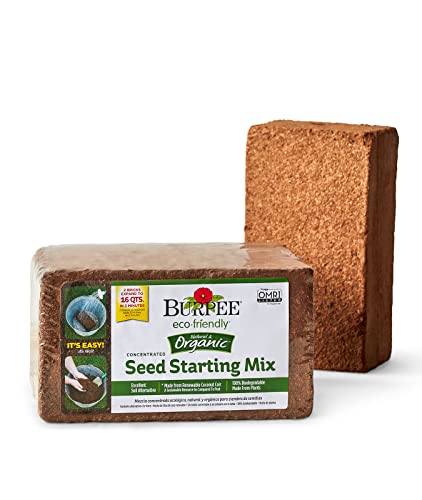
Burpee Coir Seed Starting Mix

Burpee 72-Cell Seed Starter Kit

Burpee SuperSeed 36-Cell Seed Tray

Adawook Self-Watering 60-Cell Seed Starter Tray with Grow Lights and Humidity Domes
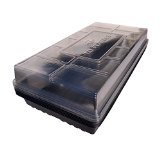
Hydroponics Market 5 Humidity Domes and 5 1020 Plant Growing Trays

Kimdozee 120-Cell Seed Tray
Meet The Standout Selections
Burpee Coir Seed Starting Mix begins with one compressed brick rather than a full bag of loose medium. Coir is coconut fiber, and this brick expands to 16 quarts after you add water, making it a practical base for filling the trays and cells you already own.
You gain the most flexibility when you want a clean medium for herbs, flowers, or vegetables without purchasing a complete propagation system. Unlike the Burpee 72-Cell Seed Starter Kit, this option leaves humidity control and organization to you.
Points In Its Favor
- The compressed format saves storage space until you need it.
- Expanded coir provides a lightweight medium for filling standard seed cells.
- You can use the mix across multiple trays rather than one fixed cell count.
Practical Considerations
- This is growing medium, not a complete kit, so plan on separate trays, labels, and a humidity cover.
- You must add enough water and allow the brick to expand before filling your containers.
Quick Facts
Built With In Mind
You benefit most from this medium when you already own reusable trays and prefer to choose your own cell count.
Look Elsewhere When
The Burpee 72-Cell Seed Starter Kit suits you better when you want trays, coir pellets, labels, and a dome in one coordinated setup.
For a sizable indoor batch, the Burpee 72-Cell Seed Starter Kit keeps the main components together. You receive two 36-cell trays, 72 coir pellets, a bottom water reservoir, and a greenhouse-style dome that helps retain warmth and humidity around young seedlings.
The six plant markers and two planting diagrams are more useful than they first appear, especially when you sow several herb, flower, or vegetable varieties at once. Compared with the Burpee Coir Seed Starting Mix, it offers more organization but less freedom to choose a different growing medium.
Key Advantages
- Seventy-two cells give you room to start a substantial mixed batch.
- The reservoir tray collects drainage beneath the planting cells.
- A dome creates a more enclosed setting during early germination.
- Labels and diagrams help you keep track of different varieties.
- The included coir pellets remove the need to fill cells separately.
Small Caveats
- Fixed cell trays take up more room than a single compressed brick of growing medium.
- You may eventually want a separate reusable tray once the first batch is transplanted.
Feature Snapshot
Made For
You benefit most from this kit during a busy February sowing weekend with several varieties to track.
Another Choice May Suit
The Burpee SuperSeed 36-Cell Seed Tray suits you better when repeated reuse and gentle plant removal matter more than a large one-time batch.
The Burpee SuperSeed 36-Cell Seed Tray is built around repeat use rather than disposable cells. Its flexible silicone cups flex as you remove a seedling, which can reduce the amount of soil disturbed around the roots during transplanting.
Thirty-six cells give you a manageable starting point for a kitchen garden or patio collection. Unlike the 72-cell Burpee kit, this tray leaves out pellets, a dome, and a reservoir, so it fits neatly into an existing indoor setup where you already manage moisture and humidity.
Everyday Wins
- Flexible cells let you release seedlings with less handling.
- The reusable format suits multiple indoor growing seasons.
- Corner drainage slots support airflow and water movement through the growing medium.
Worth Noting
- You need a separate humidity dome during the earliest stage of germination.
- You must supply your own growing medium, labels, and watering setup.
Right Fit For
You benefit most from this tray when you already understand watering and want a durable, compact cell system for repeated batches.
Reach For A Different Pick When
The Adawook Self-Watering 60-Cell Seed Starter Tray with Grow Lights and Humidity Domes suits you better when you want a self-contained indoor station with lighting.
The Adawook Self-Watering 60-Cell Seed Starter Tray with Grow Lights and Humidity Domes brings the main elements of an indoor propagation station together. You get a 60-cell insert, humidity covers, two grow lights on a support stand, a bottom tray, and a capillary mat that moves water into the cells.
This is the most equipment-heavy option here, so it suits a dedicated shelf or worktable rather than a temporary corner. A humidity dome is a clear cover that holds moisture near seedlings, while the 3-in-1 meter helps you check temperature and humidity during the tender early-growth stage.
Real Benefits
- Two lights support seedlings placed beneath the support stand.
- The capillary mat supports a more consistent internal watering approach.
- Sixty cells provide a practical balance of capacity and tray size.
- Ten labels and a temperature-humidity meter support daily monitoring.
Points To Keep In Mind
- The lights, stand, domes, and trays require more storage and setup space than a basic cell tray.
- You still need suitable growing medium and seeds for the cells.
Technical Highlights
Who Will Love This
You benefit most from this station when you have a dedicated growing area and want lights, covers, and irrigation support in one setup.
Where A Sibling Pick Shines
The Hydroponics Market 5 Humidity Domes and 5 1020 Plant Growing Trays suit you better for broad microgreen or wheatgrass work without built-in lighting.
The Hydroponics Market 5 Humidity Domes and 5 1020 Plant Growing Trays create broad covered growing areas rather than a fixed collection of small cells. Each tray measures 21.5 by 11 inches, and each matching dome adds 2.25 inches of height over the 2.5-inch-deep tray.
You can use the system for wheatgrass, microgreens, or seed starting when you add suitable inserts and growing medium. Compared with the Adawook station, it offers more reusable cover area but no integrated lights or automatic watering components.
A Few Strong Suits
- Five matching domes and trays support repeated growing cycles.
- The wide format works well for dense microgreen and wheatgrass trays.
- The bottom trays have no drainage holes, so they can hold moisture beneath inserts.
- The domes and trays are reusable and recyclable.
Some Limits To Know
- You need seed-starting inserts and appropriate growing medium to use the flat trays for individual seed cells.
- Five domes and five trays require more storage space than a compact cell insert.
Core Details
The Right Fit
You benefit most from this system when you plan to grow microgreens, wheatgrass, or multiple covered seed trays on a regular basis.
Swap It Out When
The Kimdozee 120-Cell Seed Tray suits you better when compact plantable cells matter more than broad reusable tray coverage.
The Kimdozee 120-Cell Seed Tray concentrates a large number of starting cells into a compact format. Each cell measures 1.97 inches on each side, giving you room for herbs, vegetables, flowers, succulents, and microgreens without moving to a larger tray footprint.
Its natural-pulp cells are designed to stay together around delicate roots, and you can place them directly into soil or a larger container during transplanting. That material differs from the reusable silicone used by the Burpee SuperSeed tray, so your priorities matter more than the raw cell count.
Practical Advantages
- One hundred twenty cells support a dense batch of small seedlings.
- Compact cells help you use limited shelf space efficiently.
- The natural-pulp construction can move from the tray into soil or another container.
- The square cell size gives you a consistent grid for labeling and spacing.
Details To Watch
- You need a separate humidity cover during the earliest germination stage.
- Small cells require consistent moisture and careful watering to avoid displacing emerging seedlings.
Made For
You benefit most from this tray when you want many plantable cells in a compact indoor setup or have a broad group of small plants to start.
Consider Something Else When
The Burpee SuperSeed 36-Cell Seed Tray suits you better when you plan to reuse one flexible tray across many seasons.
What Matters Before You Buy
Cell Count and Plant Size
Match the tray to the mature size of your plants. A 120-cell format suits herbs, flowers, microgreens, and other small starts, while larger cells give roomier roots more space. The 36-cell and 60-cell systems offer a middle ground when you expect to transplant before the plants become crowded.
Drainage, Watering, and Humidity
Seedlings need moisture without sitting in constantly saturated conditions. Look for drainage slots, a bottom reservoir, or a self-watering mat, and decide whether you will control humidity with a dome. The domes in these systems retain moisture, so you may need to remove or adjust covers as seedlings grow.
Reuse Versus Plantable Components
Reusable silicone or plastic trays make sense for repeated indoor cycles, while pulp or coir cells can move into soil. Your decision comes down to storage, handling, and how many rounds you expect to grow. A complete kit also saves you from assembling trays, covers, labels, and medium separately.
Practical Details That Shape Your Setup
Mistakes Worth Dodging
A large cell count does not guarantee better results, so match the tray to the plant and available light. Check whether the setup includes growing medium, labels, a humidity cover, and drainage support before assuming it is complete. For reusable systems, confirm that your shelf or table can hold the assembled height.
Where The Extra Money Goes
Higher-tier systems often add grow lights, a support stand, monitoring tools, or a self-watering layer. Those additions make sense for a dedicated indoor station, while a basic tray remains more practical for occasional batches. Pay for a feature that solves a daily problem in your setup, not simply for a longer equipment list.
Frequently Asked Questions
What size seed starting kit do I need for vegetables?
A 36- or 60-cell kit works well for mixed vegetables, while a 120-cell tray suits many small herbs and flowers. Choose larger cells for vegetables that develop substantial root systems.
Do I need a humidity dome for seed starting?
A dome helps maintain moisture around newly sown seeds during early germination. Remove or adjust it as seedlings grow to reduce trapped humidity.
Is coir better than potting soil for starting seeds?
Coir is lightweight and expands readily, while potting soil can provide a different mix of nutrients and structure. Your seed type, watering habits, and existing supplies should guide the choice.
Can I reuse a seed starting tray?
You can reuse suitable plastic or silicone trays after cleaning them and checking for damage. Pulp-based cells are generally intended to move into soil rather than return to the tray.
How many seeds should I plant per cell?
Planting one strong seed per cell can reduce the need for thinning later. You can also sow several seeds per cell and keep the strongest seedlings when they reach transplant size.
Final Verdict
The Burpee 72-Cell Seed Starter Kit offers the most balanced starting setup, while the Burpee SuperSeed 36-Cell Seed Tray makes repeated indoor use straightforward. Choose the Adawook system for an equipped propagation station, the Hydroponics Market set for broad covered trays, and the Kimdozee tray for compact plantable cells. The Burpee Coir Seed Starting Mix remains a flexible choice when you already own the containers and humidity controls.
