

Kitchen scraps tend to disappear into the trash long before anyone gets around to building an outdoor compost setup. A rotating compost bin changes that routine by making aeration and mixing easier, while smaller indoor and underground systems offer practical alternatives for apartments, garden beds, and yards with limited space.
The right choice depends on where the compost lives. Apartment dwellers may prefer the countertop convenience of a bokashi system, while backyard gardeners can compare capacity, chamber layout, ventilation, and access to finished compost. Smaller garden beds have their own case for a compact worm composter.
The six options below cover indoor food waste, outdoor tumblers, an underground system, and a large stationary compost box. Their designs suit different households, so the most useful decision comes down to your space, the amount of material you generate, and how often you want to handle the compost.
How The Shortlist Stacks Up
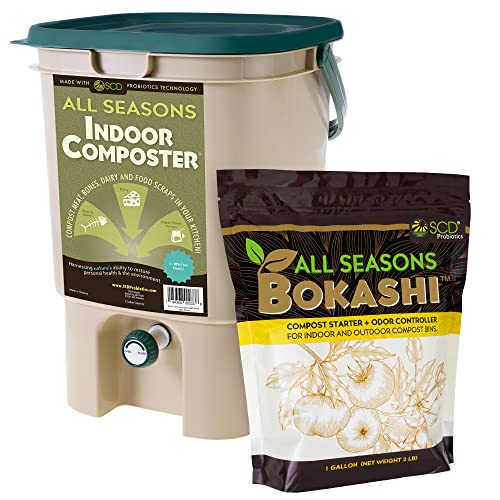
SCD Probiotics 5-Gallon Composter Kit

Maygrove 43-Gallon Compost Tumbler

Maygrove 53-Gallon Dual-Chamber Rotating Compost Tumbler

Maygrove 53-Gallon Compost Tumbler

TOP XIAN Inground Worm Composter 2-Pack for Garden Beds

F2C 80-Gallon Outdoor Compost Bin with Flip Lid and Bottom Exit Door
What Each Pick Brings To The Table
The SCD Probiotics 5-Gallon Composter Kit brings food-waste handling indoors, where a sealed countertop bin can sit beside a blender or near the trash and recycling containers. Its bokashi process uses a microbial starter to break down food in an air-restricted container, so you do not need a balanced pile of greens and browns or a trip to an outdoor tumbler.
Meat, dairy, small bones, and oily scraps are among the materials the manufacturer says the starter can handle. That flexibility makes the kit practical for households that want to process a broad range of kitchen leftovers, although it operates differently from a conventional rotating compost bin and requires the included starter to work through the material.
Where It Excels
- The 5-gallon container keeps the full setup on your counter, making it suitable for apartments and compact kitchens.
- No electricity is required, so the bin can also be stored or used while camping.
- A sealing lid and bokashi starter help control odor during indoor food collection.
- The strainer and spigot let you draw off the finished liquid for use as diluted plant food.
- The starter material accommodates food types that can make conventional compost piles troublesome.
Practical Considerations
- This is an indoor bokashi setup rather than a mechanically rotating tumbler, so it does not provide the same aeration by turning a drum.
- The process depends on adding starter material between food layers, which takes more attention than a simple static bin.
Quick Facts
Made For Compact Kitchens
This kit suits apartment residents, classrooms, and small households that want to process mixed food scraps indoors without assembling an outdoor tumbler.
Another Choice May Suit
The F2C 80-Gallon Outdoor Compost Bin fits households with substantial yard space and a preference for stationary outdoor composting.
The Maygrove 43-Gallon Compost Tumbler gives backyard gardeners a manageable middle ground between a small countertop system and a large stationary box. Its 360-degree rotation moves material around internal mixing bars, replacing repetitive turning with a controlled spin whenever the pile needs aeration.
Two separate chambers add a useful bit of workflow. Fresh scraps can enter one side while the other side finishes processing, which makes the design more practical for regular kitchen waste than a single open chamber. For most medium-size yards, 43 gallons also leaves a more manageable footprint than the larger Maygrove models.
Practical Pluses
- The rotating drum mixes ingredients without a pitchfork, reducing the physical work of turning a pile.
- Dual chambers support separate stages of decomposition, so you do not have to mix fresh material with nearly finished compost.
- Adjustable vents give you control over airflow, moisture, and temperature inside the drum.
- Large sliding doors simplify loading scraps and removing compost that is ready to use.
- A gear-assisted handle and dual-direction brakes improve control while the loaded drum is stationary or moving.
Trade Offs
- The 43-gallon capacity is less generous than the 53-gallon Maygrove options for families producing heavy volumes of yard debris.
- Assembly requires space outdoors, and rotation needs enough clearance around the frame.
- Its maker lists compost in as little as 4 to 6 weeks, though actual timing depends on the material mix and conditions.
Core Details
Right Fit For Backyard Gardens
This tumbler suits gardeners with moderate food waste who want easier mixing and separate processing stages in a compact outdoor footprint.
Where A Sibling Pick Shines
The Maygrove 53-Gallon Dual-Chamber Rotating Compost Tumbler provides more capacity for gardeners who regularly generate substantial kitchen and yard waste.
The Maygrove 53-Gallon Dual-Chamber Rotating Compost Tumbler is built for households that regularly generate kitchen scraps and enough yard material to keep a larger system occupied. Compared with the 43-gallon Maygrove, it offers more room without abandoning the convenience of a rotating drum and two-stage setup.
Built-in bars mix the contents as the drum turns, while adjustable vents help you manage the air and moisture entering the compost. Sliding loading doors keep material access straightforward, and the steel frame provides the main support around the UV-resistant plastic body. For a serious backyard composting routine, that combination keeps the daily handling reasonably direct.
A Few Highlights
- The 53-gallon drum provides useful capacity for households combining food scraps with garden waste.
- Independent chambers let one batch process while the other receives new material.
- Rotation distributes ingredients more evenly than manually turning a stationary pile.
- Reinforced supports are designed to limit barrel sagging as the loaded weight increases.
- Dual-direction brakes help keep the drum stable while doors are opened or material is loaded.
Small Caveats
- Its larger frame demands more backyard space than the 43-gallon version, including room to operate the handle and doors.
- The steel frame can add weight, making relocation less convenient than moving a lightweight plastic compost box.
- A tumbler does not remove the need to balance wet and dry material or judge when compost is finished.
Who Will Love This
This model fits experienced backyard composters with enough space for a substantial tumbler and a steady stream of organic material.
Reach For A Different Pick When
The Maygrove 43-Gallon Compost Tumbler is a better fit when yard space is limited or food-waste volume remains moderate.
The Maygrove 53-Gallon Compost Tumbler shares the rotating, dual-chamber layout of the larger Maygrove choices, but the included monitoring instruments set it apart. Instead of judging moisture and temperature by touch alone, you can check compost conditions and soil readiness with dedicated tools.
Its waterproof compost thermometer helps identify internal heat, while the 3-in-1 soil tester checks moisture, pH, and light. For someone paying attention to the process rather than simply storing scraps, those additions make the tumbler feel like a more complete gardening setup. You still need to balance the materials properly, but the tools provide useful reference points.
Useful Strengths
- Two chambers separate new material from compost that is further along in decomposition.
- The included thermometer takes some guesswork out of checking the compost’s internal temperature.
- The soil tester checks three useful conditions: moisture, pH, and light.
- A 53-gallon rotating drum holds a substantial amount of material for an active backyard garden.
- Sliding doors and a gear-assisted handle make loading, turning, and unloading more manageable.
Points To Note
- The monitoring tools add value only if you will use them to guide watering, turning, or planting decisions.
- The 53-gallon body and steel frame require more clearance than the 43-gallon Maygrove model.
- Tool readings still require sensible interpretation based on the material in the chamber.
Feature Facts
Built With In Mind
This tumbler suits backyard gardeners who enjoy monitoring moisture, temperature, and soil conditions rather than treating compost as a passive storage bin.
A Better Fit Elsewhere
The Maygrove 53-Gallon Dual-Chamber Rotating Compost Tumbler suits gardeners focused mainly on capacity and rotation without the added monitoring tools.
The TOP XIAN Inground Worm Composter 2-Pack takes a different approach to kitchen waste by using earthworms to process organic material below ground. Each unit measures 7 by 7 by 7.4 inches, so the setup stays largely beneath the soil rather than occupying a visible section of patio or yard.
That small footprint makes the system appealing near raised beds or established garden areas, especially for people who want compost close to the plants that may receive it. The two-pack provides a convenient way to establish separate stations, although each mini container handles less material than a full-size tumbler. Access and care still matter because the system depends on living earthworms doing the processing.
A Few Strong Suits
- The compact 7-by-7-inch footprint keeps most of the system below the surface.
- Placement beside garden beds makes processed organic material convenient for nearby soil work.
- The two-pack supports two separate composting locations within a larger garden.
- Worm-based processing offers an alternative to manually turning a conventional outdoor pile.
Small Limitations
- The mini containers hold less material than the 43-gallon and 53-gallon rotating tumblers.
- Because the design is installed underground, garden-bed access and installation space need consideration before setup.
- It suits people comfortable managing earthworms rather than simply rotating a drum.
The Right Fit
This system fits garden-focused households with a sheltered bed area, limited aboveground space, and an interest in small-scale worm composting.
Not Your Match When
The F2C 80-Gallon Outdoor Compost Bin suits households that want substantial stationary capacity and straightforward access to finished compost.
The F2C 80-Gallon Outdoor Compost Bin with Flip Lid and Bottom Exit Door prioritizes capacity over rotation. Its large stationary body can hold a substantial mixture of kitchen scraps, hay, and other organic yard material, making it useful for households that compost more than a small tumbler can comfortably contain.
Ventilation comes from 80 air openings and deep exterior fins that encourage circulation through the material. The secure top lid helps keep out animals and withstand wind, while the lower exit door provides a way to remove compost from the bottom. It is less about effortless turning and more about creating a spacious, well-ventilated outdoor holding area.
What Makes Sense
- The 80-gallon capacity supports large batches of kitchen and yard waste.
- Eighty air openings promote circulation without requiring a rotating handle.
- Deep fins help the container maintain airflow around its sides.
- The top lid opens with one hand and locks to discourage animals and wind disturbance.
- A bottom exit door makes finished compost easier to reach than digging through the full pile.
Practical Considerations
- The large capacity requires more yard space than any rotating model in this shortlist.
- Unlike a tumbler, you still need to mix or turn the contents manually for even decomposition.
- Its storage size suits people with more material than a 43-gallon or 53-gallon drum can handle.
Important Details
Whose Yard It Belongs On
This box suits large-property households and serious garden composters who value storage capacity more than a rotating drum.
Look Elsewhere When
The Maygrove 43-Gallon Compost Tumbler is a better fit for gardeners who want mechanical mixing and a smaller outdoor footprint.
What Matters Before You Choose
Capacity and available space
Capacity should reflect your actual material flow, not just the largest container that fits. A large household producing daily food scraps may fill a smaller tumbler quickly, while a household with seasonal yard debris may need the F2C 80-Gallon Outdoor Compost Bin. Measure the intended location, including room to turn a drum or open a lid.
Rotation versus stationary storage
A rotating compost bin reduces the need to turn material with a fork, and dual chambers can separate fresh scraps from batches that are nearly finished. A stationary box handles larger quantities but still needs manual mixing. Choose based on how much physical maintenance you want to manage and how much room remains around the container.
Ventilation and moisture
Air supports the microorganisms that break down organic material, while too much dryness or excessive moisture can slow the process. Adjustable vents, numerous openings, and deep exterior fins are useful for backyard systems. You still need to add dry material when scraps are especially wet, since a vented container cannot manage moisture on its own.
Kitchen habits and garden layout
An indoor bokashi bin suits people who want immediate food-scrap processing in a small kitchen. Outdoor tumblers reward regular turning and provide greater daily volume. The TOP XIAN Inground Worm Composter 2-Pack makes the most sense when a sheltered garden bed is available and a small, belowground footprint matters more than high capacity.
Practical Decisions Before Purchase
Mistakes Worth Dodging
Do not select a large tumbler before confirming clearance around the handle and doors. A bin that cannot turn or open without hitting a fence can become frustrating quickly. Also, avoid judging capacity by brand alone, since dual-chamber models divide usable space between stages of decomposition.
Where The Extra Money Goes
Added capacity, a steel support frame, adjustable ventilation, and monitoring tools can raise the cost of a larger design. Those upgrades make sense for frequent composters who value easier handling or more precise monitoring. A simple, compact setup remains more practical when your material volume and gardening routine are modest.
Frequently Asked Questions
Are rotating compost bins better than stationary bins?
Rotating bins are better for people who want easier mixing because turning the drum distributes material without a fork. Stationary bins can be better for large quantities because they often offer more capacity and require less complicated assembly.
How much space does a rotating compost bin need?
Allow space for the full frame, handle, and access to the loading doors. Dual-chamber tumblers also need room to rotate, so a level outdoor area with sufficient clearance is important.
Can a rotating compost bin handle all kitchen scraps?
A well-balanced compost system generally works best with varied organic material and adequate moisture. Some indoor bokashi systems are specifically designed to accept items such as meat, dairy, and small bones, which is a different process from a conventional outdoor tumbler.
How long does compost take in a rotating bin?
The Maygrove models list a possible 4-to-6-week cycle, though actual timing depends on the mixture, moisture, aeration, and climate. A small, poorly balanced load can take considerably longer.
Can I use a rotating compost bin in cold weather?
Outdoor tumblers can be used year-round, but low temperatures can slow decomposition. An indoor bokashi bin offers a different solution because food processing happens inside the house rather than in an outdoor drum.
Closing Remarks
Your ideal choice comes down to routine and space. The SCD Probiotics 5-Gallon Composter Kit handles food scraps indoors, the Maygrove tumblers simplify outdoor mixing, the TOP XIAN system keeps composting close to garden beds, and the F2C 80-Gallon Outdoor Compost Bin focuses on large stationary storage. Match the design to how much material you create, then give it the space and attention it needs.
