

Plumeria rewards fast drainage, but many general potting mixes stay wetter than these tropical shrubs prefer. You may need a coarse, open medium for a sunny patio pot, a light amendment in an existing mix, or a compact formula for a single indoor repot.
The products below serve different roles rather than competing as identical potting soils. Rosy Soil Cactus & Succulent Mix is the clearest direct fit, while the biochar booster, houseplant mixes, orchid mix, and herb mix can suit particular setups.
The Lineup, Simplified

Rosy Soil Cactus Mix 4 Quarts, Pack of 2

Rosy Soil Biochar Booster 8 Quarts
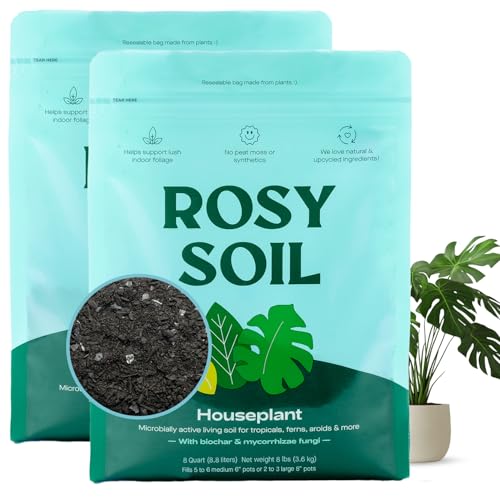
Rosy Soil Houseplant Soil 8 Quarts, Pack of 2

Rosy Soil Organic Houseplant Mix 4 Quarts

Rosy Soil Orchid Mix 4 Quarts

Rosy Soil Herb Mix 4 Quarts
A Deeper Look At The Lineup
A plumeria moving into a sunny patio pot needs a medium that drains promptly rather than holding a column of wet soil around its roots. This chunky cactus and succulent mix provides that open structure, and each 4-quart bag is intended to fill roughly two to three plants, depending on pot size.
Unlike a general houseplant mix, this one is formulated around low-moisture plants such as desert roses, jade, and snake plants. It remains the most direct option here for plumeria, provided you use a container with drainage holes and avoid packing it too tightly.
The Good Stuff
- Its coarse composition supports plumeria in warm, bright conditions.
- Peat-free ingredients encourage a freer flow of air and water.
- Worm castings, beneficial fungi, and microorganisms add biological activity.
- The resealable 4-quart bags keep unused mix contained between repotting sessions.
- A two-pack gives you enough material for multiple pots or one generous repot.
Trade Offs
- The open mix may dry faster than a general indoor potting soil in a warm room.
- It is a succulent formulation, so it does not provide the richer organic profile sought in a houseplant mix.
Core Details
Made For
You benefit most from this mix when growing plumeria in a porous or free-draining container where wet roots are your main concern.
Where Another Pick Suits Better
Rosy Soil Biochar Booster 8 Quarts suits gardeners who want to improve an established mix rather than replace it.
Biochar is a stable, carbon-rich material made by heating organic matter in limited oxygen, and this blend pairs it with mycorrhizae, worm castings, bokashi, and compost. That combination is different from Rosy Soil Cactus Mix: it is an amendment designed to blend into a working medium, not a standalone plumeria mix.
For a large patio collection, mixing a measured portion into a suitable potting base can improve water retention and nutrient handling without replacing the entire soil. The addition works especially well when you want to refresh tired mix around several container plants.
The Value In It
- Its porous carbon structure can hold moisture and nutrients within a blended mix.
- Mycorrhizae are root-associated fungi that support the plant’s biological relationship with soil.
- Compost and worm castings add organic material alongside the biochar.
- One 8-quart bag covers a substantial garden or container area.
Practical Considerations
- This is a soil amendment, so using it alone would not replace a complete plumeria medium.
- Its water-retention focus makes careful mixing important in a small, sunny pot.
- Accurate measurement helps avoid changing the texture of the base mix too much.
At A Glance
Right Fit For
You benefit most when maintaining several established container plants and want to refresh the root-zone mix without replacing all of it.
Consider Something Else When
Rosy Soil Cactus Mix 4 Quarts, Pack of 2 is the better choice for a first repot that calls for a complete, specifically textured medium.
Repotting an indoor plumeria alongside leafy houseplants creates a different need, and this peat-free blend answers it with biochar, worm castings, mycorrhizae, compost, and bark fines. The two-bag format gives you enough material for several containers without purchasing a separate product for each plant.
Compared with Rosy Soil Cactus Mix 4 Quarts, Pack of 2, this is a more general indoor growing medium. You gain useful organic components and bark-based structure, though the container still needs unrestricted drainage for a plumeria kept indoors.
Where It Helps
- The two 8-quart bags suit a home with multiple plants to repot.
- Biochar, compost, and bark fines create a mixed planting medium.
- Mycorrhizae and beneficial microorganisms add biological activity.
Small Caveats
- The general houseplant formula is not specifically tailored to plumeria’s preference for open drainage.
- The larger pack needs more storage space than a single smaller bag.
- Compost and bark make this a more organic-leaning medium than the cactus mix.
Who Will Love This
You benefit most when one indoor plumeria shares a repotting session with several conventional houseplants.
A Better Fit Elsewhere
Rosy Soil Organic Houseplant Mix 4 Quarts suits you better when you only need enough medium for one container.
A single plumeria on a windowsill calls for a manageable amount of fresh mix, and this 4-quart bag fits that task neatly. Its formula replaces peat with biochar, worm castings, mycorrhizae, compost, and bark fines, creating a biologically active medium without synthetic fertilizers or fillers.
The smaller package is the practical difference from Rosy Soil Houseplant Soil 8 Quarts, Pack of 2. You get the same broad ingredient approach in a volume suited to a single repot, making storage easier in an apartment or compact potting area.
Strong Points
- The 4-quart volume works well for one medium-sized container.
- Biochar contributes a porous carbon component to the blend.
- Compost and worm castings support an active soil ecosystem.
- The peat-free formula suits gardeners avoiding conventional peat-based mixes.
Points To Note
- Check drainage carefully because this mix is intended for indoor houseplants rather than plumeria specifically.
Feature Facts
Built With In Mind
You benefit most when repotting one indoor plumeria and want a manageable bag with a peat-free, biologically active formula.
Swap It Out When
Rosy Soil Cactus Mix 4 Quarts, Pack of 2 is a stronger option for a plumeria that needs especially open, low-moisture conditions.
Orchid bark, pumice, and biochar give this mix the open physical structure that orchids need, and that same air space can suit a plumeria potted in a warm, bright location. Its consistency leaves substantial room around roots rather than compressing into a dense block.
That openness is the attraction and the limitation. Compared with Rosy Soil Organic Houseplant Mix 4 Quarts, this blend offers a more free-draining base, but it was not formulated around plumeria and may dry more quickly in a hot, exposed pot.
What Makes Sense
- Bark and pumice create a visibly open planting medium.
- Biochar adds a stable porous component without relying on fine soil.
- Mycorrhizae and beneficial microbes support root-zone activity.
Possible Compromises
- The orchid-specific formula is not a dedicated plumeria medium.
- The open components may require closer watering checks in warm conditions.
- A 4-quart bag provides less material than the two-bag houseplant option.
Best Suited To
You benefit most when you prioritize maximum drainage and control the mix closely in a warm, bright container.
Look Elsewhere When
Rosy Soil Cactus Mix 4 Quarts, Pack of 2 suits you better when you want a purpose-formulated succulent medium for plumeria.
This herb mix was designed for basil, thyme, mint, parsley, cilantro, lavender, and rosemary rather than plumeria. Its biochar, worm castings, and mycorrhizae may interest gardeners who also maintain Mediterranean-style herbs in warm patio containers, but the label’s intended use remains important.
Compared with Rosy Soil Cactus Mix 4 Quarts, Pack of 2, the herb formula presents a less direct choice for a plumeria because it is not built around succulent drainage needs. The two products can share a sunny balcony, but each serves a different planting profile.
The Case For It
- Biochar supports water and nutrient handling within the mix.
- Worm castings and mycorrhizae add biological components.
- The formula works for indoor and outdoor herb containers.
Details To Watch
- Its stated purpose is herb growing, not plumeria cultivation.
- Using it for plumeria means checking the mix’s drainage more carefully in a warm pot.
Quick Facts
The Right Fit
You benefit most when growing herbs in containers alongside a plumeria collection and can distinguish the two plants’ different medium requirements.
Another Choice May Suit
Rosy Soil Cactus Mix 4 Quarts, Pack of 2 is the better fit for the plumeria itself because its formula directly addresses succulent drainage.
What Actually Matters In A Plumeria Mix
Drainage Comes First
Plumeria grows best in an open medium that lets excess water leave the pot quickly. Coarse mineral material, bark, pumice, or another stable porous component helps preserve air space around the roots. Dense, fine potting media presents more risk in a wet container than in a bright, airy one.
Living Components Add Context
Worm castings, compost, mycorrhizae, and biochar each play a different part. Organic material supports biological activity, mycorrhizae form close relationships with roots, and biochar can improve the handling of water and nutrients within a blended medium. None replaces a suitably open base by itself.
Match The Mix To The Plant
A complete succulent mix suits a full repot, while biochar is better used as a measured addition to an existing base. General houseplant and orchid mixes demand more attention to container drainage and drying rate. Always match the product to its stated plant use instead of relying on the word “organic” alone.
Key Details That Shape Your Choice
Mistakes Worth Dodging
Avoid choosing a dense houseplant mix solely because it contains organic matter. Plumeria needs a container that drains freely, and a dense medium can stay wet too long. Also avoid filling an entire pot with biochar, since it is an amendment rather than a complete planting medium.
What Separates Premium From Basic
The higher-cost options often add biochar, mycorrhizae, worm castings, or compost rather than simply increasing the quantity of ordinary soil. Those additions make sense when you value long-term soil structure, particularly across several containers. For one small repot, a complete mix designed for succulents offers the more straightforward decision.
Frequently Asked Questions For Potting Soil For Plumeria
Do I Need Special Potting Soil For Plumeria?
Plumeria generally benefits from a loose, fast-draining medium that does not remain saturated around the roots. A cactus and succulent mix is a practical starting point for a full repot.
Can I Use Cactus Mix For My Plumeria?
Yes, a chunky cactus mix is a close fit when it drains freely and the pot has unobstructed drainage holes. It is more directly suited to plumeria than a dense, moisture-retentive houseplant mix.
Should I Add Biochar To Plumeria Soil?
Biochar works well as a measured amendment blended into a suitable base rather than used as the entire planting medium. Mixing it evenly helps you change the soil without creating uneven pockets in the container.
Is General Houseplant Soil Suitable For Plumeria?
You can use it with careful attention to drainage, though it is not formulated specifically around plumeria’s preference for open, low-moisture conditions. A cactus mix is usually the clearer choice for a full repot.
How Much Potting Mix Does A Plumeria Need?
Choose a container only slightly larger than the root ball, then fill the space around the roots with the selected mix. A two-bag pack works well for multiple plants, while a 4-quart bag covers a more limited repotting session.
The Takeaway
Rosy Soil Cactus Mix 4 Quarts, Pack of 2 is the most direct fit for plumeria because its loose, succulent-focused structure supports quick drainage. Rosy Soil Biochar Booster 8 Quarts is the better upgrade for an established mix, while the houseplant, orchid, and herb formulas suit more specific planting arrangements. Match the medium to the pot, drainage, and plant before deciding.
