Bagworms can turn a once-tidy shrub or tree into a patchwork of chewed leaves and silken shelters. You need a product that targets the caterpillar stage, fits the plant, and can be applied according to its label. The options below cover dormancy-season spraying, bacterial treatments, broad-spectrum concentrates, and indoor pest control, with one feeding substrate included as a supporting option for raising caterpillars.
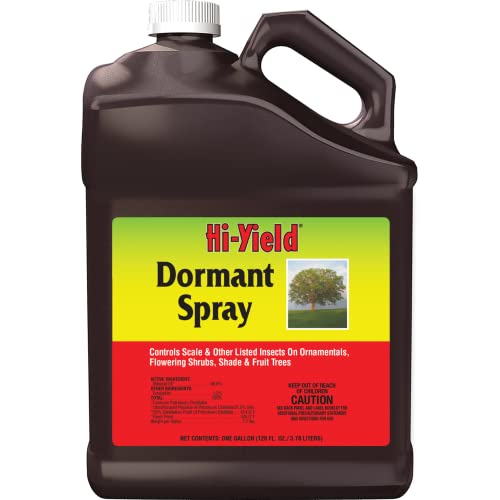
Hi-Yield 32043 is built for a dormant-season approach, a period when many insects overwinter on shrubs, ornamental plants, fruit trees, and shade trees. A dormant spray is applied during cool, inactive growth rather than during peak insect activity, so timing becomes central to using it correctly.
Its listed targets include mites, leaf rollers, armyworms, scale, whiteflies, and fruit-tree pests. That makes it useful for a broader garden program, although bagworms need to appear on the product label before you treat them. Compared with Thuricide BT, this option focuses on seasonal prevention and dormant plant care rather than direct caterpillar feeding.
Practical Advantages
✓One-gallon format suits ornamental and edible plantings requiring seasonal treatment.
✓The listed pest range covers scale, mites, leaf rollers, armyworms, and whiteflies.
✓Application in mild morning or late-afternoon conditions can reduce plant stress during dormancy.
✓It can fit a mixed garden program covering fruit trees, shrubs, and shade trees.
Trade Offs
•Bagworm control requires label confirmation because the stated target list does not name them directly.
•Application rates vary by plant type and size, so mixing instructions need careful attention.
•Some houseplants may be injured, and sulfur-containing products cannot be combined with it.
Feature Snapshot
Feature
Specification
Why It Matters
Container size
1 gallon
Provides a practical volume for garden use.
Listed targets
Mites, leaf rollers, armyworms, scale, and whiteflies
Supports broader seasonal pest management.
Application timing
Cool morning or late-afternoon use
Helps avoid the hottest part of the day.
Mixing compatibility
Not compatible with sulfur-containing products
Prevents an incompatible tank combination.
Who It Suits Best
This spray fits home gardeners managing scale, mites, and listed caterpillar pests across ornamental or fruit plantings during dormancy.
A Better Fit Elsewhere
Southern Ag Thuricide BT offers a closer label match for caterpillars and worms in an actively growing garden.
Bagworms are caterpillars, which makes Southern Ag Thuricide BT the most closely aligned choice on this list by formulation and stated pest category. It uses Bacillus thuringiensis, commonly called Bt, a bacterium-based active ingredient used against susceptible caterpillars and worm-like larvae.
The liquid format works around vegetables, citrus, nuts, shrubs, trees, tobacco, and flowering plants. Application rates range from 1 to 4 ounces per gallon, giving room to adjust for the label directions and target crop. For most gardeners, the decisive step remains checking that bagworms appear among the labeled pests before spraying.
Reasons It Performs
✓The product category directly matches caterpillars and worms, the life stage of bagworms.
✓Flexible dilution rates support application across several labeled plant groups.
✓The liquid concentrate makes spot treatment and measured mixing straightforward.
✓A one-gallon container gives good coverage for a single garden or several ornamental shrubs.
Points To Keep In Mind
•Confirm the label lists bagworms and gives the correct rate for your plant.
•The listed use range does not cover every plant, so check before mixing.
•Reaching the caterpillars with spray matters because the material has to reach its target.
Key Specs
Feature
Specification
Why It Matters
Active ingredient
Bacillus thuringiensis, known as Bt
Identifies the bacterium-based treatment category.
Target pests
Caterpillars and worms
Matches the larval form of bagworms.
Mixing rate
1 to 4 ounces per gallon
Provides a labeled range for dilution.
Made For
This option suits vegetable gardeners and ornamental growers who want a liquid treatment specifically labeled for caterpillar pests.
Swap It Out When
Hi-Yield 32043 makes more sense for a broader dormant-season program involving scale, mites, and several plant types.
Southern Ag Dipel Dust takes a different route from liquid Thuricide: it applies as a powder, which can be useful where a dry treatment is easier to handle. The listed plant coverage includes vegetables such as broccoli, cabbage, cauliflower, celery, collards, cucumber, kale, lettuce, tomatoes, turnips, tobacco, and melons.
Roses are also called out, giving this dust a place in mixed ornamental and edible gardens. You still need to confirm bagworms on the current label. Compared with Southern Ag Thuricide BT, the main distinction is physical format rather than pest category, so application habits and label directions should guide your choice.
Everyday Advantages
✓The dust format offers an alternative for gardeners who do not want to mix a liquid.
✓Vegetable coverage includes common brassicas, leafy greens, cucumbers, tomatoes, and melons.
✓Rose use gives the product a place in ornamental beds alongside edible crops.
Small Caveats
•Bagworms must be listed on the label, since the available target description does not name them.
•Dust application can be less convenient on plants where thorough, even coverage is difficult.
•Keep the product away from food crops during storage and handling.
The Right Fit
This dust suits gardeners raising roses or vegetables and seeking a dry Bt option for caterpillar pests listed on its label.
Consider Something Else When
Southern Ag Thuricide BT fits situations where measured liquid mixing and adjustable gallon-based rates are preferable.
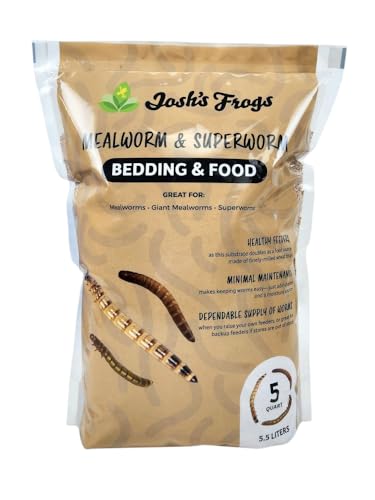
This is the one item on the list that is not a pesticide, and that distinction matters. Josh’s Frogs Wheat Bran Bedding is a substrate for mealworms and superworms, not a treatment for bagworms or the plants they feed on.
Its relevance is practical for reptile and amphibian keepers who raise these insects as food. Finely milled wheat bran serves as bedding and can double as feed, while shelter and a moisture source complete the setup. In a bagworm program, this option supports feeder-insect husbandry rather than garden treatment.
Standout Benefits
✓Finely milled wheat bran supports both the bedding and feeding needs of feeder insects.
✓The five-quart container suits home colonies and keeps backup material nearby.
✓Adding shelter and a moisture source creates a straightforward rearing setup.
✓It reduces dependence on frequent feeder trips for compatible reptile-feeding programs.
Practical Considerations
•This product cannot be applied to plants or used as a bagworm pesticide.
•Mealworms and superworms still require appropriate shelter and moisture management.
•Five quarts may need more space than a small shelf or compact terrarium can provide.
Feature Facts
Feature
Specification
Why It Matters
Material
Finely milled wheat bran
Functions as both substrate and feed material.
Volume
5 quarts
Supports home feeder colonies and backup feeding.
Animals
Reptiles and amphibians
Intended for habitats that use mealworms or superworms.
Additional requirements
Shelter and a moisture source
Explains the basic setup beyond the bedding itself.
Whose Shelf It Belongs On
It belongs with reptile and amphibian keepers who raise mealworms or superworms and want the substrate to contribute to feeding.
Look Elsewhere When
Southern Ag Thuricide BT is the relevant choice for treating susceptible caterpillars on labeled garden plants.
Agrisel Pro 7.9 is a spray concentrate for broad outdoor pest control, with listed uses spanning lawns, ornamental areas, and agricultural settings. A concentrate is a concentrated formulation that requires dilution according to its label, so mixing accuracy and compatible equipment shape the ownership experience.
Its pest coverage includes spiders, ants, fleas, mole crickets, and stink bugs, making it more of a general outdoor program than a narrowly focused caterpillar treatment. You will need to verify bagworms on the label and confirm the plant or site is included before using it on infested foliage.
Features That Help
✓Broad pest coverage supports one program across several common outdoor insect problems.
✓The formulation suits lawns, ornamental areas, and agricultural environments.
✓A one-gallon container provides concentrated volume for larger treatment areas.
✓The concentrate format reduces storage volume compared with carrying ready-to-use liquid.
Where It May Fall Short
•Bagworms are not named in the available pest description, so label confirmation is essential.
•Concentrates require careful dilution and equipment that can handle the labeled application.
•Its broad range may be unnecessary for a single caterpillar problem on one shrub.
Quick Facts
Feature
Specification
Why It Matters
Form
Spray concentrate
Requires dilution before application.
Container
1 gallon
Suits concentrated treatment of larger areas.
Use areas
Lawns, patios, and gardens
Allows use across several outdoor settings.
Built With In Mind
This concentrate fits property managers dealing with several outdoor insect problems across lawns, patios, and ornamental plantings.
Another Choice May Suit
Southern Ag Dipel Dust suits a smaller garden that favors dry application on listed vegetable crops or roses.
Agrisel Zone Plus is built around household and general property pest control rather than a specific caterpillar application. Its stated uses include indoor spaces as well as businesses and livestock facilities, with insects such as bees, wasps, ants, spiders, and cockroaches included in the broader pest range.
The 128-ounce size gives you more volume than the smaller package options, which can help with recurring household programs or larger treatment areas. It is not a practical match for a bagworm infestation on shrubs and trees unless the current label specifically allows that use and identifies bagworms as a target.
What It Does Well
✓Versatility across indoor and outdoor settings suits mixed property-care needs.
✓The large volume reduces the need for frequent container replacement during a substantial program.
✓The stated pest range covers several common household insects.
✓The product can serve properties with both indoor rooms and surrounding exterior areas.
Less Ideal Details
•Bagworms and garden plants need to appear on the label before this becomes a relevant choice.
•A household-centered pest range may leave garden-specific use unaddressed.
•The large container requires storage space away from children, pets, food, and feed.
Who Will Love This
This option suits households managing several common indoor and outdoor insects across a home, business, or livestock facility.
Not Your Match When
Southern Ag Thuricide BT is the better fit for gardeners seeking a labeled liquid treatment aimed directly at caterpillars.
## Match The Pest, Plant, And Season
### Read The Target Pest Label
Bagworms are caterpillars, but a product naming “worms” still needs to list bagworms for garden use. Start with the target-pest panel, then check the plant or site list. Southern Ag Thuricide BT has the closest stated category, while Hi-Yield 32043 and Agrisel Pro 7.9 require a more deliberate label check.
### Separate Dormant And Active-Season Care
Hi-Yield 32043 centers on dormant applications to ornamentals, shrubs, fruit trees, and shade trees. That makes its timing different from a product applied during active caterpillar feeding. Apply the label’s timing instructions to your plants and local conditions rather than treating one seasonal approach as interchangeable with another.
### Consider Format, Coverage, And Space
Liquid concentrates require measured dilution, while dust products fit different handling habits and plant coverage. A one-gallon container may serve a focused garden well, whereas the 128-ounce Zone Plus package is better suited to broader household use. Storage space, mixing equipment, and the number of sites also matter.
### Check Label Compatibility Before Mixing
Hi-Yield 32043 cannot be combined with products containing sulfur. Other products may have their own restrictions involving timing, crop sensitivity, or prior applications. Keep each label accessible and treat its directions as the final guide for rate, target pest, application site, and handling.
## Common Mistakes To Avoid In Garden Pest Control
### Mistakes Worth Dodging
Choosing a product only because it mentions worms can leave the actual pest unaddressed. Confirm the bagworm listing, plant suitability, application timing, and dilution rate before mixing. Product format also matters, since a dust, liquid concentrate, and dormant spray are not interchangeable merely because all three address insects.
### What The Higher Tier Buys
Larger volume and broader pest coverage may justify a higher-tier choice when one property contains several affected areas. A concentrated one-gallon container also saves storage space over carrying multiple ready-to-use containers. For one shrub or a single caterpillar problem, a smaller targeted option may be more practical.
## Frequently Asked Questions
### What Is The Best Treatment For Bagworms?
Southern Ag Thuricide BT is the closest fit because it is labeled for caterpillars and worms, which includes the larval form of bagworms. Confirm the bagworm listing and crop directions before applying it.
### Are Bt Products Suitable For Vegetable Gardens?
Bt products can fit vegetable gardens when the crop and target pest appear on the label. Southern Ag Thuricide BT lists several vegetables, while Southern Ag Dipel Dust offers a dry option for specified crops.
### Does Dormant Spray Work On Bagworms?
A dormant spray may be appropriate only when bagworms appear on its label and the application timing fits your plants. Hi-Yield 32043 targets several dormant-season pests, so verify the bagworm listing rather than relying on general insect-control language.
### Is A Dust Easier To Apply Than A Liquid?
A dust avoids liquid mixing but can be harder to distribute evenly on dense foliage. A liquid makes measured dilution and thorough coverage easier, so plant density and your handling preferences should guide the format.
### Can One Product Treat Bagworms And Household Insects?
Some broad-spectrum products cover many insects, but the label must allow both the pest and the application site. For a bagworm problem on vegetation, a garden-labeled caterpillar treatment is more relevant than a household-centered product.
## Final Verdict
Your strongest starting point is the option whose label names bagworms and matches the plant you are treating. Southern Ag Thuricide BT offers the clearest caterpillar fit, while Hi-Yield 32043 and the Agrisel concentrates suit broader seasonal programs after label confirmation. Choose carefully, follow the directions, and keep the plant-specific details in view.