

You set the aloe vera pot on a sunny shelf, added water, and noticed the soil staying wet for days. That slow drainage is the practical problem to solve: aloe needs room around its roots, so a loose, gritty medium gives you better control than dense garden soil.
Six options below range from cactus-specific blends to general organic houseplant mixes. The right choice depends on how much drainage you want, how many plants you are repotting, and whether you value a texture matched directly to aloe over a broader indoor planting medium.
A Closer Look At The Lineup

Rosy Soil Cactus Mix, 4 Quarts
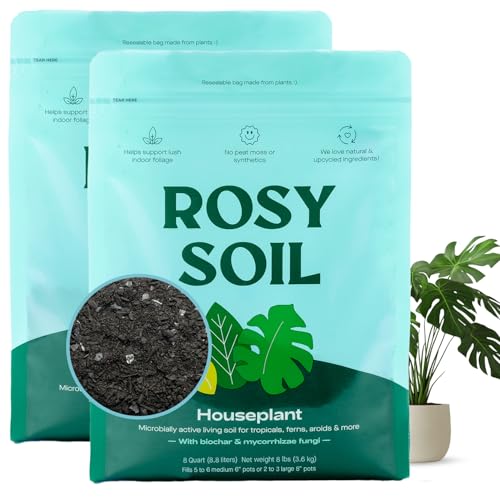
Rosy Soil 8-Quart Houseplant Mix

Perfect Plants Coco Coir Mix

Grow Queen Chunky Houseplant Mix for Tropical Plants and Flowers, 2QT

Brut Worm Farms Organic Potting Soil with Perlite, 1 CU FT

Spike & Bloom High-Drainage Cactus Soil with Mycorrhizal Fungi, 4 Quarts
More Details On Our Top Picks
Aloe vera usually fares better in a loose, fast-draining medium than in dense soil that stays wet. Rosy Soil Cactus Mix combines a chunky texture with worm castings, beneficial fungi, and microorganisms, living organisms that can support activity around plant roots.
This is the most directly aligned option in the group because the formula explicitly names aloe vera alongside jade, snake plant, and other drought-tolerant houseplants. For a sunny windowsill with several similar plants, the resealable four-quart bags also offer useful flexibility.
Notable Gains
- The loose, coarse structure gives water an easier path through the pot.
- Worm castings add organic matter without relying on synthetic fertilizers.
- Microorganisms and fungi create a biologically active planting medium.
- Two resealable bags help keep unused soil fresh between repotting sessions.
Points To Keep In Mind
- The formula targets drought-tolerant plants, so it suits a narrower collection than a general indoor mix.
- Plan shelf space for two four-quart bags, especially in a compact potting area.
Quick Facts
Who It Suits Best
You benefit most from this blend when your collection centers on aloe vera and other drought-tolerant potted plants.
Where Another Pick Suits Better
Spike & Bloom High-Drainage Cactus Soil with Mycorrhizal Fungi, 4 Quarts suits you better when a stated soil pH matters most.
Rosy Soil takes a broader approach than its cactus-focused blend, replacing peat moss with biochar, worm castings, mycorrhizae, compost, and bark fines. Biochar is a porous carbon material, while mycorrhizae are fungi that associate with plant roots, so the recipe emphasizes both structure and soil biology.
That makes this a useful choice for a mixed indoor collection, though the formula is not presented as a gritty aloe medium. With two eight-quart bags, you have enough volume for multiple repotting jobs and can compare the texture in your own pots before committing an entire aloe plant to it.
Useful Highlights
- Biochar and bark fines contribute structure to the growing medium.
- Mycorrhizae and compost add biological and organic components.
- No peat moss keeps the ingredient list focused on other growing materials.
- The two large bags suit frequent repotting across several indoor plants.
Practical Considerations
- Its general houseplant positioning leaves you without the explicit aloe focus found in Rosy Soil Cactus Mix, 4 Quarts.
- Two eight-quart packages require more storage space than the smaller options here.
Made For
You get the most use from this option when repotting several indoor plant types rather than maintaining only succulents.
Consider Something Else When
Rosy Soil Cactus Mix, 4 Quarts suits you better when drought-tolerant drainage is the deciding factor.
Coco coir gives this mix a different character from the Rosy Soil Houseplant Mix. Coco coir is coconut fiber, and this eight-quart blend combines it with pine bark, perlite, sand, and garden lime to create a porous base for indoor containers.
Perlite is a lightweight volcanic material used to improve pore space, while the coir provides the main organic base. In practice, this option fits a broad indoor collection, but aloe growers may prefer the more explicitly cactus-focused textures found elsewhere in the lineup.
What Pays Off
- Coco coir, bark, and sand create a mixed, open planting texture.
- Perlite adds visible pore space for water to move through the mix.
- Eight quarts offer useful capacity for repotting more than one plant.
- Garden lime forms part of the mineral ingredient blend.
Trade Offs
- The ingredient profile is designed for general indoor plants rather than named drought-tolerant species.
- A full eight-quart bag may be more material than a small collection needs at one time.
Feature Snapshot
Right Fit For
This option works for you when you want one practical indoor medium made from familiar mineral and organic components.
Not Your Match When
Spike & Bloom High-Drainage Cactus Soil with Mycorrhizal Fungi, 4 Quarts suits you better when a defined pH and cactus-specific formulation guide your choice.
A two-quart bag keeps the storage commitment modest while giving you enough medium for a small repotting job. Grow Queen describes its mix as chunky and well draining, balancing moisture retention with airflow around indoor roots.
That balance makes more sense for tropical foliage plants and flowers than for a tightly focused succulent collection. You may still use it for a single aloe, but Rosy Soil Cactus Mix, 4 Quarts gives you a clearer match between texture and plant type.
A Favorable Mix
- The chunky structure supports airflow within the pot.
- Moisture retention is balanced with drainage for indoor roots.
- It is suited to tropical plants and flowering indoor plants.
- The smaller volume is convenient for limited storage.
Some Limits To Know
- Aloe is not among the plant groups explicitly named in the formula.
- Two quarts may require another bag for a collection larger than one or two pots.
At A Glance
Best Suited To
You benefit most from this compact bag when potting tropical houseplants or flowers in a small space.
Look Elsewhere When
Rosy Soil Cactus Mix, 4 Quarts suits you better when aloe vera is the plant that needs to drive the soil decision.
This option moves beyond an indoor-only use case, with a one-cubic-foot format intended for container plants inside or outside. Worm castings provide the central organic component, while perlite opens space in the medium and trace minerals include Azomite and kelp.
For an aloe on a patio or balcony, the general-purpose positioning offers flexibility, but it does not carry the same explicit succulent focus as the cactus blends. The pack of two provides substantial working volume, which is convenient for spring repotting but worth storing thoughtfully.
Advantages To Know
- Worm castings add an organic, biologically rich component.
- Azomite and kelp supply the stated trace minerals.
- Perlite contributes porous space to the potting blend.
- The formula suits both indoor and outdoor container plants.
- Two one-cubic-foot bags support larger repotting sessions.
Where It May Fall Short
- Its general container-plant focus does not tailor the texture specifically to aloe or cactus.
- Two cubic feet require meaningful storage space between uses.
Who Will Love This
You get the most from this blend when repotting a mixed collection of indoor and outdoor container plants.
A Better Fit Elsewhere
Rosy Soil Cactus Mix, 4 Quarts suits you better when rapid drainage for drought-tolerant plants comes first.
Spike & Bloom makes its most concrete distinction with a stated pH of 6.5, placing the blend on the slightly acidic side that suits many cactus and succulent plants. The four-quart package also weighs eight pounds and is described as a gritty, high-drainage mix.
Mycorrhizal fungi provide the biological feature, complementing a formulation centered on moisture leaving the pot quickly. Compared with Rosy Soil Cactus Mix, 4 Quarts, this choice gives you a more specific pH figure, while the Rosy Soil option offers a longer list of named plants and resealable packaging.
Why It Works Well
- A pH of 6.5 provides a clear acidity reference for cactus soil.
- The gritty, high-drainage texture supports quick water movement.
- Mycorrhizal fungi add a root-associated biological component.
- Four quarts suit a modest collection of container succulents.
Details To Watch
- This focused cactus medium is less relevant to indoor plants that prefer steadier moisture.
- The four-quart volume still calls for a dry, tidy storage spot.
Core Details
Built With In Mind
You benefit most from this blend when you maintain several cactus or succulent plants and value a stated pH.
Where A Sibling Pick Shines
Rosy Soil Cactus Mix, 4 Quarts suits you better when resealable packaging and explicit aloe compatibility matter more than a numerical pH.
What Aloe Vera Soil Needs Most
Prioritize Open Root Space
Aloe vera stores water in its leaves, so its roots do not benefit from a medium that remains saturated. A coarse texture with mineral particles creates larger pore spaces, allowing excess water to leave the pot more readily.
Look for mixes described as fast draining, chunky, gritty, or suitable for cactus and succulents. Dense soil and garden dirt can compact around roots, making your watering frequency harder to control.
Check the Plant-Specific Fit
The closest match names aloe vera directly and pairs it with similar drought-tolerant plants. General houseplant mixes can still work, but their ingredients may be designed around a broader balance of moisture and airflow.
You gain useful confidence from a formulation aimed at cacti and succulents, especially when the plant has just been repotted into a larger container.
Consider Biological and Mineral Components
Worm castings add organic material, while mycorrhizae are fungi that form associations with roots. Perlite contributes porous space, and a stated pH gives you another concrete detail to compare.
Those features can matter alongside texture, but they do not replace good drainage. A loose cactus-style base remains the priority for aloe vera.
Avoiding Common Soil Mistakes
Mistakes Worth Dodging
Choosing a mix solely because it looks rich or dark can lead you toward a medium that stays wet too long. Check the plant categories named on the package, look for mineral-based drainage ingredients, and avoid assuming every indoor potting mix suits an aloe.
What Separates Premium From Basic
Higher-tier blends often add defined particle structure, living organisms, trace minerals, or a stated pH. Those details help narrow the choice, and the upgrade matters most when you want a formula explicitly matched to succulents or a larger collection of containers.
Frequently Asked Questions
Do I Need Special Potting Soil for Aloe Vera Plants?
A loose, fast-draining medium gives aloe roots more air and helps water leave the pot sooner. Cactus or succulent soil is the closest match, while a general indoor mix needs to be loose and open.
Is Cactus Soil Too Gritty for Aloe Vera Plants?
Cactus soil can suit aloe vera well because both prefer low-moisture conditions. A mix that feels excessively coarse may need a finer ingredient added to suit your pot and watering routine.
Should Potting Soil for Aloe Vera Plants Contain Perlite?
Perlite can help create pore space in a dense potting medium. It is not essential by itself, so you should also consider the texture and drainage of the complete blend.
Does Aloe Vera Need Fertilizer Already in the Potting Soil?
Organic ingredients such as worm castings can contribute some nutritional value during the growing period. An aloe-specific soil remains useful mainly because of its drainage rather than any fertilizer claim.
How Often Should You Replace Potting Soil for Aloe Vera Plants?
Replace the surface layer when it breaks down or when repotting is appropriate for the plant’s size. You can refresh the top layer without necessarily replacing the entire root-ball area.
Final Verdict
Rosy Soil Cactus Mix, 4 Quarts is the clearest fit for aloe vera because it combines an explicitly plant-specific formula with loose drainage and living soil components. Spike & Bloom offers the more defined pH profile, while the larger general-purpose mixes suit broader collections.
Start with the texture and drainage your aloe needs, then choose the package size and additional ingredients that match your potting setup. The right soil should make your watering routine easier to understand, not simply add more things to the pot.
