

A bird of paradise in a sunny living room needs soil that delivers water without leaving the root zone waterlogged. The right mix supports its broad leaves, balances moisture with drainage, and fits the limited space of a container. These six options cover finished potting media, specialized mixes, and a versatile soil amendment for home growers.
The Lineup, Simplified

Rosy Soil Cactus & Succulent Mix 4 Quarts

Rosy Soil Biochar Booster 8 Quarts
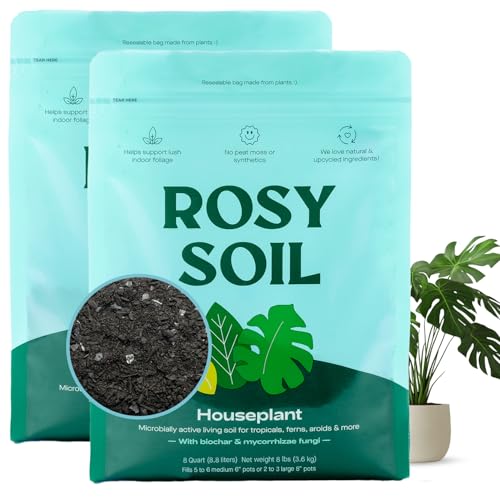
Rosy Soil Houseplant Soil 8 Quarts

Rosy Soil Organic Houseplant Mix 4 Quarts

Rosy Soil Orchid Potting Mix 4 Quarts

Rosy Soil Herb Mix 4 Quarts
What Each Pick Brings To The Table
A bird of paradise growing indoors needs open soil around its roots, but a cactus mix may lean too far toward quick drying. Rosy Soil’s loose, chunky blend provides that open root zone, making it more useful for mixed houseplant collections than as a complete planting medium for a moisture-loving bird of paradise.
Unlike the Biochar Booster later in this list, this is ready-to-use potting mix with worm castings, beneficial fungi, and microorganisms already included. Its peat-free formula also supports freer drainage, though the low-moisture emphasis is clearly designed for drought-tolerant plants.
Strong Points
- The chunky structure leaves space around roots and helps excess water move out of a container.
- Worm castings and soil organisms add biological material to an otherwise mineral-heavy medium.
- The peat-free formula suits growers seeking an alternative to peat-based cactus mixes.
- Resealable packaging helps protect the remaining mix between repotting sessions.
Things To Consider
- The low-moisture profile is less aligned with the steadier watering needs of many indoor bird of paradise plants.
- Each 4-quart bag is described as filling two or three plants, so check your pot volume before buying.
Key Specs
The Right Fit
This mix fits succulent growers and mixed-container gardeners who value an open, low-moisture medium.
A Better Fit Elsewhere
Rosy Soil Houseplant Soil 8 Quarts suits you better when a bird of paradise is the main plant in the pot.
Biochar is a stable, carbon-rich material created by heating organic matter in limited oxygen, and this blend gives that material a broader soil-building role. Added to houseplant soil, it can improve moisture retention, aeration, and nutrient absorption, which makes it a practical companion for a bird of paradise pot.
Unlike the finished cactus mix, Biochar Booster is an amendment rather than a complete potting medium. The label calls for roughly 5 percent by volume, or one cup per cubic foot of soil, so your role is to blend it evenly rather than fill a pot with it directly.
Everyday Advantages
- Biochar helps balance moisture retention and aeration within an existing potting mix.
- Mycorrhizae are fungi that associate with roots, while compost and worm castings support the soil food web.
- The 8-quart bag provides enough material for a meaningful container refresh or a small garden bed.
- A peat-free amendment offers a way to improve soil without relying on peat moss.
Practical Considerations
- It cannot replace a finished potting medium on its own for a container-grown bird of paradise.
- Mixed application is more involved than filling a pot directly with a prepared houseplant mix.
- The 8-quart volume may be more than a single small repotting job requires.
Quick Facts
Built With In Mind
This amendment suits gardeners who want to improve an existing houseplant mix or prepare a small raised bed.
Consider Something Else When
Rosy Soil Houseplant Soil 8 Quarts is simpler for a single bird of paradise because it needs no measured blending step.
A dedicated houseplant mix gives you a more straightforward starting point for a bird of paradise than borrowing a cactus blend or building a custom amendment. This Rosy Soil formula combines biochar, worm castings, mycorrhizae, compost, and bark fines without relying on peat moss, giving the root zone a varied mix of drainage and organic components.
Two 8-quart bags provide 16 quarts overall, enough for several repotting jobs or a group of indoor plants. Compared with the 4-quart houseplant option, it offers more volume and may reduce the need to store additional soil between tasks.
Where It Delivers
- The ingredient blend is formulated for indoor houseplants rather than a single narrow plant family.
- Biochar and bark fines contribute to an open planting medium while compost and castings add organic material.
- Mycorrhizae and beneficial microorganisms introduce root-associated biological components.
- The two-bag format gives you useful volume for repotting several plants around the home.
Details To Watch
- Confirm that your container has drainage holes, since a suitable pot remains essential even with an open mix.
- You may need extra shelf or floor space to store two full bags indoors.
At A Glance
Made For
This pack fits home growers repotting a bird of paradise alongside other indoor plants that use a general houseplant medium.
Where A Sibling Pick Shines
Rosy Soil Organic Houseplant Mix 4 Quarts takes less storage space when you are repotting one smaller plant.
Repotting one bird of paradise in a spare room does not always call for a large supply of soil. This 4-quart houseplant mix offers the same general approach as the larger pack, using biochar, worm castings, mycorrhizae, compost, and bark fines in a peat-free indoor medium.
The compact bag works well for a single repotting session and is easier to place in a cabinet than two full-sized bags. Compared with the 8-quart option, its main distinction is volume rather than a different plant category, so select it according to how much soil your pot actually needs.
Well-Handled Touches
- The formula targets the broad needs of indoor foliage plants, including a bird of paradise.
- Peat-free ingredients give you a suitable alternative to conventional peat-based houseplant soil.
- Organic inputs include worm castings, compost, bark fines, and biological components without synthetic fertilizers.
Small Caveats
- A large mature container may require more than 4 quarts to fill and replace the old medium.
- Keep the sealed bag somewhere dry and accessible so it remains convenient for the next repotting job.
Who Should Grab It
This size suits apartment growers and plant owners repotting one modest bird of paradise without excess storage space.
Reach For A Different Pick When
Rosy Soil Houseplant Soil 8 Quarts fits you better for multiple containers or a larger seasonal repotting project.
Orchid bark, pumice, and biochar create an open structure suited to orchids, which often grow as epiphytes, meaning they attach to another plant rather than rooting in ordinary garden soil. That airy profile is useful for roots needing strong aeration, but it differs from the moisture balance normally preferred for a bird of paradise.
You could treat this as a specialized component in a broader mix, though a finished houseplant medium offers a more direct route. The added mycorrhizae and beneficial microorganisms make it more substantial than plain bark, but its coarse plant-specific structure remains the deciding factor.
Positive Takeaways
- Bark and pumice create substantial open space around roots.
- Biochar adds another porous component to the blend.
- Mycorrhizae and microorganisms support the biological side of the planting medium.
Possible Compromises
- The mix is designed around orchid-growing conditions rather than a bird of paradise’s broad-leaf needs.
- Using it alone may provide less consistent moisture than a general houseplant mix.
Whose Shelf It Belongs On
This option belongs with orchid owners and experienced growers who understand how to balance an airy medium.
Look Elsewhere When
Rosy Soil Houseplant Soil 8 Quarts is a clearer choice for a bird of paradise kept in a standard indoor pot.
The name identifies this mix’s main purpose clearly: growing culinary herbs indoors or outdoors. It includes biochar, worm castings, and mycorrhizae in a blend designed for basil, thyme, mint, parsley, cilantro, lavender, rosemary, and similar plants, which makes it less direct for a bird of paradise.
That makes it a practical second soil for a mixed planting setup rather than a first choice for a dedicated indoor palm. You might use it in a larger container with compatible plants, while a general houseplant mix remains easier to match to a standalone bird of paradise.
Useful Strengths
- The formula targets a clearly defined group of edible and aromatic herbs.
- Biochar, worm castings, and mycorrhizae support root development and nutrient uptake.
- The same 4-quart format works for a windowsill pot or an outdoor planter.
Factors To Consider
- It is not formulated around the water and root requirements of a bird of paradise.
- Using it for a mixed container adds complexity because each plant still has distinct moisture needs.
Feature Snapshot
Best Suited To
This mix fits kitchen gardeners growing herbs in containers beside a sunny window or on a patio.
Swap It Out When
Rosy Soil Houseplant Soil 8 Quarts serves you better when a bird of paradise is the primary plant.
What Matters In A Bird Of Paradise Potting Mix
Drainage Comes First
A bird of paradise needs a planting medium that accepts water without staying saturated around the roots. Look for loose, porous material and always use a container with drainage holes, since a suitable medium cannot compensate for a pot that traps excess water.
Moisture Retention Still Matters
Fast drainage should not mean constant dryness. Biochar, compost, and organic components can help the root zone hold moisture between waterings, giving indoor plants a more balanced mix than a coarse cactus medium used without adjustment.
Match Volume To Repotting
Choose a quantity based on the container, not merely the plant’s size. A 4-quart bag works well for a modest repotting session, while two 8-quart bags suit multiple plants or a larger plant that needs more medium around its root ball.
Common Mistakes Worth Dodging
Mistakes Worth Dodging
Choosing a cactus mix solely for drainage can leave a bird of paradise on the dry side. A finished houseplant mix is a more balanced starting point, while biochar works best as a measured amendment within suitable soil.
What Separates Premium From Basic
Specialized mixes pay for added components such as biochar, compost, castings, and biological inoculants. Those inputs can improve the planting medium, but a more elaborate formula does not replace the right pot, drainage, and watering routine.
Frequently Asked Questions
What Is The Best Soil For A Bird Of Paradise?
A loose, well-draining houseplant mix gives a bird of paradise the most practical balance of moisture retention and aeration. Organic components such as compost, bark fines, and biochar can round out the root zone.
Do I Need Cactus Soil For A Bird Of Paradise?
Cactus soil is not necessary because it is formulated for plants that prefer quicker drying. Use a general houseplant mix, or add a cactus mix as part of a carefully balanced custom blend.
Can I Use Orchid Potting Mix For A Bird Of Paradise?
You can use orchid mix as an airy component, but its bark-and-pumice structure differs from the medium usually preferred for a bird of paradise. A finished houseplant mix is simpler and more closely aligned with the plant’s needs.
Is Biochar Useful For Potted Bird Of Paradise?
Biochar can improve water retention, aeration, and nutrient absorption when blended into potting soil. Use the stated application rate rather than filling the container with biochar on its own.
How Much Potting Soil Does A Bird Of Paradise Need?
Use enough medium to fill the container around the root ball while leaving room for practical top dressing. A 4-quart bag suits a smaller repotting job, while a larger plant may require additional soil.
Final Verdict
For a bird of paradise in a standard indoor pot, Rosy Soil Houseplant Soil offers the clearest fit because it is formulated for broad-leaved houseplants and combines drainage, moisture, and organic components. The Biochar Booster serves a different purpose, while the cactus, orchid, and herb mixes require more deliberate adaptation to the plant’s needs. Choose the medium that matches the container, then give drainage and consistent watering equal attention.
