A stubborn dandelion can turn a five-minute cleanup into an afternoon of kneeling, pulling, and dealing with dirt. The right tool changes that routine, whether you need a long-handled puller for a broad lawn, a narrow blade for cracks, or a powered option for larger areas. These picks cover different soil types, garden sizes, and handling preferences, so your best choice depends on where the weeds are growing and how much strain you want to avoid.
Reaching for a weed in the middle of a lawn can leave your knees in the dirt and your back bent for the better part of an afternoon. The Fiskars 4-Claw Stand-Up Weed Puller answers that problem with a 39-inch shaft, an offset handle, and a foot platform that lets you apply downward pressure without crouching.
Four serrated stainless steel claws surround the plant and work beneath the root ball. An integrated window gives you a view of the weed as the easy-eject mechanism releases it. Compared with the compact DeWit Culti-Weeder, this model trades portability for better reach and less bending during broad lawn care.
Homeowners and gardeners who regularly clear dandelions, thistles, and similar weeds benefit most from the upright stance and 39-inch reach.
The DeWit Culti-Weeder better serves you when storage space is limited and a short tool can handle both cultivation and small weeding jobs.
2 / 6
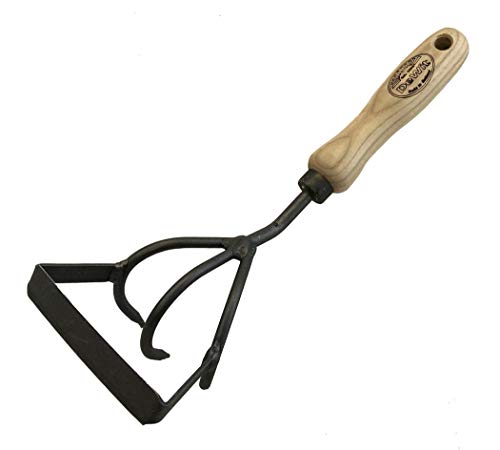
A tiny weeding job does not always justify carrying a long stand-up tool. The DeWit Culti-Weeder combines a three-tine cultivator with a sharpened straight blade, giving you two working ends in a compact format for flower beds, narrow paths, and densely planted areas.
The steel head is hardened and heat-treated for strength, while the short handle keeps the tool close to the ground. You may find the hand position more suitable for detailed work than the Fiskars 4-Claw Stand-Up Weed Puller, particularly between shrubs or around closely spaced plants.
Real Benefits
- ✓The three tines loosen compact soil before planting or clearing small patches.
- ✓A straight cutting edge handles weeds and small stones from the opposite end.
- ✓Heat-treated boron steel gives the working head a durable, purposeful feel.
- ✓The short profile is easier to maneuver between plants than a long shaft.
Points To Note
- •Its short handle means more bending than the Fiskars stand-up model.
- •The cultivator tines are intended for small areas rather than rapid clearing of an open lawn.
Core Details
| | Feature | Specification | Why It Matters |
|---|
| Working ends | Three-tine cultivator and straight blade | Allows soil loosening and weeding with one compact tool. |
| Head material | Hardened boron steel | Resists wear during repeated digging and cultivation. |
| Heat treatment | Heat-treated construction | Supports strength across the steel working head. |
| Handle | Short-handle format | Improves control in confined planting areas. |
Made For
Container gardeners and balcony planters benefit most from a small, two-ended tool for detailed bed maintenance.
Look Elsewhere When
The Fiskars 4-Claw Stand-Up Weed Puller suits you better when reducing kneeling and back strain matters more than compact storage.
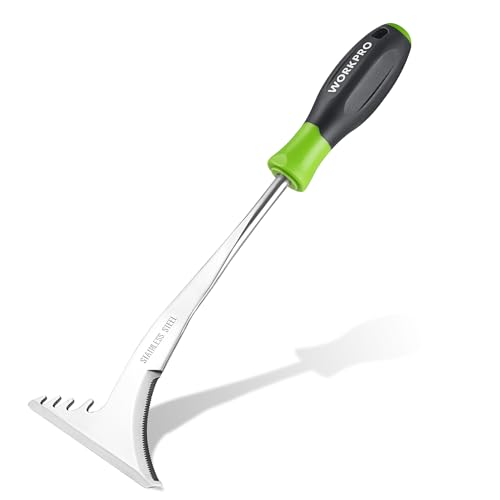
Some weeds never appear in an open flower bed. They squeeze into the joint between paving stones, grow along a hard landscape border, or surface in a narrow lawn edge where a broad stand-up tool cannot fit. The WORKPRO 12.5-Inch Crack Weeder is built for that narrow, awkward space.
Its L-shaped stainless steel blade works from different directions, with a cutting edge, sawtooth section, and root-pulling barb serving separate parts of the job. Unlike the DeWit Culti-Weeder, which also breaks soil, this tool concentrates on precision work around stones and hard edges.
Notable Upsides
- ✓The slim profile reaches weeds in tight paving joints and narrow borders.
- ✓An L-shaped blade supports cutting from more than one direction.
- ✓Different blade sections handle trimming, scraping, and pulling roots.
Honest Caveats
- •The 12.5-inch size offers less leverage than a longer-handled tool.
- •Small blade sections demand more care around stones and hard edging.
- •It is unsuitable for clearing a wide lawn or extracting a deep root mass.
Right Fit For
Homeowners dealing with weeds between pavers, beside garden borders, or along awkward lawn edges get the most value from this precise tool.
Consider Something Else When
The DeWit Culti-Weeder is the better choice for you when your small-space work includes loosening soil as well as removing plants.
A large yard can turn repeated manual pulling into a tiring project. The DIAINSKY 21V Electric Weeder adds a 21-volt battery system and a rotating pulling head, allowing you to work over weeds while remaining upright.
That powered approach is most useful across lawns, courtyards, and larger garden areas where many weeds need attention. Compared with the Fiskars 4-Claw Stand-Up Weed Puller, you exchange a straightforward manual mechanism for motorized rotation and cordless convenience.
Practical Advantages
- ✓The rotating head reduces the repeated hand-pulling motion required for each weed.
- ✓Stand-up operation helps you avoid bending and kneeling.
- ✓The 21-volt battery system supports use around lawns, gardens, and courtyards without a cord.
- ✓Powered operation suits larger cleanup sessions with numerous weeds.
Practical Considerations
- •You need to account for charging time between longer cleanup sessions.
- •The battery and motor require dry indoor storage between outdoor jobs.
Technical Highlights
| | Feature | Specification | Why It Matters |
|---|
| Power system | 21-volt battery | Powers the tool without requiring a connection to an outlet. |
| Battery type | Lithium-ion | Supports cordless operation for outdoor garden tasks. |
| Working action | Rotating puller head | Automates much of the rotational pulling motion. |
Who Will Love This
Gardeners with broad lawns or many recurring weeds benefit most from the reduced bending and motorized pulling action.
Swap It Out When
The Fiskars 4-Claw Stand-Up Weed Puller suits you better when a quiet, uncomplicated manual tool fits your garden routine better.
Pulling every weed in a large lawn is not practical for everyone. The Spruce 64 Oz Weed & Grass Killer Kit takes a different approach, using a liquid treatment and power wand to target broadleaf and grassy weeds such as dandelions, crabgrass, clover, dollarweed, and morning glory vines.
The 64-ounce container provides a larger treatment volume, while the wand helps direct application and the included batteries remove the need for a separate power connection. Compared with the manual Fiskars puller, this option suits broad coverage rather than precise root extraction.
Reasons It Performs
- ✓The power wand supports directed application across larger lawn sections.
- ✓The 64-ounce container is suited to treating sizable weed patches.
- ✓The formula targets both broadleaf and grassy weed varieties.
Things To Consider
- •It treats weeds in place rather than physically removing roots.
- •Careful targeting is important around flowers, vegetables, and other wanted plants.
- •Label directions should govern mixing, application, and any waiting period before replanting.
Whose Shelf It Belongs On
Homeowners focused on large lawn patches benefit most from a treatment method that covers broad areas without pulling every plant.
Reach For A Different Pick When
The WORKPRO 12.5-Inch Crack Weeder suits you better when you want to remove a few weeds physically from paving cracks.
The orange version of the DIAINSKY 21V Weeder follows the same basic approach as the earlier electric pick: a 21-volt battery drives a rotating puller while you stand over the plant. It gives you a practical middle ground between a hand tool and a larger powered garden machine.
For a sizable yard, that motorized action can spare you repeated pulling motions. Compared with the DeWit Culti-Weeder, it offers greater reach and less bending, but it also introduces a battery and motor that need storage away from moisture.
Real-World Strengths
- ✓Powered rotation reduces the effort involved in pulling numerous weeds.
- ✓The upright format suits lawns, gardens, and courtyards.
Small Caveats
- •You must plan around charging time and keep the battery dry during storage.
Essential Details
| | Feature | Specification | Why It Matters |
|---|
| Power system | 21-volt battery | Provides cordless operation for outdoor weed removal. |
| Variant | Orange | Distinguishes this listing from the other DIAINSKY electric weeder. |
Best Suited To
Homeowners who want cordless powered cleanup without reaching for a full-size powered garden machine benefit most from this format.
A Better Fit Elsewhere
The DeWit Culti-Weeder suits you better when a lightweight hand tool and close-up soil work matter more than motorized pulling.
## What Matters Before You Choose A Weeder
### Match The Tool To The Growth Pattern
Open lawn weeds and deep-rooted plants demand different approaches. A stand-up puller with multiple claws works well for individual plants in flower beds and lawns, while a crack weeder handles growth trapped between stones. For broad patches of grass-like weeds, a treatment wand can cover more ground without repeated bending. You get the cleanest match by looking at where the weeds grow before choosing the working end.
### Consider Soil And Root Conditions
Moist ground generally gives a puller more room to slide beneath a root system. Compacted clay needs extra preparation because the claws must penetrate resistant soil. Short cultivators work around the surface, while a narrow crevice blade suits hardened joints and edges. In our view, watering hard soil beforehand can make a manual puller more practical than forcing the tool through dry ground.
### Balance Reach Storage And Power
A 39-inch shaft reduces bending but occupies more room in a shed. A short-handled cultivator is easier to carry and maneuver between plants. Electric weeders remove much of the repetitive pulling motion, yet they also require charging space and dry storage. Match the tool to the size of your garden and the amount of equipment you already maintain.
### Think About Precision Versus Coverage
Precision tools work best on a small number of stubborn plants. A long-handled puller suits regular individual removals without chemical treatment. A spray wand is more useful when the goal is to treat a visible lawn section. For a few weeds, reach and control matter more; for extensive coverage, container size and application speed carry greater weight.
## Common Mistakes Worth Avoiding
### Mistakes Worth Dodging
The most common error is choosing by weed name alone. Root structure, soil moisture, and the location of the plant determine which tool will work best. A broad spray wand cannot replace a crevice blade, and a long puller may be unnecessarily awkward in a crowded bed. Measure your storage space and consider the ground conditions before settling on a design.
### When Paying More Pays Off
A higher cost may reflect a longer shaft, stronger steel, powered rotation, or a larger treatment container, but the extra spending only makes sense when you will use it. Manual tools suit occasional work and small gardens. Cordless power becomes more attractive as the number of weeds and the time spent bending increase. Choose the added capability that solves a recurring task in your yard.
## Frequently Asked Questions
### Are Manual Weeders Better Than Electric Ones?
Manual weeders suit small gardens, occasional maintenance, and shoppers who prefer simple tools with few moving parts. Electric weeders fit larger lawns and frequent cleanup where reducing bending and repetitive pulling matters most.
### What Is The Easiest Weeder To Use?
The easiest choice depends on the job and your physical preferences. A long-handled manual puller offers simple operation, while an electric model reduces repeated hand movements and a spray wand covers broad sections more quickly.
### Do Weed Pullers Remove The Entire Root?
A puller designed to grasp beneath the root ball can lift the whole plant, but success depends on soil moisture and the tool reaching below the root. Compact ground should be softened first, and small weeds may be removed with less of the root system.
### Can I Use A Crack Weeder In A Garden Bed?
You can use a crack weeder in a bed, though its narrow shape makes it better suited to edges, stones, and narrow gaps. A broader cultivator or multi-claw puller is more effective for general soil work.
### Is A Weed Treatment Kit Better Than Manual Removal?
A treatment kit is more practical for broad areas of grass-like or broadleaf weeds. Manual removal is better for isolated plants, cracks, and areas where you want to remove the plant without treating nearby soil.
## Final Verdict
Start with the shape of your weed problem. Choose the Fiskars for upright manual pulling, the DeWit for compact two-ended garden work, WORKPRO for narrow cracks, and DIAINSKY for cordless powered cleanup. The Spruce kit fits broad treatment areas where physical removal would be too labor-intensive. Match the tool to the task, and your weekend cleanup becomes much more manageable.