

A patio that fits six raised beds leaves little room for a folding chair, while a bare kitchen corner may call for something entirely different. A vertical garden system can solve either problem, but the right design depends on whether you want an outdoor soil bed, a movable planter, or a soil-free tower that recirculates water and nutrients.
The six options below cover raised beds with storage, a convertible mesh trellis, rolling planters, and hydroponic towers for indoor or outdoor food growing. Each one serves a distinct space and routine, so the most useful choice is the system that matches your sunlight, floor area, and preferred maintenance level.
The Shortlist At A Glance

Vego garden Elevated Raised Garden Bed 2′ x 4′ with Legs and Storage Rack
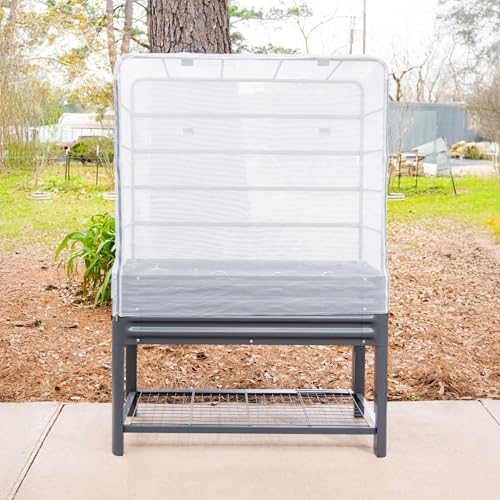
Vego garden 2′ x 4′ Mesh Cover System 4-in-1 Trellis

Vego garden Rolling Elevated Raised Garden Bed 2′ x 4′ Olive Green

WINNIESHOP 2-Tower 56-Pod Vertical Hydroponic Garden with Timer and Wheels

Netouit 35-Pod Hydroponic Garden Tower with Auto Timer

Kaforble 60-Pod System
A Deeper Look At The Lineup
Some patios look most useful once the gardening supplies disappear beneath the planting area. This 2-by-4-foot raised bed keeps that equipment in the frame, while the 32-inch working height reduces the amount of stooping involved in routine tending.
The welded VZ 2.0 steel frame and lower supports give this bed a more substantial feel than a lightweight planter box. For a household growing herbs and vegetables outdoors, the 700-pound capacity provides useful structural support while the enclosed edges and rubber trim make the assembled frame more comfortable to handle.
Key Advantages
- The 32-inch total height includes a 12-inch planting area, bringing everyday watering and harvesting closer to waist level.
- Zinc, magnesium, and aluminum-coated steel is finished with AkzoNobel paint for outdoor exposure.
- Welded corners, legs, and a lower support bracket create a rigid frame around the planting area.
- The storage rack uses otherwise wasted space beneath the bed for gardening tools and supplies.
Practical Considerations
- Assembly still requires putting the components together and tightening the fasteners before use.
- The 700-pound figure describes structural capacity, not a guaranteed crop yield, so dense soil and large containers remain practical limits.
Technical Sheet
Who It Suits Best
This bed suits outdoor gardeners who want a substantial soil planter, easier access, and built-in tool storage without giving up patio space.
A Better Fit Elsewhere
Shoppers who need to reposition a bed regularly may prefer Vego garden Rolling Elevated Raised Garden Bed 2′ x 4′ Olive Green.
The raised bed handles the soil, while this accessory changes how you protect and train what grows inside it. Compatible with the Vego garden V Series 2-by-4-foot bed, the system can serve as a mesh cover, wall trellis, arched trellis, or tool rack.
That versatility makes more sense for a gardener whose plants change with the season than for someone buying a fixed decorative screen. The 35 percent shading level moderates sunlight and helps hold moisture, while 65 percent light transmittance leaves plants with a useful amount of natural light.
What Earns Its Place
- Four configurations let one frame move between plant protection, climbing support, and tool storage.
- The mesh balances partial shade with enough transmitted light for continued plant growth.
- Powder-coated steel, stainless steel hardware, and UV-resistant mesh suit repeated outdoor use.
Trade Offs
- The garden bed is not included, so this is an add-on for a compatible V Series model rather than a complete growing setup.
- Its 2-by-4-foot fit means you should check the bed dimensions before ordering another size.
Feature Snapshot
Made For
This system fits V Series bed owners who want climbing-plant support, adjustable shade, and physical protection within one accessory.
Consider Something Else When
Choose WINNIESHOP 2-Tower 56-Pod Vertical Hydroponic Garden with Timer and Wheels for a self-contained soil-free setup rather than an accessory for a raised bed.
Rolling wheels solve a practical patio problem: a fixed planter can leave one corner unusable, while a movable bed can follow the light. This olive-green 2-by-4-foot model keeps the raised-bed format of the first Vego garden option while adding mobility and an under-bed storage rack.
The VZ 2.0 construction uses zinc, magnesium, and aluminum-coated steel with AkzoNobel paint. Its 700-pound frame capacity supports the same practical role as the fixed bed, making it appealing for renters or seasonal patios where the growing area needs to move.
Everyday Perks
- Rolling wheels make it easier to shift the bed as sunlight changes or seasonal use ends.
- The lower storage rack keeps tools and supplies within the footprint of the planter.
- The coated steel frame and 700-pound capacity suit substantial outdoor soil growing.
Room For Improvement
- Moving a heavily filled bed is still more demanding than moving an empty planter.
- Its 2-by-4-foot footprint needs enough clearance to roll without striking walls or edging.
- Compared with a hydroponic tower, it requires soil, drainage planning, and more hands-on watering.
Right Fit For
This model suits patio gardeners who want an elevated soil bed but occasionally need to relocate it or reclaim floor space.
Another Choice May Suit
Netouit 35-Pod Hydroponic Garden Tower with Auto Timer is a more compact fit for a balcony where conserving floor area matters more than storing tools beneath a soil bed.
Two towers create a larger vertical growing area without requiring two separate floor locations. The WINNIESHOP system places 56 planting sites across the pair, making it more substantial than a single compact tower while remaining useful in a balcony, kitchen, garage, or sunroom.
Hydroponic growing uses a nutrient solution instead of soil. Here, a timer controls the pump cycle, while the recirculating system moves water and nutrients through the growing area. Four wheels, including two brakes, let you reposition the towers and secure them in a bright location.
Points In Its Favor
- The 56-pod arrangement gives herbs, greens, strawberries, tomatoes, and flowers dedicated growing positions.
- A customizable timer helps keep watering consistent without requiring daily attention.
- Recirculated water can use less than conventional soil watering, depending on the plants and growing conditions.
- Two locking wheels prevent the towers from shifting once you find their preferred position.
- The broad range of suggested plants makes the system useful for both food crops and decorative greenery.
Softer Spots
- Hydroponic growing requires attention to the nutrient solution and pump operation, so it is not maintenance-free.
Quick Facts
Built With In Mind
This two-tower arrangement suits balcony and sunroom growers who want substantial planting capacity, adjustable watering, and the freedom to move the system with the light.
Where A Sibling Pick Shines
Kaforble 60-Pod System is the stronger fit when built-in grow lights matter more than a two-tower arrangement or a large number of locking wheels.
A single tower keeps the arrangement visually simpler than the 56-pod two-tower system. The Netouit design uses seven vertical tiers and 35 planting sites, making it a practical middle ground for a compact patio, kitchen, greenhouse, or bright indoor corner.
Its built-in timer can be adjusted down to the minute for the pump’s operating and resting periods. Water and nutrients travel from the top of the tower downward, so the system offers scheduled soil-free growing without the wheels or integrated lights found in some higher-capacity designs.
What Pays Off
- Seven tiers place 35 planting sites in a narrow vertical footprint.
- Minute-level timer settings accommodate different plants, growth stages, and watering preferences.
A Few Limitations
- The tower stays in one location because it does not include the wheeled base found on the WINNIESHOP system.
- No built-in grow light is listed, so it depends on suitable ambient light or a separate lamp.
- The 35 planting sites are fewer than the capacity offered by the Kaforble system.
The Right Fit
This tower fits apartment growers and first-time hydroponic gardeners who want a compact vertical layout with precise watering control.
Reach For A Different Pick When
WINNIESHOP 2-Tower 56-Pod Vertical Hydroponic Garden with Timer and Wheels suits a larger planting program where mobility and more pod positions are priorities.
Built-in lighting changes what this system can do in a kitchen or apartment. The Kaforble design combines 60 pods across three vertical tiers with adjustable full-spectrum LED lights, giving indoor plants a dedicated light source without requiring a separate fixture above each growing level.
A pump circulates water and nutrients through the root zones, while the 21-liter reservoir holds the solution. Growing sponges replace soil, which keeps the immediate growing area tidy and offers a convenient way to start seeds and later transfer plants.
Where It Excels
- Sixty planting sites support herbs, leafy vegetables, tomatoes, peppers, strawberries, and climbing crops.
- The adjustable light height can accommodate seedlings as well as taller plants.
- Automatic circulation moves water and nutrients through the system while helping keep the root zones oxygenated.
- The 21-liter reservoir reduces the number of separate watering containers needed around the tower.
- Planting sponges keep the system soil-free and simplify handling during transplanting.
Details To Watch
- The taller three-tier arrangement needs adequate vertical clearance and access to the reservoir.
- Built-in lights and a circulating pump mean the system requires access to power and regular monitoring of its solution.
Core Details
Whose Shelf It Belongs On
This system belongs in an apartment or home kitchen where substantial indoor capacity and integrated lighting justify a larger, powered setup.
Swap It Out When
Netouit 35-Pod Hydroponic Garden Tower with Auto Timer is a simpler fit when you need fewer pods, less vertical bulk, and no integrated lighting.
What Matters Before You Buy a Vertical Garden
Start With The Growing Space
A raised bed needs a broader outdoor footprint, while a hydroponic tower concentrates planting sites into a narrow vertical area. Measure the floor space, wall clearance, and nearby sunlight before choosing. A rolling system also needs a straight path and enough room to move without catching on patio edging.
Decide Between Soil And Water
Soil-based beds suit familiar vegetables and herbs but require drainage planning, soil handling, and regular watering. Hydroponic systems circulate a nutrient solution through a soilless medium, reducing watering work while adding pumps, timers, reservoir checks, and often grow lights.
Plan Around Daily Access
Trellises work best beside reachable plants, and reservoirs need enough clearance for refilling and inspection. Look for a layout that lets you reach every tier without moving the entire system, especially in a busy kitchen or narrow balcony.
The Details Behind Soil-Free and Raised Systems
Mistakes Worth Dodging
Counting planting sites without considering mature plant size can leave you with overcrowding. Check light exposure, electrical access, reservoir clearance, and drainage before purchasing. Bed accessories also need exact size and model compatibility.
What The Higher Tier Buys
Higher-capacity systems add planting positions, integrated lighting, larger reservoirs, or mobile bases. Those additions suit growers who want more control or a complete indoor setup. A smaller tower may be more practical when floor space and simple watering matter most.
Frequently Asked Questions
Do Vertical Garden Systems Work Indoors?
Yes, provided the chosen system receives suitable light and its power or water connections can reach the growing area. Towers with built-in LEDs offer more control over indoor lighting.
Are Raised Beds Better Than Hydroponic Towers?
Raised beds suit outdoor soil gardening, while hydroponic towers conserve floor space and circulate water without soil. Your setting, available sunlight, and preferred maintenance routine determine the better fit.
Can One System Grow Fruit and Vegetables?
Yes, although crop choice depends on space, light, and plant size. Leafy greens and herbs are forgiving, while tomatoes, peppers, and strawberries need more room and stronger light.
How Much Water Do Hydroponic Systems Use?
A recirculating system repeatedly moves solution through the growing area instead of watering each plant from above. The actual water use varies with plant size, temperature, humidity, and the operating schedule.
Do All Vertical Garden Systems Need Electricity?
No. Soil-based raised beds need no electricity, while hydroponic towers generally require power for pumps, timers, and any integrated lights.
Final Thoughts
The right vertical garden system depends less on maximum plant count and more on where it will live. A Vego raised bed suits outdoor soil growing, the mesh system expands a compatible bed, and the hydroponic towers serve compact spaces with scheduled watering. Match the structure to your sunlight, available room, and willingness to manage pumps, lights, soil, or reservoirs before deciding.
