A fence line often becomes more complicated when mature trees cross the boundary, leaving branches, vines, or fallen limbs in the way of mowing, repairs, and decoration. The right equipment depends on the job: substantial nylon rope handles rigging and tree-pulling work, while weather-resistant string lighting gives fence lines a seasonal presence after dark.
A Side-By-Side Look
PickWhy We Picked ItBest ForAction
Editor’s Choice
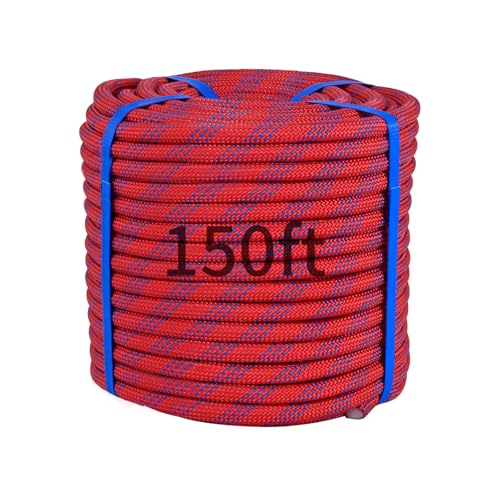
Kynara 150Ft 1/2 Inch Heavy Duty Climbing Rope (Red)
The Kynara 150Ft 1/2 Inch Heavy Duty Climbing Rope sits between the lighter 3/8-inch option and the thicker 3/4-inch ropes. Its combination of length, diameter, and listed 9,000-pound breaking strength makes it a practical middle ground for controlled rigging and tree-pulling work around a fence line.
For experienced arborists, the 150-foot length can reduce the need to reposition a line between nearby trees. The soft nylon construction also feels more approachable during extended handling, while resistance to ultraviolet exposure, moisture, and chemicals suits outdoor work. You still need a sound climbing and rigging system around it.
Real Benefits
✓A 150-foot run reaches across a good section of fence line without frequent repositioning.
✓The listed 9,000-pound breaking strength provides a clear capacity reference for rigging.
✓A 1/2-inch diameter is easier to handle than the heavier 3/4-inch alternatives.
✓Nylon construction handles moisture and ultraviolet exposure for outdoor settings.
Practical Considerations
•The 150-foot length needs deliberate coiling and storage space after each job.
•Breaking strength does not replace proper knots, compatible hardware, and professional rigging practices.
Key Specs
Feature
Specification
Why It Matters
Length
150 ft
Useful for working between trees along a long boundary.
Diameter
1/2 inch
Balances carrying weight with handling convenience.
Breaking strength
9,000 lb
Supplies a stated tension limit for load comparisons.
Construction
48-strand core, 24-strand sheath
Supports a soft profile and abrasion resistance.
Who It Suits Best
Experienced arborists handling mixed climbing, rigging, and branch-control tasks benefit from this balance of diameter and reach.
A Better Fit Elsewhere
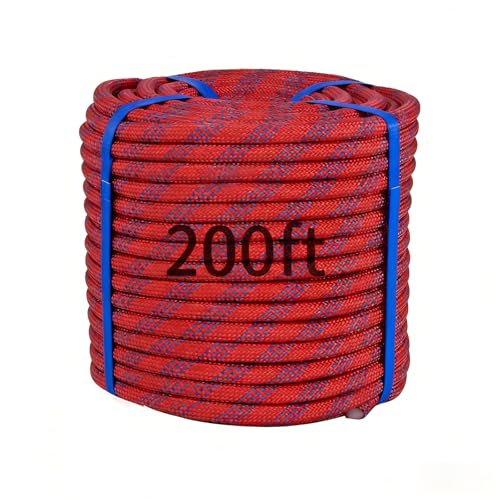
Choose Kynara 200Ft 1/2 Inch Heavy Duty Climbing Rope when greater reach matters more than compact storage.
A 3/8-inch rope makes sense when easier handling matters more than maximum pulling capacity. Kynara 150ft 3/8 Inch Climbing Rope keeps a generous working length while presenting less bulk than the 1/2-inch and 3/4-inch choices.
Climbers working close to tree canopies may appreciate the lighter diameter and soft nylon construction. Its listed 3,430-pound breaking strength is lower than the other rope figures here, so a controlled pull and a sound rigging plan are essential. In our view, it suits experienced users handling moderate loads with frequent hand contact.
A Favorable Mix
✓The 3/8-inch diameter offers a lighter option for close-quarters climbing work.
✓A 150-foot length gives ample reach between separated trees.
✓The 12-strand core and 48-strand sheath combine a soft grip with abrasion resistance.
Worth Noting
•The listed capacity trails the Kynara 1/2-inch and 3/4-inch ropes in this roundup.
•Matching rope diameter, knot strength, and hardware matters during a high-force pull.
•Long rope still needs organized storage rather than being left in a tangled pile.
Made For
Experienced climbers who regularly work on smaller limbs and favor manageable rope diameter benefit most from this option.
Another Choice May Suit
Choose Kynara 150Ft 1/2 Inch Heavy Duty Climbing Rope for stronger rated capacity without adding substantial bulk.
For demanding pulls, Kynara 150Ft 3/4 Inch Heavy Duty Climbing Rope provides the highest listed breaking strength in this group at 20,000 pounds. The 3/4-inch diameter also gives experienced arborists a more substantial line for controlled tree-pulling and rigging tasks.
That extra thickness is the trade-off. Compared with Kynara 150ft 3/8 Inch Climbing Rope, this rope demands more space and effort to carry, so it suits professional workflows more readily than quick, lightweight maintenance. Its 24-strand core and 48-strand sheath preserve a softer profile despite the substantial diameter.
Useful Strengths
✓The 20,000-pound figure gives high-capacity tree work a clear comparison point.
✓The 3/4-inch rope remains manageable for users accustomed to heavy rigging lines.
✓A 150-foot length supports pulls across several nearby trees.
✓Nylon resists outdoor moisture, ultraviolet exposure, and chemicals.
Trade Offs
•Its weight and bulk make the 3/8-inch option more attractive for lighter work.
•The 150-foot run requires more storage and transport space than the 100-foot version.
•High rope capacity does not make an improvised rigging setup suitable.
Technical Highlights
Feature
Specification
Why It Matters
Rope length
150 ft
Provides reach for controlled pulls between trees.
Diameter
3/4 inch
Supports heavier rigging applications.
Breaking strength
20,000 lb
Offers the highest stated load figure here.
Core
24 nylon strands
Forms the load-bearing center of the rope.
Sheath
48 nylon strands
Adds abrasion resistance around the core.
Right Fit For
Experienced arborists handling larger, controlled pulls benefit from the rope’s high listed capacity and substantial construction.
Where Another Pick Shines
Choose Kynara 100Ft 3/4 Inch Arborist Rope when the same diameter feels excessive but a shorter run would be easier to manage.
Orange and purple lights give a fence bordering mature trees an instant Halloween character. ZAXIFLY C7 Orange Purple Lights uses 27 larger C7-style bulbs across 25 feet, creating a more visible pattern than tiny point lights would provide.
The alternating colors suit porch rails, fences, and tree branches without requiring the full strand to follow one straight edge. Molded plastic bulbs offer a practical choice around branches where broken glass would be troublesome. Unlike the rigging ropes here, this strand addresses decoration rather than tree-handling work.
What It Does Well
✓The C7 profile gives each orange and purple bulb a bold, visible shape.
✓Twenty-seven bulbs spread the seasonal color across the 25-foot strand.
✓Plastic bulbs suit tree branches and high-traffic outdoor areas.
✓The E12 base works with standard decorative string-light sockets.
Small Caveats
•A 25-foot section may need additional connected strands for a longer fence.
•The orange-and-purple palette is intentionally seasonal rather than year-round neutral.
Feature Snapshot
Feature
Specification
Why It Matters
Length
25 ft
Fits a porch, short fence run, or tree cluster.
Bulb count
27
Creates a distributed pattern of visible light.
Bulb style
C7 LED
Provides the larger retro-light appearance.
Connection
Connectable to 700 ft
Allows compatible strands to be joined.
Who Will Love This
Home decorators creating a bold Halloween display around fences, porches, and tree branches appreciate the large alternating bulbs.
Look Elsewhere When
Choose Kynara 150Ft 1/2 Inch Heavy Duty Climbing Rope when the task requires controlled tree movement rather than seasonal lighting.
Kynara 100Ft 3/4 Inch Arborist Rope keeps the substantial diameter and 20,000-pound breaking strength of the longer 150-foot model while reducing the amount of rope to carry. That makes it a sensible fit for trees positioned close to a fence, shed, or other fixed obstacle.
Experienced users still get a substantial nylon line with a 24-strand core and 48-strand sheath. The shorter length can simplify storage and setup when pulling distances are modest. The honest caveat is that it offers less reach whenever a tree stands well beyond 100 feet of the working area.
Standout Benefits
✓The 3/4-inch diameter supports high-capacity controlled tree pulling.
✓A 100-foot length is easier to store than the 150-foot 3/4-inch alternative.
✓The soft nylon construction supports comfortable handling during rigging work.
Some Limits To Know
•Limited reach can become an issue across a broad property.
•The bulk remains noticeable compared with either 1/2-inch rope.
Quick Facts
Feature
Specification
Why It Matters
Length
100 ft
Balances pulling reach with easier storage.
Diameter
3/4 inch
Provides a substantial high-capacity rope.
Breaking strength
20,000 lb
Matches the higher-capacity rope class.
Built With In Mind
Experienced arborists working near close obstacles benefit from high-capacity rope without carrying an extra 50 feet.
Consider Something Else When
Choose Kynara 150Ft 3/4 Inch Heavy Duty Climbing Rope when the working area requires more than 100 feet of reach.
Kynara 200Ft 1/2 Inch Heavy Duty Climbing Rope preserves the manageable 1/2-inch diameter and listed 9,000-pound breaking strength of the 150-foot version, then adds another 50 feet. That extra reach is useful when fence-line trees are spaced across a wide property.
The construction combines a 48-strand core with a 24-strand sheath, giving experienced users a soft, abrasion-resistant line for rigging and controlled tree pulling. Compared with the 200-foot alternative’s closer counterpart, the smaller diameter remains easier to handle. The obvious compromise is the extra bulk involved in coiling, storing, and transporting 200 feet.
Everyday Perks
✓The 200-foot length spans broader runs between trees.
✓A 1/2-inch diameter remains less cumbersome than 3/4-inch rope.
✓UV, moisture, and chemical resistance suit outdoor use.
Practical Considerations
•Longer rope takes more time and space to coil neatly.
•Its capacity remains below that of the 3/4-inch Kynara ropes.
The Right Fit
Experienced arborists spanning broad fence lines favor the extra reach without moving up to a thicker rope.
Reach For A Different Pick When
Choose Kynara 100Ft 3/4 Inch Arborist Rope when compact storage and greater listed capacity matter more than extended reach.
## Planning Equipment Around Fence-Line Trees
### Match the Rope to the Pull
Breaking strength is the stated maximum tension a rope is rated to withstand. Your equipment needs, knot choice, and working conditions determine the actual load, so compare more than diameter alone. The 3/8-inch Kynara rope favors handling, while both 3/4-inch options provide substantially higher stated capacity.
### Set the Needed Reach
Measure the likely distance between attachment points before choosing rope length. A 100-foot rope can simplify storage around close trees, while 150-foot and 200-foot versions reduce repositioning across wider boundaries. Diameter and reach often move in opposite directions, so one model rarely handles every constraint.
### Plan Lighting Around the Fence
The ZAXIFLY strand uses larger C7 bulbs for a visible seasonal display. A 25-foot run suits a short porch or fence section, while its connectable design supports longer arrangements when compatible strands are joined. Check the socket and connection requirements before installation.
### Account for Storage
Heavy rope and a 200-foot working length need room for orderly coiling and transport. Compact storage can matter more in a crowded utility van or narrow workshop than a little extra line. Match the rope to both the working area and the place where you will keep it.
## Before You Commit
### Mistakes Worth Dodging
Avoid selecting rope by length alone; diameter, rated capacity, hardware, and rigging method work together. Also check the actual distance between trees and leave enough margin for controlled movement. Decorative lighting calls for a separate check of socket style, connection method, and outdoor placement.
### What Separates Premium From Basic
Higher-capacity ropes use larger diameters, stronger constructions, or greater lengths, each adding bulk or storage demands. The extra capability earns its place only when your tree-pulling task and rigging system require it. Otherwise, a smaller, shorter rope can be the more practical choice.
## Frequently Asked Questions
### What size rope is best for tree pulling?
Choose a rope whose stated capacity, diameter, and length match the pull, rigging system, and distance involved. The 3/4-inch Kynara models offer the highest listed breaking strength here, while the 1/2-inch versions balance capacity with easier handling.
### Is 1/2-inch climbing rope suitable for arborist work?
The Kynara 1/2-inch options list 9,000-pound breaking strength and are marketed for climbing, rigging, and tree pulling. Proper technique, compatible hardware, and an appropriate safety plan remain necessary for experienced users.
### How much rope is needed for trees along a fence?
Measure the widest working distance, including the distance required to set up and reposition the line. The 100-foot option handles closer areas, while the 150-foot and 200-foot versions provide extra reach across broader properties.
### Can the ZAXIFLY C7 lights be connected together?
The listing states that the strand can connect to compatible lighting up to 700 feet. Check the connection type and your planned arrangement before installation, especially when combining sections around trees or across multiple fence sections.
### Are the ZAXIFLY bulbs suitable for outdoor tree lighting?
The strand is designed for outdoor decoration, and its bulbs use shatter-resistant plastic rather than glass. That makes it a practical fit for branches, railings, and areas where falling or accidental contact is likely.
## Final Verdict
The right choice depends on the part of the fence line you are managing. Heavy-duty Kynara ropes cover distinct handling, reach, and capacity needs, while the ZAXIFLY strand handles the decorative side of a seasonal display. Match the equipment to the actual task, and check your rigging and installation requirements before starting.