

A tired houseplant sends mixed signals: curled leaves, faded growth, or soil that stays wet too long. Soil testing equipment helps you measure the factors you can act on, from pH and moisture to temperature and dissolved nutrients. The right choice depends on whether you manage containers, raised beds, lawns, or a hydroponic reservoir.
The Lineup, Simplified

Bluelab TRUNCOMV2 Commercial Truncheon Nutrient Meter, Digital Conductivity Tester for Hydroponic Systems

Bluelab CAREKITPHCON pH and EC Probe Care Kit

Bluelab Pulse Digital Soil Meter for Root-Zone Moisture, Nutrients, and Temperature

SPECILITE 6-in-1 Digital Soil Tester

Luster Leaf 1663 Soil Kit
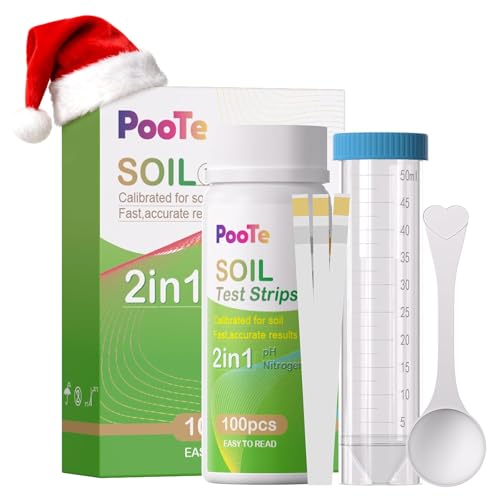
PooTe Soil pH and Nitrogen Test Kit, 100 Pieces
More On The Choices That Made The List
Managing a nutrient solution calls for a meter built for water rather than a probe pushed into potting mix. The TRUNCOMV2 measures conductivity, meaning the solution’s ability to carry electrical current, and translates that reading into familiar scales for nutrient concentration. It is a practical fit for reservoirs, growing tents, and commercial mixing tasks.
Unlike the Bluelab Pulse Meter reviewed later, this model focuses on solution readings. The broad scale is useful when nutrient concentration varies considerably, while factory calibration reduces setup work. For a single indoor plant, the feature set may feel excessive, but for a working reservoir it fits the task neatly.
Strengths Worth Knowing
- The wide measurement range accommodates many hydroponic nutrient concentrations.
- Digital readings provide clear separation between CF, EC, and ppm scales.
- You can check a reservoir during mixing without disturbing growing media.
- Factory calibration supports immediate use in a managed growing system.
Practical Considerations
- This is a solution meter, not a tool for checking moisture directly in soil.
- Its specialized functions offer limited value for routine container-plant care.
Technical Highlights
Built With In Mind
This meter suits hydroponic growers, greenhouse operators, and hobbyists who routinely mix nutrients in reservoirs or tanks.
Where A Sibling Pick Shines
The Bluelab Pulse Meter is a better fit for checking moisture and temperature directly in soil, coco coir, or potting mix.
A meter cannot provide dependable readings when its probes are coated with residue or deposits. This maintenance kit addresses that overlooked part of ownership with cleaning solutions and four included solution containers for pH and conductivity probes. It belongs beside the Bluelab TRUNCOMV2 in a hydroponic setup, although it does not take readings itself.
You may get more value from it once you already own compatible meters and regularly mix nutrients. The kit also supports a two-point calibration process for pH probes, while conductivity probes do not require calibration through this kit. That division makes it more relevant to careful growers than casual users.
Advantages To Know
- Four included solutions support routine pH and EC probe maintenance.
- Regular cleaning helps preserve the condition and accuracy of compatible probes.
- The kit suits reservoirs, water tanks, growing tents, and indoor systems.
Things To Consider
- It is a maintenance accessory, not a substitute for a pH or EC measuring device.
- Confirm that your meters accept the standard pH and EC probes addressed by this kit.
- The liquids need sensible storage away from heat and spills.
Made For
You benefit most from this kit as a hydroponic grower, indoor gardener, or educator who already uses Bluelab pH and conductivity instruments.
Another Choice May Suit
The Bluelab Pulse Meter makes more sense when you need direct measurements rather than maintenance supplies for existing probes.
Houseplant care often turns into guesswork when moisture, temperature, and nutrient concentration are checked separately. The Bluelab Pulse combines those readings in a handheld meter, placing its probe in soil, coco coir, potting mix, or nutrient solution. You can use it across indoor and outdoor growing setups without switching categories of equipment.
Compared with the TRUNCOMV2, this model reaches into the root zone, making it more useful for containers and beds. Its phone connectivity adds a record of changing conditions, which can help you compare readings over time. The app requirement is worth checking, particularly for an older phone or a device without Bluetooth.
Where It Excels
- One probe reports moisture, nutrient, and temperature readings together.
- You can check soil, coco coir, potting mix, or nutrient solution.
- Phone synchronization gives you a history of measurements in the app.
- The handheld format suits quick checks across several plants.
Points To Note
- Your phone must meet the listed iOS, Android, and Bluetooth requirements.
- Probe placement and growing-medium consistency affect how useful repeated readings are.
Quick Facts
The Right Fit
This meter suits houseplant owners, indoor growers, and balcony gardeners who want several root-zone readings in one instrument.
Reach For A Different Pick When
The Luster Leaf 1663 Soil Kit offers separate nitrogen, phosphorus, and potash checks when nutrient-category analysis matters more than quick electronic readings.
A seedling bench can present several questions at once: Is the light strong enough, is the soil wet, what is the pH, and how warm is the surrounding air? The SPECILITE places six measurements in one digital instrument, including light intensity, moisture, fertility, pH, temperature, and humidity. It gives you a broader overview than a single-purpose meter.
Two removable probes add flexibility, while the dial and LCD display provide two ways to read the information. Unlike the Bluelab Pulse, this model also includes light and ambient humidity, making it more useful for establishing growing conditions around seedlings. The broad dashboard does not, however, separate nitrogen, phosphorus, and potash the way a chemical soil kit can.
Key Advantages
- Six environmental and soil readings appear in one instrument.
- The LCD screen displays results in a more readable form than a dial alone.
- Removable probes give you more placement options around pots and beds.
- Light and humidity readings help you evaluate the seedling environment.
Minor Gripes
- The temperature reading covers ambient conditions rather than root-zone temperature.
- A broad fertility reading does not provide separate N-P-K analysis.
- Two removable probes add components to rinse, dry, and store carefully.
Feature Snapshot
Who Should Grab It
This tester is a practical fit for beginners, indoor gardeners, and seedling growers who want pH, moisture, light, and room conditions in one place.
Consider Something Else When
The PooTe Soil pH and Nitrogen Test Kit is a more focused choice when you need repeated pH and nitrogen checks for a lawn or large garden.
When you need to know which nutrient category is lacking, a broad digital dashboard is not enough. The Luster Leaf 1663 uses a liquid-based process to measure soil pH, nitrogen, phosphorus, and potash separately. It provides the kind of breakdown you need for classroom demonstrations, garden planning, or diagnosing poor growing conditions.
Compared with the SPECILITE, this kit trades speed and electronic convenience for specific nutrient categories. Its 80-test capacity includes 20 tests for each of the four measurements, while the included guidance helps connect soil conditions with suitable plant choices. For a serious garden project, that detail can matter more than a compact digital display.
Bright Spots
- Separate measurements cover pH, nitrogen, phosphorus, and potash.
- The 80-test capacity supports repeated garden and classroom use.
- Detailed instructions help you perform the liquid-based process.
- Planting guidance adds context beyond the numerical soil results.
Practical Considerations
- The manual liquid process takes more steps than a digital meter reading.
- Consumable reagents need secure, organized storage between uses.
- It does not continuously track moisture or temperature.
Built With In Mind
This kit fits educators, serious home gardeners, and horticulture students who need specific pH and N-P-K results rather than a quick environmental overview.
A Better Fit Elsewhere
The SPECILITE 6-in-1 Digital Soil Tester serves casual plant care better when you want fast readings without handling test liquids.
