

A windowsill full of houseplants can fail quietly when their soil packs down and holds water longer than the roots can use. The right potting mix gives roots room, balances moisture and airflow, and suits the plant’s needs, from moisture-loving ferns to drought-tolerant succulents. These options cover general indoor use, specialty plants, compact growing spaces, and soil amendments for larger container projects.
The Picks In Brief

Rosy Soil Cactus & Succulent Potting Mix 4-Quart Pack

Rosy Soil Biochar Booster 8 Quarts

COCF Coco Coir Brick 1.4 lb
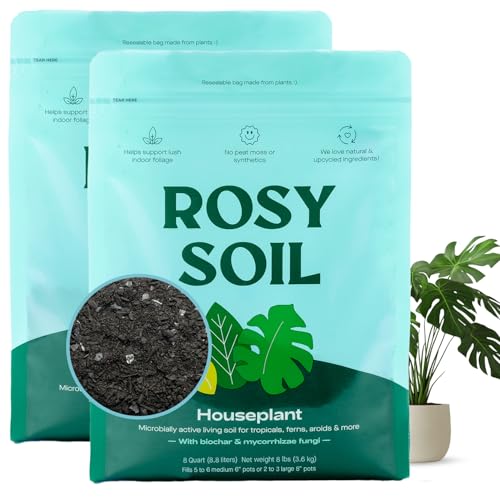
Rosy Soil Houseplant Potting Soil 8-Quart Pack

Rosy Soil Organic Houseplant Potting Soil 8 Quarts

Rosy Soil Organic Houseplant Potting Soil 4 Quarts
A Deeper Look At The Lineup
Succulents often struggle in dense potting soil because their roots need oxygen as well as moisture. This mix uses a chunky, peat-free base that drains freely, making it a more natural fit for aloe, jade, snake plants, and other plants that dislike constantly wet soil.
The pack includes two 4-quart bags, so you can handle several pots without buying several separate containers. Its worm castings and living soil components add biological material, though your pot’s drainage holes still do the essential work of releasing excess water.
The Practical Payoff
- The loose texture gives roots more air than a dense, fine-textured potting mix.
- Free drainage helps reduce the risk of waterlogged soil around succulent roots.
- Two resealable 4-quart bags make separate plants and later repotting easier to manage.
- Printed planting guidance gives first-time growers a useful reference while potting.
Worth Noting
- This specialized mix is less suitable for ordinary foliage plants that prefer steadier moisture.
- The resealable bags need enough storage room to remain folded and protected.
Feature Snapshot
Made For Dry-Rooted Plants
You’ll appreciate this option most for a collection of cacti, succulents, desert roses, lithops, or bonsai kept in containers with drainage holes.
Another Choice May Suit
Rosy Soil Organic Houseplant Potting Soil 4 Quarts is the better fit for broad-leaved indoor plants that want a more general-purpose medium.
Biochar is a stable, carbon-rich amendment made by heating organic material in a low-oxygen environment. This blend adds that material to existing soil along with mycorrhizae, worm castings, bokashi, and compost, making it a soil improvement rather than a complete potting mix on its own.
For raised beds or large containers, that distinction matters. You blend it into soil at roughly 5%, or sprinkle it around existing plants and work it into the upper layer, so you can improve structure without replacing the entire growing medium.
What Stands Out
- Biochar helps hold moisture and nutrients while keeping amended soil less compact.
- Mycorrhizae form a beneficial relationship with roots, supporting access to available nutrients.
- Compost and worm castings add organic material and biological life to the mix.
- One 8-quart bag can amend up to 5 cubic feet of soil.
- The peat-free formula suits gardeners reducing their reliance on peat-based media.
Trade Offs
- Using too much can unbalance the planting mix, so the application rate deserves attention.
- The loose amendment takes up more storage room than a compressed growing medium.
At A Glance
Built For Larger Projects
This is a practical amendment for raised-bed growers, vegetable gardeners, and anyone mixing a substantial number of containers.
A Better Fit Elsewhere
COCF Coco Coir Brick 1.4 lb suits you better when compact storage and a ready-made coconut-fiber medium matter more than soil conditioning.
A compressed brick is handy in a crowded potting area because it stores flat and expands only after hydration. This coconut-fiber medium opens into at least 2 gallons of light material, giving you enough volume for several small pots or a seed-starting project.
Unlike the amended soil in Rosy Soil Biochar Booster, this is a standalone growing medium derived from coconut husk fiber. Its low electrical conductivity, a measure of soluble salts, and near-neutral pH make it broadly compatible with vegetables, herbs, flowers, and indoor plants, though you may want to blend it with other media for specific crops.
Useful Strengths
- The fibrous structure holds moisture while leaving spaces for air around roots.
- Low electrical conductivity reduces the risk of harmful salt accumulation.
- The compressed format saves shelf and cupboard space until you need it.
Small Caveats
- You must prepare the brick with warm water before filling containers.
- The expanded medium occupies considerably more room than the original package.
- It needs a container with drainage so retained moisture does not build up.
Quick Facts
Right For Small Work Areas
You’ll find this useful in an apartment, compact potting area, or seed-starting setup where shelf space comes at a premium.
Consider Something Else
Rosy Soil Houseplant Potting Soil 8-Quart Pack is easier for routine repotting because it arrives loose and ready to scoop into pots.
A sizable plant collection can consume potting mix faster than expected, particularly during spring repotting. This pack contains two 8-quart bags, giving you separate reserves for multiple containers without making you split one large bag into storage bins.
The peat-free formula combines biochar, worm castings, mycorrhizae, compost, and bark fines. That blend gives indoor roots more than a sterile-looking growing base, while the bark and biochar components help preserve pore space rather than relying on peat as the structural backbone.
Points In Its Favor
- Two large bags cover substantial repotting needs and keep unused soil separated.
- The ingredient blend supports both soil structure and biological activity around roots.
- Peat-free composition gives eco-conscious gardeners another medium to consider.
Things To Consider
- You need suitable storage for 16 quarts of loose potting soil before opening the bags.
Who Will Love This
This option suits dedicated houseplant growers who repot several large planters at once or maintain a broad indoor collection.
Reach For A Different Pick
Rosy Soil Organic Houseplant Potting Soil 4 Quarts is the better choice for a smaller collection that only needs one manageable bag.
One 8-quart bag sits neatly between the compact coir brick and the two-bag bulk option. It gives you a useful amount of potting soil for routine repotting without requiring a large storage area, and the loose medium is ready to scoop straight into a planter.
Its biochar, compost, worm castings, mycorrhizae, and bark fines replace peat and support a more biologically active root zone. The organic formulation contains no synthetic fertilizers or fillers, which may suit you when you want a straightforward indoor mix made from recognizable organic components.
Practical Pluses
- The balanced blend suits general-purpose houseplant repotting and container filling.
- Biochar and bark fines add structural support to the peat-free base.
Points To Keep In Mind
- The 8-quart bag requires more storage room than the compressed coir brick.
- Specialty plants may need a coarser or faster-draining mix than this general indoor blend.
Core Details
The Right Fit
You’ll get the most convenience with this option as an everyday houseplant owner repotting several pots across a season.
Swap It Out When
Rosy Soil Houseplant Potting Soil 8-Quart Pack makes more sense when your repotting schedule calls for two separate bags.
A four-quart bag offers a more manageable alternative to the eight-quart Rosy Soil options, particularly in a home office or apartment where storage space is limited. It works well for a few medium pots, small planters, and routine top-dressing tasks.
The same peat-free approach applies here: biochar, worm castings, mycorrhizae, compost, and bark fines create a biologically active indoor medium without synthetic fertilizers or filler ingredients. Compared with Rosy Soil Cactus & Succulent Potting Mix 4-Quart Pack, this is the broader indoor option, while the cactus mix has the coarser profile needed by dry-rooted plants.
Strengths Worth Knowing
- The smaller bag is easier to carry, open, and store in a compact living space.
- Its general-purpose formula works for common foliage plants and indoor containers.
- Multiple organic components support both structure and biological activity.
Room For Improvement
- Four quarts may be limiting for a large plant collection or several oversized pots.
Whose Shelf It Belongs On
This bag suits apartment dwellers and beginners tending a handful of houseplants in a few medium-sized containers.
Where A Sibling Pick Shines
COCF Coco Coir Brick 1.4 lb is the neater storage choice when shelf space matters more than having loose soil ready to use.
What Matters Before You Pot
Match the medium to the plant’s watering pattern
Succulents, cacti, snake plants, and other drought-tolerant plants need a loose medium that releases excess water quickly. Ordinary foliage plants generally benefit from a balanced indoor mix that holds enough moisture for consistent root access. Your watering habits matter too, since a plant in a warm, bright room may use water differently from one in a cooler corner.
Check drainage before choosing texture
A well-aerated mix cannot compensate for a pot without drainage holes. Moisture can still collect at the base and create problems for roots. Select a container with drainage and avoid placing a pot inside a decorative cachepot without allowing water to escape.
Decide between a complete medium and an amendment
A complete potting mix is ready for potting, while an amendment is blended into existing soil. Rosy Soil Biochar Booster is designed for the second job, covering raised beds, garden soil, or custom container blends. Using the right amount keeps the amendment from overwhelming the existing medium.
Consider where the soil will live
Loose bags need a dry, accessible storage place, while a compressed coir brick takes up very little room until you hydrate it. Larger houseplant collections may make a 4-quart bag disappear quickly, while a modest collection may prefer the smaller format.
Common Mistakes Worth Avoiding
Wrong Turns To Avoid
Avoid choosing by the word “moisture-retentive” alone, since a mix that holds water well may still need air around the roots. Check drainage, pot size, and plant type together. A general indoor formula works better for most foliage plants, while succulents need a coarser profile.
What Separates Premium From Basic
The difference often comes down to formulation and volume rather than a longer ingredient list. Specialized cactus mixes emphasize rapid drainage, living amendments combine multiple biological components, and bulk options reduce repeated storage trips. Pay for the feature your setup actually needs rather than extras you will never use.
Frequently Asked Questions
What is the best soil mix for houseplants?
A general-purpose, peat-free indoor potting mix suits most foliage plants. Use a coarser cactus or succulent mix for drought-tolerant plants that need faster drainage.
Do houseplants need special potting soil?
Plants do not require one universal medium, but their water needs affect the structure you should choose. Succulents benefit from a loose, fast-draining formula, while many tropical foliage plants prefer a balanced mix that retains more consistent moisture.
Can I use garden soil for houseplants?
Garden soil can be too dense and may not provide the right balance of aeration and water retention for container plants. A potting medium designed for indoor containers gives you more control over drainage and root conditions.
Is coco coir suitable for houseplants?
Coco coir works for many houseplants because its coconut fibers retain moisture while leaving room for airflow. It can also be blended with other materials when a particular plant needs a different drainage level.
How much potting soil do I need?
Measure the volume of your pots and add a little extra for future repotting. A four-quart bag suits a modest collection, while eight-quart or larger options make more sense for frequent repotting and several large planters.
Final Thoughts
Choose the mix that matches your plants and your watering routine, not simply the largest bag. Rosy Soil’s cactus formula handles dry-rooted plants, the organic houseplant mixes cover general indoor use, and the coir brick wins on compact storage. Pick the format that fits your space, then give every pot proper drainage.
