

A watering can in hand and a rose bed showing thin new growth, it quickly becomes clear that fertilizer is not interchangeable. Roses need the right nutrient balance, and your garden’s size, planting style, and watering routine determine which product makes the most sense.
Each option below offers a distinct approach, from water-soluble feeding to dry soil amendments and concentrated rose formulas. The right choice depends on how you garden, not simply on which label sounds the most convincing.
The Picks In Brief

Miracle-Gro All Purpose Plant Food 12.5 lb
Down To Earth Organic Rose & Flower Mix 25 lb

Espoma Organic Alfalfa Meal Fertilizer 3 lb

Espoma Organic Rose-Tone 4-3-2, 18 lb, 2 Pack

Whitney Farms Organic Bone Meal 3 lb

Farmer’s Secret Rose Booster 8 oz
Taking A Closer Look At The Options
A watering can already in hand makes this the simplest option for combining feeding and watering. The granules dissolve in water, and its 24-8-16 NPK formula provides nitrogen, phosphorus, and potassium, the three nutrients represented by those numbers, for roses, houseplants, vegetables, trees, and other plants.
For a mixed garden, that versatility can prevent you from maintaining several separate products. Unlike the dry soil blends later in this list, it can also be delivered through a watering can or a garden feeder, though the outdoor mixture differs from the indoor dilution.
Advantages To Know
- One product covers roses and a wide range of other plants.
- Water-soluble granules fit directly into an existing watering routine.
- The 12.5-pound container serves a large outdoor garden area.
- Separate dilution guidance supports both indoor and outdoor use.
Practical Considerations
- You must use the correct dilution for indoor or outdoor plants.
- The large container needs a dry, accessible storage spot between waterings.
Quick Facts
Who It Suits Best
You benefit most from this choice when roses share space with houseplants, vegetables, trees, or a large mixed flower bed.
Consider Something Else When
Espoma Organic Rose-Tone 4-3-2 suits gardeners who prefer a ready-to-use, rose-specific soil fertilizer over a water-soluble general plant food.
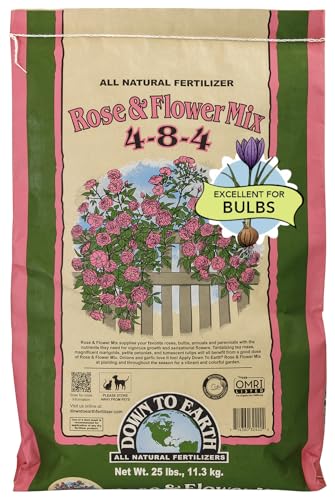
The 25-pound box shifts the decision from watering-can convenience to building a substantial planting bed. Its 6-3-3 formula supplies nitrogen, phosphorus, and potassium, while ingredients such as feather meal, fish bone meal, alfalfa meal, greensand, kelp meal, and mineral nutrients create a more complex soil amendment than a single-ingredient product.
Unlike the highly concentrated Miracle-Gro option, this blend is intended to be worked into soil. It is listed by the Organic Materials Review Institute for organic production and can also serve fruit trees, vines, and ornamental plants, so one large box can cover several parts of a garden.
What Works In Its Favor
- The large size suits established beds and repeated garden use.
- Calcium, sulfur, zinc, and iron supplement the primary nutrients.
- Organic production suitability helps guide garden planning.
Worth Noting
- The 25-pound package requires more storage space than smaller bags.
- It is a dry soil blend, so it does not follow a watering-can dilution routine.
- Gardeners following a specific nutrient program should compare the 6-3-3 ratio with their needs.
Built With In Mind
You get the most from this fertilizer in a sizable rose or flower bed where repeated soil applications and a dry-storage area are practical.
Where Another Pick Suits Better
Miracle-Gro All Purpose Plant Food fits smaller mixed gardens and anyone who wants to feed plants through routine irrigation.
One ingredient makes this easier to understand than a multi-component blend. Espoma uses 100% alfalfa meal with no fillers or additives, providing a 2-0-2 ratio designed to contribute nitrogen and potassium to roses, flowers, vegetables, trees, and shrubs.
Compared with Down To Earth’s 6-3-3 blend, this option places greater emphasis on nitrogen and potassium without phosphorus. You can apply it directly to soil or turn it into alfalfa tea, giving you two approaches to feeding, although the tea route adds a separate preparation step.
Positive Points
- A single named ingredient keeps the formula easy to understand.
- Direct soil application fits established organic gardening routines.
- The 3-pound bag is easier to store than a bulk fertilizer box.
Some Limits To Know
- The 2-0-2 ratio does not provide the phosphorus offered by bone meal.
- Preparing alfalfa tea requires extra time and equipment beyond direct soil use.
The Right Fit
This fertilizer suits you best when you want a straightforward organic material for roses or a mixed bed and value flexible application methods.
Another Choice May Suit
Whitney Farms Organic Bone Meal 3 lb serves gardeners whose priority is adding phosphorus and calcium rather than emphasizing nitrogen and potassium.
Rose-Tone takes the direct route with a 4-3-2 fertilizer analysis and 5% calcium. Its Bio-tone formula and natural or organic ingredients make it a distinct choice from Espoma’s single-ingredient alfalfa meal, while the rose-focused formula suits climbers, knock-out roses, viburnum, bougainvillea, and clematis.
The product is ready to use, with no mixing required. You apply it around the drip line, the zone where rainwater naturally reaches the root area, then water thoroughly. Monthly use from May through September gives you a defined schedule for the growing season.
A Favorable Mix
- The formula is designed specifically for roses and compatible flowering plants.
- Calcium supports a broader nutrient profile beyond the basic NPK ratio.
- No mixing makes application quicker during routine garden care.
- Two 18-pound bags provide substantial coverage for rose beds.
Details To Watch
- The stated monthly schedule runs from May through September.
- Two large bags create more storage demands than a single 3-pound product.
- The fertilizer requires thorough watering after application.
Feature Snapshot
Made For
You benefit most from this choice when your landscape centers on roses and other flowering plants that receive regular seasonal feeding.
Reach For A Different Pick When
Farmer’s Secret Rose Booster 8 oz fits gardeners who prefer a concentrated liquid mixed into a watering can rather than a dry soil product.
Bone meal serves a narrower purpose than the blended products: enriching soil with phosphorus and calcium. Its 6-8-0 analysis supports the development of roots and flowers, making it relevant for roses, bulbs, vegetables, flowering plants, and shrubs.
Unlike Espoma Rose-Tone, this is not a complete rose-feeding formula with a balanced NPK ratio. It works as a soil amendment, a term for material added to improve soil, so it best complements a broader nutrition plan rather than replacing every seasonal rose feed.
Practical Pluses
- Phosphorus and calcium directly target root and flower development.
- The 3-pound package remains manageable for smaller gardens.
Points To Note
- The 6-8-0 formula provides no nitrogen or potassium.
- It requires soil application rather than dilution in a watering can.
- Gardeners seeking a complete feeding program need another product to cover the missing nutrients.
Who Should Grab It
This product suits you when phosphorus and calcium are your main soil-improvement priorities for roses, bulbs, flowers, or shrubs.
A Better Fit Elsewhere
Espoma Organic Rose-Tone 4-3-2, 18 lb, 2 Pack offers a more complete rose-feeding profile when your soil needs balanced nutrients throughout the growing season.
A small bottle can still anchor a regular feeding routine. Farmer’s Secret Rose Booster is formulated specifically for rose varieties throughout their growing lives, with an 8-ounce package of concentrated plant food intended to support green growth and flowering.
The small format is the main practical distinction. You dilute two teaspoons into one gallon of water and apply it weekly during the growing season, creating a more frequent routine than the monthly dry application used for Espoma Rose-Tone.
Practical Advantages
- The formula is designed specifically for rose varieties.
- Concentrated liquid makes measured watering-can applications convenient.
- Weekly feeding supports a consistent seasonal routine.
Possible Compromises
- Accurate dilution matters because the formula is highly concentrated.
- Weekly application takes more attention than monthly soil feeding.
Key Attributes
Best Suited To
You benefit most from this option when you maintain a few roses and enjoy a liquid-feeding routine that fits comfortably into your weekly garden care.
Swap It Out When
Espoma Organic Alfalfa Meal Fertilizer 3 lb suits gardeners who prefer direct soil application and want to avoid preparing a liquid feed.
What Matters Before You Choose
Start with what needs feeding. A general-purpose water-soluble product makes sense for a mixed garden, while a rose-specific formula offers a more focused nutrient profile. A phosphorus-focused amendment serves a different purpose from a complete seasonal feed.
Compare the NPK ratios next. Nitrogen supports leafy growth, phosphorus contributes to roots and flowers, and potassium supports overall plant vigor, but a higher number does not automatically mean a better fertilizer. Match the formula to the plant, soil, and your established feeding routine.
Then account for application. Water-soluble and liquid concentrates join familiar watering routines, while dry amendments require placement and follow-up watering. Large bags reduce refills but need more storage space, so choose the package size that suits your garden rather than your shopping trip.
A Few Details That Shape the Choice
Mistakes Worth Dodging
Avoid choosing by the boldest number on the bag. A high-nutrient formula is not a substitute for the balance your roses actually receive, and bone meal is not a replacement for a complete rose feed.
Also do not ignore storage and preparation. A 25-pound box, two 18-pound bags, and an 8-ounce concentrate create very different ownership routines, from dry storage to weekly dilution.
What Separates Premium From Basic
Larger packages reduce the frequency of repurchases, while specialized formulas target roses or other flowering plants. Concentrated products shift the tradeoff toward careful measuring and repeated application.
The extra investment makes more sense for a substantial rose bed or a dedicated feeding routine. For a small collection, a smaller package may offer the better fit.
Frequently Asked Questions
Can rose fertilizer feed other flowers?
Yes, rose fertilizers often suit compatible flowering plants, but check the label for named varieties and plant groups. Some mixes also work on shrubs, vegetables, trees, or ornamental plants.
Is water-soluble fertilizer easier to apply?
Water-soluble fertilizer is convenient for gardens already using a watering can or garden feeder. Dry soil amendments and concentrated liquids require different placement, dilution, or watering steps.
What do the NPK numbers mean?
The three numbers show the relative proportions of nitrogen, phosphorus, and potassium. Nitrogen supports green growth, phosphorus supports roots and flowers, and potassium contributes to general vigor.
Can organic rose fertilizer support healthy roses?
Yes, organic materials can support rose growth when applied according to their directions. The nutrient balance, soil condition, and consistency of application determine how the fertilizer functions in your garden.
How often should roses be fertilized?
Follow the directions on the fertilizer you select, since schedules differ by product. Some options call for monthly use from May through September, while concentrated liquid formulas may be applied weekly during the growing season.
Final Verdict
Choose based on your garden’s demands and your willingness to maintain a specific routine. Miracle-Gro offers broad flexibility, Espoma Rose-Tone serves dedicated rose beds, and Farmer’s Secret fits a compact weekly approach. Whichever option you select, use its directions carefully and keep the feeding schedule consistent.
