

A windowsill full of herbs, a shelf of leafy houseplants, and a windowsill crowded with succulents each need a different growing medium. The right potting soil controls drainage, supports roots, and fits the plant’s watering needs, while the wrong choice can leave roots sitting in water or struggling to find nutrients. These Rosy Soil options cover succulents, general houseplants, orchids, herbs, and outdoor beds, so you can match the blend to the job instead of paying for a general-purpose mix that doesn’t quite fit.
A Closer Look At The Lineup

Rosy Soil Cactus Mix 4QT

Rosy Soil Biochar Booster
Rosy Soil Houseplant Soil

Rosy Soil Organic Houseplant 4QT

Rosy Soil Orchid Mix

Rosy Soil Indoor/Outdoor Herb Mix 4QT
More On The Choices That Made The List
Repotting an aloe or jade plant calls for a loose medium that lets excess water leave quickly. This blend is chunky rather than dense, so roots have room to spread without being surrounded by a heavy, continuously wet soil mix. That structure is especially helpful in warm rooms where a compact potting mix may dry unevenly.
The formula contains beneficial fungi, microorganisms, and worm castings, giving roots more than an inert growing surface. It contains no peat moss, the traditional moisture-holding base ingredient found in many general potting soils. For most succulent collections, that trade-off supports a more suitable root environment.
Good Reasons To Consider
- The open texture supports drainage for cacti, succulents, snake plants, and desert roses.
- Living components create a more biologically active medium around plant roots.
- Each 4-quart bag fills approximately two to three plants, making the pack practical for a collection.
- Resealable packaging helps protect unused mix between repotting sessions.
Practical Considerations
- The absence of peat moss suits dry conditions but makes this a poor match for moisture-loving ferns.
- Each bag fills several containers, so you may need somewhere practical to store the remaining mix.
Key Product Details
Made For
This mix best suits beginners and experienced growers raising drought-tolerant houseplants in containers with drainage holes.
Another Choice May Suit
Rosy Soil Biochar Booster is a better fit for improving the structure of an outdoor raised bed rather than filling a small succulent pot.
A raised bed that feels exhausted after a season of vegetables can benefit from an amendment rather than another layer of rich soil. Biochar is a stable, carbon-rich material made by heating organic matter in low oxygen, and its porous structure helps soil retain water and nutrients between irrigation. That makes this option more relevant to garden soil than to a windowsill collection.
Rosy Soil combines the biochar with mycorrhizae, fungi that form beneficial associations with plant roots, plus worm castings, bokashi, and compost. Compared with Rosy Soil Cactus Mix 4QT, this formula targets long-term bed structure and broader edible crops rather than a small, fast-draining container.
Everyday Advantages
- The sponge-like biochar structure supports water and nutrient retention in growing beds.
- Mycorrhizae, worm castings, compost, and bokashi add several biological components in one amendment.
- One 8-quart bag can amend up to five cubic feet or cover roughly 32 square feet.
Things To Weigh
- This is a soil amendment rather than a complete potting medium, so you blend it into existing soil or potting mix before planting.
Feature Facts
Right Fit For
Vegetable growers, herb gardeners, and raised-bed hobbyists will get the most benefit from this broad garden amendment.
Where Another Pick Suits Better
Rosy Soil Cactus Mix 4QT is the smarter choice for a jade plant or aloe that needs an open, low-moisture container medium.
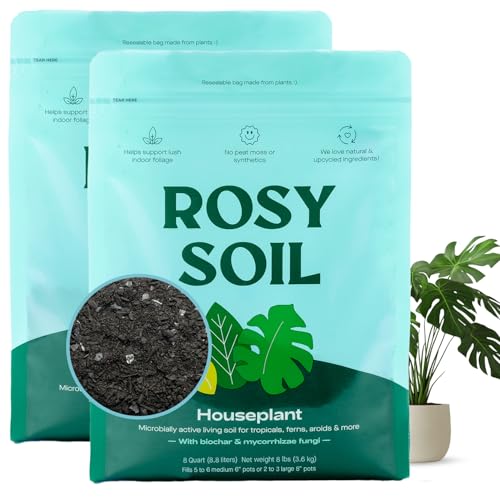
Repotting a shelf of ferns, monsteras, and pothos calls for a balanced indoor medium rather than a highly specialized cactus or orchid blend. This houseplant mix replaces peat moss with biochar, worm castings, mycorrhizae, compost, and bark fines. The result is a more complex growing environment for roots without relying on synthetic fertilizers.
Two 8-quart bags make this practical for a busy spring repotting session or a home with several large planters. Unlike Rosy Soil Biochar Booster, this is a complete potting medium designed to fill containers directly, so you don’t need to calculate an amendment ratio.
Reasons It Performs
- The bark fines, biochar, and compost create a balanced base for general indoor plants.
- Mycorrhizae and other living components support root development and nutrient uptake.
- Two 8-quart bags reduce the number of containers needed for a large repotting job.
Less Ideal Details
- This general mix is less closely matched to the drainage needs of succulents and orchids.
- The large package needs cool, dry storage if you do not use all of it at once.
Who Will Love This
Houseplant hobbyists with several containers and mixed tropical foliage plants will find this a convenient all-purpose potting soil.
A Better Fit Elsewhere
Rosy Soil Organic Houseplant 4QT suits you better when you only have a few small pots and prefer a manageable bag size.
A four-quart bag offers a sensible amount of soil for a compact apartment or a handful of tabletop planters. This version uses the same general houseplant approach as Rosy Soil Houseplant Soil, with biochar, worm castings, mycorrhizae, compost, and bark fines replacing peat moss. That gives you a complete medium with several biological components already included.
For a single small repotting project, the compact package prevents unused mix from taking up unnecessary space. You may find the larger two-bag format more convenient for a full room refresh, though, especially with several mature plants.
Where It Excels
- The bag size works neatly for a few small or medium houseplant containers.
- Biochar, compost, and bark fines provide a more varied base than plain peat-based soil.
Practical Considerations
- A large collection may require several bags, making bulk storage more useful.
- This general houseplant formula is not tailored to the sharper drainage needs of succulents.
Quick Facts
Built With In Mind
This size is ideal for apartment dwellers, beginners, and anyone repotting a few compact indoor plants.
Not Your Match When
Rosy Soil Houseplant Soil gives you better value for a room-sized collection that needs two 8-quart bags.
Orchids grown in a dense indoor mix can struggle because their roots need air and rapid drainage. This blend combines orchid bark, pumice, and biochar, with pumice being a lightweight volcanic stone that creates open spaces around roots. The chunky structure reflects the airy conditions orchids naturally encounter as air-growing plants.
Mycorrhizae and beneficial microbes add biological support to the medium. Compared with Rosy Soil Cactus Mix 4QT, both use coarse structures, but the orchid version pairs bark with pumice and biochar rather than relying on a general succulent formula.
A Few Highlights
- Orchid bark and pumice create the open drainage structure prized by orchid growers.
- Biochar adds a stable porous component to the chunky medium.
- Mycorrhizae and beneficial microbes support healthy root development.
Small Caveats
- This specialized mix is a poorer fit for ordinary foliage plants that prefer a more continuous soil base.
- The 4-quart volume is best matched to a modest number of orchid repotting projects.
The Right Fit
Orchid enthusiasts keeping moth orchids or other air-rooted varieties will appreciate the open root zone.
Look Elsewhere When
Rosy Soil Houseplant Soil is the better option for mixed foliage houseplants that don’t need an orchid-specific medium.
Basil on a sunny windowsill and rosemary on a patio need more than a decorative container and soil scooped from a general bag. This herb blend is formulated for basil, thyme, mint, parsley, cilantro, lavender, rosemary, and similar plants in indoor or outdoor containers. It gives you a clear reason to choose a dedicated medium instead of reusing a dense houseplant mix.
Biochar, worm castings, and mycorrhizae support root development and nutrient uptake. It shares these living components with Rosy Soil Biochar Booster, but the application is different: this one fills herb containers directly, while the booster is mixed into garden soil.
Standout Benefits
- The formula targets common culinary and medicinal herbs rather than generic houseplants.
- One blend works for indoor windowsills and outdoor patio planters.
- Biochar and worm castings complement the mycorrhizae around plant roots.
Practical Considerations
- A large outdoor herb planter may require more than one 4-quart bag.
- Use containers with drainage holes so excess water can leave the root zone.
Technical Highlights
Whose Shelf It Belongs On
Home cooks growing herbs for daily meals benefit from a mix designed for both kitchen windowsills and patio containers.
Where A Sibling Pick Shines
Rosy Soil Biochar Booster is a better fit when you want to amend a large raised bed for tomatoes, peppers, and other vegetables.
What To Look For Before You Buy
Match The Mix To The Plant
Start with how the plant drinks. Succulents and orchids need open media that drains quickly, while ordinary indoor plants benefit from a balanced mix containing bark fines, compost, and biochar. Herbs sit between those extremes, so a dedicated herb blend can be more useful than a general-purpose soil. Choosing by plant type avoids paying for a medium that works against the root structure you want.
Consider The Growing Container
A suitable potting soil can only drain properly when the container has an opening for excess water to leave. Large planters and raised beds also need enough soil volume to support roots without being packed tightly around them. For a windowsill, the 4-quart Rosy Soil Organic Houseplant 4QT is easier to handle; a larger collection may justify the two-bag houseplant format.
Check Coverage And Storage
The Biochar Booster covers up to five cubic feet or roughly 32 square feet, so calculate your bed area before opening a bag. Packaged mixes also need dry storage between uses, especially in a warm garage or humid utility room. Resealable packaging helps, but you still want enough room to keep the bags closed and undisturbed.
Two Potting Soil Details Worth Checking
Pitfalls Shoppers Hit
A common mistake is choosing by plant name alone. Cactus, orchid, houseplant, and herb mixes have different structures, so check the ingredients and drainage profile before purchasing. Another error is ignoring the container, since a medium cannot compensate for a pot with no drainage opening.
Why Top Tier Costs More
Specialty blends cost more because they use targeted components and less filler rather than simply providing a larger volume of standard soil. A biochar amendment, orchid bark, or a living houseplant formula delivers a specific structure you may otherwise need to create by mixing materials yourself.
Frequently Asked Questions
Which Rosy Soil option suits cacti and succulents?
Rosy Soil Cactus Mix 4QT is designed for loose, fast-draining conditions. Its chunky texture suits cacti, succulents, aloe, jade, and other drought-tolerant container plants.
Can Biochar Booster be used in potting soil?
Yes. Blend about 5% into new soil, roughly one cup per cubic foot, or work it into the upper layer around an existing plant. It is an amendment rather than a complete container medium.
What is the difference between the two houseplant soil sizes?
Rosy Soil Houseplant Soil comes as two 8-quart bags for larger repotting sessions. Rosy Soil Organic Houseplant 4QT offers the same general approach in a more compact quantity for smaller collections.
Is the orchid mix suitable for regular houseplants?
The orchid mix is tailored to the open root environment needed by orchids. Rosy Soil Houseplant Soil is the better choice for conventional foliage plants that prefer a balanced, bark-fine medium.
Which mix works for kitchen herbs?
Rosy Soil Indoor/Outdoor Herb Mix 4QT is formulated for basil, thyme, mint, parsley, cilantro, lavender, and rosemary. It works for both windowsill containers and outdoor herb planters.
Final Thoughts
The best value comes from matching the medium to the plant, container, and amount of soil you need. Rosy Soil Cactus Mix 4QT handles dry-loving plants, the houseplant options cover general indoor use, and the orchid, herb, and biochar formulas serve more specialized needs. Choose based on the growing environment and volume rather than packaging size alone.
