

A windowsill full of herbs, a shelf of leafy houseplants, and a windowsill crowded with tiny cactus pots each need a different growing medium. The right potting soil supports the root structure, manages water, and gives each plant a better chance in its particular pot, while the wrong blend can stay too dense or dry out too quickly. These six Rosy Soil options cover succulents, indoor plants, orchids, herbs, and garden soil without asking you to use one mix for every job.
How The Shortlist Stacks Up

Rosy Soil Cactus Mix 4 Quarts

Rosy Soil Biochar Booster 8 Quarts
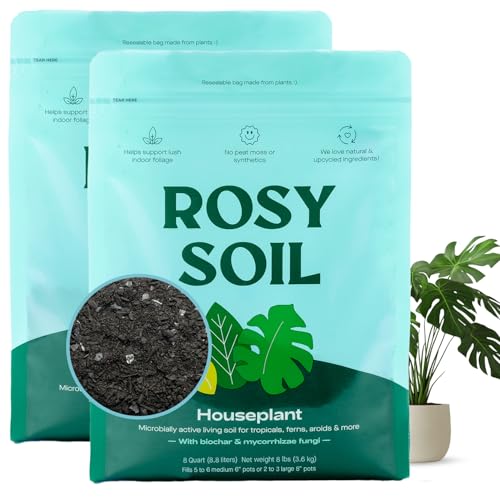
Rosy Soil Houseplant Mix 8 Quarts

Rosy Soil Houseplant Mix 4 Quarts

Rosy Soil Orchid Mix 4 Quarts

Rosy Soil Herb Mix 4 Quarts
A Closer Look At Each Pick
Repotting a jade plant calls for a medium that leaves room around the roots instead of packing them into dense, wet soil. Rosy Soil Cactus Mix uses a loose, chunky structure, which matters most for cacti and other drought-tolerant plants that prefer air around their root systems. The formula includes beneficial fungi, microorganisms, and worm castings, giving the soil a biological component beyond basic drainage.
Compared with the general-purpose Rosy Soil Houseplant Mix, this option is much more specialized. It suits aloe, jade, Christmas cactus, desert rose, lithops, snake plants, and bonsai, although those plants still have differing light and watering needs. The two 4-quart bags are resealable, helping protect the remaining mix until your next repotting session.
Where It Excels
- The open texture promotes drainage and reduces compaction around succulent roots.
- Living soil ingredients support roots with biological activity and organic matter.
- Using no peat keeps the blend suitable for moisture-sensitive cactus varieties.
- Each 4-quart bag reportedly fills two or three plants, making the pack practical for collections.
Trade Offs
- This specialized formula is less suitable for moisture-loving foliage plants.
- Two separate bags take more shelf space than one 8-quart container.
Key Specs
Made For Dry-Garden Collections
This mix best suits cactus and succulent growers who understand the care needs of individual varieties and want a porous root environment.
A Better Fit Elsewhere
Rosy Soil Houseplant Mix 4 Quarts suits foliage plants that prefer a more general indoor planting medium.
Raising tomatoes in a raised bed or filling a new container often starts with a structural problem: ordinary soil may not retain water and nutrients evenly. Biochar is a stable, carbon-rich amendment made by heating organic material in a low-oxygen environment, and Rosy Soil combines it with mycorrhizae, worm castings, bokashi, and compost. The result is designed to improve aeration, water retention, and nutrient absorption without serving as a complete potting mix by itself.
That distinction makes this a practical addition to a garden rather than a substitute for a ready-to-use houseplant blend. One 8-quart bag amends as much as five cubic feet, or roughly 32 square feet, and can be mixed into new soil or placed around existing plants. For a larger outdoor plot, its garden-scale coverage makes it more useful than a small indoor potting bag.
Notable Gains
- Biochar holds moisture and nutrients within its porous carbon structure.
- Mycorrhizae form a root-level relationship that supports nutrient uptake.
- Compost and worm castings feed the soil biology around plant roots.
- One application is designed to continue supporting soil structure over time.
- The bag works in raised beds, garden plots, and container soil.
Points To Note
- It requires mixing or incorporation rather than direct use as a finished potting medium.
- The recommended 5% blend rate must be measured to avoid changing the mix too heavily.
Feature Snapshot
Right Fit For Gardeners
This amendment best suits vegetable gardeners, raised-bed growers, and container gardeners who want to improve an existing soil mix.
Consider Something Else When
Rosy Soil Houseplant Mix 8 Quarts is the more convenient choice for a routine indoor repotting session.
A plant shelf rarely contains just one type of greenery, which is where a flexible indoor mix earns its place. Rosy Soil Houseplant Mix uses biochar, worm castings, mycorrhizae, compost, and bark fines in place of peat. Those ingredients give the medium both a structural base and active components associated with stronger root development.
The pack of two 8-quart bags gives you 16 quarts overall, making this the more convenient format for a substantial collection or several repotting days. Unlike Rosy Soil Cactus Mix, it is not designed around the fast-draining needs of drought-tolerant plants, while the Orchid Mix uses a much coarser bark-based structure.
Everyday Advantages
- The multi-ingredient formula supports general indoor houseplant repotting.
- Biochar and bark fines add structure without relying on peat.
- The larger pack supports multiple plants and future repotting sessions.
Small Caveats
- Two bags require more storage room than the compact 4-quart option.
- Specialized plants still call for a more porous cactus or orchid medium.
Built With In Mind
This format suits indoor plant owners with several pots who want one general-purpose medium for an extended repotting session.
Where A Sibling Pick Shines
Rosy Soil Cactus Mix 4 Quarts is the stronger fit for a collection dominated by jade, aloe, or other drought-tolerant plants.
A single 4-quart bag suits an apartment shelf, a home office, or a plant collection that is being replenished gradually. The organic indoor blend contains biochar, worm castings, mycorrhizae, compost, and bark fines, all used in place of peat. It offers a more purposeful medium than plain garden soil for plants that spend their lives in containers.
Compared with Rosy Soil Houseplant Mix 8 Quarts, the formula follows the same basic approach, but the volume is much easier to store and carry. That makes it sensible for one or two indoor pots. The tradeoff is straightforward: larger collections will need another container sooner.
What Works In Its Favor
- The compact bag suits smaller indoor spaces and occasional repotting.
- Living ingredients give the general-purpose blend a biologically active component.
Some Limits To Know
- Four quarts may be limited for a room with many large pots.
- The formula is not tailored to the open structure required by orchids.
- Drought-tolerant plants receive more benefit from a cactus-specific medium.
The Right Fit
This bag works well for apartment residents and home office workers tending a few conventional foliage plants.
Another Choice May Suit
Rosy Soil Houseplant Mix 8 Quarts offers more convenient bulk storage for a larger indoor collection.
Orchids grow in an open mix rather than the compact soil used for many garden plants, and that difference is visible in the planting medium. Rosy Soil Orchid Mix combines orchid bark, pumice, and biochar to create large gaps around the roots. The structure reflects the airy conditions orchids naturally experience while attached to trees rather than rooted in dense ground soil.
Mycorrhizae and beneficial microbes add a biological layer to the mineral and bark components. For a windowsill orchid, that gives you a purpose-built medium without building a custom blend from separate materials. It is a closer fit than either houseplant option, whose structure is not designed around orchid roots.
Good Reasons To Consider
- Orchid bark and pumice create an open structure with generous air spaces.
- Biochar adds another porous component to the coarse planting medium.
- Mycorrhizae and beneficial microbes support the root environment.
- The ready-made blend saves you from combining several separate materials.
One Thing To Weigh
- The coarse composition is specialized for potted orchids rather than ordinary garden beds.
Technical Highlights
Whose Shelf It Belongs On
This mix suits orchid growers repotting plants in bark-based indoor containers or controlled greenhouse spaces.
Look Elsewhere When
Rosy Soil Herb Mix 4 Quarts is the more suitable option for a kitchen planter filled with basil, parsley, or cilantro.
A kitchen herb planter needs a planting medium that can support frequent harvests without being treated like an ornamental bedding plant. Rosy Soil Herb Mix is formulated for basil, thyme, mint, parsley, cilantro, lavender, rosemary, and other herbs, with biochar, worm castings, and mycorrhizae working together around the roots. The blend is intended for both indoor windowsills and outdoor planters.
The biological ingredients support root development and nutrient uptake, which matters when you harvest leaves regularly. Compared with Rosy Soil Houseplant Mix, this option narrows the formula around culinary herbs, while the Orchid Mix remains much coarser and more specialized.
Useful Strengths
- The formula targets a broad collection of common culinary and aromatic herbs.
- Biochar, worm castings, and mycorrhizae provide a biologically active root zone.
- One blend works for indoor containers and outdoor herb planters.
Possible Compromises
- Four quarts may require additional bags for a large outdoor herb bed.
- Different herbs still need appropriate sunlight and watering schedules.
Core Details
Made For Kitchen Gardens
This mix is a natural fit for cooks growing herbs in a sunny kitchen, windowsill, patio pot, or small outdoor planter.
Swap It Out When
Rosy Soil Biochar Booster 8 Quarts is more useful for a large garden bed where you intend to amend a broad area of soil.
Match The Mix To Root Conditions
Start With Plant Type
Begin with the plant’s natural growing conditions rather than the word “potting soil” on the front of a bag. Cacti and succulents need a loose, quick-draining structure, orchids need a coarse bark-based medium, and leafy houseplants generally benefit from a balanced indoor blend. Herbs fall between the last two categories, so a dedicated herb formula gives you a useful starting point without pretending every herb has identical moisture needs.
Read The Blend Before The Bag Size
Biochar is an amendment rather than a complete growing medium, while bark, compost, worm castings, and mycorrhizae describe what is present in a finished mix. A ready-to-use product saves you from measuring and combining components, while an amendment gives more control over the existing soil. Check whether the product is meant to fill a pot, support a raised bed, or be blended into another medium.
Check How You Will Use It
Houseplant collections and herb planters benefit from a medium formulated for containers, while garden beds may need an amendment rather than a complete potting soil. Larger projects also change the practical calculation: an 8-quart bag may cover a group of pots, yet a bed measured in cubic feet needs a different amount. Look at the stated application rate and the space available for storing an opened bag.
Mistakes Worth Dodging
Common Shopping Slip Ups
Do not treat a soil amendment as a ready-to-fill potting mix, or choose a cactus blend for a moisture-loving houseplant. Check the intended plants, container drainage, and application instructions before opening the bag. The medium’s structure matters more than a general label about being organic or natural.
What Separates Premium From Basic
A specialized blend earns its place through purposeful components, such as bark and pumice for orchids or a porous cactus formula for succulents. A larger bag may also be more useful when you have many pots, but volume cannot replace a suitable formula. Pay for the structure and ingredients your plants actually need.
Frequently Asked Questions
Is Rosy Soil Cactus Mix Suitable for Jade Plants?
Yes, its loose, chunky structure is well suited to jade and similar drought-tolerant plants. It also includes worm castings and beneficial microorganisms for a more active root environment.
How Much Biochar Booster Should You Mix Into Soil?
The recommended starting point is about 5% of the new soil, roughly one cup per cubic foot. You can also sprinkle it around existing plants and work it into the upper few inches of soil.
Which Rosy Soil Houseplant Mix Size Should You Choose?
Choose the 4-quart bag for a few pots or limited storage space. The pack of two 8-quart bags offers more volume for a larger plant collection and several repotting sessions.
Can Orchid Mix Be Used for Regular Garden Plants?
Regular garden plants usually need a different medium suited to their soil and moisture requirements. Rosy Soil Orchid Mix is designed as a coarse, open planting medium for orchids.
Can Rosy Soil Herb Mix Be Used Outdoors?
Yes, the formula is intended for herb planters both indoors and outdoors. Its 4-quart size works well for windowsills and small patio containers, while large beds require more material.
Final Verdict
The right potting soil is defined by the plant’s roots, pot drainage, and growing environment. Rosy Soil Cactus Mix 4 Quarts handles porous succulent needs, Orchid Mix 4 Quarts gives orchid roots room to breathe, and the Herb Mix 4 Quarts serves kitchen plants in either indoor or outdoor containers. For broad houseplant care, the 4-quart and 8-quart houseplant options cover different collection sizes, while Biochar Booster 8 Quarts belongs in garden soil rather than a finished pot. Match the formula to the plant, then choose a bag size that fits your space and routine.
