

Container gardening often starts with a simple problem: the soil has to hold moisture, support roots, and fit where you need it. Gardeners with small balconies may favor compact, compressed products, while those preparing raised beds need enough volume for top-dressing and broad coverage. The right garden soil depends on the plants, the space, and whether you need a growing medium or a surface covering.
This comparison covers earthworm castings, coco mulch, compost and manure blend, organic potting mix, biochar, and concentrated coir. You’ll find options for containers, raised beds, lawns, and larger landscaping projects, with the trade-offs explained clearly so you can choose by task rather than by packaging alone.
A Closer Look At The Lineup
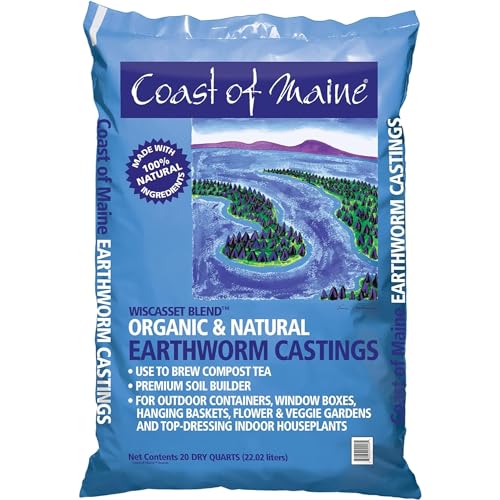
Coast of Maine Wiscasset Blend Earthworm Castings Soil, 20 Quart

PlantBest Coco Mulch Compressed Block 9.1 lb, 64 Quarts

Garden Magic Compost Blend 2-Pack

Back to the Roots Organic Mulch

FOOP Organic Inoculated Biochar Soil Amendment with Microbes, 5G Pail

PlantBest Coco Peat Garden Soil
The Picks, Examined More Closely
You get a 20-quart blend built from earthworm castings, the digested material earthworms leave behind as they process organic matter. Its fine texture and lack of noticeable odor make it practical for topping up houseplant pots without creating the mess associated with heavier compost.
This mix suits you best when container size limits what you can carry. Compared with PlantBest Coco Peat Garden Soil, which comes as a compact block, this option arrives ready to use. You can blend it with your own growing medium or use it as a top layer, although the 20-quart size is less suitable for filling an entire raised bed.
The Practical Payoff
- The 20-quart bag gives you a manageable amount for several containers.
- Fine texture fits neatly around houseplant root balls and pot rims.
- Improved water retention supports steadier moisture in container soil.
- The lack of odor keeps indoor potting work more pleasant.
Things To Consider
- You may need another product for the root zone rather than only a surface layer.
- Its container-focused volume is smaller than the bulk options in this lineup.
At A Glance
Made For
You’ll benefit most as a houseplant owner or container gardener working with a limited amount of storage space.
Where Another Pick Suits Better
Back to the Roots Organic Mulch serves you better when you need a broad-purpose growing blend for herbs, vegetables, or flowers in a larger container.
Your landscaping storage problem gets easier with a compressed coconut mulch block. The 9.1-pound package expands to approximately 64 quarts, giving you much more material than its compact shipping form suggests. That makes it a sensible choice for garden beds, tree bases, and broad areas where a loose mulch bag would be awkward to carry.
Unlike the Coast of Maine castings blend, this product is designed primarily as a surface material rather than a nutrient-rich potting component. You add water before spreading it, and the expanded coconut fibers form a covering over exposed soil. Depending on your bed size, one block may not be enough, so estimate the finished area before you buy.
The Case For It
- The compressed format saves shelf and floor space before use.
- You avoid transporting a large, loose bag from the store to your garden.
- The expanded volume suits mulching trees, beds, and landscaped areas.
Worth Noting
- You need room to let the block expand before using it.
- Its surface-mulch role differs from a complete potting mix.
Who It Suits Best
You’ll appreciate this compact block most when storage space is tight and you want to cover a meaningful garden area with mulch.
Consider Something Else When
PlantBest Coco Peat Garden Soil fits your needs better when you want a concentrated growing medium for pots rather than a separate mulch layer.
Two 40-pound bags give you a substantial amount of compost-based material for lawn top-dressing, raised beds, flowers, and vegetables. The blend combines reed sedge peat with composted animal manure, supplying organic matter and plant nutrients to outdoor soil. Its odor-free formulation is especially helpful when you work near an open window or a busy household entryway.
You get more bulk here than with the 20-quart Coast of Maine option, although the 80-pound total is heavier to move. Compared with coco mulch, this blend is more closely connected to feeding and improving soil, while the coconut product concentrates on creating a protective surface layer. It is best treated as an amendment or top-dressing for established outdoor areas.
The Value In It
- Two 40-pound bags provide generous coverage for outdoor beds.
- The peat-and-manure blend adds organic matter to your soil.
- The lack of odor makes handling more practical near living spaces.
Points To Note
- You need to plan for the weight of two full-size bags.
Key Specs
The Right Fit
You’ll benefit most when you maintain raised vegetable beds, flowers, or a lawn and need a substantial top-dressing material.
Another Choice May Suit
Back to the Roots Organic Mulch suits you better for filling individual pots with a ready-to-grow blend rather than top-dressing outdoor beds.
Your mixed-container projects get a broad-purpose medium designed for herbs, vegetables, fruits, and flowers. The 25.7-quart package, equivalent to one cubic foot, works in pots, ground-level beds, and raised beds. That versatility makes it easier to keep one mix on hand for several parts of a small garden.
Plant food provides nutritional support, while dolomitic limestone helps adjust soil pH. Yucca extract, also called saponin, is included for moisture control, and the blend avoids traditional peat. Unlike PlantBest Coco Mulch, this option is formulated as a growing medium for the root zone. You may need another loose material for surface coverage around stems.
A Favorable Mix
- You can use the blend in pots, in-ground beds, and raised beds.
- Included plant food supports routine growing needs across vegetables and flowers.
- Dolomitic limestone provides a pH-adjusting component.
- Yucca extract adds moisture-control functionality.
- The one-cubic-foot volume fits many common container projects.
Minor Gripes
- Its mulch label can cause confusion with loose surface-mulch products.
- You may need a separate material for deeper bed building or broad surface coverage.
Feature Snapshot
Who Will Love This
You’ll love this option if you grow a mixed assortment of herbs, vegetables, fruits, and flowers in containers or small beds.
A Better Fit Elsewhere
Garden Magic Compost Blend 2-Pack fits your outdoor soil-improvement needs better when you want to top-dress raised beds or lawn areas.
Your soil-improvement project gets an amendment built around biochar, a stable, porous material made from pine byproducts. This version arrives charged with soil-enriching microorganisms, adding a biological component that basic compost products don’t provide in the same form. It can support lawn, field, container, flower-bed, tree, and shrub applications.
Biochar absorbs excess nutrients and moisture, then makes them available as plants need them. You’ll find this most useful when you want to amend existing soil rather than replace a pot or fill a bed from scratch. Compared with Coast of Maine Wiscasset Blend Earthworm Castings Soil, this product takes a more specialized approach to soil structure and microbial activity.
Everyday Wins
- You get biochar already charged with soil-enriching microbes.
- The porous amendment retains nutrients and moisture for later plant use.
- It works across lawns, containers, beds, trees, and shrubs.
- The pine-waste source gives the material a defined origin.
- The five-gallon pail provides a manageable amount for targeted work.
Trade Offs
- You must use it as an amendment rather than a complete potting medium.
- Application quantity and mixing need to follow the product directions.
- Its specialized purpose is less convenient than a ready-to-use blend.
Built With In Mind
You’ll benefit most as an experienced gardener improving established soil across trees, lawns, or perennial beds.
Where A Sibling Pick Shines
PlantBest Coco Peat Garden Soil suits you better when you need a complete, peat-free growing medium for a new container.
Your potting shelf stays manageable with an 11-pound compressed coconut coir block. Once expanded, it produces approximately 79 quarts, or 2.65 cubic feet, of growing medium. That combination makes it useful for a group of pots or a small indoor garden, particularly when carrying loose soil is inconvenient.
The coir is triple-washed and low in salts, which helps create a clean starting medium for container plants. Compared with PlantBest Coco Mulch, both use compressed coconut material, but this option expands into a root-zone growing mix rather than a surface covering. You need to add water and prepare it before potting, and you may want to add your own fertilizer according to the crop’s needs.
Where It Delivers
- You gain roughly 79 quarts of medium from a compact 11-pound block.
- Triple-washed, low-salt coir gives you a clean container base.
Where It May Fall Short
- You need to prepare the compressed block with water before potting.
- It lacks the included plant food found in the Back to the Roots blend.
Quick Facts
Made For
You’ll benefit most as a container gardener who wants a lightweight, concentrated medium for indoor plants or seasonal pots.
Look Elsewhere When
Back to the Roots Organic Mulch fits your needs better when you want plant food, limestone, and moisture-control ingredients already combined in the mix.
What Matters Before You Fill a Pot
Match the medium to the job
You need a root-zone medium for pots and seed-starting containers, while beds and tree bases call for a surface mulch or soil amendment. Top-dressing calls for a different texture and volume than filling an entire planter. Your first decision is the job, because using a soil amendment as a complete potting mix can leave roots without the support they need.
Read volume and weight together
A 9.1-pound compressed block can become 64 quarts of mulch, while a 20-quart loose bag may weigh more and occupy more shelf space. Check both figures before buying. You’ll also want to consider whether you have room to expand a compressed product and enough storage for the finished material.
Check what the blend already contains
Composted manure, plant food, limestone, yucca extract, and microorganisms serve different purposes. Nutrients feed plants, limestone adjusts pH, and moisture-control ingredients affect how the medium handles water. Biochar and microbes support soil biology, but they don’t replace the basic physical support required in a container. Choose the blend that matches the plants and the existing soil.
Two Details That Change Soil Decisions
Wrong Turns To Avoid
Don’t assume every product labeled for gardens can serve the same purpose. A loose surface mulch, a concentrated potting mix, and a microbial amendment each belong in a different place. Check the package for its intended use and avoid choosing solely by the word “soil.”
What Separates Premium From Basic
Higher-tier products often add specialized components such as balanced plant food, pH adjusters, moisture-control ingredients, or inoculated microbes. Those extras help only when they match your plants and application. A simple coir block may be more suitable for your containers, while a specialized amendment can make sense for long-term bed improvement.
Frequently Asked Questions for Price For Garden Soil
What is the best garden soil for container plants?
A fine-textured, low-salt potting mix generally fits container plants better than loose landscape mulch. Your choice should support roots, retain appropriate moisture, and fit the available pot volume.
Is earthworm castings a complete potting mix?
Earthworm castings provide useful organic matter but are generally better used as part of a growing medium or top-dressing. You can blend them with another base material for container use.
How much does a compressed coco block expand?
The 9.1-pound PlantBest Coco Mulch block expands to about 64 quarts, while the 11-pound PlantBest Coco Peat Garden Soil block expands to roughly 79 quarts. Your storage space should accommodate the finished volume.
Can compost and manure blend be used on lawns?
Yes, Garden Magic Compost Blend is intended for lawn top-dressing and raised beds. Its odor-free blend of reed sedge peat and composted manure suits outdoor flowers, vegetables, and grass.
What is the difference between mulch and potting mix?
Mulch covers exposed soil, while potting mix provides the root-zone medium around plants. Your project may need one or both, but a surface mulch shouldn’t automatically be treated as a container-growing medium.
Final Verdict
Your best choice depends on the job: Coast of Maine fits container top-dressing, PlantBest Coco Mulch handles surface coverage, Garden Magic supports outdoor beds, Back to the Roots serves mixed containers, FOOP targets established soil, and PlantBest Coco Peat fits compact growing setups. Match the product to the space, roots, and amount you need, and you’ll avoid buying a versatile label that doesn’t perform the task you have in mind.
