

Crabgrass often slips into thin lawn areas before you notice it, turning a small patch into a spreading problem by midsummer. The right pre-emergent for crabgrass depends on your grass type, lawn size, preferred application method, and timing. These options serve different needs, from turf-focused weed control to granular lawn treatment and broader landscape cleanup.
The Main Contenders

Roundup for Lawns5 Concentrate

Baye Rezilon Pre-Emergence

Yard Mastery 0-0-7 Prodiamine Pre-Emergent, 45 lb, 15,000 sq ft

Image Casoron Preventer 8 lb
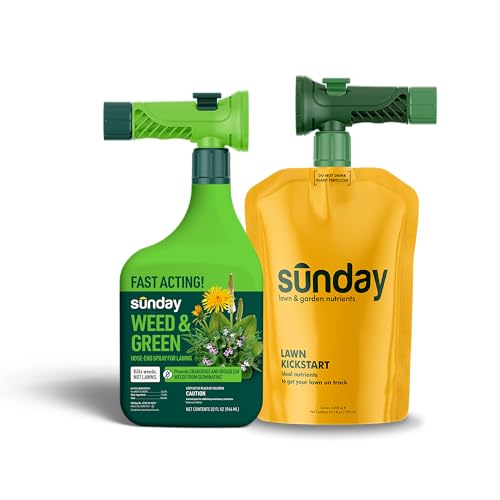
SUNDAY Weed & Feed 5,000 Sq Ft

SUNDAY Weed Warrior 2-Pack
A Closer Look At Each Pick
A lawn that already has dandelions, clover, and chickweed needs a different approach from one preparing for crabgrass. Roundup for Lawns5 Concentrate handles a broad collection of established weeds while being intended for compatible warm-season and cool-season turf. Its selective formulation focuses on weeds rather than the entire lawn, which makes it useful for selective cleanup.
The concentrate format gives you several application choices, including backpack, pump, hose-end, and power sprayers. For a homeowner with substantial lawn care experience, that flexibility is valuable. For most people, though, this is a broadleaf cleanup tool rather than the strongest match for early crabgrass control, especially because crabgrass is absent from its stated weed list.
Positive Points
- Covers 93 weed types, including dandelion, clover, chickweed, oxalis, purslane, and yellow nutsedge.
- Works with several common sprayer styles for uniform or spot application.
- Starts working immediately and becomes rainproof after four hours.
- Lists St. Augustinegrass, Bermuda, centipede, bahiagrass, and zoysiagrass among compatible southern lawns.
Practical Considerations
- Its listed use centers on existing broadleaf weeds, not pre-emergent crabgrass control.
- Concentrate mixing requires the specified amount and compatible sprayer equipment.
Feature Snapshot
Made For Southern Lawns
Homeowners maintaining compatible southern turf and dealing with several established weed types benefit most from this concentrate.
Where Another Pick Suits Better
Yard Mastery 0-0-7 Prodiamine Pre-Emergent suits you better when your priority is stopping crabgrass and annual bluegrass before they emerge.
Pre-emergence products create a timing advantage by working before weed seedlings become visible. Baye Rezilon is explicitly positioned as a pre-emergence herbicide, making it more closely aligned with crabgrass prevention than the broad weed-control choices elsewhere in this list. Group 29 is an herbicide classification, useful when comparing active-ingredient families rather than appearance alone.
Its one-quart container suits a homeowner who wants a focused lawn application without purchasing a large granule bag. The concise product information leaves grass compatibility, dilution, and application timing as important label checks, so careful instruction reading matters. You may find this option most useful when your lawn plan is centered entirely on early-season weed emergence.
Notable Gains
- Its pre-emergence purpose matches the timing required for young crabgrass seedlings.
- The quart size works well for smaller or carefully measured lawn applications.
- Group 29 classification makes the herbicide family easy to compare with other products.
Where It May Fall Short
- Confirm that your lawn type and target weeds appear on the product label.
- The liquid format requires the correct mixing and application equipment.
- It does not serve as the feeding component of a combined lawn-care routine.
Best Suited To
Homeowners with a smaller lawn and a well-timed pre-emergence program benefit most from this focused treatment.
Consider Something Else When
Yard Mastery 0-0-7 Prodiamine Pre-Emergent offers a better fit for large lawns that also benefit from granular spreading and a fertilizer component.
Large properties make lawn treatment more than a small patch-and-spray job. Yard Mastery’s 0-0-7 Prodiamine Pre-Emergent provides a clearly stated application rate of 3 pounds per 1,000 square feet, with the 45-pound bag covering 15,000 square feet. That measurable coverage makes budgeting and spreader calibration much easier for owners of sizable lawns.
Its granule format spreads through a lawn spreader, while the 0-0-7 analysis adds nitrogen without potash or phosphate. Crabgrass heads the list of targeted weeds, alongside annual bluegrass, bittercress, chickweed, and henbit. Compared with Baye Rezilon, the tradeoff is added fertilizer and a larger bag rather than a compact liquid concentrate.
Useful Strengths
- Directly targets crabgrass, annual bluegrass, chickweed, henbit, and bittercress before emergence.
- The stated 15,000-square-foot coverage suits broad residential lawns.
- Granules work with standard lawn-spreading routines and avoid liquid mixing.
- The 0-0-7 fertilizer analysis supports lawn feeding alongside weed control.
Things To Consider
- The 45-pound bag requires dry storage away from moisture and pets.
- Accurate spreader calibration is important for uniform coverage.
- The fertilizer component may be unnecessary when your lawn already has adequate nutrition.
At A Glance
The Right Fit
Homeowners with medium or large lawns seeking crabgrass control and some added nutrition benefit most from this granular option.
A Better Fit Elsewhere
Baye Rezilon Pre-Emergence suits you better when a compact liquid treatment and a narrower application are your priorities.
Not every crabgrass problem starts in open turf. Gardeners often see unwanted grasses and weeds around roses, shrubs, fruit trees, and landscape beds, where an open lawn spreader is less useful. Image Casoron uses granules intended for these planted areas, giving it a clearer purpose than the turf-focused products in this list.
The label coverage includes annual grassy weeds and certain perennial weeds around established ornamental trees and shrubs, fruit and nut trees, and berries. The tradeoff is narrower placement: this is a landscape-bed treatment rather than a broad crabgrass program for an entire lawn. Confirm the listed plants and treated areas before spreading the granules.
The Case For It
- Granules spread conveniently around established shrubs, trees, roses, and berries.
- Targets annual grassy weeds and certain perennial weeds in garden and landscape areas.
- The 8-pound package provides a manageable option for concentrated bed applications.
Factors To Consider
- Its strongest application is around listed landscape plants, not across an entire lawn.
- Keep granules away from plant material that does not appear on the label.
- A lawn spreader may be less useful here than a hand broadcast spreader.
Who Will Love This
Gardeners maintaining weed-prone beds around compatible roses, trees, shrubs, and berry plants benefit most from these granules.
Swap It Out When
Yard Mastery 0-0-7 Prodiamine Pre-Emergent is a stronger match for treating a large lawn with crabgrass and annual bluegrass.
A spring lawn program often combines two jobs: addressing visible weeds and feeding the grass. SUNDAY Liquid Weed & Feed follows that structure with separate weed and feeding steps rather than placing every component in a single application. The stated targets include dandelion and crabgrass, making it more relevant to an already active spring cleanup than a strict pre-emergence program.
Its liquid approach suits lawns that already have a sprayer and benefit from a simple routine. Compared with Yard Mastery’s dry granules, it avoids carrying and calibrating a heavy bag across the yard. The catch is timing: this choice is less suited to someone who wants a single early treatment focused on crabgrass emergence.
Everyday Wins
- Combines weed control and lawn feeding in a two-part seasonal routine.
- Targets both dandelion and crabgrass within a single product system.
- Liquid application fits homeowners who already own a suitable sprayer.
- Stated coverage reaches 5,000 square feet.
Some Limits To Know
- This is a weed-and-feed routine rather than a dedicated pre-emergence barrier.
- The separate treatment and feeding steps take more time than one granular application.
- Sprayer capacity and label directions determine application feasibility.
Quick Facts
Made For Routine Lawn Care
Homeowners managing a medium lawn and handling both feeding and visible spring weeds benefit most from this paired routine.
Another Choice May Suit
Yard Mastery 0-0-7 Prodiamine Pre-Emergent suits you better when early crabgrass control and broad granular lawn coverage are the main goals.
Cracks in a driveway, edges of a patio, and open areas in a garden bed need more than a lawn spreader can handle. SUNDAY Weed Warrior is a nonselective concentrate for those targeted areas, where unwanted grasses and broadleaf weeds compete with pavement or established planting. It is not positioned as a pre-emergent crabgrass treatment for lawn turf.
The two 22-ounce bottles make two gallons of finished spray and include a reusable mixing pouch plus a battery-powered wand sprayer. That equipment makes repeated hardscape applications more convenient, especially for someone tired of mixing by hand. The trade-off is selectivity: its broad action requires careful placement around wanted plants.
A Few Highlights
- Two concentrated bottles produce two gallons of finished spray.
- Includes a reusable mixing pouch and battery-powered wand sprayer.
- Targets unwanted vegetation in driveway cracks, walkways, patios, and garden beds.
- Concentrate format reduces the need to carry multiple ready-mixed bottles.
Details To Watch
- The nonselective action requires precision around wanted plants.
- You need to mix the concentrate with water before spraying.
- It serves hardscape and bed cleanup rather than early lawn crabgrass control.
The Main Details
Who Should Grab It
Homeowners focused on driveway cracks, walkways, patios, and garden beds benefit most from this concentrated spray kit.
Look Elsewhere When
Baye Rezilon Pre-Emergence is the better fit when your goal is an early pre-emergence treatment for crabgrass in lawn turf.
Match the Treatment Window to Your Lawn
The first decision is timing. Pre-emergent means the treatment is applied before weed seedlings become visible, so a late application may miss the stage when crabgrass is most vulnerable to interruption. Check the product label for its application window and local growing conditions rather than relying on a calendar date alone.
Start With Grass Type
Your lawn species comes before product format. Roundup for Lawns5 lists St. Augustinegrass, Bermuda, centipede, bahiagrass, and zoysiagrass among suitable southern lawns. Other products may carry different restrictions, and a product intended for landscape beds may not belong in turf, so verify grass and plant compatibility before mixing or spreading anything.
Choose Liquid or Granular
Liquid concentrates offer precise placement and work well with backpack, pump, hose-end, or power sprayers. Granular products suit lawn spreaders and large properties, with Yard Mastery providing a stated 3-pound rate for each 1,000 square feet. Your equipment and comfort with mixing or calibration should guide this choice.
Check Area and Equipment
Measure the treated area before opening a container. Yard Mastery covers 15,000 square feet with its 45-pound bag, while SUNDAY’s weed-and-feed system is listed for 5,000 square feet. The SUNDAY Weed Warrior kit also includes a wand and mixing pouch, but the concentrated format still requires correct dilution.
Read the Timing Window
Granular, liquid, and post-emergence products solve different stages of a lawn problem. A dedicated pre-emergence herbicide fits early crabgrass control, while a weed-and-feed system serves visible weeds and feeding together. Roundup for Lawns5 is primarily a broad established-weed treatment, so matching the product to the weed stage prevents a disappointing application.
What Makes Each Approach Different
Mistakes Worth Dodging
Choosing by packaging alone can lead to the wrong treatment. A weed-and-feed kit is not a substitute for early crabgrass control, and a nonselective concentrate does not belong casually in lawn turf. Always match the labeled plants, weeds, application timing, and equipment before treating.
What Separates Premium From Basic
Added fertilizer, larger coverage, or included spray equipment can justify a higher tier when your lawn needs those functions. Granular fertilizer adds convenience for large lawns, while a concentrate kit helps with repeated hardscape cleanup. For a small patch or one seasonal application, the basic option may cover your needs more economically.
Frequently Asked Questions
When should I apply a pre-emergent for crabgrass?
Apply it before crabgrass seedlings become visible, following the product label’s timing and application instructions. Local grass condition and weather help determine the exact window.
Can pre-emergent products control crabgrass already visible in the lawn?
No, pre-emergent products act before seedlings emerge, so visible crabgrass needs a product labeled for that stage. SUNDAY Liquid Weed & Feed targets crabgrass as part of its visible-weed and feeding routine.
Is liquid or granular pre-emergent better for crabgrass?
Liquid concentrates allow targeted placement, while granular products are convenient for large lawns and standard spreaders. Your sprayer, storage space, and application comfort determine which method fits better.
Which option suits southern grass lawns?
Roundup for Lawns5 is specifically listed for several southern grasses, including St. Augustinegrass, Bermuda, centipede, bahiagrass, and zoysiagrass. Check every product label for compatibility with your exact turf before application.
Do all these products feed the lawn?
No, only some combine weed control with nutrition. Yard Mastery carries a 0-0-7 fertilizer analysis, and SUNDAY Liquid Weed & Feed includes a separate feeding step, while the other choices focus primarily on weed control.
Final Thoughts
The strongest direct match for early crabgrass control is Yard Mastery’s prodiamine granule treatment, with Baye Rezilon offering a compact liquid alternative. Roundup for Lawns5 handles established weeds in compatible lawns, and the two SUNDAY products suit visible-weed or hardscape routines instead. Match the treatment to the weed stage, lawn type, and application equipment before you start.
