

A pasture thick with broadleaf weeds, a cool-season lawn losing ground to clover, and an unevenly sprayed treatment area create different herbicide decisions. Ranchers and property managers need products matched to weed stage, grass type, and application scale, while careful sprayers also benefit from visible spray indicators that show where treatment has landed.
The Essentials At A Glance

Corteva DuraCor Herbicide 1 gal

Monterey Turflon Ester Herbicide 1 Pint

Liquid Harvest Lazer Green Spray Pattern Indicator 1 Gallon

Corteva Remedy Herbicide Concentrate
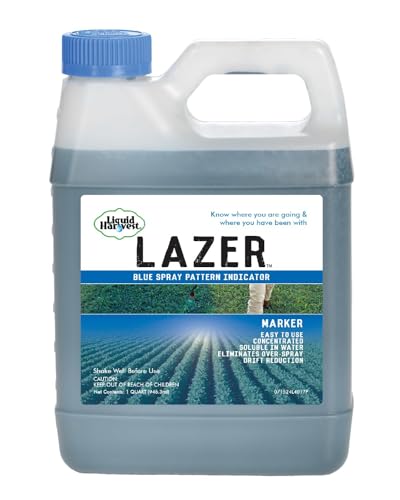
Liquid Harvest Lazer Blue Spray Pattern Indicator 32 Ounces

Yard Mastery 0-0-7 Granular Prodiamine Pre-Emergent 45 lbs
Taking A Closer Look At The Options
Large-scale pasture weed control calls for more than a spot treatment, and Corteva DuraCor brings both post-emergent and residual activity to rangelands, grazing land, CRP acres, and established forage grass. Residual activity means the treatment continues working after application rather than acting only on vegetation visible at that moment.
Its selective action targets broadleaf and invasive plants while leaving established grasses in place, which makes the gallon format more relevant to ranchers and agricultural professionals than to someone treating a small residential lawn. Broadcast use also suits acreage where treating individual weed patches would be impractical.
Strong Points
- Controls broadleaf and invasive weeds across pasture and rangeland settings.
- Residual activity supports longer weed management and reduced regrowth.
- Selectivity helps preserve established pasture and rangeland grasses.
- The one-gallon container supports large-area broadcast application.
Practical Considerations
- New York use is restricted, making a location check essential before purchase.
- Its professional, acreage-oriented format offers little value for one small lawn patch.
Key Specs
Best Suited To
Ranchers, land managers, and agricultural professionals managing broadleaf weeds across established forage acres.
Another Choice May Suit
Yard Mastery 0-0-7 Granular Prodiamine Pre-Emergent 45 lbs suits homeowners preventing selected lawn weeds before they emerge.
Cool-season ornamental lawns need a selective approach when clover, oxalis, ground ivy, wild violet, ragweed, and certain grasses become persistent. Monterey Turflon Ester targets emerged weeds, including bermudagrass and kikuyugrass, without relying on residual weed control.
Compared with DuraCor’s broadacre pasture role, Turflon Ester is a more focused lawn treatment. The included measuring spoon and one-pint container make it easier to dilute and measure a smaller spray-tank batch, while its listed coverage extends to 20,000 square feet.
Useful Touches
- Addresses both selected broadleaf weeds and troublesome turf grasses.
- Works on actively emerged plants, giving treatment a clearly defined stage.
- The measuring spoon helps keep small spray batches easier to proportion.
- One pint can cover up to 20,000 square feet when used as directed.
Points To Note
- Use is limited to perennial bluegrass, perennial ryegrass, or tall fescue turf.
- Spray drift onto flowerbeds and other non-target broadleaf plants can cause damage.
Quick Facts
Who It Suits Best
Home lawn caretakers maintaining compatible cool-season turf and dealing with emerged broadleaf or grass weeds.
Not Your Match When
Corteva DuraCor Herbicide 1 gal fits large pasture managers whose weed-control program needs residual activity.
Even coverage becomes much easier to judge when the spray mixture leaves a visible green trail. Liquid Harvest Lazer Green adds that visual cue to water-based treatments, showing you where a solution has traveled across grass, lawns, or similar surfaces.
This is an application aid rather than a pre-emergent or post-emergent herbicide. Whereas Turflon Ester kills actively growing weeds, Lazer Green simply identifies treated areas, which can help with spot applications, overlapping passes, and keeping a treatment confined to the intended area.
Positive Takeaways
- Green coloring makes boundaries and missed patches easier to notice.
- Works with water-based chemical spray mixtures.
- The one-gallon format suits repeated or larger marking jobs.
- Marking is non-permanent and non-staining, so visibility need not become a lasting surface change.
Small Caveats
- It cannot mix with oil-based solutions.
- It marks coverage but provides no weed-control action by itself.
Right Fit For
Careful applicators treating large grass areas with water-based mixtures who need an immediate visual record of coverage.
Look Elsewhere When
Monterey Turflon Ester Herbicide 1 Pint suits you when the goal is controlling emerged weeds in compatible cool-season turf.
Brush encroachment and stubborn broadleaf plants call for a different emphasis than broadacre pasture weed management. Corteva Remedy uses triclopyr to target brush and broadleaf weeds across rangelands, permanent grass pastures, CRP acres, and fencerows.
Both Corteva products are built for agricultural settings, but their active ingredients and intended challenges differ. DuraCor emphasizes broadleaf weed control with residual activity, while Remedy centers on brush and broadleaf vegetation through a concentrate format.
Points In Its Favor
- Triclopyr targets encroaching brush and tough broadleaf weeds.
- Suitable for rangeland, pasture, CRP, and fencerow applications.
- The concentrate format supports professional mixing and application work.
- Useful where reclaiming overgrown land is a larger objective.
Trade Offs
- Concentrated products require careful measurement and dilution according to label directions.
- Sensitive sites require a compatibility check before nearby vegetation is treated.
Feature Snapshot
Made For
Pasture and rangeland managers reclaiming brush-heavy land or managing broadleaf weeds across agricultural sites.
A Better Fit Elsewhere
Liquid Harvest Lazer Green Spray Pattern Indicator 1 Gallon suits applicators who first need a visible way to check spray coverage.
Blue coloring offers another way to confirm where a water-based spray has landed. Liquid Harvest Lazer Blue marks treated grass and lawn areas, helping you spot uneven passes before the mixture dries and the visual evidence fades.
Compared with the one-gallon green version, this option comes in a more compact 32-ounce container. That makes it a practical companion for smaller treatment batches, while the blue color can be easier to distinguish against dark soil or green vegetation.
Key Advantages
- Blue color provides a clear contrast across grass and soil.
- Compatible with water-based herbicides, fungicides, pesticides, and fertilizers.
- The 32-ounce size suits smaller mixing and application routines.
- Non-permanent marking helps avoid a lasting surface stain.
Areas To Watch
- Oil-based mixtures are outside its compatibility range.
- Visible coverage provides application feedback, not weed control.
Who Will Love This
Home lawn applicators and small-scale landscapers who mix water-based treatments and want quick visual confirmation of placement.
Where A Sibling Pick Shines
Liquid Harvest Lazer Green Spray Pattern Indicator 1 Gallon fits you better when a larger marking job makes the one-gallon container more convenient.
Prevention requires a different timing approach from killing weeds already visible in the lawn. Yard Mastery’s granular prodiamine treatment creates a pre-emergent barrier, meaning it targets listed weeds before they emerge rather than acting on established plants.
Its listed targets include crabgrass, annual bluegrass, bittercress, chickweed, and henbit. Compared with Turflon Ester’s post-emergent use on actively growing weeds, this product fits a seasonal prevention plan centered on cool-season lawn care.
Good Reasons To Consider
- Pre-emergent timing supports prevention of several common lawn weeds.
- Granules are practical for broad, even lawn distribution with suitable spreading equipment.
- The 45-pound bag covers 15,000 square feet at the listed 3-pound application rate.
- The 0-0-7 analysis pairs weed prevention with a fertilizer format.
The Fine Print
- Pre-emergent products do not control weeds that have already emerged.
- Even distribution depends on using the product at its specified rate and with suitable equipment.
Core Details
Built With In Mind
Homeowners maintaining lawns where preventing crabgrass, annual bluegrass, and several common winter weeds is more useful than treating emerged plants.
Reach For A Different Pick When
Monterey Turflon Ester Herbicide 1 Pint suits you better when actively growing weeds in compatible cool-season turf need treatment now.
Match The Treatment Window To Your Site
Identify The Weed Stage
A pre-emergent treatment prevents listed weeds from developing after application, while a post-emergent product acts on plants already growing. A residual herbicide adds continuing activity after treatment, making it useful in pasture programs that combine existing weed control with later regrowth management.
Match The Turf And Site
Cool-season ornamental turf, permanent pasture, rangeland, CRP acreage, and residential lawns do not share the same treatment profile. Turflon Ester is limited to compatible cool-season grasses, while DuraCor and Remedy are oriented toward agricultural forage and land-management settings.
Check The Active And Residual Attributes
Aminopyralid, florpyrauxifen-benzyl, and triclopyr define the listed Corteva treatments differently. Prodiamine serves as the pre-emergent barrier in Yard Mastery, so choosing it for weeds already visible may leave the original problem in place.
Plan Coverage Before Mixing
Consider container size, listed coverage, and application equipment together. A one-gallon concentrate may suit large acreage, a one-pint bottle may suit measured lawn batches, and 45 pounds of granular material requires a spreader for consistent distribution.
Where Application Details Change The Decision
Mistakes Worth Dodging
The most consequential mistake is choosing a product by weed name without checking the treatment stage, grass type, and labeled site. Another common error is expecting pre-emergent granules to remove emerged weeds or assuming a post-emergent spray will prevent later seedlings.
What Separates Premium From Basic
A larger container or higher-strength concentrate can reduce repeated measuring and handling for large jobs, while a spray indicator adds coverage visibility rather than weed-control power. The useful upgrade depends on your acreage, spray equipment, and need to monitor application accuracy.
Frequently Asked Questions
What Is The Difference Between Pre-Emergent And Post-Emergent Herbicides?
Pre-emergent herbicides target weeds before they appear, whereas post-emergent herbicides treat plants that have already emerged. Residual activity adds continued control after application.
Can A Pre-Emergent Herbicide Kill Weeds Already Growing In The Lawn?
No, a pre-emergent barrier is intended to prevent listed weeds from emerging, not remove established plants. Use an appropriate post-emergent treatment for weeds already present.
Is Turflon Ester Suitable For Every Type Of Lawn?
No, it is designed for compatible cool-season ornamental turf such as perennial bluegrass, perennial ryegrass, and tall fescue. Flowerbeds and other non-target broadleaf plants must also be protected from spray drift.
What Does A Spray Pattern Indicator Add To A Treatment?
A spray pattern indicator temporarily marks where a water-based mixture has traveled, helping you identify uneven coverage or missed areas. It does not control weeds by itself.
How Do I Choose Between Pasture And Lawn Herbicides?
Start with the site, grass type, target weeds, and whether the weeds have already emerged. Turf, pasture, rangeland, and residential lawn products have different labeled uses and application requirements.
Final Verdict
Your most useful choice depends on the job: DuraCor for residual pasture weed control, Turflon Ester for emerged weeds in compatible cool-season turf, and prodiamine granules for lawn weed prevention. Remedy addresses brush-heavy agricultural sites, while Lazer Green and Lazer Blue help you verify spray coverage without replacing weed control. Read the label and match every attribute to the ground you intend to treat.
