

Pepper plants can look easy to grow, yet their roots are particular about soil that drains well without staying parched. You need a mix suited to containers, enough moisture retention for steady growth, and a planting medium that supports feeding without becoming compact. The right choice depends on whether you’re starting a few plants indoors, filling a raised bed, or mixing soil for an outdoor planter.
The Lineup, Simplified

Rosy Soil Cactus & Succulent Mix 4-Quart Pack

Rosy Soil Biochar Booster 8-Quart
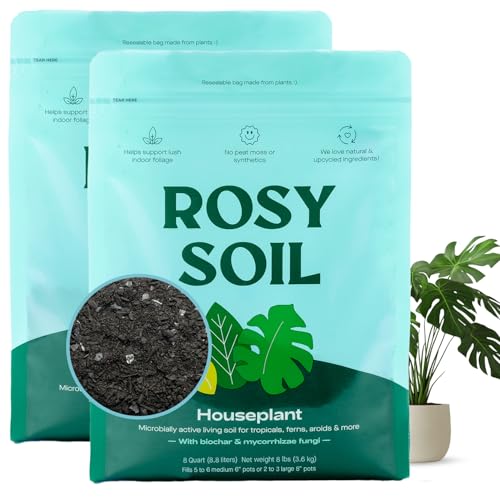
Rosy Soil Houseplant Mix 8-Quart Pack

Rosy Soil Organic Houseplant Mix 4 Quarts

Rosy Soil Orchid Mix 4 Quarts

Rosy Soil Herb Mix 4 Quarts
A Deeper Look At The Lineup
This loose, gritty mix is built for plants that prefer dry root zones, including aloe, jade, snake plants, and desert roses. Its chunky structure lets water leave quickly, which helps reduce the compacted, waterlogged conditions that can trouble many container plants.
For peppers, it serves more as a specialized reference point than a direct recommendation. Compared with Rosy Soil Biochar Booster, it prioritizes rapid drainage over moisture retention and nutrient support, so you’ll need to assess it against the moisture needs of your growing setup.
Where It Helps
- The open texture resists compaction and promotes drainage around roots.
- Peat-free composition suits gardeners seeking a low-moisture planting medium.
- Beneficial fungi, microorganisms, and worm castings add biological material to the mix.
- Resealable packaging helps preserve the remaining soil between planting sessions.
Trade Offs
- This formulation targets drought-tolerant plants rather than fruiting vegetables, making it a specialist choice for pepper planters.
Quick Facts
Built With In Mind
This mix suits beginners raising drought-tolerant houseplants in containers where loose drainage and easy potting matter most.
Look Elsewhere When
Rosy Soil Biochar Booster 8-Quart is the better fit for peppers that need stronger moisture retention and nutrient uptake.
Biochar is a stable, carbon-rich amendment that can improve both moisture retention and aeration when mixed into soil. This option stands apart from the specialty mixes because peppers are explicitly included among the crops it is designed to support.
For a raised bed or large container, that combination makes practical sense. Depending on your existing soil, blending roughly 5% into the planting medium can create a more supportive root environment without replacing the entire soil volume.
Benefits That Matter
- Biochar helps soil hold moisture and nutrients between waterings.
- Mycorrhizae form a beneficial relationship with roots, supporting nutrient absorption.
- Worm castings, bokashi, and compost add biological material to the soil.
- The amendment works with peppers, tomatoes, cucumbers, herbs, and flowering plants.
- One bag covers a substantial planting area and fits both beds and containers.
Practical Considerations
- This is an amendment rather than a complete potting medium, so it needs to be blended with suitable soil.
- The 8-quart package takes more storage room than a single 4-quart planting mix.
Technical Sheet
The Right Fit
This amendment fits gardeners growing peppers in raised beds, outdoor beds, or containers with existing potting soil.
Where A Sibling Pick Shines
Rosy Soil Herb Mix 4 Quarts is a better fit for a windowsill or patio planter devoted entirely to culinary herbs.
Two 8-quart bags give you a generous planting base for an indoor collection or a busy spring repotting schedule. The mix replaces peat with biochar, worm castings, mycorrhizae, compost, and bark fines, producing a more complex medium than plain garden soil.
It can serve as the base for container peppers, although its houseplant focus makes it less specialized than the Biochar Booster. The honest read is that this option works best when you want one versatile soil for several indoor plants.
The Helpful Details
- Peat-free ingredients give container gardeners a planting base without traditional peat moss.
- Biochar and bark fines add physical variety to the medium.
- Mycorrhizae and compost introduce beneficial biological components.
- The two-bag pack reduces repeated purchases during a large repotting project.
Small Caveats
- The formulation is centered on houseplants rather than the feeding demands of fruiting peppers.
- With 16 quarts total, you’ll need a dry storage place that keeps both bags sealed.
- It contains no synthetic fertilizer, so additional feeding may still be needed as peppers develop.
Who Should Grab It
This pack suits indoor gardeners repotting several houseplants and starting compact pepper plants on a sunny sill.
Swap It Out When
Rosy Soil Biochar Booster 8-Quart is the stronger choice for peppers planted in beds or larger outdoor containers.
A 4-quart bag keeps the storage commitment modest, which makes this version easier to handle for one or two indoor pepper plants. It shares the peat-free houseplant formula found in the larger Rosy Soil pack, with biochar, worm castings, mycorrhizae, compost, and bark fines.
Compared with Rosy Soil Houseplant Mix 8-Quart Pack, the difference is primarily convenience rather than composition. For a small apartment balcony or windowsill, that smaller volume may be the more practical fit.
Features That Help
- The manageable 4-quart size fits compact storage areas and smaller planting sessions.
- Multiple organic ingredients give container soil a more varied structure.
- The absence of peat and synthetic fertilizer suits gardeners seeking an organic planting base.
Points To Note
- One bag may cover only a few medium containers, depending on their size.
- It is formulated for indoor houseplants, so pepper growers should monitor feeding needs closely.
Feature Snapshot
Who Will Love This
This mix is well suited to apartment growers handling a small number of houseplants and compact pepper containers.
Another Choice May Suit
Rosy Soil Houseplant Mix 8-Quart Pack fits gardeners repotting a larger indoor collection in one session.
The bark, pumice, and biochar blend creates an open root zone designed for orchids, whose roots naturally grow in an airy environment rather than dense soil. That structure is noticeably different from the finer houseplant mix in Rosy Soil Houseplant Mix 4 Quarts.
It belongs in a roundup about pepper soil because it demonstrates how specialized potting media can be. As a direct planting medium for peppers, though, it is much too specialized and would not be the sensible choice.
Why It Works Well
- Orchid bark creates large gaps for air around the roots.
- Pumice contributes additional mineral structure to the open mix.
- Biochar adds a porous component that can help manage moisture within the blend.
- Mycorrhizae and beneficial microbes support the orchid root environment.
Less Ideal Details
- The coarse bark-based structure is not formulated for pepper roots.
- The 4-quart bag is dedicated to orchid projects rather than mixed vegetable planting.
Whose Shelf It Belongs On
This mix belongs with orchid owners repotting plants that need an open, bark-based root zone.
Not Your Match When
Rosy Soil Biochar Booster 8-Quart is the better match for anyone growing peppers in beds or containers.
This formulation is designed around culinary herbs such as basil, thyme, mint, parsley, cilantro, lavender, and rosemary. Biochar, worm castings, and mycorrhizae give the medium a living structure suited to vigorous roots in indoor or outdoor planters.
That makes it a practical choice for a mixed kitchen-garden project, especially when herbs and peppers occupy separate containers. For peppers themselves, the Biochar Booster provides a more direct and adaptable planting approach.
Standout Benefits
- The mix is formulated for common culinary herbs used in home cooking.
- Biochar supports moisture retention while preserving an open soil structure.
- Worm castings and mycorrhizae contribute organic and biological components.
- One 4-quart bag suits a windowsill or patio herb planter.
Things That May Matter
- The formula focuses on herbs rather than fruiting vegetables such as peppers.
- Separate containers allow the herb mix and pepper soil to serve different plant groups without blending.
Key Product Details
Made For
This mix suits home cooks growing herbs on a sunny sill, patio, or alongside a container pepper garden.
Reach For A Different Pick When
Rosy Soil Biochar Booster 8-Quart fits gardeners whose main focus is peppers rather than culinary herbs.
What Matters in Pepper Soil
Drainage around the root zone
Pepper roots need soil that drains freely enough to prevent standing water, especially in containers with limited bottom space. Dense or fine mixes can retain too much moisture, while very coarse mixes may dry quickly. A balanced medium holds some water between waterings without remaining saturated.
Moisture retention for steady growth
Pepper plants develop unevenly when their root zone swings between dry and saturated conditions. Biochar can contribute useful porosity because its carbon-based structure holds moisture and creates small spaces within the soil. The amount you need depends on your mix, pot size, and local growing conditions.
Nutrients and biological activity
Fruiting peppers require steady nutrition as flowers and fruit develop. Compost, worm castings, mycorrhizae, and other organic inputs can improve the planting medium, but their presence does not replace a feeding plan tailored to the plant’s stage. Read the product directions before combining multiple amendments.
Container volume and storage
Your available space matters as much as the ingredients. A 4-quart bag suits a few medium pots, while an 8-quart bag reduces repeated purchases for larger containers or beds. Dry storage also matters because sealed bags keep unused soil in better condition and make later mixing easier.
Two Details That Shape Your Choice
Mistakes Worth Dodging
A potting mix labeled for succulents, orchids, or herbs is not automatically suitable for peppers. Those formulas prioritize different drainage and feeding conditions, so match the medium to the crop rather than the container. Another common error is adding every available amendment at once, which makes it difficult to understand how the soil is changing.
What Separates Premium From Basic
A richer blended mix may add biochar, compost, worm castings, or mycorrhizae that a basic medium lacks. The upgrade is most useful when your existing soil drains poorly, dries too quickly, or has little organic material. For a small pepper pot, a complete houseplant mix may already provide enough structure.
Frequently Asked Questions
What is the best soil type for peppers in pots?
A loose, well-draining potting mix that retains moderate moisture suits container peppers. The medium should support roots without becoming compacted or waterlogged, and it may need supplemental feeding as fruit develops.
Can I use cactus mix for pepper plants?
Cactus mix is designed for drought-tolerant plants, so it is not the most suitable direct choice for peppers. Its fast-draining structure can dry too quickly for a fruiting vegetable during hot weather.
Is biochar beneficial for pepper soil?
Biochar can improve water retention, aeration, and nutrient absorption when blended into soil. The Rosy Soil Biochar Booster is specifically suited to peppers and can be mixed into potting soil or outdoor planting beds.
How much Biochar Booster should I mix into soil?
The recommended rate is about 5%, or roughly 1 cup per cubic foot of soil. Mix it evenly into new potting soil or work it into the upper few inches around existing plants.
Should potting soil for peppers contain worm castings?
Worm castings add organic matter and support soil biology, but they work best as part of a balanced medium. Peppers also need suitable drainage and an appropriate feeding plan as they produce flowers and fruit.
Bottom Line
Rosy Soil Biochar Booster 8-Quart is the clearest fit for peppers because it combines soil conditioning with a structure designed for nutrient and moisture uptake. The houseplant mixes make sense for indoor projects, while the cactus, orchid, and herb formulas serve narrower plant groups. Match the medium to the crop, then give your peppers a container and watering routine that support steady growth.
