

Hydrangeas punish both extremes: soil that stays waterlogged and mix that dries out too quickly. You need a container with drainage, a growing medium that balances moisture and airflow, and amendments matched to the ground beneath it. This guide covers practical mixes for pots, biochar for improving soil, and lime or gypsum for specific garden-bed problems.
The Choices Worth Comparing

Rosy Soil Cactus & Succulent Mix 4-Quart 2-Pack

Rosy Soil Biochar Booster 8 Quarts
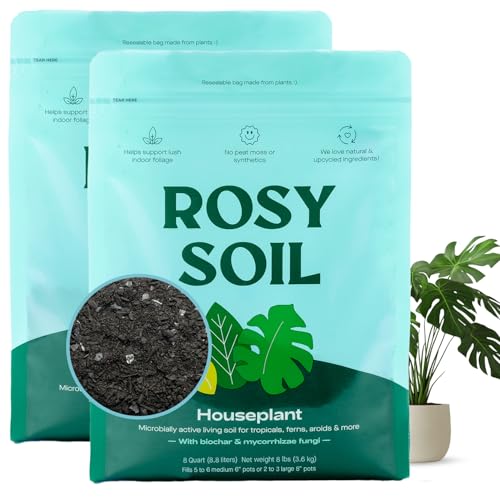
Rosy Soil Houseplant Potting Soil 8-Quart 2-Pack

Rosy Soil Houseplant Potting Soil 4 Quarts

Earth Science Fast Acting Lime Granules 5 lb for Soil pH and Runoff

Earth Science Fast Acting Gypsum Granules 5 lb Soil Conditioner
The Details Behind The Selections
A mixed container offers a useful place for this loose cactus mix, but it is not the most natural standalone home for a hydrangea. The blend is designed for drought-tolerant plants such as jade, aloe, snake plants, and desert roses, with a coarse structure that moves excess water away from roots quickly.
That fast drainage is the main reason to consider it beside a hydrangea in a shared pot. You gain a distinct zone for a succulent without forcing either plant into the same moisture preferences.
What It Does Well
- The loose, open texture supports plants that dislike saturated soil.
- Worm castings and beneficial microorganisms add biological material to the mix.
- Peat-free composition supports more freely draining container conditions.
- The two-pack provides useful material for several small succulent containers.
Trade Offs
- This is specialized succulent media, so it should not replace a balanced houseplant mix for a hydrangea.
- Separate container zones help you avoid giving both plant types the same watering routine.
At A Glance
Built With In Mind
This mix suits gardeners combining hydrangeas with succulents in a carefully divided container.
Look Elsewhere When
Rosy Soil Houseplant Potting Soil 8-Quart 2-Pack serves you better when the hydrangea occupies the main container.
The Biochar Booster takes a different route from the cactus mix: you blend it into another medium rather than use it alone. Biochar is a stable, carbon-rich material produced by heating organic matter in limited oxygen, and this version adds mycorrhizae, worm castings, bokashi, and compost. Mycorrhizae are fungi that associate with roots and extend the soil area available for water and nutrient uptake.
For a hydrangea pot, that makes the amendment attractive when your existing mix loses structure or needs better moisture management. In a raised bed, it can improve the overall growing medium over a broader area.
Key Advantages
- Biochar supports aeration while retaining moisture within its porous structure.
- Living ingredients add biological activity beyond plain carbon.
- The measured mixing rate makes application easier to control.
- One bag covers raised beds, containers, and outdoor soil.
- Peat-free ingredients suit gardeners reducing reliance on conventional peat-based mixes.
Practical Considerations
- This is an amendment, not a complete potting mix, so mixing instructions need attention.
- Too much amendment can upset the original soil balance, especially in a small container.
Key Attributes
The Right Fit
This booster suits container growers and raised-bed gardeners prepared to blend it into their existing medium.
Another Choice May Suit
Rosy Soil Houseplant Potting Soil 4 Quarts is more convenient for a fresh pot that needs a complete medium.
Eight quarts changes the scale of a container project, and this two-pack suits a porch full of hydrangeas or a mix of indoor and outdoor pots. Unlike the cactus mix, it is formulated as general-purpose houseplant media, with biochar, worm castings, mycorrhizae, compost, and bark fines replacing peat.
The honest read is that this works best as the hydrangea’s own medium in a container with drainage holes. Compared with the smaller 4-quart version, its main practical advantage is having enough material to repot several plants without another trip for soil.
Practical Advantages
- A peat-free formula gives container gardeners an alternative to conventional peat-heavy media.
- Bark fines and biochar contribute to a porous planting structure.
- Mycorrhizae, compost, and worm castings provide biological components suited to potted plants.
- The two-bag format suits multiple pots and seasonal repotting.
Details To Watch
- The mix is designed for houseplants generally, not a hydrangea-specific formula.
- Large containers still need drainage openings and a saucer that catches excess water.
- Moisture needs will vary with pot size and indoor conditions.
Who It Suits Best
You benefit most when repotting several container hydrangeas and want one peat-free medium for the job.
Reach For A Different Pick When
Rosy Soil Biochar Booster 8 Quants fits better when you want to improve an established bed rather than fill fresh pots.
The 4-quart format keeps fresh soil manageable for a single repotting day. It shares the peat-free houseplant approach of the larger Rosy Soil bag, using biochar, compost, bark fines, worm castings, and mycorrhizae to create a planting medium suited to indoor containers.
That makes it a practical fit for a hydrangea moved into a decorative pot, provided the pot has drainage holes. Compared with the cactus mix, it offers a more broadly balanced medium for a leafy flowering shrub.
Strong Points
- Four quarts is convenient for repotting a limited number of plants.
- The peat-free ingredient list suits container-focused growing.
- Multiple biological components support a more active root zone.
- Biochar contributes porous structure to the finished medium.
Smaller Considerations
- You may need another container for a larger potting project.
- General houseplant media still requires a suitable pot and attentive watering.
Core Details
Made For
This size suits you when repotting one or two hydrangeas in an indoor or sheltered container.
Where A Sibling Pick Shines
Rosy Soil Houseplant Potting Soil 8-Quart 2-Pack makes more sense for a balcony full of containers.
Soil pH affects how available nutrients are to plant roots, making lime a targeted tool for acidic soil rather than a general potting-mix upgrade. These fast-acting granules begin raising pH and also contain calcium, with the formula designed to reduce nutrient runoff.
That makes the product more relevant to a hydrangea planted in an open bed with known low pH. It does not solve poor drainage or provide the organic components expected from a complete potting medium.
The Good Stuff
- Fast-acting granules address confirmed low-pH soil without waiting for a slow-release form.
- Raising pH can improve nutrient availability in acidic ground.
- The formula also supplies calcium to the soil.
- Runoff reduction supports nutrient use in treated lawn and garden areas.
Factors To Consider
- A soil test should establish the starting pH and guide the application rate.
- Adding lime without a pH problem can move the soil in the wrong direction.
- This treatment does not replace a porous medium for a container hydrangea.
Whose Shelf It Belongs On
You benefit most with an in-ground hydrangea whose acidic soil has been tested and confirmed.
Not Your Match When
Earth Science Fast Acting Gypsum Granules 5 lb Soil Conditioner is the better fit for compaction or salt-related soil problems.
