

Getting a gardenia’s growing medium right means balancing two conflicting needs: enough moisture to support the shrub and enough air space around its roots. You’ll find that balance depends on texture, drainage, amendments, and the size of your container, whether your gardenia lives on a patio or beside a bright window.
These six mixes cover everything from moisture-retentive houseplant blends to fast-draining cactus media and a large all-purpose option. You’ll find the most useful details for a gardenia below, including where each blend fits and which trade-off to consider.
The Main Contenders

Rosy Soil Cactus & Succulent Mix 4 Quarts, 2-Pack

FoxFarm Happy Frog Potting Soil 12qt
Rosy Soil Houseplant Mix 8 Quarts

Back to the Roots Mulch 25.7qt

Gardenera Anthurium Potting Soil 1 Quart
NOVA-TERRA Houseplant Soil 2.4 Quarts
Why These Options Stand Out
This mix takes a deliberately open, gritty approach, which makes it a dependable choice for drought-tolerant plants such as jade, aloe, and snake plants. That same fast drainage can leave a gardenia’s root zone dry too quickly, especially in a warm room or a terracotta pot.
For a gardenia, you may find this blend more useful as a structural component than as the entire pot contents. Its lightweight texture is appealing, but a gardenia generally needs a more moisture-retentive balance than the formula is designed to provide.
Useful Strengths
- Loose texture promotes airflow and rapid drainage around roots.
- Peat-free composition avoids the dense, water-holding consistency common in many potting mixes.
- Worm castings, fungi, and microorganisms add biological material to the medium.
- Each 4-quart bag is resealable, helping protect unused soil between potting sessions.
Trade Offs
- The drought-oriented formula may need careful moisture monitoring around a gardenia.
- Each bag fills roughly two to three plants, so a large container can require several bags.
Key Specs
Who It Suits Best
This mix suits gardeners tending cacti, succulents, or other drought-tolerant container plants.
Where Another Pick Suits Better
NOVA-TERRA Houseplant Soil 2.4 Quarts may suit you better when a gardenia needs a more balanced moisture-and-airflow profile.
FoxFarm Happy Frog brings together the feeding power and broader planting scope that the cactus mix lacks. Earthworm castings, bat guano, and aged forest products create an amended medium suited to indoor plants, outdoor containers, trees, shrubs, and roses, making it more flexible for a mixed garden.
Its soil microbes are another point in its favor because they can support root efficiency and nutrient uptake. The 12-quart volume also makes this a practical choice when you want enough medium for several containers without opening numerous smaller bags.
A Few Strong Suits
- Organic amendments provide more nutrition than an unamended planting medium.
- A custom microbial blend supports nutrient availability around container roots.
- The large package suits multiple houseplants, shrubs, and trees in pots.
- Two customizable plant tags help organize varieties and planting dates.
Practical Considerations
- It is a broad container blend rather than a mix formulated specifically for gardenias.
- The 12-quart bag needs dry storage space between uses.
The Right Fit
This option fits gardeners with several container plants who value organic amendments and a roomy supply.
Another Choice May Suit
Rosy Soil Houseplant Mix 8 Quarts may suit you better when you prefer a peat-free blend with biochar and bark-based structure.
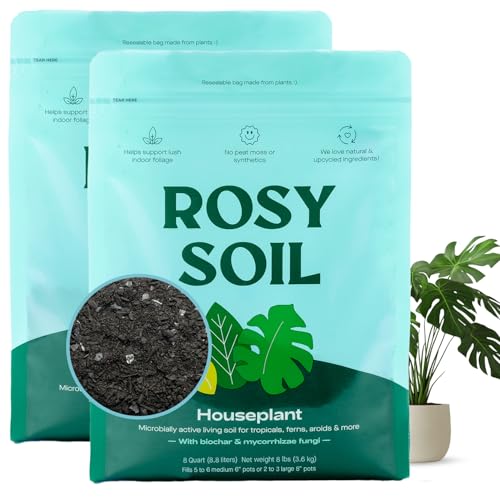
This houseplant blend uses several organic materials to create a more complex medium than FoxFarm Happy Frog. Biochar, compost, worm castings, mycorrhizae, and bark fines replace peat moss, giving roots a varied mix of carbon, organic matter, and biological material.
Mycorrhizae are beneficial fungi that form relationships with plant roots, while biochar can improve the way a growing medium handles water and nutrients. The honest read is that this could serve as a thoughtful base for a gardenia, provided the mix retains enough moisture in your particular pot.
The Case For It
- Peat-free composition gives you a more sustainable alternative to conventional peat-based mixes.
- Biochar, compost, and bark fines create varied structure throughout the medium.
- Mycorrhizae and other microorganisms support biological activity around roots.
- Two 8-quart bags provide a generous supply for repotting several houseplants.
Worth Noting
- The biological amendments make this more complex than a simple mineral-based container mix.
- You should check the stated pH on the package against the needs of an acid-loving gardenia.
Feature Snapshot
Made For
This mix suits indoor gardeners who want an organic, peat-free houseplant medium with diverse biological components.
A Better Fit Elsewhere
FoxFarm Happy Frog Potting Soil 12qt may suit you better when you want a larger general-purpose blend with an established feeding component.
Despite the mulch name, this large all-purpose medium is also intended for container planting, raised beds, and ground use. It brings plant food, dolomitic limestone, and yucca extract into a peat-free blend, giving you a practical option for filling several pots or an entire garden bed.
For a single gardenia, the 25.7-quart volume is more than most people need, and the storage requirement is worth considering. In a shared planting area or a busy patio garden, however, the generous supply becomes a practical advantage.
What Helps Most
- The 25.7-quart amount covers large containers and raised beds.
- Built-in plant food supports herbs, vegetables, fruits, and flowers.
- Yucca extract provides moisture-control support within the blend.
- Peat-free composition gives you an alternative to conventional peat-based media.
Details To Watch
- Dolomitic limestone is included to adjust pH, so check compatibility with an acid-loving gardenia.
- The large package requires more storage space than a typical houseplant bag.
At A Glance
Who Should Grab It
This option suits gardeners filling raised beds, large containers, or several pots at once.
Swap It Out When
NOVA-TERRA Houseplant Soil 2.4 Quarts may suit you better for one indoor gardenia where compact storage matters more than bulk volume.
This one-quart bag is built for anthuriums rather than gardenias, so its value depends on whether anthuriums share your indoor growing space. The formula combines Canadian peat moss with New Zealand bark, creating a focused medium for a plant type with distinct container-growing needs.
The mix is handcrafted in the United States, which gives you a defined origin and a compact package for individual repotting jobs. For a gardenia, though, the anthurium-specific positioning makes a general houseplant blend a more direct choice.
Where It Excels
- The peat-and-bark formula gives anthuriums a dedicated planting medium.
- The one-quart size works well for a single small repotting project.
Where It May Fall Short
- The formula is tailored to anthuriums rather than gardenias.
- You may need several bags for a collection of larger plants.
Who Will Love This
This soil suits gardeners focused on anthuriums who value a specialized, small-volume blend.
Reach For A Different Pick When
Rosy Soil Houseplant Mix 8 Quarts may suit you better for a general indoor gardenia collection.
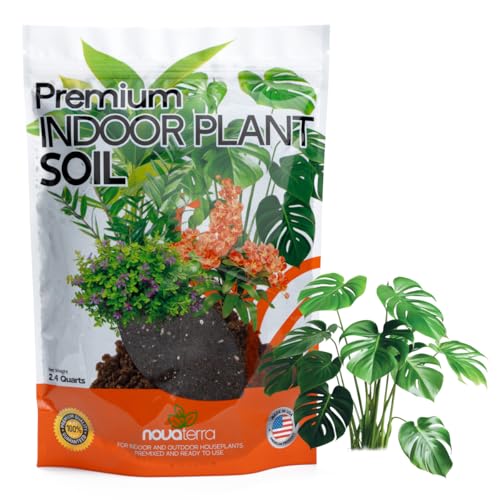
This blend makes the most direct use-case sense for a gardenia kept in an indoor container. Coco coir and peat moss provide a familiar moisture-retentive base, while the overall formula is designed to balance water retention with drainage and reduce compaction around indoor roots.
Its 2.4-quart package is compact, so it works well for a small potting shelf or a single modest container. For a large patio tub, you may find yourself buying several packages, but the balanced houseplant focus gives this option a clearer role than the drought or specialty blends.
Bright Spots
- Balanced moisture retention and drainage suit containers needing both water and airflow.
- Coco coir supports a houseplant-oriented growing structure.
- The reduced-compaction design keeps the medium from becoming dense.
- A small package simplifies storage and limits leftover soil.
Possible Compromises
- The 2.4-quart volume may be too small for a large gardenia container.
- Peat moss means this is not a peat-free option.
Core Details
Whose Shelf It Belongs On
This mix belongs on a small potting shelf where you care for a compact indoor gardenia.
Look Elsewhere When
FoxFarm Happy Frog Potting Soil 12qt may suit you better when you need medium for several containers and a broader range of plants.
What Gardenia Soil Needs Before You Pot
Drainage Without Constant Drying
A gardenia needs a growing medium that holds moisture without becoming compacted. The Rosy Soil Cactus & Succulent Mix drains rapidly, while the NOVA-TERRA Houseplant Soil places a clearer emphasis on balancing moisture and airflow. Watch how quickly the pot dries in your home, since a sunny window and terracotta container can change the watering pattern quickly.
Texture That Fits the Container
A loose, airy medium leaves room for water to move through the pot, but a gardenia still needs enough organic material to support steady moisture. Coarse bark, coir, compost, and similar components affect both drainage and retention. Choose a texture that feels loose rather than dense, then adjust your watering routine to the pot rather than a fixed schedule.
Ingredients and pH Matter
Worm castings, microbes, mycorrhizae, and plant food can add value to a container medium, although each amendment serves a different purpose. Gardenias also prefer acidic soil, so check the product’s pH information before use. FoxFarm Happy Frog offers broad amendment benefits, while the dolomitic limestone in Back to the Roots Mulch makes its package pH details particularly relevant.
Match the Volume to Your Project
The smallest package works for one indoor repotting task, while the 12-quart and 25.7-quart options suit busy patios or multiple containers. Check your available storage space before buying a large bag. You’ll also want enough medium to fill around the root mass without leaving a deep, empty layer at the bottom of the pot.
Common Buying Traps
Mistakes Worth Dodging
Choosing by the word “mulch” alone can lead you to the wrong medium for a container gardenia. Look for a product intended for potting, container planting, or indoor plants, and check the pH information. A fast-draining cactus mix can also be too open for a gardenia that needs steadier moisture.
The Upgrade Payoff
Higher-priced mixes often add organic amendments, biological organisms, or specialized components rather than simply increasing volume. Those additions can suit a particular plant or growing setup, but they don’t automatically improve every container. The most useful upgrade is the one that matches your gardenia’s moisture needs, available space, and local growing conditions.
Frequently Asked Questions
Can I Use Cactus Soil for Gardenias?
You can use cactus soil for a gardenia only after considering its very fast drainage. Gardenias generally need steadier moisture than drought-oriented cactus mixes provide, so you may need to combine it with a more moisture-retentive medium.
Is FoxFarm Happy Frog Potting Soil Suitable for Gardenias?
It can work as a general container base for gardenias because it includes organic amendments and a broad range of plant-supporting ingredients. Check the pH information and monitor moisture closely, since the mix is not formulated specifically for acid-loving shrubs.
Which of These Mixes Retains the Most Moisture?
NOVA-TERRA Houseplant Soil 2.4 Quarts offers the clearest balance of moisture retention and drainage among the houseplant-focused choices. Actual drying speed still depends on your container, plant size, light, and temperature.
Do Any of These Soils Contain Plant Food?
FoxFarm Happy Frog Potting Soil and Back to the Roots Mulch include plant-feeding components. Other mixes focus more heavily on soil structure and biological material, so your regular feeding routine should guide any additional nutrients.
How Much Potting Soil Does a Gardenia Need?
Fill the container to a depth that leaves enough room for the root ball while keeping the plant at its proper depth. Avoid leaving a large empty space beneath the root mass, and choose a container with drainage holes.
Final Verdict
NOVA-TERRA Houseplant Soil 2.4 Quarts is the clearest fit for a compact indoor gardenia, while FoxFarm Happy Frog Potting Soil 12qt offers broader flexibility for mixed container planting. Rosy Soil Houseplant Mix 8 Quarts appeals to gardeners seeking an organic, peat-free blend, and the larger Back to the Roots option suits extensive planting projects. Choose based on moisture needs, pH, and available space, then adjust your care routine to the pot.
