

Dahlias thrive in fertile soil that drains well, especially when their thick roots sit in a container all season. Heavy garden soil can restrict those roots, while an overly coarse mix may dry too quickly. The right potting soil balances moisture retention, aeration, and nutrient support for strong stems and abundant blooms.
The Lineup, Simplified

Rosy Soil Cactus & Succulent Mix

Rosy Soil Biochar Booster
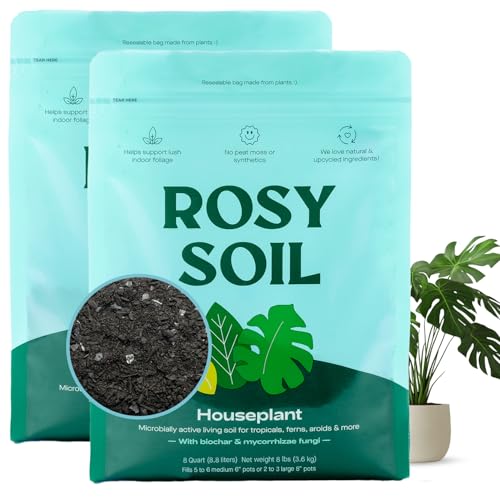
Rosy Soil Houseplant Mix 8 Quarts

Rosy Soil Houseplant Mix 4 Quarts

Rosy Soil Orchid Mix

Rosy Soil Herb Mix 4 Quarts
Meet The Standout Selections
A dahlia in a container needs air around its roots, and this mix provides a notably open structure. Unlike the more general houseplant blends later in the list, its chunky texture favors rapid drainage and resists compaction around thick dahlia tubers.
That makes it a useful drainage component for a patio pot, particularly where dense soil stays wet for long periods. Used alone, though, it remains a cactus and succulent blend rather than a complete dahlia-growing medium, so mixing it with a richer base gives you more control over moisture and fertility.
Where It Excels
- The loose, chunky structure lets excess water escape and reduces the risk of compacted container soil.
- Peat-free composition supports freer drainage and suits gardeners avoiding conventional peat-based mixes.
- Two resealable 4-quart bags give you manageable portions for several containers or a staged potting project.
Trade Offs
- Its fast-draining character can lose moisture quickly during hot weather, so container placement and watering frequency matter.
- Its primary design is for drought-tolerant plants, making it better as a component than a stand-alone dahlia medium.
Built With In Mind
This mix suits container dahlia growers who need a coarse, free-draining component for a warm patio or balcony.
A Better Fit Elsewhere
Rosy Soil Biochar Booster is the stronger fit for gardeners amending an established dahlia bed.
Biochar is a stable, carbon-rich amendment whose porous structure can hold water and nutrients within garden soil. For dahlias growing in heavy beds, that makes this a more useful soil-conditioning option than the cactus mix, which is intended to create open space rather than improve an entire planting bed.
Unlike plain charcoal, the blend also contains mycorrhizae, worm castings, bokashi, and compost. The application is straightforward for most home gardeners, although the recommended mixing rate matters because this is an amendment, not a complete potting medium.
Standout Benefits
- Its porous biochar helps soil retain moisture while maintaining aeration around dahlia roots.
- Living components add biological activity and support nutrient uptake through the root zone.
- One 8-quart bag covers a useful area of a raised bed or container soil blend.
- The stable amendment can remain effective across repeated growing seasons.
Practical Considerations
- Mix it into soil rather than filling a pot by itself, since the product is designed as an amendment.
- The recommended proportion is about 5 percent by volume, or roughly one cup per cubic foot of soil.
Feature Snapshot
Who It Suits Best
This amendment fits dahlia gardeners improving raised beds, vegetable beds, or existing outdoor soil.
Where A Sibling Pick Shines
Rosy Soil Houseplant Mix 8 Quarts is easier for creating a ready-to-use container blend from scratch.
Two 8-quart bags make this the most convenient full-size container option in the group. The blend combines biochar, worm castings, mycorrhizae, compost, and bark fines, giving dahlia containers both aeration and more organic material than the open cactus formulation.
It also works as a general indoor potting base, so a single purchase can serve dahlias, foliage plants, and herbs without separate bag trips. The trade-off appears outdoors: this is primarily an indoor houseplant mix, and garden beds rarely need the same bark-based structure.
Good Reasons To Consider
- The two-bag format provides ample medium for repotting several sizable dahlia containers.
- Biochar supports drainage and moisture retention without relying on peat moss.
- Worm castings, compost, and mycorrhizae give container soil more biological and nutritional depth.
Small Caveats
- The bark-based houseplant formula may not provide the structure sought in a free-draining outdoor bed.
- Its container focus means established garden soil may need less amendment than a fresh pot does.
Made For
This mix fits anyone wanting a convenient peat-free base for dahlias and other plants sharing a patio or indoor collection.
Consider Something Else When
Rosy Soil Herb Mix 4 Quarts makes more sense when your pot contains culinary herbs alongside a dahlia.
The 4-quart version carries the same peat-free houseplant formula as the larger two-bag option, just in a more manageable quantity. That makes it a sensible choice for one substantial dahlia repot, several smaller containers, or a gardener who prefers not to store unused soil for long.
Biochar, worm castings, mycorrhizae, compost, and bark fines provide a balanced structure for indoor containers. Compared with the cactus mix, it retains more growing medium around roots; compared with the biochar amendment, it is a planting base rather than something you blend at a measured rate.
Practical Pluses
- The 4-quart size suits focused repotting without committing to a large two-bag package.
- Its peat-free formula combines aeration, moisture retention, and organic growing components.
Points To Note
- One bag may be limited for a collection of large dahlia containers, so check your pot volume before purchasing.
Technical Highlights
The Right Fit
This format best serves dahlia growers repotting a few medium pots who value a smaller, peat-free soil package.
Another Choice May Suit
Rosy Soil Houseplant Mix 8 Quarts is the better fit for multiple containers or a full potting bench.
Orchid bark, pumice, and biochar create a very open planting medium designed for orchids, whose exposed roots need abundant air. Dahlias also appreciate drainage, but their tubers need more consistent contact with moisture and growing medium than this coarse structure may provide.
It can still contribute useful physical properties as a component in a container blend. Using the mix alone risks a dry root zone, particularly in warm weather, so it sits outside the main dahlia recommendations despite sharing the same broad soil category.
Real Benefits
- The open blend prevents dense, airless pockets around sensitive roots.
- Pumice and bark create strong drainage in specialized orchid containers.
- Mycorrhizae and beneficial microbes add biological activity to the medium.
Possible Compromises
- The very coarse structure may dry too quickly for dahlias during hot, sunny weather.
- Its orchid-specific design makes it less practical as a complete dahlia medium.
- Adding it to regular potting soil can create uneven moisture levels unless the proportions are controlled.
Best Suited To
This mix belongs with orchid growers who value maximum aeration and also grow dahlias in carefully monitored containers.
Reach For A Different Pick When
Rosy Soil Houseplant Mix 4 Quarts is the better choice for a dahlia pot needing a balanced, ready-to-fill medium.
This herb mix is formulated for basil, thyme, mint, parsley, cilantro, lavender, and rosemary, with uses on windowsills and outdoor planters. Its biochar, worm castings, and mycorrhizae also make it reasonable for dahlias, particularly when one container holds herbs around a flowering dahlia.
The limitation is straightforward: it is not presented as a dahlia formula, and its moisture behavior may differ from what a large flowering plant needs. Compared with the general houseplant blend, it offers a more purposeful fit for kitchen gardens but less reason to make it your dahlia’s sole medium.
A Strong Showing
- Biochar contributes drainage and moisture retention to a shared herb-and-dahlia pot.
- Worm castings add organic material and support a biologically active root zone.
- Mycorrhizae assist roots with nutrient uptake in container-grown plants.
- The 4-quart package works for indoor or outdoor herb containers.
Areas To Watch
- Its formulation centers on herbs rather than the feeding demands of large dahlia plants.
- A single pot dedicated to a dahlia is better served by a general-purpose houseplant mix.
Quick Facts
Who Will Love This
This mix suits dahlia growers who want one medium for basil, mint, parsley, and nearby flowers in a compact container.
Not Your Match When
Rosy Soil Houseplant Mix 8 Quarts is the smarter option for filling several dahlia-focused containers.
What Dahlia Containers and Beds Need From Soil
Dahlias need a growing medium that supports vigorous roots without leaving the crown and tubers sitting in water. That makes drainage, organic matter, and the planting environment more useful considerations than a label aimed at one flower.
Drainage Matters in Containers
A container must have unobstructed drainage holes, and the mix should remain porous after repeated watering. The Rosy Soil Cactus & Succulent Mix offers the openest structure here, while the houseplant blends provide a more balanced foundation for tubs that need steadier moisture.
Garden Beds Benefit From Amendments
Established beds rarely need complete replacement. Biochar is a stable, carbon-rich amendment that adds porous structure and can help soil retain water and nutrients, while the recommended mixing rate keeps it from overwhelming the existing soil.
Match the Mix to the Plant
General houseplants tolerate the houseplant blend, orchids need the highly open orchid formulation, and drought-tolerant plants prefer the cactus mix. A dahlia belongs somewhere between those extremes, which is why the Biochar Booster or a peat-free houseplant base makes the most practical sense.
Two Mistakes That Can Cost Dahlias
Common Shopping Slip Ups
Do not choose a mix solely because the plant category sounds close, and do not assume a fast-draining cactus medium contains everything dahlias need. Match the product to the growing space, drainage, and plant type before considering package size.
What Separates Premium From Basic
The extra investment often buys a more deliberate blend of biochar, organic matter, beneficial fungi, and compost rather than a larger quantity of plain medium. Those components can matter in containers where nutrients and root-zone biology are limited, especially for long-growing dahlias.
Frequently Asked Questions
Can I Use Cactus Potting Soil for Dahlias?
Yes, as part of a container blend that includes a more moisture-retentive medium. Its open texture helps prevent compaction, but using it alone may leave dahlia roots too dry.
Is Biochar Good for Dahlia Soil?
Biochar is useful for improving drainage, moisture retention, and nutrient-holding capacity in soil. Mix Rosy Soil Biochar Booster into existing soil rather than using it as a complete planting medium.
Can Houseplant Potting Soil Grow Dahlias?
Yes, especially in containers where a balanced, peat-free blend meets the plant’s needs. Choose the 8-quart two-bag format for several containers or the 4-quart size for smaller repotting projects.
Are Orchid or Herb Mixes Suitable for Dahlias?
An herb mix can work for dahlias sharing a container with culinary plants, though it is not dahlia-specific. An orchid mix is too specialized and open to serve as a straightforward dahlia medium.
How Much Biochar Booster Should I Use?
Use about one cup per cubic foot of soil, roughly 5 percent by volume. One 8-quart bag can amend up to 5 cubic feet or cover about 32 square feet.
Final Verdict
For dahlias in containers, Rosy Soil Houseplant Mix 8 Quarts offers the most straightforward balance of drainage, organic matter, and container convenience. For garden beds, Rosy Soil Biochar Booster is the more relevant soil-conditioning choice, while the cactus and orchid mixes work better as specialized components. Match the blend to your container, drainage, and planting method rather than the flower name alone.
