Blueberry planters punish poorly drained soil, while raised beds reward loose, organic amendments that balance moisture and aeration. The right approach depends on whether you’re filling a container, improving an existing bed, or combining soil components for a larger planting. These six Rosy Soil options cover different roles, from fast-draining houseplant mixes to a long-term garden soil booster.
A large blueberry container needs a loose root zone, and the open structure of this cactus mix provides a useful texture reference. Its formulation is built for drought-tolerant houseplants, so the honest fit comes from checking its acidity alongside the requirements of your blueberry mix rather than assuming it is ready to use alone.
Unlike the Biochar Booster, this is a complete planting medium rather than an amendment for established soil. Worm castings, beneficial microorganisms, and a peat-free formula support active roots while the chunky structure promotes drainage.
What Makes Sense
✓The coarse, airy texture reduces the chance of a densely compacted container.
✓Excess water can move through the mix more freely, which matters during frequent watering.
✓Worm castings and soil organisms add organic matter and biological activity.
✓Two resealable 4-quart bags provide useful volume for multiple containers.
Points To Note
•Its core purpose is cactus and succulent care, so blueberry suitability depends on the blend you create and the resulting pH.
Key Specs
Feature
Specification
Why It Matters
Texture
Chunky and loose
Supports drainage in containers
Organic components
Worm castings and microbes
Adds biological activity
Base
Peat-free
Reduces reliance on peat
Package
Two 4-quart bags
Offers resealable storage
Who It Suits Best
This mix suits gardeners repotting drought-tolerant houseplants who value an open, fast-draining root zone.
A Better Fit Elsewhere
Rosy Soil Biochar Booster suits gardeners improving an existing blueberry bed rather than filling a pot with a specialty cactus medium.
Blueberry beds benefit from amendments that improve both moisture handling and root-zone aeration, and this booster addresses both jobs. Biochar is a stable, carbon-rich material created by heating organic matter in a low-oxygen environment; its porous structure can hold water and nutrients while leaving spaces for roots and oxygen.
For a raised bed, the practical advantage is controlled mixing. Blend it into soil before planting or work it into the upper layer around established shrubs, then use the berry’s acidity requirements to guide your soil test and pH adjustment.
Everyday Wins
✓The amendment can be distributed through new bed soil at a measured 5% ratio.
✓Mycorrhizae, beneficial microbes, compost, and worm castings expand the biological side of the blend.
✓Biochar can improve both water retention and aeration in the amended layer.
✓One application remains effective over time, reducing the need for repeated replacement.
Trade Offs
•It is an amendment, not a complete blueberry potting medium, so it should be combined with suitable soil.
•Soil structure alone does not settle the pH question; verify the finished mix separately.
Technical Sheet
Feature
Specification
Why It Matters
Application rate
About 1 cup per cubic foot
Simplifies bed preparation
Coverage
Up to 5 cubic feet
Suits multiple planting areas
Area coverage
About 32 square feet
Useful for spreading evenly
Biological components
Mycorrhizae, castings, bokashi, compost
Supports root activity
Base material
Peat-free
Reduces reliance on peat
Built With In Mind
This booster fits gardeners planting blueberries in raised beds who want to improve an existing soil mix without relying on a specialty container medium.
Another Choice May Suit
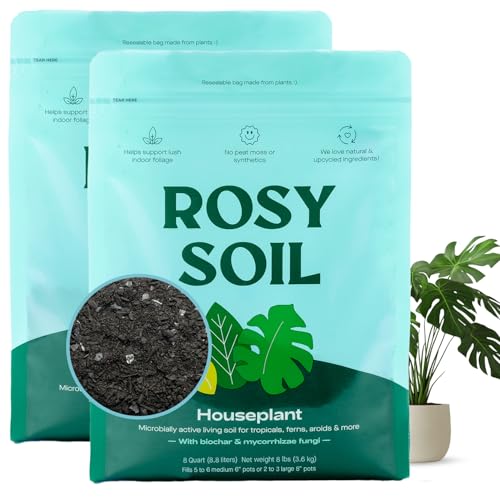
Rosy Soil Houseplant Mix 8qt, Pack of 2 suits gardeners who need a complete medium for several indoor containers rather than an amendment for outdoor beds.
Two 8-quart bags put this option on the shelf for a serious repotting session. Its peat-free houseplant formula combines biochar, worm castings, mycorrhizae, compost, and bark fines, giving indoor containers organic matter and a biologically active root zone.
That makes it a bulk potting option, not a blueberry-specific formula. Compared with the smaller Rosy Soil Houseplant Mix 4qt, the two-bag format suits a home with several plants or a larger mix-and-match job, provided you confirm the finished pH is appropriate for blueberries.
What It Does Well
✓The two-bag package offers enough medium for several repotting tasks.
✓Biochar and bark fines introduce both drainage support and organic structure.
✓Mycorrhizae and compost support a more active soil environment for container plants.
Some Limits To Know
•Its houseplant focus does not replace a blueberry-specific acidity check.
•Two large bags require more storage room than the 4-quart format.
•Container drainage holes and a suitable planting container remain necessary for blueberry shrubs.
Made For
This pack fits indoor plant owners handling multiple repotting jobs who value a peat-free, biologically active houseplant medium.
Consider Something Else When
Rosy Soil Biochar Booster better fits gardeners amending an outdoor raised bed where soil structure and long-term organic matter are the main concerns.
A single 4-quart bag keeps the storage commitment modest while offering the same basic houseplant approach as the larger Rosy Soil pack. Biochar, bark fines, compost, worm castings, mycorrhizae, and beneficial microbes replace a peat-based formula.
For blueberry work, this container mix is most useful as a base component in a carefully blended blueberry formula, not as the sole decision. Its role is root-zone structure, while the final mix still needs to meet the acidity requirement of your planting.
Standout Benefits
✓The 4-quart size suits small repotting jobs and easier storage.
✓Biochar and bark fines give the blend a more open, organic structure.
Practical Considerations
•The pH of the completed blueberry mix still needs to be checked.
•Its broad houseplant formulation is less targeted than an amendment designed for outdoor beds.
•Large blueberry projects may require several bags and more mixing space.
Quick Facts
Feature
Specification
Why It Matters
Volume
4 quarts
Keeps storage compact
Base
Peat-free
Uses alternative soil components
Components
Biochar, castings, compost, bark fines
Adds structure and organic matter
The Right Fit
This bag fits occasional indoor repotting tasks and gardeners who want a manageable amount of biologically active, peat-free medium.
Look Elsewhere When
Rosy Soil Herb Mix 4qt better fits gardeners building a container blend for culinary herbs that tolerate the conditions of their chosen recipe.
Orchids and blueberries do not need the same planting medium, but this mix highlights a principle useful in blueberry containers: a root zone should remain open rather than dense. Orchid bark, pumice, and biochar create large drainage spaces for plants that prefer oxygen around their roots.
The formula is enriched with mycorrhizae and beneficial microbes, making it a focused choice for orchids and other air-rooted plants. For blueberries, treat its texture as a useful reference while selecting components that also satisfy the crop’s acidity needs.
Useful Strengths
✓Orchid bark creates substantial space for airflow and rapid drainage.
✓Pumice contributes a stable, lightweight mineral component.
✓Biochar adds another porous element to the open blend.
✓Mycorrhizae and microbes add biological support for root development.
Worth Bearing In Mind
•This is an orchid medium and does not establish blueberry suitability by itself.
Feature Snapshot
Feature
Specification
Why It Matters
Primary components
Orchid bark, pumice, biochar
Creates an open root zone
Volume
4 quarts
Handles several orchid repotting tasks
Who Will Love This
This mix suits orchid owners repotting plants in an apartment or home with limited storage space.
Where A Sibling Pick Shines
Rosy Soil Biochar Booster is the stronger choice for gardeners preparing a large outdoor blueberry bed with a measured soil amendment.
A windowsill full of basil, thyme, mint, and parsley calls for a potting mix built around the moisture and aeration needs of culinary herbs. This 4-quart blend includes biochar, worm castings, and mycorrhizae to support root development and nutrient uptake in indoor or outdoor planters.
It is a practical companion to a blueberry setup, particularly when you want culinary herbs nearby, but its formulation is designed around herbs rather than blueberry shrubs. Mint and other vigorous herbs can also spread beyond a small pot, so placement deserves thought.
What Pays Off
✓The blend targets common culinary herbs such as basil, parsley, cilantro, rosemary, thyme, and mint.
✓Biochar helps support both moisture retention and aeration in container soil.
✓Worm castings and mycorrhizae contribute organic and biological support.
Minor Gripes
•Its herb-specific formulation does not replace a blueberry-appropriate growing medium.
•Four quarts may feel modest for a patio containing several large herb planters.
Whose Shelf It Belongs On
This mix fits home cooks growing culinary herbs in windowsill pots or patio containers near the kitchen.
Reach For A Different Pick When
Rosy Soil Houseplant Mix 4qt better fits gardeners filling several indoor pots with a broader houseplant medium rather than an herb-focused blend.
## What Blueberry Growers Should Check In The Mix
### Drainage Comes Before Extra Ingredients
Blueberry roots need loose soil that drains freely while still holding enough moisture between drinks. A dense potting mix can remain wet too long, so check drainage holes, avoid compressing the soil, and keep the root zone open from the bottom up.
### Acidity Requires Its Own Verification
Blueberries grow in acidic soil, which makes the finished pH a nonnegotiable part of the planting decision. Soil-test the final blend, then adjust it using the method and materials appropriate for your climate and planting site.
### Containers And Beds Need Different Plans
Large containers dry quickly, so a blueberry mix may benefit from carefully selected organic components that support moisture without closing the pore spaces. In a raised bed, the Biochar Booster offers the clearest approach because you can blend it into the bed before planting.
### Match Volume To The Project
A 4-quart bag suits a modest repotting session, while two 8-quart bags cover more pots and mixed planting jobs. For a raised bed, calculate the planting area and use the booster’s stated coverage figures before opening a bag.
## Common Mistakes In Blueberry Potting
### Mistakes Worth Dodging
Avoid choosing a mix solely because the label says “organic” or “living soil.” Blueberries also need an open root zone and suitable acidity, so inspect the ingredients and test the completed mix rather than relying on one broad description.
### What Separates Premium From Basic
The more specialized products here differ through purposeful components, larger volumes, or concentrated amendments. Those extras earn their place when you need a precise texture, a substantial planting project, or a long-term soil-building program rather than a small bag of general-purpose medium.
## Frequently Asked Questions for Potting Soil For Blueberries
### Can I Use Regular Houseplant Potting Mix for Blueberries?
You can use it as part of a carefully blended mix, but you must verify the finished pH and drainage. General houseplant mix alone may not provide the acidity blueberries need.
### Can Biochar Booster Replace Potting Soil?
No, it should be mixed with suitable soil rather than used as the sole planting medium. Its role is to improve water retention, aeration, and nutrient handling within that blend.
### Is Peat-Free Soil Better for Blueberries?
Peat-free does not automatically mean blueberry-friendly. Drainage, organic matter, and the final pH matter more than the absence of peat alone.
### Should Container Blueberries Use a Specialty Mix?
A specialized mix can simplify consistency, but the container still needs drainage holes and an acidity-appropriate blend. Confirm the pH before planting rather than relying on the product category.
### Can Cactus or Orchid Mix Be Used for Blueberries?
Those mixes can provide a loose texture, but neither is formulated specifically for blueberries. You would still need to verify acidity and build a complete, well-draining planting medium.
## Final Thoughts
The Biochar Booster makes the most sense here for improving an existing raised bed, while the houseplant mixes can serve as components in a custom container formula. Whichever route you take, check drainage and test the finished pH, because structure alone cannot meet every blueberry requirement.