An aloe plant can look healthy in almost any soil for a few weeks, but its roots reveal the truth later. Saturated, compacted potting mix restricts oxygen and leaves water sitting around the root system, so the right medium for aloe should be loose, fast-draining, and open around the roots. These six mixes cover dedicated aloe planting, larger soil projects, and related houseplants, with the details that matter most for pots, drainage holes, and everyday watering routines.
Repotting an aloe calls for a medium that drains freely instead of compressing around its fleshy roots. Rosy Soil Cactus & Succulent Mix is formulated with that task in mind, and the packaging also identifies aloe vera among the drought-tolerant plants suited to the blend. It looks more like a purposeful, coarse growing medium than ordinary bagged potting soil.
The peat-free formula supports a lighter pot without removing the organic matter that helps anchor roots. That makes it a practical choice for a sunny windowsill collection where watering mistakes happen easily. Compared with Rosy Soil Houseplant 8 Qt, this mix puts drainage ahead of the broader indoor-plant focus.
The Case For It
✓Chunky structure leaves room around aloe roots for air and rapid drainage.
✓The formula explicitly includes aloe among its suitable plants.
✓Worm castings support microbial activity without relying on synthetic feeds.
✓Peat-free composition encourages a lighter, freely draining medium.
✓Two four-quart bags provide useful volume for several small pots.
Worth Noting
•The coarse structure may settle differently than fine indoor potting soil.
•It is specialized for dry-climate plants, not ferns or moisture-loving houseplants.
Quick Facts
Feature
Specification
Why It Matters
Format
Two 4-quart bags
Useful for multiple small pots
Base
Peat-free cactus mix
Supports freer drainage
Organic components
Worm castings
Support soil biological activity
Made For
This mix best suits beginners and experienced growers repotting aloe, jade, snake plants, or other drought-tolerant container plants in light, porous soil.
Another Choice May Suit
Rosy Soil Houseplant 8 Qt may suit you better when one planting medium must cover a varied collection of indoor plants.
This is an amendment rather than a complete potting medium, so its role is different from Rosy Soil Cactus & Succulent Mix. Biochar is a stable, carbon-rich material created by heating organic matter with little oxygen, and its porous structure can hold water and nutrients within a larger soil mix. For an aloe pot, that makes it a potential blend component rather than a stand-alone answer.
The addition of mycorrhizae, worm castings, bokashi, and compost gives the amendment a biological dimension. Mycorrhizae are fungi that form a mutually supportive relationship with plant roots, helping expand the area available for water and nutrient uptake. The result works best when you control the blend and keep drainage central.
A Few Highlights
✓Porous biochar improves moisture retention without compacting soil.
✓Living components complement compost and worm castings.
✓One eight-quart bag covers a substantial area or soil volume.
✓The stable amendment is suited to repeated pot and bed applications.
Small Caveats
•Using it alone would skip the structure an aloe pot needs.
•Excess amendment can reduce the open space needed by succulent roots.
•Its garden-scale coverage requires measuring the pot volume.
Feature Snapshot
Feature
Specification
Why It Matters
Format
8-quart bag
Covers larger soil projects
Application
About 5% of new soil
Controls the amendment ratio
Right Fit For
This option fits gardeners who already understand soil blending and want to improve a peat-free aloe medium without replacing it entirely.
Consider Something Else When
Rosy Soil Cactus & Succulent Mix is the clearer choice for a straightforward first repot with no measured blending plan.
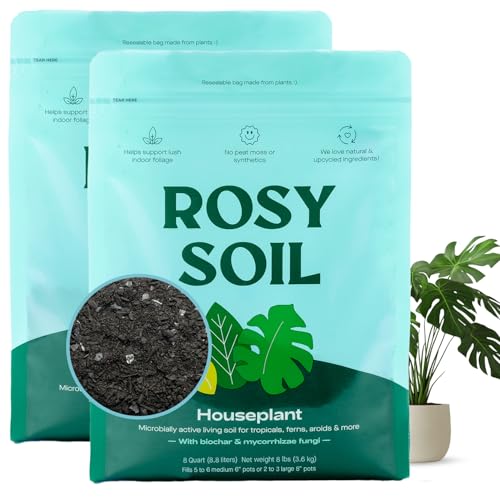
A large houseplant collection often creates a different problem from a single aloe pot: one medium gets used across several plant types. Rosy Soil Houseplant 8 Qt is built around biochar, worm castings, mycorrhizae, compost, and bark fines without peat. Those components provide a more general indoor mix than the cactus-focused blend.
For aloe, the trade-off is structure. This soil contains useful organic and bark components, yet it lacks the same explicit succulent specialization offered by Rosy Soil Cactus & Succulent Mix. In a collection that also includes ferns or tropical foliage, its broader profile becomes more useful.
Useful Touches
✓Two eight-quart bags cover several medium and large pots.
✓Bark fines add structure to the peat-free blend.
✓Living components support roots and nutrient uptake.
✓One purchase can serve a mixed indoor plant collection.
Trade Offs
•Its general houseplant focus is less precise for aloe than a succulent mix.
•Eight-quart bags require storage space and relatively quick use.
Whose Shelf It Belongs On
This mix suits households keeping several indoor plant varieties together and wanting one convenient peat-free medium across the collection.
Where A Sibling Pick Shines
Rosy Soil Cactus & Succulent Mix serves you better when aloe is the primary plant and fast drainage is the deciding factor.
Smaller plant shelves rarely need eight quarts at once, so the four-quart format of Rosy Soil Organic Houseplant Mix can be more convenient. Its peat-free blend includes biochar, worm castings, mycorrhizae, compost, and bark fines. That gives you the living-soil features of the larger houseplant option in a more manageable package.
You can use it for aloe in a container with drainage, though the mix is not formulated specifically for succulents. The honest read is that it works best as a general houseplant base, with extra attention to pot drainage and watering. Compared with Rosy Soil Houseplant 8 Qt, the main difference is convenience rather than composition.
Practical Pluses
✓The four-quart bag suits apartments and modest plant collections.
✓Biochar contributes stable porous structure to the blend.
✓Compost and worm castings supply organic material.
✓Bark fines replace the structure usually supplied by peat.
Points To Note
•The general indoor formula is less drainage-specific than a cactus mix.
•Four quarts may be limiting for several mature plants.
Key Product Details
Feature
Specification
Why It Matters
Format
4 quarts
Compact for small spaces
Base
Peat-free
Creates a lighter blend
Biological content
Mycorrhizae and microbes
Supports root relationships
Organic matter
Compost and worm castings
Adds biological material
Made With In Mind
This bag fits apartment dwellers and beginners who want a manageable amount of organic houseplant mix for a few containers.
Reach For A Different Pick When
Rosy Soil Cactus & Succulent Mix is the stronger match for an aloe collection requiring explicit fast-draining support.
Rosy Soil Orchid Mix solves a different root problem from an aloe mix. Orchids often grow with their roots surrounded by open bark rather than dense garden soil, so this blend combines orchid bark, pumice, and biochar to create a similarly airy root zone. Its structure is purposeful even though the plant category is different.
Mycorrhizae and beneficial microbes add biological support to the medium. Using it around an aloe would create a much coarser environment than a succulent mix normally needs, so it is not the sensible dedicated choice. Its value becomes clear when the same shelving also holds orchids that need open drainage.
Rosy Soil Organic Herb Mix is designed for plants such as basil, thyme, mint, parsley, cilantro, lavender, and rosemary, not for aloe. Its biochar, worm castings, and mycorrhizae create a nutrient-focused base for edible herbs, while the four-quart format fits windowsill and patio containers.
The shared container creates the catch. An herb may appreciate more consistent moisture than an aloe, so planting both in the same pot can lead to watering one plant too often. Separate containers let you give the dry-climate aloe a faster-draining medium and keep the herbs in this richer blend.
Everyday Perks
✓The formula targets common culinary and medicinal herbs.
✓Biochar supports moisture retention and nutrient availability.
✓Worm castings add organic material to the root zone.
✓The mix works in indoor and outdoor containers.
Practical Considerations
•The plant focus is herbs, not succulents.
•Mixing it directly around aloe roots may retain more moisture than desired.
•Separate pots allow different watering schedules.
This mix suits home cooks growing herbs in containers who want a dedicated medium for plants with different watering needs from aloe.
A Better Fit Elsewhere
Rosy Soil Cactus & Succulent Mix belongs in the aloe pot, while this option serves the neighboring herb container.
## What Aloe Potting Soil Should Actually Do
### Drainage Before Richness
Aloe grows best in a medium that does not remain saturated. Loose particles create air spaces around the roots, while a pot with a drainage hole lets excess water escape. Rosy Soil Cactus & Succulent Mix provides the most explicitly gritty option here, so it deserves the closest look for a dedicated aloe pot.
### Pot Size and Root Clearance
Root space affects how quickly a pot dries. A large container holds moisture longer, while a small pot exposes roots to faster drying and needs more frequent attention. Choose a container only slightly larger than the root mass, and avoid placing a heavy succulent in a much deeper pot than it needs.
### Moisture Control at Home
The base mix establishes drainage, but your watering habits still control moisture. Let the soil dry between thorough waterings, empty any outer cachepot, and adjust the rhythm as the plant and season change. A loose mix reduces the risk of prolonged saturation, though it does not make overwatering harmless.
## Common Mistakes and Better Choices
### Mistakes Worth Dodging
Avoid choosing a dense indoor mix simply because the plant label says “houseplant.” Also avoid adding extra water-retentive material to an already open aloe mix, and never use a container without a drainage hole.
### The Case For Spending Up
A richer living mix can provide compost, castings, mycorrhizae, and biochar in one product. The extra investment is most useful when you want those components without blending amendments yourself, or when one mix must serve a broad collection.
## Frequently Asked Questions for Potting Soil For Aloe Vera
### Can regular potting soil be used for aloe?
Regular potting soil can support an aloe when it drains freely and the pot has an opening for excess water. A cactus or succulent mix offers a more predictable loose structure for long-term repotting.
### Do I need cactus mix specifically for aloe?
Cactus mix is not the only workable option, but it is formulated around the fast drainage that aloe appreciates. Houseplant mixes can work with careful watering, while a coarse orchid mix is usually too specialized for an aloe pot.
### How much potting soil does one aloe plant need?
Fill the container around the root ball and leave enough room for the plant’s position, since container diameter and depth vary. A four-quart bag covers several small pots, while one large specimen may use a substantial portion.
### Should I add perlite to aloe soil?
Perlite can increase openness in a dense mix, but it is not always necessary with a chunky cactus blend. Avoid adding more drainage material when the existing medium already holds air around the roots.
### Can biochar be used as the entire aloe potting mix?
Biochar is an amendment rather than a complete medium for most pots. Blending a controlled amount into a suitable base gives you its water and nutrient handling without replacing the structure aloe roots need.
## Final Verdict
Rosy Soil Cactus & Succulent Mix is the most direct fit for aloe because it combines an airy structure with explicit suitability for drought-tolerant plants. The houseplant mixes make sense for broader collections, while the biochar option works best as a measured amendment. Choose the medium that matches your plant’s watering needs, then give it a pot that can drain.