

A patio garden can fail quietly when every planter receives the same amount of water, while the largest container sits far from the spigot. These options cover different needs, from fabric grow bags and rolling beds to tomato cages and automatic watering equipment, helping you match root space, drainage, and convenience to your actual growing area.
The Essentials At A Glance

Vego 2 Zone Sprinkler Timer with Brass Inlet, Dual-Zone Rain Delay

Vego garden Classic Rolling Cube Tomato Planter with Metal Cage, 30 Gallon

Vego garden Classic Rolling Garden Bed, 1.75-Foot Wide Mobile Metal Garden Bed

Vego garden Raised Garden Bed Kits, 17-Inch Tall 9-in-1 Metal Planter

Vego Garden Large Drip Irrigation Kit for Raised Garden Beds, DIY Setup
iGarden 7-Gallon Grow Pots with Handles
Meet The Standout Selections
Vegetable containers rarely need identical schedules, especially when seedlings share a patio with thirsty tomato plants. You can program this hose timer for two independent zones, giving each area its own watering rhythm without adding a second timer.
The LCD screen, safety lock, and choice of 12-hour or 24-hour time make the controls easier to manage. Its brass inlet and UV-resistant ABS and PA body suit an outdoor hose connection, while IP54 water resistance helps protect the electronics from rain and splashing.
A Few Highlights
- Independent schedules let you water a shallow herb pot differently from a deeper vegetable bed.
- Seven-day programming supports daily and interval-based routines, with runs adjustable from one minute to three hours and 59 minutes.
- Rain delays of 24, 48, or 72 hours help you avoid unnecessary watering after a storm.
- The brass inlet and sealed battery cover support regular outdoor placement near a hose connection.
Things To Consider
- The required AAA batteries are not included, so add them before setting up the schedules.
- This is a hose timer rather than a container or drip emitter, so it controls connected watering equipment.
Key Specs
Who It Suits Best
This timer suits gardeners managing multiple outdoor watering areas from one hose connection.
A Better Fit Elsewhere
Choose the iGarden 7-Gallon Grow Pots with Handles instead when you need portable containers rather than automatic scheduling.
Tomatoes become awkward when their roots sit in a small container while the vines reach toward the sun. This cube planter combines a 30-gallon soil capacity with a 54-inch cage, giving tall crops a substantial growing area and a built-in place to climb.
You can roll it across a deck or patio as the light changes, then lock the wheels for stability. Unlike the compact Vego garden Classic Rolling Garden Bed, this model focuses on a single deep container for tomatoes, peppers, beans, and other demanding plants.
Key Advantages
- The 15-inch soil depth gives roots considerably more room than a standard patio pot.
- The integrated metal cage supports mature climbing plants and can carry up to 150 pounds of growth.
- Locking wheels help keep the planter steady after you position it.
- Drainage gaps in the corrugated floor direct excess water away from the root zone.
- The coated steel and galvanized tubing provide a more substantial structure than fabric containers.
Worth Noting
- Rolling wheels help with repositioning, but a soil-filled 30-gallon planter remains a substantial load.
- Check the available height around the 54-inch cage before choosing a sheltered location.
At A Glance
Made For
You will get the most use from this planter with tomatoes, peppers, beans, and other tall vegetables needing substantial soil.
Another Choice May Suit
The Vego garden Classic Rolling Garden Bed is more suitable for a compact patio where several shorter crops matter more than one mature vine.
A narrow balcony still has room for a productive bed, even when a full-size box planter would overwhelm it. At 1.75 feet wide, this rolling metal bed fits along a patio wall, deck edge, or rooftop area where a standard rectangular planter leaves too little room to walk.
You gain a raised soil area for vegetables, herbs, and flowers while keeping the container mobile. Compared with the iGarden grow bags, it offers a more rigid structure, but the bed cannot be separated into individual pots for plants that need different soil mixes.
Practical Pluses
- The 1.75-foot width suits narrow patios, balconies, decks, and rooftops.
- Wheels let you change the bed’s position as sunlight or weather conditions shift.
- Raised planting depth gives you more control over the soil than a shallow window box.
- Metal construction suits repeat seasonal use better than temporary fabric containers.
Practical Considerations
- Measure your available floor area carefully because the bed is designed around a narrow footprint.
- Rolling access is most useful on a smooth, level surface where the wheels can move without catching.
Right Fit For
This bed suits apartment and patio gardeners who want a movable raised bed for herbs and compact vegetables.
Consider Something Else When
The iGarden 7-Gallon Grow Pots with Handles suit you better when each plant needs its own container and separate placement.
A fixed garden-bed shape can be frustrating when your available space changes with the season. This 9-in-1 kit lets you assemble the metal sections into nine configurations, so a backyard corner, long patio edge, or grouped planting area can guide the final layout.
The kit reaches 17 inches tall and can form an 8-by-2-foot bed. Its zinc, magnesium, and aluminum coating gives the steel panels a protective finish, making this a more permanent alternative to the movable fabric bags in the list.
Notable Gains
- Nine possible configurations reduce the need to settle for one fixed garden-bed shape.
- The 17-inch height creates a substantial raised area for vegetables and flowers.
- Coated steel construction suits a permanent backyard installation.
- You can build a long 8-by-2-foot arrangement or create a more segmented grouping.
Possible Compromises
- Plan for assembly and decide on the final configuration before adding soil.
- The full 8-by-2-foot arrangement needs a large, level area that smaller patios may not provide.
Feature Snapshot
Built With In Mind
This kit suits backyard gardeners who want a permanent metal bed and value multiple layout options.
Where Another Pick Shines
The Vego garden Classic Rolling Cube Tomato Planter is easier to reposition and better suited to a single mature tomato plant.
Drip irrigation shifts the focus from wetting the entire bed to delivering water near the roots. This large Vego kit is designed for raised beds, so you can direct moisture toward vegetable rows, flowers, and other plants without relying on an overhead sprinkler.
That approach differs from the Vego 2 Zone Sprinkler Timer, which controls watering through a hose-connected setup. Here, the emphasis is the distribution line itself, making the kit a practical companion to the rolling and modular beds rather than a container.
What Works In Its Favor
- Drip lines place water near plant roots, where it is most useful for container and bed irrigation.
- The raised-bed design matches the layout of the Vego garden metal planters.
- A DIY installation lets you arrange the lines around the planting rows you actually maintain.
- Targeted watering helps reduce the amount of moisture reaching paths and unplanted soil.
Points To Note
- Check the kit’s coverage against your bed dimensions and row spacing before arranging the components.
Who Will Love This
This irrigation kit suits you if you maintain a raised bed and want consistent root-level watering with less manual attention.
Skip It When
The iGarden 7-Gallon Grow Pots with Handles are more appropriate for a few separate containers rather than a connected raised bed.
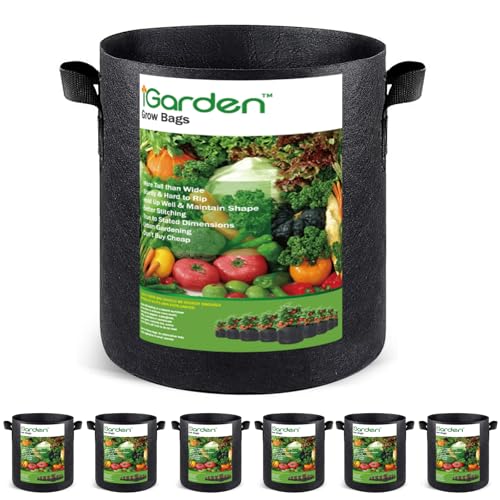
Six separate fabric pots make it easy to arrange vegetables across a sunny porch, patio, or rented outdoor area. Each 7-gallon bag gives you a useful balance of soil capacity and portability, while the handles let you reposition a planted container more easily than you can move a rigid box.
The 280-gram nonwoven fabric is permeable, allowing air to reach the root zone and encouraging roots to stop circling as they encounter the container edge. Unlike the metal options, these bags are flexible and intended to stay upright when filled with soil.
Standout Benefits
- Six pots give you a coordinated set for grouping multiple vegetables or herbs.
- Each 7-gallon container provides more room than a small nursery pot.
- Air-permeable fabric supports aeration and air pruning around the roots.
- Handles make individual pots easier to lift, carry, and rearrange.
- Smart drainage helps excess water leave the growing area.
Small Caveats
- The bags need soil to stand upright, so avoid handling them as empty, rigid containers.
- Permeable fabric can change moisture more quickly than a solid-sided pot, making regular soil checks useful in warm weather.
Core Details
Made For
These pots suit balcony growers and renters who want separate, movable containers for vegetables and herbs.
Reach For A Different Pick When
The Vego garden Classic Rolling Garden Bed suits you better when you want one connected soil area and a more rigid structure.
What to Match Before You Plant
Root Space and Planter Depth Start with the mature size of your vegetables rather than the container’s footprint alone. Deep roots need greater soil depth, while a sprawling crop also requires enough surface area for its foliage. The Vego garden Classic Rolling Cube Tomato Planter offers 15 inches of soil depth, and the 17-inch modular bed provides a taller frame for substantial root zones.
Drainage and Growing Medium Drainage gaps in the rolling tomato planter and smart drainage in the fabric pots serve different needs. Rigid beds require a stable mix that retains enough moisture between watering sessions, while permeable fabric benefits from close attention to moisture as conditions change.
Mobility and Layout Wheels matter for a patio bed that follows the sun, but they create less value for a permanent backyard installation. Measure the route to your growing area, available overhead clearance, and floor dimensions before choosing a rolling planter or a modular kit.
Watering Method Drip irrigation delivers water close to roots, while a hose timer controls connected watering equipment over a schedule. Your planter depth, crop spacing, and access to a hose determine which method fits the routine more naturally.
Before You Fill a New Planter
Common Shopping Slip Ups
Choosing by color or style can distract you from root depth, drainage, and the mature size of the crop. Measure the growing area and note how much weight filled soil will place on a patio or balcony.
Wrong Turns To Avoid
Do not assume every raised-bed accessory fits every container. Confirm the bed dimensions, connection style, and coverage before arranging irrigation parts or positioning a large rolling planter.
What The Higher Tier Buys
More substantial options add root capacity, structural support, programmable watering, or multiple layouts. Those additions make sense for frequent harvests, mature vines, and larger growing areas, while a few compact crops may not need that much capacity.
Frequently Asked Questions
What size pot is best for growing vegetables?
The right size depends on the crop’s mature root system and how much foliage it produces. Larger containers generally offer more soil volume, while compact vegetables can fit comfortably in smaller 7-gallon containers.
Are raised garden beds suitable for growing vegetables?
Yes, raised beds provide more controllable soil depth than many shallow patio pots. They suit vegetables, herbs, and flowers when you account for the bed’s footprint, drainage, and access for watering.
Do these planters need to match a particular watering system?
The containers can be watered by hand, and compatible beds can also use drip lines. A hose timer requires a hose-connected watering setup, so check your equipment before choosing one.
Which option is easiest to move?
The iGarden fabric pots and rolling metal planters both offer ways to change position. The fabric bags are light and flexible, while the rolling beds suit larger crops that need a sturdier root area.
Are fabric grow pots suitable for tomatoes?
They can suit compact or determinate tomato varieties when filled with suitable soil and positioned with adequate light. A tall or heavily vining tomato generally benefits from the additional support and soil volume of the rolling cube planter.
Wrap Up
Your most useful pot is the one that fits the crop, space, and watering routine without asking you to compromise constantly. Choose deep mobile containers for mature vegetables, fabric pots for flexible arrangements, and drip irrigation when consistent root-level moisture matters most. The right setup feels manageable from the first planting day.
