

A rosemary plant on a sunny patio can look awkward in an oversized container, especially when the pot holds more soil than the plant needs. The right choice balances drainage, root space, stability, and the ability to follow changing sunlight, and these six rolling planters make that decision much easier.
The Essentials At A Glance
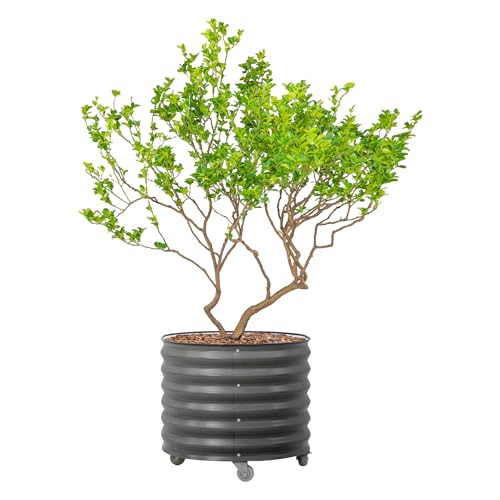
Vego garden Rolling Metal Citrus Tree Planter Pot 27″, 45 Gallon, Modern Gray

Vego garden Rolling Metal Citrus Tree Planter Pot 21″, 20 Gallon, 2 Pack Pearl White
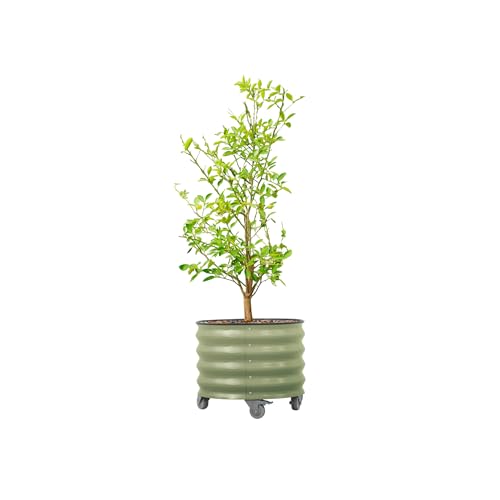
Rolling Metal Citrus Tree Planter Pot 21″ Round, 20 Gallon with Wheels, Olive Green

Rolling Citrus Tree Planter Gen 3, Self-Watering 24″ Wide, 30 Gallon, Olive Green

Vego garden Classic Rolling Citrus Tree Planter 1.75′ × 1.75′ Metal Raised Bed, Olive Green
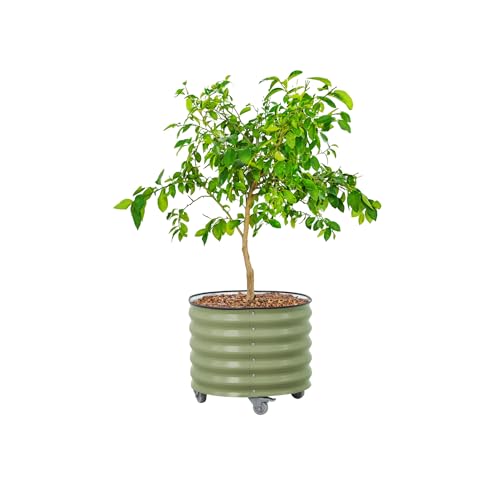
Rolling Metal Citrus Tree Planter Pot 24″ Round, 30 Gallon with Wheels, Olive Green
The Strengths Of Each Pick
Picture a substantial patio tree that needs to move with the seasons. This 45-gallon planter gives dwarf citrus, olive, and other compact trees generous soil depth, while the locking wheels let you reposition the container without wrestling with its weight.
For rosemary, it may be more container than a modest plant requires. The trade-off is simple: you gain a durable, mobile growing space, but you also fill more of the patio and manage a larger volume of soil.
Why It Works Well
- The 27-inch metal frame and 45-gallon capacity suit substantial dwarf trees.
- Locking wheels provide mobility while helping the planted pot remain stable.
- Drainage holes support the free flow of excess water around the root zone.
Trade Offs
- The large footprint and soil volume require meaningful patio space.
- Most rosemary plants need less root room than this 45-gallon format provides.
Key Specs
Who It Suits Best
This planter fits gardeners growing dwarf citrus or olive trees who value mobility and have a generous patio or backyard.
Where Another Pick Suits Better
Vego garden Classic Rolling Citrus Tree Planter 1.75′ × 1.75′ Metal Raised Bed, Olive Green suits rosemary growers with much less patio space.
A pair of planters gives you more flexibility than the single Vego garden Rolling Metal Citrus Tree Planter Pot 27″, 45 Gallon, Modern Gray. You can place one near the kitchen and another beside a sunny seating area, or use the matching pots to organize herbs, flowers, and compact edible plants.
Each planter measures 21 by 17.5 inches and holds up to 20 gallons. That remains oversized for many rosemary plants, but the 20-gallon format makes more sense for a young citrus tree that will eventually need more room.
Key Advantages
- Two planters create a coordinated pair for patios, decks, or garden entrances.
- The 20-gallon capacity accommodates compact trees as well as substantial herbs.
- Locking casters make seasonal repositioning easier.
- Corrosion-resistant metal and stainless steel hardware suit outdoor use.
Practical Considerations
- Two containers occupy more space and create two separate watering tasks.
- The 20-gallon limit suits smaller trees rather than a full-sized citrus canopy.
Feature Snapshot
Built With In Mind
This set works well for households that want matching movable planters for herbs, compact fruit trees, and decorative patio plants.
A Better Fit Elsewhere
Vego garden Rolling Metal Citrus Tree Planter Pot 27″, 45 Gallon, Modern Gray fits gardeners who want one larger tree container rather than a coordinated pair.
Compared with the white two-pack, this olive-green planter gives you a single 21-inch rolling container with a more understated garden finish. The 20-gallon size falls between a standard herb pot and a large tree planter, which can suit a young edible tree or an established collection of herbs.
The round metal body, sturdy frame, locking wheels, and drainage holes cover the core needs of a patio planter. For rosemary, you may find that the proportions look better after the plant develops a rounded, woody form.
Real Benefits
- Rolling casters let you follow changing sunlight across a patio.
- The 20-gallon volume gives young trees a substantial starting root zone.
- The round shape fits neatly beside a doorway or garden bench.
Small Caveats
- Olive green is a more specific color choice than the pearl-white pair.
- Its capacity remains generous for a typical rosemary plant.
- A filled container can be difficult to move across uneven ground.
The Right Fit
This planter suits patio gardeners who want one olive-green rolling pot for a young citrus tree, olive, or group of herbs.
Another Choice May Suit
Vego garden Rolling Metal Citrus Tree Planter Pot 21″, 20 Gallon, 2 Pack Pearl White suits gardeners who want coordinated containers for two separate areas.
This model adds a feature the other planters lack: an integrated watering system. A reservoir stores water below the planting area, a wick carries moisture toward the roots, and a water gauge helps you judge when the container needs attention.
The 30-gallon capacity makes more sense for a dwarf fruit tree than for a modest rosemary plant. In return, you gain convenient refilling through the watering tube and the ability to roll the pot as seasonal light changes.
What Works In Its Favor
- The reservoir and wick system deliver moisture directly to the root area.
- A refill tube avoids disturbing the soil or foliage.
- The built-in gauge provides a visible watering check.
- Locking casters support seasonal movement and rearrangement.
Details To Watch
- The gauge still needs regular attention; it is not a set-and-forget system.
- A planted 30-gallon pot can feel heavy even with caster wheels.
Technical Highlights
Made For
This planter suits busy gardeners growing dwarf citrus or fig trees who value integrated watering and easy seasonal movement.
Look Elsewhere When
Vego garden Rolling Metal Citrus Tree Planter Pot 27″, 45 Gallon, Modern Gray suits gardeners who want maximum capacity without a built-in reservoir.
A 1.75-by-1.75-foot square planter solves the space problem that makes many rolling tree containers awkward on a balcony or narrow deck. Its raised profile provides deeper soil than a shallow decorative pot while keeping the footprint manageable.
Rosemary is a more natural fit here than in the 30- and 45-gallon models. The container can hold rosemary alongside compact vegetables, herbs, or flowers, and the wheels help you shift the entire planting when the available light changes.
Reasons It Performs
- The square footprint suits patios, balconies, decks, and rooftops.
- Deep raised sides support stronger root systems than a low pot.
- Wheels make seasonal repositioning more convenient.
Less-Strong Areas
- The compact square offers less root volume than the round tree planters.
- Multiple plants can compete for water as the container fills.
Best Suited To
This raised bed suits apartment and balcony gardeners who want a mobile planting area for rosemary, vegetables, and compact herbs.
Reach For A Different Pick When
Vego garden Rolling Metal Citrus Tree Planter Pot 27″, 45 Gallon, Modern Gray suits gardeners with the patio space and plant scale for a larger citrus tree.
This 24-inch planter occupies a middle ground between the space-hungry 45-gallon model and the 1.75-foot square bed. Its 30-gallon capacity gives a dwarf citrus tree, fig, or olive enough room for substantial root growth without taking over the entire patio.
That scale also makes the container more practical for a mixed planting of rosemary, herbs, and flowers. Drainage holes and rolling wheels cover the essentials, although you must account for the weight of 30 gallons of wet soil.
Advantages To Know
- The 30-gallon volume suits medium-sized patio trees.
- A 24-inch round body gives useful width without extreme bulk.
- Drainage holes help prevent excess moisture from collecting around roots.
- Wheels make the planted container easier to reposition.
Worth Noting
- Rosemary may still prefer a smaller container for root-to-soil balance.
- Wet soil adds weight that can strain the wheels over uneven surfaces.
Quick Facts
Who Will Love This
This planter suits patio gardeners who want more root space than a compact raised bed without the footprint of the largest model.
Where A Sibling Pick Shines
Rolling Citrus Tree Planter Gen 3, Self-Watering 24″ Wide, 30 Gallon, Olive Green suits gardeners who prefer an integrated reservoir and water gauge.
What Matters Before Potting Rosemary
Match Capacity to the Plant
A large rolling planter does not automatically suit a rosemary plant better. Container size should reflect the plant’s mature root system, while drainage remains essential. The 30- and 45-gallon options make more sense for dwarf citrus, olive, and fig trees, whereas the smaller raised bed can feel more proportionate for rosemary, herbs, and companion flowers.
Check Your Available Floor Space
Measure both the planter’s width and the route needed to move it. A 27-inch round model needs a broad, stable area, while the 1.75-foot square bed fits more easily onto a balcony or deck. Account for the fact that a filled container becomes considerably heavier than its empty dimensions suggest.
Decide How Much Watering Support You Want
The self-watering model reduces the frequency of manual watering through its reservoir, wick, refill tube, and gauge. The other planters rely on drainage holes and regular watering, giving you more direct control over moisture. For frequent travelers, the integrated system may be convenient; for gardeners who prefer checking soil by hand, a conventional container can be more straightforward.
Look Beyond the Rosemary Name
These products are designed primarily as mobile tree planters, not dedicated herb containers. Their useful features include metal construction, substantial soil depth, locking wheels, and drainage, but those same traits can make them excessive for a small rosemary plant. Choose based on plant size, patio space, and watering habits rather than the label alone.
Keeping Large Planters Practical
Where Shoppers Go Wrong
The most common mistake is choosing the largest container without checking the mature size of the plant. Extra soil can leave a small rosemary disproportionately planted, while a large wheeled pot can be harder to move than expected. Measure your space, check the weight after filling, and match drainage openings with a free-draining soil mix.
What The Higher Tier Buys
The higher tier is more than extra capacity. It adds features that simplify ownership, such as an integrated reservoir, water gauge, locking mobility, and corrosion-resistant construction. Those additions suit busy gardeners and larger trees, while a compact raised bed can handle a small herb garden with less space and fewer moving parts.
Frequently Asked Questions
What size pot should you use for rosemary?
Choose a container that reflects the plant’s mature size without leaving excess wet soil around its roots. These rolling planters are usually larger than a modest rosemary plant needs, so the 1.75-foot square option is the closest fit for compact herb use.
Is a rolling planter suitable for rosemary?
A rolling planter suits rosemary because it provides drainage and lets you move the plant toward better light. Lock the wheels while the plant is growing so the container remains stable, and avoid placing it in a location where the pot must cross rough ground.
Do rolling planters need a saucer?
A saucer can catch drainage water, but it should not remain permanently full because rosemary prefers soil that does not stay waterlogged. Confirm that the drainage holes clear freely and keep any catch tray empty between watering sessions.
Which option has the easiest watering system?
Rolling Citrus Tree Planter Gen 3, Self-Watering 24″ Wide, 30 Gallon, Olive Green has the most integrated design, with a reservoir, wicking system, refill tube, and water gauge. The remaining planters need manual watering but give you more direct control over each application.
Is a 45-gallon rolling planter excessive for rosemary?
It is large for a typical rosemary plant and makes more sense for dwarf citrus, olive, or fig trees. Choose it for a substantial tree, or select the compact raised bed when your main goal is a manageable rosemary and herb garden.
Final Verdict
Your best fit depends on plant scale rather than the word “rosemary.” The compact raised bed suits a small herb garden, the 20- and 30-gallon planters handle mixed plantings and young trees, and the 45-gallon model prioritizes substantial root capacity. Choose the container that matches your plant, floor space, and watering routine, and let the pot serve the garden rather than dominate it.
