

Seedling trays rarely stay on the windowsill for long. Once tomatoes, herbs, and tender starts need more warmth and room, a portable greenhouse gives you a dedicated growing area without requiring permanent construction. These options range from compact indoor domes to spacious cedar walk-ins, so your best choice depends on the space, weather, and amount of equipment you need nearby.
The Picks In Brief

Backyard Discovery Willow 9′ x 6′ Cedar Walk-In Greenhouse with Exhaust Fan

Backyard Discovery Zalie 11′ x 7′ Cedar Walk-In Greenhouse with Exhaust Fan

EAGLE PEAK 8×6 Pop Up Greenhouse, Clear/Green

Ohuhu Tabletop Mini Greenhouse with Waterproof Pad, 36 x 18 x 33 Inches

EAGLE PEAK 56 x 56 x 77 in Clear/Green PE Greenhouse
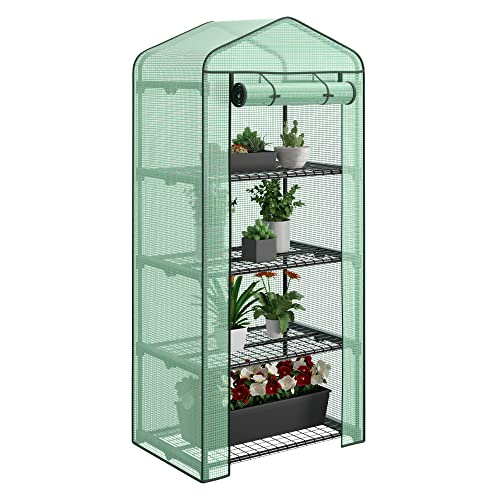
Nova Microdermabrasion 4-Tier Mini Greenhouse, 2.3 x 1.5 x 5.3 FT
A Breakdown Of The Leading Choices
The Willow suits a serious backyard garden where a permanent structure would be useful but a walk-in greenhouse still needs to be assembled. Its cedar frame, 54 square feet of interior space, and 13 linear feet of fixed staging make room for benches, pots, and organized plant zones rather than a single crowded shelf.
Four-wall polycarbonate consists of layered panels with internal channels, which helps limit heat loss compared with standard double-wall material. For most gardeners, that combination of insulation, utilities, and staging separates it from the simpler plastic-cover models.
Bright Spots
- The temperature-activated exhaust fan adds mechanical ventilation, while an easy-open window supports natural airflow and pollination access.
- Three electrical outlets and three USB ports keep accessories powered through the integrated PowerPort, though a separate power source is required.
- Interior and exterior hose hook-ups make it easier to water established beds and delicate seedlings from either side.
- Pre-cut, pre-drilled, and pre-stained components reduce preparation before assembly, with interactive instructions in the BILT app.
Things To Consider
- The stated wind and snow performance depends on anchoring the greenhouse according to the manufacturer’s instructions, so the site and setup matter.
- At 9 by 6 feet, it demands more clearance than the compact models, and the white stain may show slightly different saturation.
Quick Facts
Who Will Love This
You will appreciate the Willow most as a hands-on gardener who wants year-round growing space, built-in staging, and nearby power.
Where A Sibling Pick Shines
The EAGLE PEAK 8×6 Pop Up Greenhouse is easier for you to reposition when frequent setup and storage matter more than permanent work surfaces.
The Zalie answers a straightforward need: more growing space than the Willow in a similarly substantial cedar-and-polycarbonate format. At 11 by 7 feet, it gives you a generous footprint for grouped planters, propagation benches, and separate plant stages within one walk-in structure.
Its cedar construction, polycarbonate panels, exhaust fan, and window make it a more structured option than the lightweight EAGLE PEAK models. For a substantial backyard garden, that extra scale and material choice can matter, particularly when you want one area to handle multiple growing tasks.
A Few Strong Suits
- The 11-by-7-foot footprint offers a generous layout for planters, flowers, and young plants that need room to spread.
- Cedar framing and polycarbonate wall and roof panels provide a more substantial structure than a simple PE-covered tent.
- The exhaust fan and openable window give you two ways to manage airflow within the enclosed growing area.
- Hose hook-ups, a PowerPort, and staging shelves keep water, electricity, and work surfaces within reach.
Practical Considerations
- Its larger footprint requires clear, level space and careful planning around doors, paths, and neighboring landscaping.
- You should account for assembly and anchoring time, especially compared with the EAGLE PEAK 8×6 Pop Up Greenhouse.
Made For
You will find the Zalie most useful for an established backyard gardener managing numerous plants in a large, organized space.
Another Choice May Suit
The Backyard Discovery Willow 9′ x 6′ Cedar Walk-In Greenhouse offers a smaller footprint for yards where the Zalie’s extra width and depth would be difficult to accommodate.
Your hands get the clearest break with the EAGLE PEAK 8×6 Pop Up Greenhouse. Its preassembled frame and patented center-lock system let one person raise the structure without tools, making it practical for seasonal patios or gardens where setup needs to stay simple.
The 8-by-6 footprint still provides a proper walk-in area, so this is not merely a plant cover. Compared with the cedar models, the tradeoff is a lighter, pop-up approach that places speed and portability ahead of the more substantial materials and built-in staging.
Real Benefits
- One-person setup removes much of the time and effort associated with assembling a conventional greenhouse frame.
- The center-lock mechanism secures the frame after the structure is opened, without requiring separate tools.
- An 8-by-6 footprint creates useful room for benches, containers, and plants that have outgrown a mini greenhouse.
- The clear-and-green cover gives you a lightweight shelter that can be moved as your gardening setup changes.
A Few Limitations
- You need enough open space to unfold the pop-up frame, and the 8-by-6 footprint still needs to remain clear of obstacles.
At A Glance
The Right Fit
You will appreciate this model as a beginner or seasonal gardener who values quick setup more than a permanent-style interior.
Reach For A Different Pick When
The Backyard Discovery Willow 9′ x 6′ Cedar Walk-In Greenhouse fits you better when fixed staging, cedar framing, and integrated electrical access are priorities.
Seedling trays and small nursery pots are the natural fit for the Ohuhu Tabletop Mini Greenhouse. Its 36-by-18-by-33-inch body creates a compact humidity dome that can move between a worktable, patio, or indoor growing area as your plants change stage.
A humidity dome holds a sheltered atmosphere around young plants, while the clear cover lets you monitor growth without lifting the cover. The included waterproof pad also gives you a defined base for placing the greenhouse on a surface where water may be present.
Everyday Perks
- The compact footprint lets you keep a small propagation station close to your indoor growing lights or outdoor work area.
- The clear PVC cover provides visibility and creates a humidity-dome environment around tender seedlings.
Points To Note
- At 36 inches long and 33 inches high, you should measure your table, shelf, and overhead clearance before ordering.
- Unlike the EAGLE PEAK 8×6 Pop Up Greenhouse, this is a small propagation shelter rather than a walk-in growing area, so large planters and mature plants remain out of scope.
Built With In Mind
This model suits you best for seed starting, nursery work, or protecting a small group of plants in a compact indoor setup.
Where It Is Less Suited
The Nova Microdermabrasion 4-Tier Mini Greenhouse offers you more vertical shelf space when several levels of seedlings need to stay organized together.
A square footprint makes the EAGLE PEAK 56 x 56 x 77 in greenhouse easier to place than a long rectangular model. It stands 77 inches tall, reaches walk-in scale, and includes eight wire shelves, four on each side, for seedlings, pots, and compact growing trays.
The clear-and-green PE cover creates a lightweight enclosure for patios and backyard areas. You can assemble and disassemble it as seasonal conditions change, which is more practical for some gardeners than maintaining one fixed structure all year.
A Favorable Mix
- Eight side shelves make efficient use of vertical space without requiring a separate shelving unit.
- The 56-by-56-inch base is compact enough for a patio or smaller yard while remaining walk-in height.
- Disassembly lets you reposition the greenhouse between growing spaces as the season changes.
Small Caveats
- Wire shelves suit smaller pots and trays, so you should check their load and dimensions for your containers.
- Compared with the Backyard Discovery Willow 9′ x 6′ Cedar Walk-In Greenhouse, this model offers a smaller floor area and fewer integrated utilities.
Feature Snapshot
Best Suited To
You will find this greenhouse useful for a patio gardener who wants walk-in height, multiple shelves, and the ability to move the structure.
Consider Something Else When
The EAGLE PEAK 8×6 Pop Up Greenhouse gives you a faster setup with less assembly effort when storage space is limited.
Vertical space is the Nova Microdermabrasion 4-Tier Mini Greenhouse’s defining advantage. Its 2.3-by-1.5-by-5.3-foot size uses four tiers to separate seedlings and small plants, giving you more organized growing space without the broad footprint of a walk-in greenhouse.
A PE cover and roll-up zipper door create a lightweight enclosure for indoor seedlings, young plants, and seasonal outdoor use. The door lets you reach individual shelves more easily, which matters once multiple levels are in use.
What Pays Off
- Four tiers keep small plants separated vertically, making efficient use of a narrow floor area.
- The roll-up zipper door provides a practical opening for watering, ventilation, and reaching plants.
- The 2.3-by-1.5-foot base fits more easily beside a wall or along a narrow indoor growing area.
- The 5.3-foot height gives seedlings upright clearance while remaining much smaller than the EAGLE PEAK walk-in models.
- You can use the structure indoors for starting seedlings or outdoors for temporary seasonal shelter.
Details To Watch
- Measure the height of nearby shelves and counters first, since the 5.3-foot structure will not slide beneath many work surfaces.
Technical Highlights
Whose Shelf It Belongs On
This tiered greenhouse suits you best for indoor seed starting or a narrow balcony with several levels of young plants.
Another Choice May Suit
The Ohuhu Tabletop Mini Greenhouse gives you a wider single-dome format that suits you better when you want direct access around a broad group of small pots.
What Matters Before You Buy
Start With the Space
Measure both the floor area and overhead clearance before choosing. The EAGLE PEAK 8×6 model needs an open 8-by-6-foot area, while the Nova 4-Tier structure uses less floor space but still needs 5.3 feet of height. Your available light and access path matter just as much as the published dimensions.
Match the Cover to the Task
Polycarbonate panels provide a more structured enclosure for cedar walk-ins, while PE or PVC covers suit lighter, portable structures. A humidity dome works best around small propagation trays, and a walk-in greenhouse makes more sense once plants require benches, larger containers, or room to move around them.
Plan Ventilation and Utilities
An exhaust fan actively moves warm air outside, while an openable window supports natural circulation. Larger walk-ins may also need nearby electrical access for lights, fans, or other accessories, so outlet placement and cable routing deserve attention before assembly.
Account for Assembly and Storage
Pop-up frames prioritize quick setup and repositioning. Cedar kits require more assembly, yet their fixed staging and utilities can support a permanent growing workflow. Your storage space also matters, especially for models designed to fold or disassemble between seasons.
Mistakes Worth Avoiding
The most common mistake is choosing by footprint alone. Door clearance, shelf height, electrical access, and the path to your plants can determine whether a greenhouse works comfortably. Another common error is buying a small propagation dome for plants that already need walk-in space, or choosing a large walk-in for a limited patio.
What Separates Premium From Basic
Higher-tier walk-ins add larger cedar frames, polycarbonate panels, integrated staging, and convenient utilities. Those additions make sense for year-round gardening or frequent propagation. A simple pop-up or tiered greenhouse is often the more rational choice for seasonal use, limited storage, and a smaller collection of plants.
Frequently Asked Questions
How much space do I need for a portable greenhouse?
You need enough room for the stated footprint, a working entrance, and access to your plants. Walk-in models also need overhead clearance and space to open or assemble the frame without hitting nearby objects.
Can portable greenhouses be used indoors?
Yes, mini and tiered models suit indoor seed starting, plant propagation, and temporary humidity control. You still need suitable light, ventilation, and a surface that can accommodate the greenhouse’s base.
What is the difference between PE, PVC, and polycarbonate covers?
PE and PVC are lighter plastic covers commonly used in portable structures, while polycarbonate is a more rigid panel material used in the cedar walk-ins. The heavier construction offers a different combination of structure, insulation, and handling.
Are portable greenhouses difficult to assemble?
Setup varies substantially. Pop-up models use folding frames and locking mechanisms, while cedar kits involve assembling and securing many components, so you should allow more time for a walk-in assembly.
Do outdoor portable greenhouses need anchoring?
Anchoring or another form of secure installation is a sensible fit check for any outdoor greenhouse exposed to wind. The Willow’s stated wind rating specifically depends on following the manufacturer’s anchoring instructions.
Final Thoughts
A portable greenhouse works best when its size matches your plants and your available space. Choose the pop-up EAGLE PEAK for quick setup, the Ohuhu or Nova 4-Tier for small indoor starts, and a cedar walk-in for a serious growing area with staging and utilities. The most useful choice is the one you can position, operate, and use without fighting the layout.
