

A neatly rounded shrub can frame a front porch without the watering, pruning, and feeding that a live tree demands. A fruiting pomegranate, by contrast, gives you blossoms, edible fruit, and a long-term garden project. These are different goals, so the right choice depends on whether you want landscape greenery or a harvest.
A Side-By-Side Look

DREAMLOOM Cedar Ball Topiary

DREAMLOOM Cedar Topiary Pair

Russian Pomegranate Tree, 1 Gallon

Wonderful Pomegranate Tree, 1 Gallon

Russian 26 Pomegranate Tree, Fruit Bearing, 1 gal
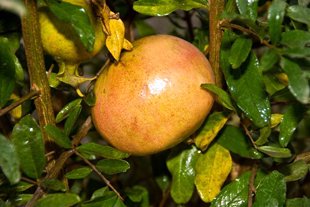
Utah Sweet Fruit Tree Live Plant
A Deeper Look At The Lineup
A clipped sphere at the entrance gives a porch instant structure, and this topiary arrives with its planter already in place. Its 20.28-inch total height and roughly 15.6-inch width work well beside a front door, although you may find it more substantial than a small tabletop accent.
Unlike the live pomegranates later in the lineup, this piece provides greenery rather than fruit. It suits renters, busy households, and anyone decorating a patio, deck, garden bed, or indoor entryway without taking on plant care.
What It Does Well
- The included planter removes the need to buy a separate pot or repot the shrub.
- Its rounded form gives porches and entryways a tidy, formal outline.
- UV-resistant foliage makes it more practical for exposed outdoor placements.
- No watering, pruning, fertilizer, or sunlight is needed once it is positioned.
Points To Note
- This is decorative greenery and produces no pomegranates.
- Allow roughly 16 inches of width for the fully fluffed ball shape.
Key Specs
Built With In Mind
This topiary fits you best when you want a polished outdoor accent with no watering routine.
Another Choice May Suit
Choose the Russian Pomegranate Tree, 1 Gallon instead when edible fruit and seasonal flowers matter more than maintenance-free decoration.
Two matching topiaries solve a familiar decorating problem: one side of a porch can look bare while the other feels crowded. This pair gives you coordinated greenery for gates, steps, doorways, or separate sections of a patio, with each planter already attached.
Compared with the single DREAMLOOM Cedar Ball Topiary, the main advantage is visual symmetry rather than a different plant design. Both use the same rounded form, included planter, and UV-resistant foliage, so choose according to the number of display points you need to fill.
Real-World Strengths
- A matched pair simplifies balanced displays around a double entrance.
- Each 20.28-inch shrub includes its own 4.69-inch-tall planter.
- The artificial foliage stays put without daily watering or seasonal trimming.
- The same design works outdoors or as an indoor decorative accent.
Small Caveats
- Two fully fluffed shrubs require about 32 inches of combined width.
- Detached leaves can be reattached to their stems after unpacking.
Made For
This pair is built for you when two entrance points, porch corners, or matching planters need coordinated greenery.
A Better Fit Elsewhere
The DREAMLOOM Cedar Ball Topiary is the neater choice for one compact location, while the pair fits wider displays.
Fruit trees become more satisfying once you can picture their seasonal rhythm, and the Russian pomegranate offers flowers before fruit. Its orange-red blossoms appear in early to mid-spring, followed by pomegranates described as ripening from mid to late September.
Self-pollinating means one tree can pollinate itself, so you do not need a second or third cultivar for fruit production. This makes the 1-gallon tree practical for a home garden, warm outdoor landscape, or small orchard where space is limited.
The Upside
- A single tree can produce fruit without a separate pollinating cultivar.
- The early spring flowers add ornamental value before harvest time.
- It begins bearing fruit at a relatively young age.
- The 1-gallon container provides a manageable starting size.
Worth Bearing In Mind
- It belongs in an outdoor garden and is not suited to life as a house plant.
- Warm outdoor conditions are important for this fruit-bearing tree.
- Its fruiting and flowering benefits require time in the ground rather than instant display.
Feature Snapshot
Who Will Love This
You will appreciate this tree if you want homegrown pomegranates, spring flowers, and a compact nursery start in a warm garden.
Consider Something Else
The Wonderful Pomegranate Tree, 1 Gallon is the alternative for gardeners who prioritize plentiful large fruit from a young tree.
The Wonderful cultivar brings together two rewards in one tree: abundant fruit and showy flowers. The blossoms arrive in early to mid-spring, adding color before the large red pomegranates begin ripening in mid to late September.
Its stated self-pollinating nature keeps the planting plan simple, much like the Russian Pomegranate Tree, 1 Gallon. For a home gardener, the main distinction is the emphasis on plentiful fruit, though the mature size still needs to fit the site you have in mind.
A Few Strong Suits
- Large, plentiful fruit makes it appealing for preserving and cooking projects.
- Self-pollinating growth allows you to begin with one tree.
- Spring blossoms give the landscape interest before harvest time.
- Low day-to-day upkeep suits gardeners who do not want a demanding tree.
Possible Compromises
- It is intended for a warm outdoor landscape rather than an indoor pot.
- You will need to provide suitable outdoor conditions and space for long-term growth.
Right Fit For
This tree fits you best when a productive fruit plant and an ornamental flowering tree are equally important in your garden.
Where Another Pick Shines
The DREAMLOOM Cedar Topiary Pair is more suitable when you want matching greenery on a porch without the care of a live fruit tree.
Some live pomegranate listings leave you guessing about the eventual footprint, but this Russian 26 tree comes with clear dimensions. It arrives 12 to 18 inches tall in a 1-gallon nursery pot and can eventually reach 10 to 12 feet high with an 8- to 10-foot spread.
That mature size makes placement the first decision. The tree prefers well-draining sandy or loamy soil with a pH from 5.5 to 7.0, and its practical pruning guidance helps you maintain airflow, control size, and make fruit easier to reach.
The Good Stuff
- Its stated mature dimensions help you reserve adequate garden space.
- The 1-gallon, 12-to-18-inch tree offers a defined nursery starting size.
- Specific soil and pH guidance helps you prepare the planting area.
- Seasonal pruning can improve air circulation and fruit accessibility.
Trade Offs
- Its eventual canopy needs considerably more room than the nursery pot suggests.
- Pruning is part of regular maintenance rather than a one-time setup task.
- Shipping is unavailable to California, Arizona, Alaska, and Hawaii under agricultural restrictions.
Technical Sheet
The Right Fit
This tree suits you if you have a spacious planting site and want a fruit-bearing pomegranate with clear soil and pruning guidance.
Look Elsewhere When
The Russian Pomegranate Tree, 1 Gallon is the better choice when you prioritize self-pollination and a more compact nursery presentation.
A small nursery pot can make a new fruit tree easier to place and transport, which is the clearest advantage here. This live plant ships at one foot or taller in a 4-inch pot, giving you a manageable entry point for a home collection.
The important distinction is that this is the Utah Sweet fruit-tree listing, not a named pomegranate cultivar. Choose it for a general fruit-tree collection; a dedicated pomegranate planting calls for one of the Russian or Wonderful options in this lineup.
Why It Works Well
- The one-foot-or-taller plant offers a defined starting height.
- A 4-inch pot keeps the tree manageable during initial placement.
- The live format offers an alternative to artificial decorative greenery.
Details To Watch
- It is not identified as a pomegranate cultivar.
- Its listing provides less planting and variety guidance than the live pomegranate options.
Quick Facts
Whose Shelf It Belongs On
This plant fits you best when you want a compact live fruit tree and recognize that it belongs in a broader collection rather than a pomegranate garden.
Reach For A Different Pick
The Wonderful Pomegranate Tree, 1 Gallon is the clearer choice when your goal is self-pollinating pomegranate fruit and spring flowers.
What Matters Before You Plant
A fruiting pomegranate needs a permanent outdoor site, whereas an artificial topiary can be moved as your porch arrangement changes. Start by separating those two intentions, because a decorative cedar ball cannot deliver the blossoms and harvest of a live pomegranate.
Climate and placement: Warm outdoor landscapes suit the live trees in this list. The Russian 26 reaches 10 to 12 feet tall and spreads 8 to 10 feet, so account for its mature canopy rather than its nursery pot.
Fruit production: Self-pollinating trees can produce fruit without a second cultivar nearby. Russian and Wonderful pomegranates offer spring flowers and a stated mid-to-late-September ripening period.
Soil and care: The Russian 26 performs best in well-draining sandy loam or loam with a pH from 5.5 to 7.0. Late-winter or early-spring pruning removes damaged growth, improves airflow, and keeps the tree manageable.
Decorative versus live: Artificial topiaries need no watering, fertilizer, sunlight, or pruning. Their practical advantage comes from low upkeep, not from producing fruit.
Practical Checks Before Ordering
Mistakes Worth Dodging
Do not judge a pomegranate solely by its nursery-pot size, since a 1-gallon tree can still become a large shrub. Confirm the cultivar, mature dimensions, outdoor climate, and soil needs before choosing a permanent site.
Where The Extra Money Goes
A higher-priced nursery plant may offer more developed stock or clearer cultivar and care information, but size alone does not determine quality. For a multi-tree orchard, named varieties and documented growth habits can be more useful than a larger pot.
Frequently Asked Questions
Do Russian pomegranate trees need a second tree to produce fruit?
No. Self-pollinating Russian pomegranate trees can produce fruit from a single planted specimen. A second tree may still add landscape interest, but it is not required for pollination.
When do these pomegranate trees bloom and ripen?
The stated flowering period is early to mid-spring, with fruit ripening in mid to late September. Your local climate will influence the actual timing.
Can pomegranate trees live indoors?
The Russian pomegranate listed here is intended for an outdoor garden and is not suited as a house plant. Choose a bright outdoor location and plan for its long-term growth.
Which option works best for a small garden?
The 1-gallon Russian Pomegranate Tree, 1 Gallon offers a compact starting container, although its mature spread still matters. Artificial topiaries take less space but provide decoration rather than fruit.
Are the DREAMLOOM topiaries pomegranate trees?
No, they are artificial cedar ball topiaries for decorative use. Choose a live Russian or Wonderful option when you want blossoms and pomegranates.
Final Verdict
Choose a live Russian or Wonderful pomegranate when fruit and seasonal flowers are central to the plan, and select Russian 26 when clear spacing, soil, and pruning guidance matter most. For a polished porch display without upkeep, the DREAMLOOM topiaries serve a different but equally valid purpose. Match the choice to the result you actually want to enjoy.
