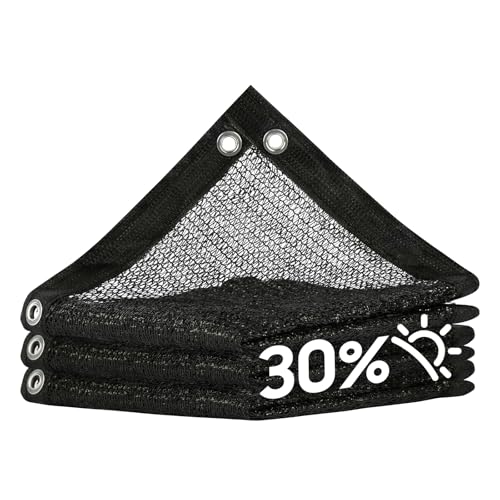
A vegetable bed that receives six hours of direct sun can struggle even when you water it regularly. Shade cloth gives you a practical way to soften that exposure, and the right coverage depends on your plants, space, and local weather rather than a single universal setting.
Royal Shade offers several sizes and shade levels within the same practical design. You’ll find 30% options for general beds, 50% coverage for greenhouses and tender plants, and 70% shade for areas that receive intense sun. All six use high-density polyethylene, reinforced edges, and grommets for securing the material to a support.
An 8-by-12-foot sheet gives you room to shade a raised bed, a group of containers, or the top of a hoop structure. At 30%, it filters enough light for general garden protection while leaving the area bright enough for vegetables and flowers that still need substantial sun.
High-density polyethylene, or HDPE, is a durable plastic used here in an open mesh construction. The cloth permits airflow while reducing direct sun, heat, and evaporation. For most backyard beds, that balance makes this a sensible first level of protection.
Why It Works Well
✓Thirty-percent shading softens strong sun without creating a deeply dim garden.
✓The open mesh allows airflow around plants instead of trapping a sealed layer of air.
✓Reinforced edge binding helps the fabric remain secure along its perimeter.
✓Two grommets make attachment to hoops, frames, or anchored lines straightforward.
Things To Consider
•The two grommets support attachment but do not replace a frame or additional tie-down points.
•The 8-by-12-foot dimensions require enough clearance to unfold and store the sheet.
Key Specs
Feature
Specification
Why It Matters
Dimensions
8′ x 12′
Covers a moderately sized bed
Shade level
30%
Provides moderate light reduction
Material
UV-resistant HDPE
Supports outdoor garden use
Made For
This option suits gardeners shading raised vegetables, flowers, or containers that receive several hours of direct sun.
A Better Fit Elsewhere
Choose Royal Shade 50% Shade Cloth 8′ x 10′ for a greenhouse or smaller collection of plants needing more light reduction.
The 8-by-10-foot footprint handles a compact raised bed more neatly than the larger Royal Shade 30% Shade Cloth 8′ x 12′. It works especially well over a small group of vegetables, a nursery bench, or a short section of a hoop house where full-bed coverage is unnecessary.
You retain the same 30% light reduction and open-air design, so the difference comes down to usable area rather than shading strength. In our view, avoiding excess material makes this a practical option for a focused garden patch.
What Stands Out
✓The compact dimensions simplify coverage of a single bed or plant bench.
✓Thirty-percent filtering suits crops that need relief from intense afternoon sun.
✓UV-resistant HDPE construction is suited to repeated outdoor exposure.
Practical Considerations
•You may need to overlap this smaller sheet to cover a wider row.
•Two grommets provide limited attachment points for wide or windy installations.
•Lightweight mesh can flutter or shift without taut, evenly spaced supports.
Who It Suits Best
This size works well for apartment growers, beginners, and small-space gardeners protecting one clearly defined planting area.
Another Choice May Suit
Royal Shade 30% Shade Cloth 8′ x 16′ fits long rows or multiple trellises better when your shaded area stretches lengthwise.
This is the most lengthwise option in the 30% group, so it suits a narrow garden bed, several parallel trellises, or a long hoop structure. Rather than joining two smaller panels, you can spread one sheet across the full run and reduce gaps along the top.
Like the other 30% cloths, it blocks some sunlight while preserving air movement. That makes it a sensible fit for vegetables, flowers, and fruiting plants that become stressed in harsh midday exposure but should not sit under deep shade all day.
What Works In Its Favor
✓The 16-foot length covers a long bed without piecing together panels.
✓Open mesh supports airflow through the growing area.
✓Thirty-percent shade provides a moderate change in light intensity.
✓UV resistance helps the fabric withstand outdoor sun exposure.
✓Reinforced edges support regular tension along a long installation.
Points To Note
•The broad sheet needs enough space to open flat, attach, and store without folding into deep creases.
Quick Facts
Feature
Specification
Why It Matters
Size
8′ x 16′
Suits elongated garden areas
Light reduction
30%
Balances shade and plant light
Built With In Mind
This cloth fits gardeners with long rows, narrow growing strips, or multiple vertical supports that need a continuous overhead cover.
Look Elsewhere When
Royal Shade 30% Shade Cloth 10′ x 10′ is the more practical option for a square bed where length and width are roughly equal.
A square sheet fits a square footprint without the extra length seen in the Royal Shade 30% Shade Cloth 8′ x 16′. You can center it over a 10-by-10-foot bed, shade a grouped container arrangement, or stretch it across a compact hoop structure.
The 30% rating keeps the setup relatively open, which matters for plants that still need daylight. Depending on your bed arrangement, a square cover may be easier to balance evenly than a long rectangle.
What It Does Well
✓Equal dimensions simplify placement over square beds and frames.
✓Moderate filtering provides useful protection from direct afternoon sun.
✓The mesh construction keeps air moving around covered plants.
Small Caveats
•You will need additional anchors or tie points to keep the wide sheet evenly tensioned.
•The sheet requires a clear 10-by-10-foot working area during installation.
At A Glance
Feature
Specification
Why It Matters
Coverage
10′ x 10′
Matches a square garden bed
Shade level
30%
Moderate daytime protection
Fabric
HDPE mesh
Allows airflow through the cover
Right Fit
This option suits gardeners with a square bed, square hoop frame, or compact collection of containers that benefits from a balanced canopy.
Consider Something Else When
Royal Shade 70% Knitted Shade Cloth 8′ x 12′ better serves heat-exposed plants that need more shading than 30% provides.
This cover raises the light reduction from the 30% seen in several earlier options to 50%. That middle setting makes sense for a greenhouse, propagation bench, or collection of plants that show stress during the brightest part of the day but still require meaningful light.
Air continues to pass through the HDPE mesh, helping limit heat buildup while reducing evaporation. The extra antioxidants and strengthened UV resistance described for this fabric also make it a reasonable choice for extended outdoor use over a greenhouse frame.
Reasons It Performs
✓Fifty-percent coverage offers more protection than the 30% cloths.
✓Open mesh preserves airflow inside a greenhouse or covered bench.
✓Reinforced edges improve strength around frequently handled attachment points.
✓UV resistance suits continued exposure above outdoor growing areas.
Possible Compromises
•Deep shade can slow growth in crops that need strong direct sunlight, so plant placement matters.
•The 8-by-10-foot size may leave part of a larger greenhouse uncovered.
Who Will Love This
This cover fits greenhouse growers, nursery operators, and home gardeners supporting seedlings or tender plants under strong midday light.
Reach For A Different Pick When
Royal Shade 30% Shade Cloth 8′ x 12′ is a better match for a broad vegetable bed that needs moderate rather than heavy shading.
Seventy-percent shading places this cloth at the deepest coverage level in the group. It fits plants that become visibly stressed in hot, exposed positions, particularly when the bed receives strong afternoon sun and little relief from surrounding structures.
The knitted cover remains ventilated rather than forming a solid barrier. You still need to manage exposure carefully, since plants that require long periods of direct light may need the cover raised during brighter hours or removed earlier in the season.
Noteworthy Benefits
✓Seventy-percent filtering provides the deepest shade in this collection.
✓Open knitted construction allows air to circulate around plant foliage.
✓UV-resistant HDPE material supports continued outdoor use.
✓Reinforced binding strengthens the sheet around its perimeter.
Less-Strong Areas
•This setting can be excessive for crops that still need substantial direct sunlight.
•Two grommets offer limited securing points across an 8-by-12-foot surface.
•The larger sheet needs suitable supports and adequate storage space.
Feature Snapshot
Feature
Specification
Why It Matters
Shade level
70%
Supports heavily exposed beds
Size
8′ x 12′
Covers a moderate garden area
Material
Knitted HDPE
Combines shade with airflow
Attachment
Two grommets
Allows initial tie-down
Made For
This cover suits gardeners with a hot, exposed bed containing plants that wilt or struggle under prolonged direct sun.
Swap It Out When
Royal Shade 50% Shade Cloth 8′ x 10′ is the gentler choice for a greenhouse containing a mix of plants with different light needs.
## Set Up Shade With the Right Coverage
### Match the Shade Percentage
Shade percentage indicates how much sunlight the material filters. A 30% cloth provides moderate protection for vegetables and flowers, while 50% suits greenhouses, benches, and tender plants. The 70% option makes sense for beds exposed to intense sun and plants that struggle under those conditions.
### Measure the Covered Area
Measure both the bed and the space needed to secure the cloth. An 8-by-10-foot sheet suits a compact patch, the 8-by-12-foot versions cover more moderate areas, and the 8-by-16-foot panel favors long rows. Leave enough room to unfold the material and attach it without dragging it across plants.
### Account for Airflow and Support
Open mesh lets air move through the cover, which helps limit heat accumulation. Reinforced edges add strength, but the grommets still need a dependable frame, cable, or additional tie points. Tight, even support also reduces flapping during breezy weather.
## Mistakes Worth Dodging
Avoid choosing shade level from the plant name alone. A 70% cover can darken a sunny vegetable bed more than the plants need, while 30% may provide too little relief in a hot, exposed location. Measure the area, note the strongest sun hours, and match the cloth to the plants’ actual light requirements.
## What Separates Premium From Basic
A higher shade level or larger panel costs more material and may use denser construction to provide greater light reduction. The upgrade pays off for demanding greenhouses, exposed beds, and long rows, while a smaller 30% cover remains sensible for a compact garden that needs only moderate protection.
## Frequently Asked Questions
### What shade percentage is best for vegetable gardens?
A 30% shade cloth is a common starting point for vegetables because it reduces direct exposure while preserving substantial daylight. Use 50% or 70% for more intense conditions and plants showing stress.
### Does shade cloth keep rain off plants?
Shade cloth provides a ventilated canopy rather than a waterproof enclosure. Rain can pass through the mesh, so you still need separate protection for plants that must remain dry.
### How do you install Royal Shade shade cloth?
Secure the grommets to a frame, hoop, cable, or other firm supports, and add tie-down points as needed. Keeping the fabric evenly tensioned helps prevent bunching and flapping.
### What size shade cloth do I need for a raised bed?
Measure the bed’s length and width, then choose a panel that covers it with room to attach the edges. The 8-by-10-foot and 10-by-10-foot options suit compact beds, while the 8-by-12-foot and 8-by-16-foot versions cover longer areas.
### Can shade cloth be used inside a greenhouse?
Yes, and 50% coverage is especially practical for greenhouses and propagation benches. Monitor plant light levels and raise or remove the cover when seedlings need stronger direct sunlight.
## Final Thoughts
Your best fit comes down to shade strength and footprint. The 30% cloths handle general garden protection, the 50% cover suits greenhouses and tender plants, and the 70% option addresses the harshest exposed beds. Measure first, then choose the smallest panel and lightest shade level that meet your plants’ needs.