

Checking soil by touch tells you very little about the moisture deeper inside a pot. A plant moisture meter gives you a clearer signal before you water, helping indoor plant caretakers, garden growers, and succulent owners judge moisture without repeatedly guessing from the soil surface.
A Snapshot Of The Selections
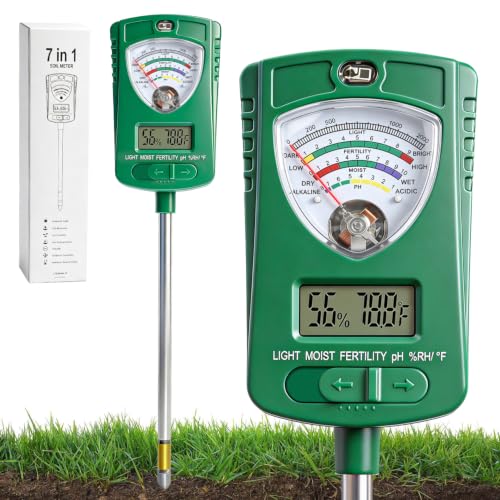
FOTSHARER 7-in-1 Soil Test Kit with Rotatable Head and Digital Display
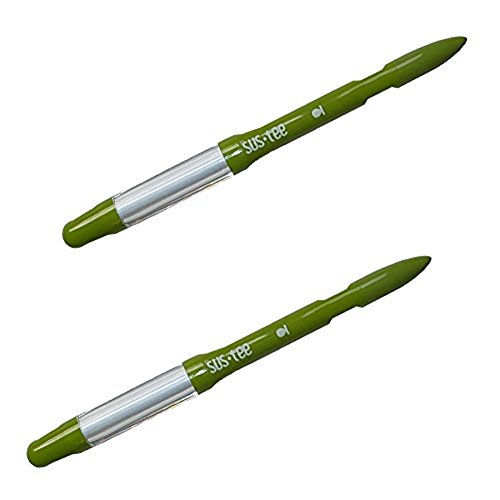
Sustee Aquameter Small Green Refillable Moisture Meter Bundle of 2

General Tools MMD7NP Digital Moisture Meter
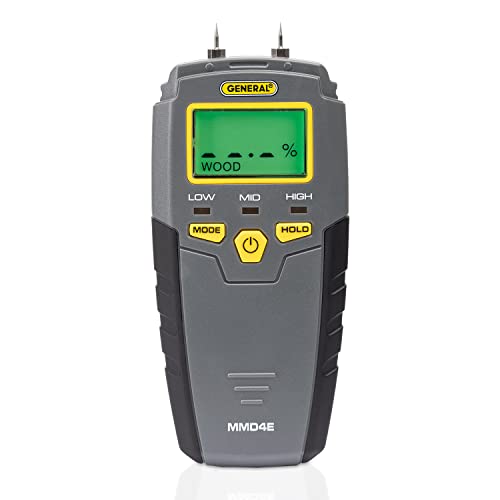
General Tools MMD4E Moisture Meter

XLUX Plant Soil Moisture Meter Without Batteries

XLUX Long-Probe Soil Moisture Meter
A Breakdown Of The Leading Choices
A cluttered shelf of separate tools can make plant care more complicated than it needs to be. The FOTSHARER 7-in-1 Soil Test Kit brings moisture, pH, fertility, light intensity, soil temperature, air humidity, and ambient temperature onto one digital display, giving you a broader picture without swapping instruments.
The 90-degree rotatable head helps you approach the soil from a more comfortable angle, especially around crowded pots or garden beds. This is attractive to growers who want several environmental readings in one place, although the extra figures may take more interpretation than a dedicated moisture meter.
Practical Advantages
- Seven measurements reduce the need for separate tools when tending indoor or outdoor plants.
- The digital screen keeps moisture, temperature, humidity, and light information together for quick reference.
- A 90-degree rotating head improves access around plants and against container walls.
- Soil and ambient readings suit both windowsill collections and larger garden areas.
- The broad feature set gives you a useful baseline for changes in a plant’s growing environment.
Worth Noting
- The number of readings can feel more complicated than necessary for routine watering checks.
- Its broad garden focus takes up more attention than a simple, moisture-only instrument.
Key Specs
Made For
This kit suits indoor plant owners and mixed-environment gardeners who value moisture, light, temperature, and pH information together.
A Better Fit Elsewhere
Sustee Aquameter serves small succulents better when you need a simple, leave-in moisture indicator without extra environmental readings.
Small pots can dry unevenly, with the center holding moisture while the outer soil begins to dry. The Sustee Aquameter is designed as a leave-in sensor, so it can remain in the soil and provide a continuing moisture reference instead of being inserted and removed for every check.
That leave-in design is especially useful for succulents and compact houseplants in 2, 2.5, or 3-inch pots. You can check several plants without carrying a separate meter around, and the two-stick bundle makes sense for a home with multiple small containers.
Notable Upsides
- Leaving the sensor in place reduces repeated insertion and removal.
- The narrow 0.4-inch width fits comfortably into small pots.
- A refillable stick offers an established format for ongoing moisture monitoring.
- Two sensors allow you to watch separate plants at the same time.
Small Caveats
- The small dimensions limit its usefulness in medium or large planters.
- The bundle focuses on moisture rather than pH, light, temperature, or fertility.
- Leaving a sensor in the soil reduces the ability to check the same spot immediately after watering without repositioning it.
Core Details
Best Suited To
This option fits succulent collectors and apartment plant owners who want continuous moisture guidance in small pots.
Another Choice May Suit
XLUX Long-Probe Soil Moisture Meter fits larger and deeper planters where a short sensor cannot reach the lower soil.
Not every moisture problem happens in a flowerpot. Damp flooring, walls, and other household surfaces call for a different tool, and the General Tools MMD7NP uses a pinless, non-invasive design to check material moisture without pushing pins into the surface.
Its digital display presents low, medium, and high moisture levels through tones and colored indicators, making the results easier to interpret at a glance. That makes it relevant to plant areas in basements, conservatories, or utility rooms where moisture in nearby building materials matters more than the soil itself.
Benefits That Matter
- The pinless sensor leaves finished surfaces without puncture marks.
- Color and tone indicators simplify quick moisture comparisons.
- Digital readings suit checks around plant storage areas and damp household spaces.
Where It May Fall Short
- It is a surface dampness meter rather than a soil moisture tool.
- Plant owners seeking pH, fertility, or light information will need another instrument.
- The response categories are less detailed than a numeric soil reading.
Built With In Mind
This model suits homeowners checking dampness around basements, plant-storage areas, walls, and other finished surfaces.
Consider Something Else When
XLUX Plant Soil Moisture Meter Without Batteries is the better fit for direct checks inside a plant pot.
Where the MMD7NP scans a surface, the General Tools MMD4E uses stainless steel pins to take a more direct moisture reading. It is built for wood, concrete, drywall, and subflooring, giving home maintainers a useful tool for locating damp building materials and checking around areas where plants may be stored.
The readable LCD and one-hand shape make it straightforward to move between a wall, floorboard, and wooden project. Compared with the pinless MMD7NP, its insertion-based approach suits people who need a more targeted material check rather than a quick scan.
Practical Pluses
- Stainless steel pins support direct checks in several common building materials.
- The LCD provides a clear display for field and household use.
- The compact shape fits comfortably in one hand.
- Pin readings offer a different method from the non-invasive MMD7NP.
Practical Considerations
- Pin insertion is unsuitable for delicate surfaces that should not be punctured.
- It measures building materials rather than the moisture inside plant soil.
- You will need a separate plant-focused tool for everyday watering decisions.
Feature Snapshot
The Right Fit
This meter fits homeowners and maintenance workers checking wood, drywall, concrete, or subfloor moisture around a plant area.
Look Elsewhere When
General Tools MMD7NP suits users who prefer pinless scanning and want to avoid making puncture marks.
For many plant-care routines, simplicity matters more than a long feature list. The XLUX Plant Soil Moisture Meter Without Batteries gives you a direct soil-moisture reading for indoor and outdoor plants, with no battery replacement or charging to remember.
That makes it a practical fit for a windowsill collection, patio planter, or mixed collection of everyday greenery. The information is less extensive than the FOTSHARER display, but the narrower purpose makes the tool easier to keep in a drawer and use whenever a watering decision feels uncertain.
Real Benefits
- No batteries simplify storage and regular watering checks.
- Indoor and outdoor support covers houseplants, patio plants, and garden containers.
- The focused design suits people who want moisture information without extra measurements.
- Its straightforward format works well for quick routine decisions.
Factors To Consider
- It does not add pH, light, temperature, or fertility information.
- A longer probe may be needed for large, deep planters.
- The short tool offers less insight into moisture at different soil depths than a multi-function model.
Who Will Love This
This option suits everyday plant owners who value simple operation and want one meter for indoor pots, patio containers, and outdoor beds.
Reach For A Different Pick When
Sustee Aquameter fits small-potted succulents better when continuous, leave-in monitoring is your priority.
The surface soil can feel dry while moisture remains near the bottom of a large planter. The XLUX Long-Probe Soil Moisture Meter addresses that gap with a probe that extends 5.5 inches beyond a regular style, reaching deeper into pots and garden containers.
It also uses a large, easy-to-read display and needs no batteries, so you can carry it outdoors without managing a power supply. For deep planters, the extended reach offers a more useful signal than a short meter, while the indoor and outdoor support keeps it relevant throughout the season.
Key Advantages
- The extended probe checks deeper soil in large and tall planters.
- A large display makes the result easier to read in a greenhouse or garden bed.
- Operation without batteries removes charging and battery replacement from the routine.
- Indoor and outdoor versatility covers pots, planters, and garden soil.
- The longer reach helps distinguish surface dryness from moisture retained lower down.
Possible Compromises
- The long probe is unnecessary for shallow dishes and very small pots.
- Insertion and removal can mark loose potting soil.
- It remains focused on moisture rather than pH, light, or temperature.
Technical Highlights
Whose Shelf It Belongs On
This meter belongs with gardeners and indoor plant owners who regularly handle tall planters or deep containers.
Where A Sibling Pick Shines
Sustee Aquameter is the neater choice for compact pots where a short, refillable sensor can remain in the soil.
What To Look For In A Soil Meter
Start with how you care for plants. The FOTSHARER 7-in-1 Soil Test Kit suits gardeners who want moisture, pH, light, temperature, and fertility readings together. For routine watering decisions, the XLUX Plant Soil Moisture Meter Without Batteries keeps the process more focused.
Match The Probe To The Pot
Probe depth determines which containers you can assess accurately. The XLUX Long-Probe Soil Moisture Meter reaches 5.5 inches farther than a regular design, making it useful for deep planters where the lower soil stays wet longer. A short meter is easier to position in small succulent pots.
Decide Between Handheld And Leave-In Designs
A handheld meter gives you flexibility because you can move it between plants. The Sustee Aquameter takes the opposite approach, remaining in the soil for continuing monitoring and fitting 2, 2.5, or 3-inch pots.
Check Whether You Need More Than Moisture
Additional measurements can help you understand why a plant is struggling, rather than merely whether its soil feels wet. pH, light intensity, and temperature provide useful context, but they also make the display busier. Your watering habits determine how much complexity will actually be useful.
Separate Plant Tools From Surface Meters
Pinless and pin-based General Tools meters belong in a different part of the category. They check dampness in walls, floors, wood, and other materials around a plant area. Use a soil-specific meter for the pot itself.
Common Plant Meter Pitfalls
A long probe can look awkward in a shallow pot, and extra readings can obscure the signal you actually need. Match the tool to your plants before comparing features.
Mistakes Worth Dodging
Do not assume the surface of dry soil means the entire pot needs water. Longer probes reveal what happens deeper down, while a leave-in sensor tracks one location over time. Choose based on pot depth and watering routine, not on the number of readings.
What Separates Premium From Basic
More advanced tools add pH, light, temperature, fertility, or deeper probe reach. Those extras suit experienced growers and large collections, while a basic moisture-only model handles basic watering checks with less interpretation.
Frequently Asked Questions
Can a plant moisture meter work for indoor potted plants?
Yes, especially the Sustee Aquameter for small pots and either XLUX model for general container and indoor plant care. Match the probe length to the pot and insert it into the root zone for a useful reading.
Can you leave a soil moisture meter in the pot?
The Sustee Aquameter is designed to remain in the soil for continuous monitoring. The other models are better treated as portable checks rather than permanently installed indicators.
Do you need pH and light readings as well as moisture?
Additional readings can help explain plant stress, but moisture alone handles many watering decisions. The FOTSHARER 7-in-1 Soil Test Kit is more useful when you actively manage soil conditions or want broader environmental information.
Which meter works best for large planters?
The XLUX Long-Probe Soil Moisture Meter reaches farther into the soil, so it offers a better fit for tall or deep containers. Its extended probe can also distinguish lower moisture from a dry surface layer.
Are General Tools moisture meters suitable for plant soil?
The MMD7NP and MMD4E are designed for moisture in household surfaces and building materials. Use a dedicated soil meter for plants, while keeping these models for dampness checks around plant storage areas.
Final Verdict
Your best choice comes down to the pots you maintain. Sustee Aquameter fits small succulents, XLUX covers straightforward and deep-container watering, FOTSHARER adds broader soil information, and the General Tools meters handle damp building materials. Match the tool to the job, and your watering routine becomes much less guesswork.
