

A windowsill full of succulents can look healthy for weeks, yet pale growth or stretched stems often points to a feeding problem. The right plant food depends on whether you want a broad-purpose fertilizer, a potash-focused seaweed formula, or a succulent-specific liquid or spray.
The Main Contenders

Miracle-Gro Water Soluble Plant Food 12.5 lb.

Smart Grower Organic Liquid Sea Kelp Fertilizer 4 oz

Smart Grower Sea-Kelp Fertilizer 2 oz, 50 Gallons
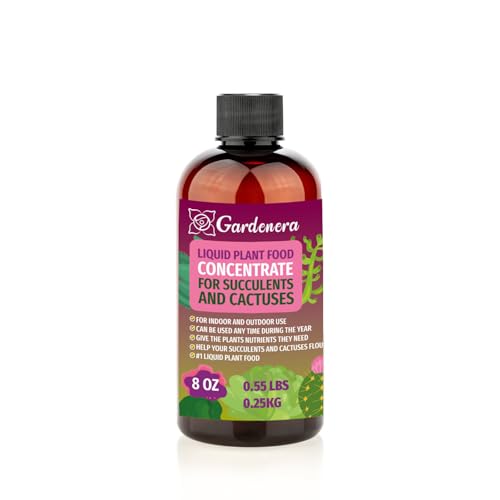
Gardenera Succulent Plant Growth Superfood 8 oz

Gardenera Premium Liquid Succulent Fertilizer 3-1-2, 8 oz

Gardenera Succulent Spray Fertilizer Mist 3-1-2, 8 oz
Taking A Closer Look At The Options
A crowded windowsill or mixed garden bed calls for one product that can handle more than cacti. Miracle-Gro Water Soluble Plant Food is built for indoor and outdoor plants, including houseplants, flowers, vegetables, roses, trees, and shrubs.
Its 24-8-16 NPK formula provides nitrogen for leaf growth, phosphorus for root and flower development, and potassium for general plant resilience. You dissolve the granules in water, which makes measured feeding straightforward, though the relatively high nitrogen calls for restraint around succulents.
Why It Works Well
- One formula covers an unusually broad mix of indoor and outdoor plants.
- Clear dilution amounts support consistent watering-can feeding.
- The 24-8-16 nutrient balance addresses several basic plant needs.
- A 12.5-pound container can cover approximately 5,000 square feet of garden area.
- Water-soluble granules distribute through a watering can without creating separate application equipment.
Trade Offs
- The nitrogen-heavy profile is less tailored to the restrained feeding needs of many succulents than a dedicated 3-1-2 formula.
- The large container needs dry storage space and offers far more fertilizer than a small indoor collection may use.
Key Specs
Made For
You maintain a mixed collection of succulents, flowers, houseplants, and outdoor garden plants and want one flexible fertilizer.
Where Another Pick Suits Better
Gardenera Premium Liquid Succulent Fertilizer 3-1-2 suits you better when your collection consists mainly of indoor succulents and cacti.
Unlike the broad Miracle-Gro option, Smart Grower Organic Liquid Sea Kelp Fertilizer takes a narrower approach. Its liquid seaweed formula uses cold-water Ascophyllum nodosum and is positioned for stronger roots and stems, particularly after repotting or transplanting.
The 0-0-4 analysis contains no nitrogen or phosphorus; its 4% soluble potash supplies potassium, the nutrient associated with sturdy stems and water-use efficiency. For plants recovering from root disturbance, that focus can feel more purposeful than a general-purpose feed.
Points In Its Favor
- The seaweed focus suits plants settling after repotting or transplanting.
- Liquid format makes it convenient to incorporate into a regular watering routine.
- The 4% soluble potash content provides a defined potassium level without adding nitrogen or phosphorus.
Small Caveats
- A 0-0-4 formula is not a complete NPK blend, so it works best alongside a balanced feeding approach.
- The concentrate requires accurate dilution and careful storage away from direct sunlight.
- Its root-and-stem emphasis offers less direct support for balanced everyday nutrition than a complete fertilizer.
Who It Suits Best
You are repotting or transplanting container plants and want a potassium-focused seaweed feed for the recovery period.
Not Your Match When
Smart Grower Sea-Kelp Fertilizer 2 oz, 50 Gallons is a better match when you prefer a powder that prepares a larger volume of feeding water.
The liquid Smart Grower formula shares a seaweed foundation with the previous pick, but this version changes the delivery and scale. A 2-ounce pouch of powdered Ascophyllum nodosum can prepare as much as 50 gallons of enriched watering water.
That volume suits a substantial collection of potted plants or a watering can used repeatedly. Its 0-0-18 analysis remains potassium-focused, while naturally derived polymers such as fucoidan, alginate, and tannins distinguish it from a basic mineral feed.
Notable Gains
- The stated 50-gallon capacity reduces refill frequency for large plant collections.
- Powder format keeps the stored product compact until it is mixed with water.
- The formula provides 18% soluble potash for potassium-focused feeding.
- The seaweed is identified as Maine-harvested Ascophyllum nodosum.
Points To Note
- The 0-0-18 profile does not supply nitrogen or phosphorus, so it should fit into a broader feeding plan.
- Preparing the full stated volume means storing or managing a large amount of mixed water, depending on your container.
Feature Snapshot
Right Fit For
You have many containers and prefer mixing one concentrated powder into a large batch of watering water.
Look Elsewhere When
Smart Grower Organic Liquid Sea Kelp Fertilizer 4 oz suits you better when a ready-to-dose liquid fits your storage and handling routine more closely.
Gardenera Plant Growth Superfood moves away from the single-purpose seaweed approach and toward a broader liquid formula for succulents and cacti. It includes 18 vitamins and minerals along with micro-fungi and bio-organisms, giving it a more complex ingredient profile.
Its compatibility with soil, hydroponics, semi-hydroponics, LECA, terrariums, vivariums, water gardens, and fish tanks gives it an advantage in mixed plant setups. You will still need to follow its dilution directions because a versatile formula can be easy to overapply.
Noteworthy Benefits
- It is designed specifically for succulents and cacti rather than garden plants generally.
- Eighteen vitamins and minerals create a broader nutritional profile than a potash-only seaweed feed.
- Micro-fungi and bio-organisms add a biological component to the formula.
- The broad list of compatible growing systems suits terrariums, hydroponic setups, and unusual containers.
- The 8-ounce container balances useful capacity with manageable storage.
Things To Consider
- Its wide applicability means you should confirm the dilution rate for the specific growing medium you use.
- The complex ingredient list offers less immediate clarity than a simple 3-1-2 nutrient ratio when you prefer straightforward nutrition.
Core Details
Who Will Love This
You maintain succulents across several growing systems and want one formula with vitamins, minerals, and biological components.
A Better Fit Elsewhere
Gardenera Premium Liquid Succulent Fertilizer 3-1-2 is a better fit for you when a clear primary-nutrient ratio matters more than a broad ingredient list.
The Gardenera 3-1-2 concentrate offers a clearer nutritional target than Gardenera Plant Growth Superfood. Its ratio pairs 3 parts nitrogen, 1 part phosphorus, and 2 parts potassium, a structure that fits the less-frequent feeding pattern many succulent growers prefer.
Liquid concentrate is easy to portion into your watering routine, but dilution remains the deciding factor. The honest read is that this option works best for indoor succulent and cactus collections where measured feeding already fits your habits.
Positive Points
- The 3-1-2 ratio makes the primary nutrient balance easy to understand at a glance.
- The liquid concentrate mixes readily into routine watering.
- The formula is tailored specifically for indoor succulents and cacti.
Trade-Offs To Consider
- Concentrated fertilizer requires careful measurement before watering.
- The product is presented for indoor plants, so outdoor planters deserve a formula explicitly labeled for outdoor use.
Whose Shelf It Belongs On
You keep indoor succulents and cacti and prefer a straightforward, succulent-focused nutrient ratio over a complex ingredient profile.
Swap It Out When
Gardenera Plant Growth Superfood 8 oz is the better choice for you when your plants occupy several growing systems that need broader compatibility.
Gardenera Succulent Spray Fertilizer Mist changes the delivery method while keeping the same 3-1-2 nutrient balance as the previous concentrate. You apply it as a foliar spray, meaning the nutrient solution reaches the leaves rather than being delivered only through the soil.
That makes it useful for quick leaf-focused care and collections where spraying is more practical than mixing a separate feeding vessel. The trade-off is that your watering routine still needs to provide the moisture succulents need at the root zone.
Benefits That Matter
- The spray format makes it easy to mist leaves directly.
- The 3-1-2 formula matches the primary nutrient ratio used by Gardenera’s liquid succulent feed.
- An 8-ounce bottle suits a home collection that does not need large quantities.
- The format reduces the need to measure fertilizer into a separate watering container for leaf applications.
Things That May Matter
- A foliar spray does not replace the regular soil watering and root-zone care that container succulents require.
- Your collection needs to be positioned so excess spray can drain away rather than collect around the base.
Quick Facts
The Right Fit
You want a quick foliar-feeding option for a home succulent collection and already have a reliable soil-watering routine.
Another Choice May Suit
Gardenera Premium Liquid Succulent Fertilizer 3-1-2, 8 oz suits you better when applying diluted nutrients through the soil is your preferred feeding method.
Matching Nutrients to Your Growing Routine
Start With The Nutrient Ratio
NPK describes the relative amounts of nitrogen, phosphorus, and potassium in a fertilizer. Succulents generally receive restrained feeding, so a concentrated ratio such as 3-1-2 provides a clearer fit than a nitrogen-heavy general-purpose formula. Potash-only seaweed products serve a narrower role and do not supply the full nutrient range.
Match The Delivery Method
Liquid concentrates give you measurable control in a watering can. Powdered seaweed can prepare a larger batch, while a spray mist serves leaf-focused care. Choose the format that matches your containers, watering habits, and available storage rather than judging only by the ingredient list.
Check The Growing System
Soil, hydroponics, LECA, semi-hydroponics, terrariums, and mixed displays may call for different application methods. A broad formula can simplify a varied collection, but the label directions still determine the correct concentration and route of application.
Account For Plant Activity
Active spring and summer growth generally calls for more regular attention than cooler, slower-growth periods. Succulents can be sensitive to excessive feeding and overwatering, so restrained application and good drainage remain more important than simply adding more nutrients.
Practical Decisions for Succulent Feeding
Mistakes Worth Dodging
Avoid judging plant food by its ingredient count or choosing a concentrated formula without checking its dilution directions. Also avoid using a general-purpose feed at full strength on delicate succulents, and do not assume foliar spray replaces proper watering at the root zone.
What Separates Premium From Basic
Higher-tier options often pay for concentrated liquid formats, succulent-specific ratios, specialized ingredients, or packaging suited to particular growing systems. The extra cost is more justified when those features match your collection; a simpler formula remains sensible for one windowsill or a modest garden bed.
Frequently Asked Questions
What Is The Best Plant Food For Succulents?
The best fit is a diluted fertilizer formulated for succulents, especially one with a restrained nutrient ratio such as 3-1-2. Seaweed feeds can support potassium-focused care, while broad formulas suit collections containing many plant types.
Can I Use Liquid Fertilizer On Succulents?
You can use liquid fertilizer on succulents when the product label includes them and you follow the dilution instructions carefully. Even a concentrated formula should be diluted rather than applied directly to roots or leaves.
Is Sea Kelp Fertilizer Better For Succulents?
Sea kelp fertilizer can suit specific needs such as transplant recovery or potassium-focused feeding, but it does not automatically provide a complete NPK balance. Compare its analysis with your plants’ needs and your broader feeding routine.
How Often Should I Feed Succulents?
Feed during active growth according to the product label, then reduce feeding during cooler or slower-growth periods. Soil moisture, drainage, light, and the plant’s condition also affect how often nutrients should be added.
Should I Use Mist Or Soil Fertilizer?
Choose a soil-applied liquid when you want to deliver nutrients through the root zone, and choose a mist for direct leaf application. Your collection may benefit from separate routines, but each method still needs careful dilution and sensible timing.
The Takeaway
The strongest succulent-specific choices are Gardenera Premium Liquid Succulent Fertilizer 3-1-2 for measured soil feeding and Gardenera Succulent Spray Fertilizer Mist 3-1-2 for foliar routines. Sea kelp formulas serve narrower nutrient goals, while Miracle-Gro earns its place when your plant collection extends well beyond succulents. Match the formula, format, and application method to your plants, then keep the feeding routine restrained.
