Fruit trees rarely face just one pest. Aphids can weaken new growth, mites stipple leaves, and caterpillars damage fruit, while humid weather adds fungal trouble along the way. The right control depends on the problem, the tree, and how much mixing or spraying you want to manage. These options cover broad-spectrum pest control, combined disease protection, targeted insect options, and plant-care support.
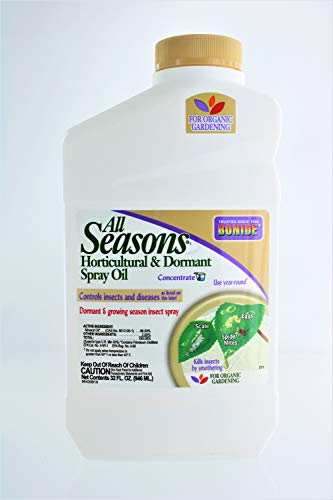
Bonide takes the broadest approach in this group, using a horticultural oil concentrate against mites, aphids, thrips, whiteflies, and other listed insects. Fruit trees are an intended use, which gives you a clearer starting point than products aimed only at ornamental plants. The concentrate format also offers more control over application volume.
For a home orchard, that breadth makes sensible sense because early-season pests can move between buds and tender foliage. The label also notes that insects cannot build resistance to this mode of action. Your main task is measuring and mixing the concentrate correctly, so follow the label rather than estimating.
Benefits That Matter
✓Targets several common fruit-tree pests in one product.
✓Designed for fruit trees, shade trees, and ornamentals.
✓Concentrate format supports flexible mixing.
✓Uses a mode of action not prone to insect resistance.
Practical Considerations
•Measuring equipment is needed for concentrate preparation.
•Confirm the fruit and tree types listed on the label.
Feature Snapshot
Feature
Specification
Why It Matters
Format
Concentrate
Mix as directed for the plant and application.
Target pests
Mites, aphids, thrips, whiteflies, and more
Useful when several insects appear together.
Plant coverage
Fruit trees, shade trees, and ornamentals
Extends beyond a single garden situation.
Resistance
Insects cannot build resistance to this insecticide
Supports repeated use within label directions.
Who It Suits Best
This option suits home orchard growers who want broad insect coverage and are comfortable measuring a concentrate.
Another Choice May Suit
BioAdvanced 3-in-1 Ready-to-Spray suits you better when combined insect and disease control matters more than concentrate preparation.
A tree can develop insects and fungal problems during the same stretch of humid weather, and BioAdvanced 3-in-1 Ready-to-Spray addresses both sides. Its three components target insects, fungi, and mites, with listed pests including aphids, adult Japanese beetles, and whiteflies. The fungicide component is also intended for black spot and powdery mildew.
Unlike Bonide Horticultural Oil, this option combines pest and disease functions in a ready-to-spray container. That convenience suits a gardener managing several ornamental beds and fruit trees, provided the label includes your particular crop. The trade-off is a broader formula used for several problems rather than one tightly focused insect list.
A Few Strong Suits
✓Combines insecticide, fungicide, and miticide functions.
✓Ready-to-spray format avoids concentrate mixing.
✓Addresses listed insects and fungal diseases together.
✓Suitable for outdoor patio, lawn, and garden use.
Things To Consider
•Check the label for your specific fruit variety.
•Ready-to-spray packaging still needs controlled application.
•Broad coverage may be more than a single pest requires.
Made For
You’ll find this most practical when insect, mite, and fungal problems overlap across a mixed outdoor garden.
Consider Something Else
ARBER Organic Fungicide Spray is a closer fit when leaf disease is the main concern and insect control adds little value.
Fertilome 16076 Spinosad Soap covers a long list of insects without asking you to identify one narrow species before you start. Targets include aphids, codling moth, fruit flies, beetles, borers, caterpillars, leafhoppers, and many others. Its outdoor label includes trees, shrubs, flowers, fruits, and citrus.
That makes it a logical option for a mixed property with fruit trees and nearby ornamentals. Unlike BioAdvanced 3-in-1 Ready-to-Spray, it focuses on insects rather than adding a fungicide. The ready-to-use format also distinguishes it from concentrated oil, although you’ll need to follow the label’s coverage and timing directions.
A Strong Showing
✓Broad insect list includes fruit-relevant pests.
✓Designed for fruit, citrus, trees, and shrubs.
✓Ready to use without separate dilution.
✓Useful across a mixed home garden.
Worth Noting
•The full pest list remains important for accurate matching.
•Confirm crop and plant types on the label.
Quick Facts
Feature
Specification
Why It Matters
Container
32 oz
Ready-to-use format for outdoor applications.
Listed targets
Aphids, codling moth, fruit flies, borers, and others
Supports several common orchard insect problems.
Plant use
Fruits, citrus, trees, shrubs, and flowers
Extends use around a home orchard.
Right Fit For
This option suits orchard growers who want a broad insect list and prefer a ready-to-use container over concentrate mixing.
Look Elsewhere When
Bonide Horticultural Oil is the better match for growers who value a resistance-related mode of action over a broad spinosad target list.
This product belongs beside your pest-control plan rather than in it. ARBER Organic Liquid Plant Food supplies concentrated nutrition for houseplants and garden plants, with features aimed at rooting, green foliage, and flowering. You’ll find it useful after repotting, before flowering, or when plants appear weak or stressed.
The practical sequence is straightforward: address the pest problem with an appropriate product, then support new growth and recovery with plant nutrition. Unlike the other options, this concentrate contains no stated insect or disease-control function. For a fruiting tree, label compatibility and dilution are the crucial checks before application.
What Helps Most
✓Supports rooting, foliage, and flowering needs.
✓Concentrate format allows controlled dilution.
✓Useful after repotting or during plant stress.
✓Serves houseplants and garden plants.
Practical Considerations
•It is plant food, not an insect-control product.
•Fruit-tree use requires label confirmation.
•Dilution instructions must be followed carefully.
Whose Shelf It Belongs On
This fits gardeners who want to support foliage and new growth after repotting or after a separate pest-control step.
Reach For A Different Pick
Fertilome 16076 Spinosad Soap suits you better when your immediate need is insect control across fruit, citrus, and ornamental plants.
Houseplant shoppers and backyard growers can use the same ARBER Organic Insecticide Spray. Its stated targets include fungus gnats, aphids, whiteflies, mealybugs, and spider mites on indoor and outdoor plants. For you, that makes it especially useful when the same pest issue appears in a kitchen garden and on potted plants nearby.
The liquid concentrate contains organic biological ingredients and plant-derived active components. It is intended for direct contact with pests and for reaching foliage and soil, where some pest life cycles occur. Compared with Fertilome 16076 Spinosad Soap, it is aimed more broadly at houseplants but does not present the same orchard-focused pest list.
Useful Highlights
✓Works across indoor and outdoor plant settings.
✓Targets several familiar foliage pests.
✓Reaches foliage and soil with a liquid concentrate.
✓Offers a practical one-product indoor-outdoor option.
Details To Watch
•Check whether your specific tree is listed.
•Concentrate preparation requires accurate dilution.
Core Details
Feature
Specification
Why It Matters
Container
16 oz
Compact option for targeted plant applications.
Coverage
Indoor and outdoor plants
Useful for houseplants and garden beds.
Best Suited To
This option suits you when pests affect both potted houseplants and outdoor plants and you want one concentrated insect product.
A Better Fit Elsewhere
BioAdvanced 3-in-1 Ready-to-Spray fits mixed gardens better when insect control and fungal disease management are both priorities.
Not every fruit-tree problem begins with an insect. ARBER Organic Fungicide Spray is built around disease concerns such as powdery mildew, leaf spot, root rot, and lawn fungi. Its biological and plant-derived ingredients are intended to support a protective barrier on leaves and roots.
That focus makes it different from BioAdvanced 3-in-1 Ready-to-Spray, which combines insect, mite, and fungal functions. For a gardener dealing with recurring mildew or spotting, a disease-focused product may reduce unnecessary complexity. Label compatibility remains essential because fruit-tree and edible-crop directions take priority.
Well-Handled Touches
✓Targets several common fungal problems.
✓Supports foliage and root protection.
✓Designed for indoor and outdoor plants.
✓Useful around humid, disease-prone conditions.
Possible Compromises
•It does not replace an insect-control product.
•Confirm that your tree appears on the label.
•Follow the listed dilution and timing directions.
Essential Details
Feature
Specification
Why It Matters
Container
16 oz
Compact size for targeted plant care.
Disease targets
Powdery mildew, leaf spot, root rot, and lawn fungi
Matches several distinct fungal problems.
Application areas
Leaves and roots
Supports both above-ground and below-ground needs.
Built With In Mind
This product fits you best when fungal symptoms are the main concern across houseplants, flower beds, or a mixed garden.
Swap It Out When
Bonide Horticultural Oil is the better match when mites, aphids, thrips, and whiteflies are your primary concern.
## What To Weigh Before Buying Fruit-Tree Pest Control
### Match The Problem First
Start with the damage you can actually identify. Fine webbing and stippled leaves point toward mite concerns, curled new growth may accompany aphids, and white clusters often suggest whiteflies. Powdery coatings and expanding leaf spots are fungal signs rather than insect damage, so a fungicide is the more relevant category for those symptoms.
### Read The Label Before The Bottle
Fruit trees vary by species and sometimes by variety, and the product label should identify the plants and problems it covers. Check the target pest list, edible-crop directions, dilution, application timing, and any restrictions on successive applications. A product suited to ornamental foliage does not automatically suit every fruit tree.
### Choose A Handling Style
Concentrates give you control over mixing volume, which can be useful for a single young tree or a larger orchard. Ready-to-spray options reduce preparation and suit smaller garden areas or gardeners who want a straightforward application. The practical choice is the format you can measure and apply consistently, not simply the larger container.
## Common Mistakes Worth Dodging
### Choose A Handling Style
Using a product for a problem it does not target wastes time and adds unnecessary handling. Check for the specific pest or disease first, then confirm that your fruit tree appears on the label.
A broad product is not automatically better for every situation. A dedicated fungicide suits mildew, while an insecticide or oil concentrate addresses listed insects.
## What Separates Premium From Basic
Higher-cost products may offer broader coverage, multiple control functions, biological ingredients, or ready-to-use packaging. Those features can justify more spending when they match a specific disease mix or reduce your preparation time.
The stronger value comes from a precise fit. A simple, correctly matched product can serve a small orchard better than a premium formula carrying functions you do not need.
## Frequently Asked Questions
### Which pesticide is most suitable for fruit trees?
Bonide Horticultural Oil is the clearest general option because fruit trees are an intended use and it targets several listed insects. Confirm your tree species and the current pest before applying.
### Can one product control both insects and fruit-tree diseases?
BioAdvanced 3-in-1 Ready-to-Spray combines insecticide, fungicide, and miticide functions. That makes it useful when your garden has overlapping insect and fungal problems, subject to label directions.
### Can these products be used on edible fruit?
Use any pesticide on a fruiting tree only when its label identifies that fruit and crop. Follow the listed application and harvest-related directions, which take priority over general garden guidance.
### Should you choose a concentrate or ready-to-spray formula?
A concentrate offers adjustable mixing for larger or more targeted applications, while a ready-to-spray product reduces preparation. Choose based on the tree area, label directions, and how accurately you can measure the product.
### Does ARBER Organic Liquid Plant Food control insects?
No, ARBER Organic Liquid Plant Food supplies plant nutrition rather than insect or disease control. Use it alongside an appropriate pest-control product when a separate recovery and feeding step makes sense for your plants.
## Final Verdict
Your strongest general option is Bonide Horticultural Oil, while BioAdvanced 3-in-1 Ready-to-Spray serves mixed pest and disease situations. Fertilome 16076 Spinosad Soap offers broad orchard insect coverage, and the ARBER products specialize in houseplant, insect, disease, or recovery needs. Match the formulation to the problem, verify the label, and choose the handling method you can use accurately.