

A thin lawn rarely fails all at once. Bare patches appear along a busy walkway, ryegrass struggles through a dry stretch, and shaded corners stay thin no matter how much water you add. These seed options put your priorities in focus, from athletic fields and small lawn repairs to cover crops, drought tolerance, and lower-light areas.
How The Shortlist Stacks Up

Burlingham Seeds Blue Magic Athletic Mix 50% Perennial Ryegrass, 50 lbs
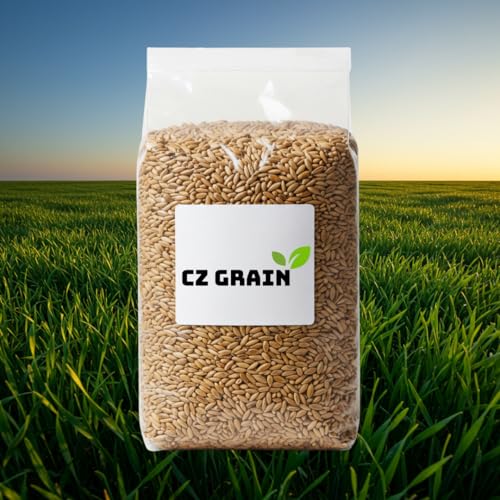
CZ Grain Perennial Ryegrass Seed for Lawns, 1/2 Pound
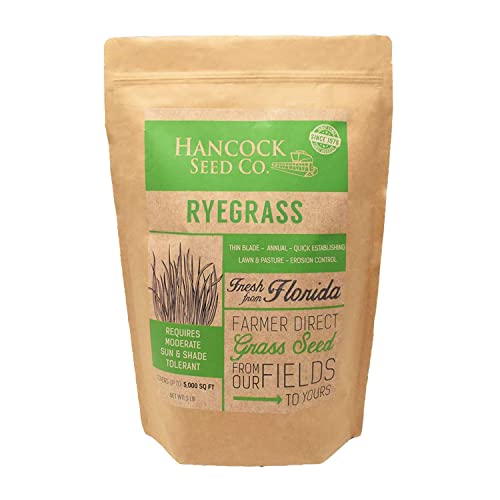
Hancock Seed Co. Ryegrass Seed, 50 lbs

Jonathan Green Black Beauty Tall Fescue, 25 lb

Jonathan Green Black Beauty Ultra Seed, 25 lb

Jonathan Green Black Beauty Dense Shade, 25 lb
The Strengths Of Each Pick
A football field, playground, or lawn crossed by daily traffic needs more than a delicate grass choice. Burlingham Seeds Blue Magic Athletic Mix pairs Kentucky bluegrass and perennial ryegrass in equal proportions, giving you a blend designed to balance wear tolerance with rapid recovery.
For most recreational areas, that combination is more useful than planting ryegrass alone. Kentucky bluegrass adds strong recuperative potential, while ryegrass establishes quickly, so you gain a useful balance of recovery and density. The 50-pound bag is substantial, so check your usable area and storage space before committing.
Points In Its Favor
- The equal bluegrass-and-ryegrass blend supports both high traffic and fast recovery.
- Perennial ryegrass is suited to winter hardiness and transition-zone conditions.
- The large bag covers 10,000 square feet at the stated application rate.
- It works for residential lawns, athletic fields, playgrounds, and golf-course roughs.
Things To Consider
- Kentucky bluegrass normally germinates more slowly than ryegrass, so the lawn fills in over time.
- Spring and fall planting gives you the strongest temperature conditions for establishment.
Feature Snapshot
Who It Suits Best
You need this blend for athletic fields, playgrounds, busy home lawns, or large overseeding projects where wear and recovery are equal priorities.
Another Choice May Suit
CZ Grain Perennial Ryegrass Seed for Lawns suits you better for a small home patch where only ryegrass is wanted and a half-pound quantity is enough.
A loose patch beside the driveway does not require a 50-pound sack. CZ Grain Perennial Ryegrass Seed for Lawns comes in a half-pound bag, which makes the product easier to manage for spot repairs, compact lawns, and garden areas that need a straightforward ryegrass stand.
You also get a single-grass option rather than the bluegrass-ryegrass blend used by Burlingham Seeds. That keeps your grass-type decision straightforward, while the open-pollinated, non-hybrid, non-GMO, and heirloom characteristics provide useful seed-selection details. The small size is the main practical advantage and also its clearest limit.
Where It Delivers
- A half-pound bag suits targeted repairs without creating excess seed.
- Pure perennial ryegrass avoids mixing in another grass species.
- The seed is suitable for lawns, pastures, sports fields, and gardens.
- Open-pollinated, non-hybrid, non-GMO, and heirloom seed are clear selling points.
Minor Gripes
- The quantity is too small for many full-lawn projects.
- You will need to compare the bag size with your square footage before ordering.
Quick Facts
Made For
You are working on a small lawn repair, garden patch, pasture section, or sports area and prefer a compact quantity of pure perennial ryegrass.
Where A Sibling Pick Shines
Burlingham Seeds Blue Magic Athletic Mix fits larger athletic and residential projects where a Kentucky bluegrass and perennial ryegrass blend is wanted.
Large-scale agricultural work calls for a different role than fine-tuning a residential lawn. Hancock Seed Co. Ryegrass Seed is offered in a 50-pound bag and is described as annual ryegrass suited to cover crops, forage, hay, and nurse-crop use alongside legume plantings.
That distinction matters. Annual ryegrass does not provide the year-after-year permanence associated with perennial ryegrass, so it should not be selected for a lawn where long-term perennial growth is the goal. For a sizable field, pasture, or temporary soil-cover project, though, the bulk quantity is the feature that matters most.
Useful Strengths
- The 50-pound quantity supports larger field and pasture work.
- Annual ryegrass fits temporary cover-crop and nurse-crop rotations.
- It can serve forage or hay applications as well as lawn work.
Trade Offs
- This is annual ryegrass rather than a perennial ryegrass seed.
- A large bag requires dry, organized storage.
- Packaging appearance may differ from the pictured product.
The Right Fit
You need substantial annual ryegrass for a temporary cover crop, forage field, hay planting, or nurse crop rather than a permanent residential lawn.
Swap It Out When
CZ Grain Perennial Ryegrass Seed for Lawns is the better match for a permanent lawn or pasture that requires ryegrass to return in later seasons.
Dry summers often separate a lawn that stays green from one that becomes patchy and brown. Jonathan Green Black Beauty Tall Fescue takes a different approach from the ryegrass-led choices, using turf-type tall fescue with roots described as reaching up to four feet and leaves covered by a moisture-preserving wax.
For lawns exposed to heat, dry conditions, and uneven maintenance, those traits make more sense than rapid ryegrass establishment. The mix also works in sunny and shaded locations. Your key decision is species priority: this is a tall fescue blend, not a perennial ryegrass option.
Where It Excels
- Deep root development supports the product’s drought-tolerance positioning.
- The waxy leaf coating helps reduce moisture loss during hot weather.
- Turf-type tall fescues offer uniform leaf texture and resist shredding when mown.
- One blend can cover both sunny and shaded lawn areas.
Practical Considerations
- Tall fescue does not give you a perennial ryegrass lawn.
- Spring or autumn planting windows suit the specified regional timing.
Technical Highlights
Best Suited To
You manage a sunny or partly shaded residential lawn in a climate with dry summers and want a deep-rooted tall fescue blend.
Look Elsewhere When
Burlingham Seeds Blue Magic Athletic Mix suits you better when quick ryegrass establishment and heavy-traffic recovery matter more than tall fescue’s drought focus.
New lawns carry a different challenge from routine maintenance: you need the seed to establish quickly enough to begin filling the area. Jonathan Green Black Beauty Ultra is designed around rapid germination, establishment of new lawns, and repair of bare or damaged patches.
The blend includes tall fescue, Kentucky bluegrass, and perennial ryegrass, so it gives you more biological variety than a pure ryegrass bag. You may find that mix more useful for filling irregular spaces, though the 25-pound quantity and broader composition call for more careful planning than the half-pound CZ Grain option.
What It Does Well
- Fast germination supports new lawn establishment.
- It is intended to fill bare and damaged areas within an existing lawn.
- Multiple grass types can create a varied but coordinated-looking turf.
- The dark green color suits homeowners seeking a uniform appearance.
Possible Compromises
- It is a multi-species blend rather than a pure perennial ryegrass product.
- A 25-pound bag may be excessive for a small repair area.
Who Should Grab It
You are establishing a new lawn or repairing several bare areas and want a blend positioned for rapid coverage.
Consider Something Else When
CZ Grain Perennial Ryegrass Seed for Lawns fits you better when you need a small, single-species repair patch rather than a broad 25-pound blend.
Soil beneath a mature tree receives less light, and a sunny-grass blend may remain thin there. Jonathan Green Black Beauty Dense Shade is formulated for those lower-light conditions, including areas under large trees, beside shrubs, or shaded by houses and other permanent structures.
Its value is specialization. The seed mixture combines four grass types selected for shade tolerance and aims for a dense, dark green lawn, so it gives you a different answer from the drought-oriented tall fescue and the wear-focused bluegrass and ryegrass blend. Check whether the affected area remains shaded as surrounding trees mature.
Everyday Perks
- Shade-tolerant seed targets areas with limited sunlight.
- It suits tree lines, shrub borders, and building shadows.
- Four grass types give the mix more than one route to fill sparse ground.
- The intended result is dense turf with a dark green color.
Worth Noting
- This is a shade-oriented blend rather than a perennial ryegrass seed.
- The 25-pound size suits larger shaded sections better than isolated spots.
At A Glance
Built With In Mind
You need denser grass in a persistently shaded lawn beneath mature trees, large shrubs, or buildings.
Reach For A Different Pick When
Jonathan Green Black Beauty Tall Fescue suits you better for a mostly sunny, dry lawn where deep roots and heat tolerance take priority over shade adaptation.
What Matters Before You Buy Perennial Ryegrass Seed
Match The Grass To The Site
Start with the light and traffic pattern, not merely the bag size. Perennial ryegrass establishes rapidly and handles wear, making it useful for active lawns and repaired areas. A bluegrass-ryegrass blend adds a different recovery profile, while tall fescue brings deeper roots and drought-oriented traits.
Shade changes the equation. Open ground can favor ryegrass and tall fescue, but persistently shaded sections may need grass selected for lower light. Measure the area and note which parts receive full sun, partial shade, or almost none.
Calculate Coverage Before Ordering
Coverage comes down to square footage and the seed’s stated application rate. Burlingham Seeds Blue Magic Athletic Mix provides a clear rate of 5 pounds per 1,000 square feet, making its 50-pound bag suitable for 10,000 square feet. Smaller options can serve repairs, but you may need more than one bag for a broad lawn.
Also consider starter fertilizer, soil preparation, and watering. The Blue Magic directions call for starter fertilizer when establishing or overseeding, which makes it part of the complete lawn-building process rather than an isolated step.
Look At Germination And Season
Perennial ryegrass normally begins emerging in 5 to 7 days, while Kentucky bluegrass can take 14 to 21 days. Seed that has not appeared by the second week may still be working when a blend contains both species.
Spring and fall generally offer more dependable temperatures for establishing cool-season grass. Soil temperatures consistently above 50°F support germination, while fall applications can remain dormant through winter and sprout as conditions improve.
Key Details That Shape Your Choice
Where Shoppers Go Wrong
Choosing by bag size alone can leave you short or carrying unused seed. Match square footage to the stated application rate, then separate full-lawn seeding from small repair areas. Annual ryegrass and perennial ryegrass also serve different purposes, so read the grass type carefully before ordering.
What Separates Premium From Basic
A larger bag mostly buys convenience, not a different growing trait. More important differences include grass composition, shade adaptation, root depth, and how much permanent coverage you need. Pay for a specialized blend only when its grass mix or establishment goal matches your site.
Frequently Asked Questions
How Quickly Does Perennial Ryegrass Seed Grow?
Perennial ryegrass normally germinates in 5 to 7 days under suitable soil temperatures. Kentucky bluegrass usually takes 14 to 21 days, so mixed lawns can appear uneven during early growth.
What Is The Best Perennial Ryegrass Seed For Overseeding?
Burlingham Seeds Blue Magic Athletic Mix is suited to large overseeding projects because it combines perennial ryegrass with Kentucky bluegrass and provides a stated application rate. CZ Grain Perennial Ryegrass Seed for Lawns is more convenient for a small, ryegrass-only repair.
Can Perennial Ryegrass Grow In Shade?
Perennial ryegrass can grow in partial shade, though persistent shade can limit performance. Jonathan Green Black Beauty Dense Shade provides a more shade-oriented alternative for areas beneath mature trees or structures.
How Much Seed Do I Need For A New Lawn?
Your square footage and the product’s application rate determine the quantity. Burlingham Seeds uses 5 pounds per 1,000 square feet, while smaller bags require you to multiply the target area by the stated rate.
Should I Use Starter Fertilizer With Grass Seed?
Starter fertilizer supplies nutrients during establishment, and the Blue Magic instructions recommend it for new lawns and overseeding. Follow the product directions and account for your existing soil and lawn-care plan.
Final Verdict
Choose based on the problem your lawn actually presents. Burlingham Seeds handles wear and recovery, CZ Grain fits small pure-ryegrass patches, and the Jonathan Green blends specialize in drought, fast establishment, or shade. Hancock Seed Co. belongs in agricultural cover-crop work rather than a permanent perennial ryegrass lawn.
