

A bare corner beside the sofa can make a living room feel unfinished, and a living olive tree may demand more light and care than your schedule allows. These artificial trees bring the height, texture, and branching silhouette of a mature indoor plant without watering or routine pruning. The options here range from detailed olive foliage to tropical and bamboo alternatives for homes, offices, porches, and patios.
A Side-By-Side Look

Kgabbke Tall Faux Artificial Bamboo Tree with Pot for Indoor Outdoor Decor
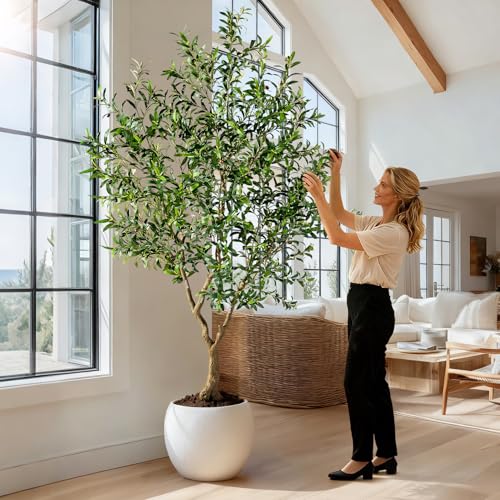
Kgabbke Large Faux Olive Tree with Pot for Indoor Outdoor Decor
Kgabbke Tall Artificial Olive Tree Floor Plant for Indoor Outdoor Decor

Kgabbke Large Faux Olive Tree with Pot, Fabric-Leaf Indoor Outdoor Decor

Kgabbke Tall Artificial Tree with White Planter for Indoor Outdoor Decor

Kgabbke Large Artificial Banana Tree for Indoor Outdoor Tropical Decor
A Breakdown Of The Leading Choices
A plain corner near a patio door can use vertical color, and this bamboo-style tree gives you that without the watering schedule attached. Its stems shift from deep violet near the base toward warm brown near the tips, creating a gradient that feels more intentional than a uniform green artificial plant.
For most people decorating a living room, porch, or office, that colored structure does more visual work than the subtle foliage of an olive tree. You sacrifice the familiar olive silhouette for something bolder, but you gain a plant that works as a standalone decorative piece. The potted format also makes the arrangement easier to place as one complete unit.
What Makes Sense
- The purple-to-brown stem gradient gives the tree a distinctive appearance.
- A floor-standing format adds height to empty rooms and covered outdoor areas.
- Artificial construction removes watering, lighting, and pruning demands.
- Its unusual coloring pairs well with neutral furniture and modern planters.
Things To Consider
- This is a bamboo-inspired design, so it does not satisfy a specific olive-tree brief.
- The rich purple coloring may feel too prominent in a restrained, pale interior.
Quick Facts
Made For
This tree suits people who want a colorful, low-maintenance floor accent with a stronger presence than a traditional olive tree.
Another Choice May Suit
Choose Kgabbke Large Faux Olive Tree with Pot for Indoor Outdoor Decor when an authentic olive silhouette matters more than bamboo-inspired coloring.
Olive-tree realism depends on more than adding green leaves to thin branches, and this model puts visible effort into both foliage and fruit. Each thickened leaf is assembled in a three-dimensional form, with raised detailing that carries the vein pattern toward the leaf edge. That sculpted treatment gives the tree more depth than a flat printed leaf.
It works especially well in a living room where you want the shape of a mature olive tree but not the maintenance commitment. For most homes, the included pot also creates a simple, coordinated display. The glossy synthetic olives reinforce the botanical theme, although the result reads more ornamental than edible.
Why It Works Well
- Three-dimensional leaves provide depth and visible vein structure.
- Hand assembly creates a more layered canopy than flat foliage.
- Gradient-colored synthetic olives add recognizable detail.
- The included pot keeps the interior and exterior setup cohesive.
Worth Noting
- The decorative fruit makes the tree more ornamental than botanical.
- Sculpted foliage may require more space than a flexible-leaved alternative.
Feature Snapshot
Who It Suits Best
This olive tree fits people who value recognizable fruit, dimensional leaves, and a substantial floor arrangement in a home or covered porch.
Where A Sibling Pick Shines
Kgabbke Tall Artificial Olive Tree Floor Plant for Indoor Outdoor Decor is the calmer choice for people who prefer varied green foliage without prominent synthetic fruit.
Compared with the preceding olive tree, this model moves attention away from fruit and toward the canopy. Its leaves are sculpted with deeply defined veins, then assembled in a mixture of lighter and darker greens. That color variation gives the tree a more natural, sunlit appearance across a large arrangement.
It makes sense for people using greenery to soften modern farmhouse, bohemian, or straightforward home-office decor. The layered color can fill a large corner without looking like a single flat shade of plastic. You may prefer its uncluttered botanical look for a bedroom, especially when conspicuous fruit would feel too ornamental.
Strong Points
- Deeply textured veins give the leaves a more dimensional profile.
- Light and dark green tones create natural variation throughout the canopy.
- The hand-assembled construction adds fullness from multiple viewing angles.
Minor Gripes
- The pronounced green contrast may feel busier in a very minimal room.
- The tree is designed for floors rather than a tabletop display.
Right Fit For
This option suits people who want a full olive canopy with natural color variation and a clear, fruit-free botanical shape.
Consider Something Else When
Choose Kgabbke Large Faux Olive Tree with Pot for Indoor Outdoor Decor when detailed synthetic olives are important to your desired look.
Fabric changes the character of artificial foliage, and that is the defining feature of this olive tree. Its soft-textured leaves have a more natural drape than the sculpted surfaces seen on Kgabbke Large Faux Olive Tree with Pot for Indoor Outdoor Decor. The vein structure remains visible, but the canopy feels relaxed rather than sharply molded.
This softer construction suits coastal, casual, and layered interiors where rigid leaves might look out of place. Multi-layered foliage is arranged across a light-to-deep green gradient, adding depth to a floor corner or covered patio. Depending on your style, the gentle drape may look more natural, though the fabric texture also sets it apart from rigid plastic foliage.
Good Reasons To Consider
- Soft-textured fabric leaves create a more relaxed silhouette.
- Visible vein details keep the foliage from appearing completely flat.
- Layered green coloring gives the canopy added depth.
- The pot supports a coordinated indoor or covered-outdoor display.
Trade Offs
- Fabric leaves offer a different look from crisp molded foliage.
- Soft construction may need careful handling when the tree is repositioned.
Key Product Details
Who Will Love This
This tree suits people who prefer soft, flowing foliage and want a full olive-tree silhouette in a relaxed home setting.
A Better Fit Elsewhere
Kgabbke Tall Artificial Olive Tree Floor Plant for Indoor Outdoor Decor offers more sculpted leaves and mixed green tones for people who prefer defined botanical texture.
A white planter can pull a tall artificial tree together without competing with its foliage, and that coordinated finish gives this dracaena-style tree a clean presentation. The leaves use dense silk cloth with flexible composite construction, so they combine a refined surface with enough movement to avoid a rigid, molded appearance.
It works well beside pale furniture, in a hallway, or on a covered patio where the white pot should remain the visual anchor. The trunk uses a PU and PE composite intended to resemble bark, adding another layer of realism below the leaves. This is a design choice rather than an olive-tree replica, so match it according to its dracaena-inspired form.
What Stands Out
- The white planter coordinates easily with light, modern interiors.
- Dense silk cloth gives the leaves a smooth, refined surface.
- Flexible composite leaves provide a more natural sense of movement.
- The bark-like composite trunk adds detail below the canopy.
Points To Note
- The dracaena form is distinct from the foliage and branching of an olive tree.
- The coordinated white planter may feel less natural beside rustic materials.
Built With In Mind
This tree fits people who want a coordinated floor plant with a white container, smooth foliage, and a clean decorative finish.
Reach For A Different Pick When
Choose Kgabbke Large Faux Olive Tree with Pot for Indoor Outdoor Decor when the narrow leaves and branching of a true olive-tree shape are central to your plan.
Broad leaves create a more dramatic floor plant than the narrow foliage of the olive options, and this banana tree turns that contrast into the main event. Its leaves are individually assembled in overlapping layers, giving the canopy depth rather than leaving you with a flat wall of green.
A bright living room, covered porch, or tropical-themed office can use that broad silhouette well. The construction follows a real-tree reference, which helps the proportions feel established, while the layered leaves keep the design dimensional from different angles. You trade the subtle Mediterranean character of an olive tree for a bolder, more expressive accent.
A Few Highlights
- Broad leaves create a bold tropical silhouette.
- Overlapping layers provide depth across the canopy.
- Hand assembly keeps the foliage structured and dimensional.
- The design suits both indoor rooms and covered outdoor areas.
Less Ideal Details
- The large leaf shape is a poor match for a narrow olive-tree aesthetic.
- A broad canopy needs adequate floor space and a clear placement area.
Core Details
The Right Fit
This banana tree suits people who want a large tropical statement with broad leaves and layered volume rather than delicate olive foliage.
Swap It Out When
Choose Kgabbke Large Faux Olive Tree with Pot for Indoor Outdoor Decor when a restrained olive silhouette suits your room better than tropical foliage.
What To Look For In A Decorative Indoor Tree
Height And Floor Space
Start with the empty area rather than the product photograph. A tall tree can make a modest room look more balanced, but the pot needs enough clearance to stand without crowding nearby furniture. Measure the intended location, then compare it with the tree’s listed height and overall footprint before ordering.
Foliage Style
Molded leaves produce sharper veins and a more structured canopy, while fabric or flexible composite leaves create a softer drape. Dual-tone greens suit natural and layered rooms; uniform foliage blends more easily with a restrained palette. Synthetic fruit adds botanical character but makes the tree feel distinctly ornamental.
Pot And Placement
A matching pot creates a cohesive display and reduces the need for separate container shopping. White planters brighten modern interiors, while darker pots support earthy or Mediterranean schemes. Covered porches and patios also work well, but direct outdoor placement calls for weather-aware care and secure footing.
How To Bring A Large Tree Into Your Space
Common Shopping Slip Ups
The most common mistake is judging the tree only by its foliage. Check the pot, total height, and branch spread as a single unit. Another easy error is choosing a dramatic tropical shape for a quiet room that calls for restrained greenery.
What Separates Premium From Basic
Higher-detail models tend to invest in shaped leaves, visible veins, varied green tones, and coordinated trunks or fruit. Those details matter most in living rooms and entryways, where close viewing reveals flatter construction. A simpler tree can still work well in a larger space where the silhouette carries the design.
Frequently Asked Questions
Are Artificial Olive Trees Suitable For Indoor Decor?
Yes, artificial olive trees suit indoor decorating because they provide a full, branching silhouette without watering, pruning, or direct sunlight requirements. Their appearance still depends on leaf detail, color variation, and overall proportions.
Do These Trees Work On A Covered Porch Or Patio?
The trees are designed for indoor and outdoor decorative placement, making covered porches and patios practical choices. Direct weather exposure calls for extra care, especially with fabric leaves, soft stems, or synthetic fruit.
Are The Pots Included With These Trees?
Several options in this list include a pot, including the olive trees and the banana tree. The white-planter design also includes its coordinated container, so check the product details to confirm the finish matches your surrounding decor.
Which Option Looks Most Like A Real Olive Tree?
Kgabbke Large Faux Olive Tree with Pot for Indoor Outdoor Decor offers the most explicitly botanical treatment through sculpted leaves, raised vein details, and gradient-colored synthetic olives. Other options emphasize layered green foliage, fabric texture, or a softer silhouette instead.
Should A Large Artificial Tree Match Its Room Color?
Match the tree’s visual weight to the room, not only its color. A bright banana tree works in a bold tropical scheme, while an olive tree suits calmer, natural interiors. Neutral pots and furniture help the foliage lead the arrangement.
Final Verdict
The best olive-style option depends on the detail you value most: sculpted fruit for a formal botanical look, varied green leaves for a natural canopy, or fabric foliage for a softer silhouette. Match the tree’s scale to the space, check the planter, and choose the botanical style that complements your room rather than forcing an olive shape into every setting.
