

A tired lawn and a garden full of flowers rarely need the same feeding plan. You may want slow-release nutrients for turf, a phosphorus-forward mix for blooms, or a balanced formula for mixed beds, and choosing on package size alone can leave the underlying goal unresolved.
The six options below cover those different jobs. Comparing their NPK ratios, nutrient forms, application methods, and intended settings helps you match the fertilizer to your plants without paying for nutrients you do not need.
A Side-By-Side Look

Supply Solutions 25-7-12 Slow-Release Lawn Fertilizer 50 lbs

Supply Solutions Power Bloom 10-20-20 Fertilizer for Flowers and Plants, 40 lbs

Supply Solutions 21.4-7-14.1 Lawn Fertilizer with Iron Turf Builder, 25 lbs

Supply Solutions NitroPlus 20-10-10 Lawn and Garden Fertilizer, 5 lbs
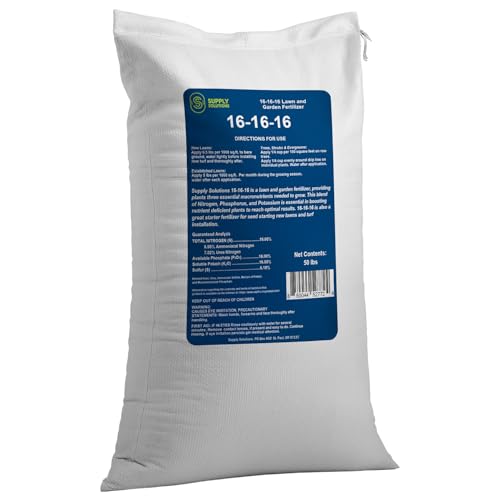
Supply Solutions 16-16-16 All-Purpose Granular Lawn and Garden Fertilizer, 50 lbs

Supply Solutions 10-10-10 Fertilizer with Micronutrients for Lawn and Garden, 50 lbs
Taking A Closer Look At The Options
Slow-release nitrogen is the central benefit here, so this bag suits a large lawn that receives routine care through early spring or summer. The nitrogen is released gradually rather than all at once, which helps reduce the risk of nutrient burn and can make repeat feeding less frequent.
Unlike Power Bloom 10-20-20, which emphasizes flowering and fruiting, this formula prioritizes steady turf feeding. You also get broader coverage than the smaller NitroPlus bag, with the stated capacity reaching 12,500 square feet.
Notable Upsides
- The 15% slow-release nitrogen supports an extended feeding period.
- A 50-pound bag covers large lawns, commercial grounds, parks, or sports fields.
- The 25-7-12 ratio suits turf and shrubs rather than bloom-focused planting.
- Broadcast, spot-treatment, and seasonal application options suit different lawn-care routines.
- Coverage of up to 12,500 square feet reduces the need for multiple large bags.
Trade Offs
- The lawn-oriented ratio does not target the flowering needs served by Power Bloom.
- A 50-pound bag needs a dry storage place, and even application calls for a broadcast spreader.
Key Specs
Built With In Mind
This option fits property managers, sports-field crews, and homeowners maintaining substantial turf with routine seasonal feeding.
Where A Sibling Pick Shines
Supply Solutions NitroPlus 20-10-10 is easier to store and better suited to a small outdoor lawn or garden area.
Flowering vegetables, ornamental beds, and fruiting trees have different needs from a lawn that must remain dense under foot traffic. Power Bloom centers on that difference with a 10-20-20 ratio, placing more emphasis on phosphorus, which supports flowering, fruiting, and root development.
You apply the powder to soil and water it in so nutrients reach the root zone. That routine makes this a practical fit for gardeners tending several kinds of flowering plants rather than maintaining turf alone.
A Favorable Mix
- The high-phosphorus ratio directly addresses bloom and fruit production.
- One formula serves flowers, shrubs, vegetables, and fruit trees.
- Watering after application moves nutrients toward the root zone.
Points To Note
- This is a targeted flowering formula rather than the most practical choice for a large lawn.
- The 40-pound package is substantial, so confirm that you have several beds and plants needing repeated feeding.
- Reapplication during active growth must follow the package directions rather than an arbitrary schedule.
The Right Fit
Home gardeners with mixed flower, vegetable, and fruit-tree beds will get the most benefit from this phosphorus-forward formula.
Swap It Out When
Supply Solutions 25-7-12 Slow-Release Lawn Fertilizer is the better choice for extensive turf that prioritizes slow, steady nitrogen feeding.
A lawn that looks pale despite adequate feeding may respond to the iron included in this blend. The 21.4-7-14.1 ratio supplies a high share of nitrogen, while iron supports the deep-green appearance associated with healthy turf.
Compared with the slow-release option, this formula focuses more directly on visible greening and stronger growth. The 25-pound bag is more manageable than the 50-pound products, although you may need several bags for a broad property.
Useful Strengths
- Iron adds a targeted approach to greener turf color.
- The high-nitrogen ratio supports vigorous spring growth and thicker grass.
- Its lawn and turf focus makes it easier to match with seasonal maintenance.
Practical Considerations
- The spring-oriented purpose is less aligned with year-round feeding than a balanced garden formula.
- A 25-pound bag may require multiple purchases for a substantial yard, so compare your lawn area with the package directions.
- Confirm that the labeled use covers your specific grass and any nearby fruits or vegetables before spreading it.
Feature Snapshot
Who Will Love This
Homeowners focused on spring turf color, thicker growth, and established lawn maintenance will find this formula relevant.
Another Choice May Suit
Supply Solutions 10-10-10 Fertilizer with Micronutrients is a better match for lawns, crops, and flower beds sharing one balanced feeding plan.
A five-pound bag changes the practical side of lawn feeding because you can move it from the shed to a small yard without hauling a large sack. NitroPlus provides a straightforward 20-10-10 blend for routine outdoor feeding, with nitrogen taking the largest share.
That makes it a sensible fit for a modest lawn, a few garden spaces, or a seasonal care kit. Compared with 16-16-16, however, it puts more emphasis on vegetative growth than on equal nutrient support.
Bright Spots
- The compact 5-pound package is convenient to carry, store, and use around a small property.
- One nitrogen, phosphate, and potash blend covers routine lawn and garden feeding.
- The familiar 20-10-10 ratio fits general seasonal growth needs.
Some Limits To Know
- The formula is intended for outdoor lawn and garden areas rather than specialized indoor feeding.
- Its nitrogen-heavy balance favors foliage and turf growth over the phosphorus emphasis of Power Bloom.
- Large properties may require multiple bags, reducing its handling advantage.
At A Glance
Whose Shelf It Belongs On
Apartment residents, first-time lawn maintainers, and gardeners with small outdoor plots will appreciate the manageable size.
Reach For A Different Pick When
Supply Solutions Power Bloom 10-20-20 Fertilizer is the stronger option for flowers, vegetables, and fruit trees needing extra phosphorus.
An equal 16-16-16 ratio appeals to you when lawn, vegetables, flowers, fruits, and berries share a feeding routine. Nitrogen supports green foliage and protein production, phosphorus contributes to flowering and fruit setting, and potassium supports roots, giving you an even distribution across all three primary nutrients.
The granular format and 50-pound package suit a large, mixed property. Compared with the 10-10-10 option, though, every nutrient is more concentrated, so matching application rate to the label becomes especially important.
What Pays Off
- The equal ratio gives flowers, fruits, vegetables, and lawn areas an all-purpose feeding option.
- A 16% nitrogen share supports green foliage and active plant growth.
- The 50-pound bag reduces the number of packages needed for broad outdoor areas.
- Granules offer a practical format for routine lawn and garden maintenance.
Where It Is Less Suited
- A specialized flower formula may suit you better when phosphorus is the primary concern.
- The 50-pound bag requires substantial storage space and a plan for carrying it to the application area.
- Its 16% nutrient level in each category is more concentrated than 10-10-10, so following the labeled rate closely matters.
Made For
Large-property households and gardeners tending several plant types with one broad-use formula will find this practical.
Look Elsewhere When
Supply Solutions 25-7-12 Slow-Release Lawn Fertilizer is a better fit for extensive turf needing gradual nitrogen release.
Micronutrients give this 10-10-10 formula a broader role than the three numbers alone suggest. Boron, manganese, copper, iron, and zinc supplement the primary nutrients, which can be useful for crop and garden programs where the soil has specific deficiencies.
The low-dust, uniform granules break down gradually and are designed to spread evenly, helping you maintain a consistent application across lawn, fruit, and vegetable areas. Soil-test results remain the clearest basis for setting the rate.
Where It Delivers
- Balanced 10-10-10 nutrition supports foliage, blooms, fruits, and roots.
- Five added micronutrients extend the formula beyond basic NPK feeding.
- Low-dust, uniform granules support controlled spreading across outdoor areas.
- Gradual breakdown places nutrient release in the root zone.
- The formula works across lawns, gardens, and crops.
Details To Watch
- The 50-pound bag needs dedicated storage and makes sense mainly for larger properties or repeated use.
- Soil-test results should guide the application rate, which the manufacturer lists at 10 to 40 pounds per acre.
- Micronutrient products are most relevant when a soil assessment or visible deficiency pattern supports their use.
Technical Highlights
Who Should Grab It
Vegetable growers, crop gardeners, and mixed-property maintainers seeking balanced nutrition plus added micronutrients will benefit most.
A Better Fit Elsewhere
Supply Solutions NitroPlus 20-10-10 is more practical for a small outdoor area where portability matters more than added micronutrients.
Match The Nutrient Ratio To Your Garden
The numbers on an NPK bag describe the relative proportions of nitrogen, phosphorus, and potassium. Nitrogen supports green foliage, phosphorus contributes to flowers and fruit, and potassium supports roots and overall resilience. A balanced ratio suits mixed areas, while a specialized ratio gives you a clearer feeding goal.
Decide what needs the most attention. A lawn that needs sustained green growth may benefit from a nitrogen-forward formula such as NitroPlus 20-10-10. Flowering vegetables and fruit trees have a stronger case for Power Bloom 10-20-20, where phosphorus takes the largest share. The 25-7-12 slow-release option is built around gradual nitrogen delivery for turf and shrubs.
Treat the package directions as the feeding plan. Your soil type, grass variety, plant age, and watering habits all affect the right rate. A soil test is particularly useful for pinpointing deficiencies, especially when a formula includes micronutrients. For granular products, uniform spreading and clean, dry storage make the routine easier to manage.
Match the size to the property. A five-pound bag is convenient for small lawns and compact garden spaces. Forty- and fifty-pound bags cover more ground but need more storage and a plan for moving the product. Large properties may favor the 12,500-square-foot capacity of the slow-release turf option, while mixed crop gardens benefit from the broader nutrient profile of 10-10-10 with micronutrients.
Common Fertilizer Decisions, Made Clear
Mistakes Worth Dodging
Choosing the formula with the largest nitrogen number can leave you feeding for foliage when your real goal is flowers or roots. Read the complete label, match the ratio to the plants, and avoid exceeding the stated application rate.
What Separates Premium From Basic
A higher-analysis or micronutrient-enriched formula may cost more because it supplies additional nutrients or a more specialized nutrient balance. The extra expense is most useful for a defined soil need, while a basic balanced blend is often enough for routine maintenance.
Frequently Asked Questions
What Does An Npk Fertilizer Ratio Mean?
The three numbers show the relative amounts of nitrogen, phosphorus, and potassium in the fertilizer. The order always stays the same, so 10-20-20 contains more phosphorus than nitrogen or potassium.
Should I Use 10-10-10 Or 20-10-10 Fertilizer?
Choose 20-10-10 for lawn and foliage growth, and use 10-10-10 for mixed plants needing balanced nutrition. Your soil condition and the plants’ current growth stage should guide the final decision.
Can Lawn Fertilizer Be Used on Garden Beds?
Only when the label identifies the crop and application setting as suitable. Flowering vegetables and fruit trees often need more phosphorus than a lawn-focused formula provides.
What Does Slow-Release Nitrogen Do?
It releases nitrogen gradually, extending the feeding period and reducing the risk of nutrient burn compared with a concentrated immediate release. The 25-7-12 option uses this approach for turf and shrubs.
Do I Need A Soil Test Before Using Micronutrients?
A soil test helps identify which nutrients the ground lacks and supports a more accurate application rate. It is especially useful for the 10-10-10 formula with added micronutrients.
Closing Thoughts
The right NPK fertilizer is the one whose ratio, nutrient profile, package size, and application method match your actual growing area. Match the formula to the plants, use the labeled rate, and let a soil assessment guide you when nutrient needs are unclear. A thoughtful match will serve your lawn and garden more effectively than simply choosing the largest bag.
