

Weak water pressure can turn watering into a slow chore, especially in a yard with mixed bed sizes, a narrow side strip, and a patch of lawn that dries out faster than the rest. The right sprinkler helps you spread water more evenly without leaning on a setup that needs more pressure than your hose can give. That matters for renters, weekend gardeners, and anyone managing a yard without a built-in irrigation system.
Below, you’ll see gear-drive, oscillating, impact, and drip-style options, since low-pressure setups often need different tools for different spaces. Some are better for broad turf, while others make more sense around raised beds, small corners, or spots that need gentler coverage. The best match depends on how much ground you need to cover and how hands-on you want the watering routine to be.
Quick Shortlist for Low-Pressure Yards

Orbit 56565 Compact Gear Drive Sprinkler

Rain Bird 32SA Simple Adjust Gear Drive Rotor

Thiswing 360° Adjustable Drip Irrigation System 16 Nozzles
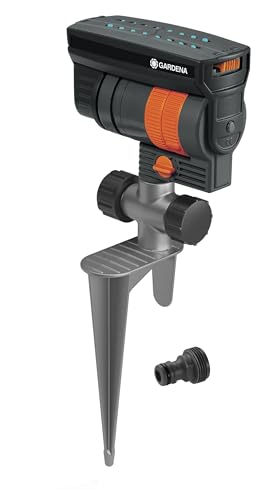
GARDENA 20575 ZoomMaxx Adjustable Oscillating Sprinkler

Biswing 2 Pack Impact Sprinkler Head on Metal Step Spike
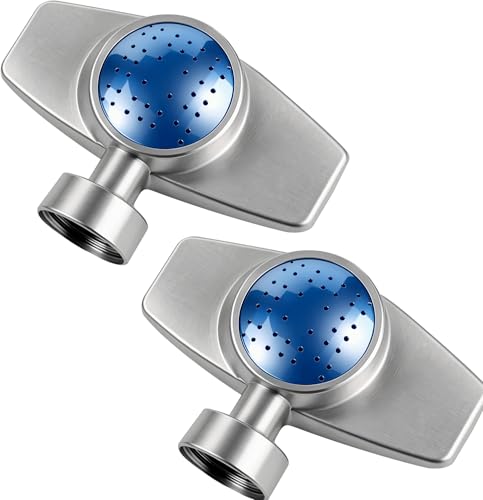
360 Degree Metal Spot Sprinkler 2 Pack
Orbit 58565N H2O-Six Gear-Drive Sprinkler
More Details On Our Top Picks
Wide yards with uneven pressure often need a sprinkler that keeps its reach without feeling fussy, and this Orbit model fits that role well. Its full-circle coverage can stretch across a big patch of lawn, so you spend less time moving it around in a hot afternoon routine.
The trade-off is simple, it’s aimed at broad coverage rather than delicate zone control. That makes it a sensible match for larger open lawns, while smaller beds may feel a little overdone.
Strong Points
- Full-circle spray suits broad lawn sections.
- Large coverage reduces constant repositioning.
- Gear-drive layout tends to suit steady watering routines.
- Useful for yards that need a simple, hands-off setup.
Things To Consider
- It focuses on area coverage more than pinpoint control.
- Smaller corners may take some adjustment to avoid overspray.
- Like many moving-head sprinklers, it benefits from periodic cleaning.
Feature Snapshot
Who It Suits Best
It suits you best if your lawn is open, fairly simple in shape, and needs coverage over a wide span rather than a tight planting bed.
Where A Sibling Pick Shines
Rain Bird 32SA Simple Adjust Gear Drive Rotor makes more sense for a yard that needs more control over spray angle and throw distance.
This Rain Bird rotor has the kind of adjustability that helps in yards with odd edges, walkways, or mixed planting areas. You can set the spray pattern from a narrow arc to a full sweep, which is useful when one section needs a little less water than the rest.
The 19-foot to 32-foot spray range gives you flexibility without pushing into oversized coverage you may never use. For many home setups, that middle-ground reach feels easier to plan around than a fixed-head design.
What We Like
- Adjustable arc helps match different lawn shapes.
- Gear-drive action suits a more controlled watering routine.
- Spray distance range works for medium-size zones.
- Good fit for areas that need careful edge management.
Points To Note
- Setup takes a little thought because of the range of adjustments.
- It is less about huge open coverage than Orbit’s wide-spread model.
Core Details
Built With In Mind
It suits you best if your yard needs adjustable coverage across zones that are not all the same shape or size.
Look Elsewhere When
Orbit 56565 Compact Gear Drive Sprinkler is the better fit for a larger open lawn that benefits from a broader single-pass reach.
Raised beds, planters, and small garden rows usually need a softer, more directed approach than a broad lawn sprinkler. Thiswing leans into that with 16 nozzles and 5/16-inch tubing, so you can route water to plants instead of blanketing the whole yard.
The 50-foot length gives you room to spread out the line, which is handy in a garden that changes shape from season to season. The trade-off is that it feels more like a watering system than a quick grab-and-go sprinkler, so setup matters more here than on the first two picks.
Highlights
- Good match for targeted watering around beds and containers.
- Fifty feet of tubing helps cover a longer planting run.
- Multiple nozzles support broader plant-by-plant reach.
- Works well in spaces where lawn sprinklers waste water.
Room For Improvement
- Installation takes more planning than a simple spike sprinkler.
- It suits planted areas better than open turf.
- Line routing and nozzle placement may need occasional adjustment.
Details At A Glance
Right Fit For
It suits you best if your yard work centers on beds, misters, and controlled watering rather than broad turf coverage.
Another Choice May Suit
GARDENA 20575 ZoomMaxx Adjustable Oscillating Sprinkler is a better match for a rectangular lawn that needs even coverage across a larger surface.
Oscillating sprinklers move side to side, which helps spread water across rectangular spaces more evenly than a fixed spray head. GARDENA’s ZoomMaxx design pairs that pattern with a metal step spike, so it feels more planted in the ground than lighter plastic versions.
That combination is useful in a medium-to-large lawn where dry stripes and puddles are both annoying. The honest read is that this style works best on tidy shapes, because irregular corners still need a little manual correction.
Reasons To Buy
- Even spray pattern helps reduce dry strips.
- Metal spike adds a steadier feel in the yard.
- Coverage range fits small lawns through larger zones.
- Good option for home layouts with straight edges.
Softer Spots
- It is less convenient for odd-shaped lawn sections.
- Oscillating heads often need a clean nozzle path over time.
- Better for surface coverage than targeted watering.
Spec Overview
Whose Shelf It Belongs On
It suits you best if your lawn is fairly rectangular and you want a cleaner, more even soak across the surface.
Skip It When
Orbit 58565N H2O-Six Gear-Drive Sprinkler is the better route for a simpler everyday setup that you can place and forget a little more easily.
Impact sprinklers make sense in a yard that sees rougher use, taller grass, or soil that doesn’t welcome delicate hardware. Biswing uses zinc alloy on a metal spike, so it leans into durability more than finesse, which is exactly why many people look at this style for larger outdoor spaces.
The 2-pack format also gives you flexibility, especially on a property with more than one watering zone. Compared with the GARDENA oscillating model, this one is less about a smooth sheet of water and more about a tougher, more mechanical spray pattern.
Upsides
- Zinc alloy construction feels suited to hard-working yard use.
- Metal spike helps anchor it in place.
- Two heads offer useful coverage planning.
- Adjustable nozzle gives you some control over spread.
Areas To Watch
- Impact spray can feel less gentle than other styles.
- It is more practical for open ground than delicate beds.
- Moving parts may need occasional cleaning, especially with grit in the water.
Feature Card
Made For
It suits you best if your yard needs a hard-wearing sprinkler for open ground and you prefer a metal build over a lighter-duty setup.
Where Another Pick Fits Better
For gentler watering in a small lawn patch, DTRK 360 Degree Metal Spot Sprinkler 2 Pack is the more comfortable fit.
Small lawn sections and tight garden spots usually don’t need the force or footprint of a large rotor. This DTRK pair keeps the approach gentle and compact, which is helpful around young plantings, side yards, or a patch that sits close to walkways.
The 30-foot coverage limit is part of the appeal here, not a drawback. You get a sprinkler that feels easy to place where a broad Orbit or Rain Bird setup would be too much.
Bright Spots
- Gentle water flow suits smaller, more delicate areas.
- Thirty-foot reach is sensible for compact zones.
- Metal build gives it a sturdier feel than lightweight options.
- Two-pack layout helps cover more than one small area.
Small Caveats
- It is aimed at small areas, so it won’t replace a larger lawn sprinkler.
- Coverage is modest compared with the broader models in this list.
Technical Sheet
The Right Fit
It suits you best if your yard has small, separate areas that need gentle watering without a big sprinkler footprint.
Swap It Out When
Orbit 56565 Compact Gear Drive Sprinkler makes more sense for a larger open lawn that needs broader coverage in fewer moves.
This Orbit gear-drive sprinkler sits in a useful middle ground, especially for homeowners who want something straightforward for routine lawn care. Gear-drive heads usually feel calmer than impact styles, so the spray tends to suit everyday watering rather than a heavy-duty, rough-edged yard.
Compared with the larger Orbit 56565, this one is easier to think of as a practical everyday companion. It’s not the flashiest option in the list, but that plain-spoken approach is part of the appeal for a standard yard routine.
Positives
- Simple gear-drive design keeps the setup familiar.
- Works well for regular lawn maintenance.
- Feels less aggressive than an impact sprinkler.
- Good middle-ground choice for typical home use.
Minor Gripes
- It does not lean into wide-coverage drama like the 56565 model.
- It may feel too basic for highly segmented yard plans.
Core Details
Who Will Love This
It suits you best if you want a familiar sprinkler for weekly lawn watering and prefer a no-drama setup.
Reach For A Different Pick When
Rain Bird 32SA Simple Adjust Gear Drive Rotor is the smarter match for a yard that needs more precise spray-angle control.
How To Choose The Right Lawn Sprinklers For Low Water Pressure
Match The Spray Style To Your Yard Shape
Low-pressure watering works best when the sprinkler’s pattern matches the space you actually need to cover. A wide lawn usually suits a gear-drive or oscillating model, while raised beds and narrow strips do better with drip tubing or a smaller spot sprinkler.
Gear-drive rotors move water in a smoother sweep, which helps when the pressure is steady but modest. Oscillating heads are better for rectangles, because they spread water back and forth instead of sending it in a narrow arc.
Look At Throw Distance Before Anything Else
Throw distance is the reach of the spray, and it matters more than flashy wording on the box. A sprinkler that throws too far can waste water at the edges, while one with too little reach leaves dry gaps you keep trying to patch.
For compact city yards, shorter reach often works better than a big coverage claim. For larger suburban lawns, a wider throw can save you from moving the head every few minutes.
Think About Water Pressure And Flow, Not Just Coverage
Low water pressure usually favors sprinklers that work well without demanding a strong push from the hose. Gentle spray, adjustable arcs, and wider nozzles often make a setup feel more usable than a design built for force.
That’s where product fit matters most: an impact sprinkler can handle rugged outdoor use, while a drip kit can be kinder to beds and planters. The right choice depends on whether you want broad coverage, precise plant watering, or a middle-ground tool for routine lawn care.
Things Worth Knowing First
Mistakes Worth Dodging
One common slip-up is choosing a sprinkler for the largest possible area and then expecting it to perform well in a small yard. Another is overlooking hose routing, because a long line with awkward bends can make even a solid sprinkler feel clumsy.
It also helps to avoid mixing up lawn sprinklers and drip systems. They solve different problems, and trying to make one do the other usually leaves you with dry patches or overwatered beds.
Where The Extra Money Goes
Higher-tier models usually cost more because they use better materials, more adjustable spray control, and parts that feel steadier in daily use. Metal spikes, finer arc settings, and multi-nozzle layouts often raise the price because they add flexibility and durability.
That upgrade is worth it when your yard has mixed zones, awkward edges, or enough lawn that constant repositioning becomes tedious. For a small, simple patch, a basic model may already do the job without extra complexity.
Frequently Asked Questions
Can low water pressure still support a lawn sprinkler?
Yes, but the sprinkler needs to suit the pressure you have instead of asking for more. Gear-drive, oscillating, and drip styles usually make more sense than aggressive spray setups.
Which sprinkler type works best for a small yard?
A compact spot sprinkler or a short-range oscillating model often fits a small yard well. Those styles keep water where you need it instead of pushing it too far.
Is a drip system better than a lawn sprinkler?
It depends on the space you’re watering. A drip system suits beds, planters, and narrow planting runs, while a lawn sprinkler fits turf more naturally.
What matters more, spray pattern or coverage area?
Both matter, but pattern usually comes first because it determines how the water lands. Coverage area matters after that, since it tells you how much ground the sprinkler can reach.
Do metal sprinklers last longer than plastic ones?
Metal often feels sturdier in regular yard use, especially on a spike base. Plastic can still work well, but it usually makes more sense for lighter-duty setups.
