

A first bonsai should be small enough for a desk yet substantial enough to feel like a miniature tree rather than a starter plant. For beginners, that usually means choosing a healthy live tree with clear care guidance, a practical container, and a shape that works well indoors. I also compare ready-to-display plants with seed kits and bare-root cuttings, since each creates a very different first bonsai experience.
How The Shortlist Stacks Up

Brussel’s Bonsai Small Ficus Live Bonsai

Brussel’s Bonsai 5-Year Hawaiian Umbrella Bonsai

Brussel’s Bonsai Small Live Bonsai Tree

AVERGO Bonsai Tree Kit Deluxe
Brussel’s Bonsai 4-Year Ficus Bonsai

CZ Grain 5 Willow Bonsai Trees, 3 Species, Indoor and Outdoor

CZ Grain 3 Large-Trunk Bonsai Willow Cuts, Three Willow Types
A Deeper Look At The Lineup
A first bonsai feels less intimidating when it arrives already planted and ready for display. Brussel’s Bonsai Small Ficus Live Bonsai offers that straightforward introduction, with a Golden Gate ficus recognized by its twisting trunk and dark, dense leaves. The compact scale suits an office desk or apartment shelf, while the established tree gives me more visual presence than a freshly germinated seedling.
The ficus is suited to bright indoor conditions and regular watering, making it practical for a beginner who wants a living centerpiece rather than a propagation project. I would place it near a window with good light, then observe the soil before establishing a watering rhythm.
Features That Help
- The live tree arrives planted in a bonsai container.
- Its spiraling trunk creates an immediate bonsai silhouette.
- Compact proportions suit desks, shelves, and coffee tables.
- The ficus adapts well to indoor light and regular watering.
Things To Consider
- Bright light and attentive watering remain essential indoors.
- Delivery is unavailable to Alaska and Hawaii, and nighttime temperatures above 50°F are preferred.
Quick Facts
Who It Suits Best
This ficus fits first-time bonsai growers who want a mature-looking indoor tree without the work of starting from seed.
Look Elsewhere When
Brussel’s Bonsai 5-Year Hawaiian Umbrella Bonsai offers a denser, more rounded canopy for people who prefer fine foliage over a sculptural ficus trunk.
Compared with the Golden Gate ficus, Brussel’s Bonsai 5-Year Hawaiian Umbrella Bonsai puts more emphasis on foliage. Tiny, glossy leaves gather in umbrella-shaped clusters, creating a dense green canopy that can soften a cubicle or home office. Its 8- to 12-inch height also gives it more presence on a desk without demanding a large footprint.
The package includes the bonsai, plastic grower pot, soil, and care instructions, so the main setup is simple. I like the five-year age for this use case because it provides a developed form while still fitting the practical limits of a beginner indoor collection.
Where It Excels
- Dense foliage gives it a full appearance indoors.
- Small umbrella-shaped leaves create a delicate canopy.
- The compact height works well for desks and shelves.
- Soil, grower pot, and care instructions are included.
- Orange-red to dark berries can add seasonal visual interest.
Small Caveats
- The plastic grower pot is practical but less decorative than a ceramic display container.
At A Glance
Made For
This tree is well suited to office workers and apartment dwellers who want a full canopy on a compact shelf or desk.
Where Another Pick Suits Better
Brussel’s Bonsai Small Live Bonsai Tree provides a ceramic pot for people who care more about immediate display than the plastic grower pot.
The defining detail here is presentation. Brussel’s Bonsai Small Live Bonsai Tree comes in a ceramic bonsai pot, which gives it a more finished appearance for a display shelf, entry table, or office credenza. The Hawaiian umbrella form contributes glossy, finely divided leaves and a dense canopy, combining a decorative container with a compact indoor tree.
A care guide is included, which matters for beginners learning how to water and shape a young bonsai. Unlike the 5-Year Hawaiian Umbrella Bonsai with its plastic grower pot, this option is already oriented toward display, although pot colors and styles can vary.
The Practical Payoff
- Ceramic pot creates a ready-made indoor display.
- Care guidance supports early training tasks.
- Fine leaves form an attractive, compact canopy.
Points To Note
- Pot color and style vary between trees.
- The live tree still needs proper indoor light and watering rather than a hands-off display.
Right Fit For
This bonsai fits beginners who want an attractive living display with minimal initial container work.
A Better Fit Elsewhere
AVERGO Bonsai Tree Kit Deluxe is a better choice for beginners who prefer growing trees from seed and shaping them over time.
For someone who enjoys the process, AVERGO Bonsai Tree Kit Deluxe offers a different path from buying a finished indoor tree. The kit is built around growing five unique bonsai varieties from seed, including crape myrtle, flame tree, and blue jacaranda. That makes it a longer-term hobby project rather than an instant decorative centerpiece.
The charcoal fir planter adds a home for the seedlings, while extra seed packets create some flexibility for a second growing attempt. I would approach this kit with a willingness to monitor moisture and light rather than expecting miniature trees immediately, and the hands-on process may be the main appeal.
What Earns Its Place
- Five tree varieties broaden the growing experience.
- A charcoal fir planter supports the seedlings.
- Extra seeds offer a backup for another attempt.
- The project teaches patience, observation, and basic plant care.
Possible Compromises
- Seedlings require more attention and time than a mature live bonsai.
- The kit is less suitable for an instant office display.
- Results depend on the growing conditions maintained at home.
Feature Snapshot
Built With In Mind
This kit suits patient beginners who want bonsai as a growing and shaping hobby rather than a ready-made ornament.
Swap It Out When
Brussel’s Bonsai Small Ficus Live Bonsai fits beginners who want a living tree on a desk from the start.
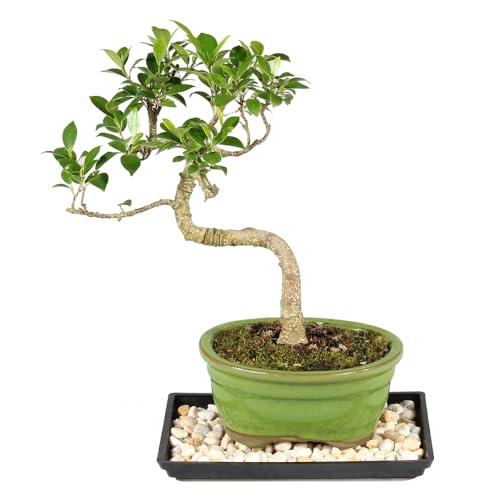
Brussel’s Bonsai 4-Year Ficus Bonsai centers on a familiar ficus form with a spiraling trunk and lush, dark foliage. That recognizable silhouette makes it a comfortable choice for someone moving from ordinary houseplants into bonsai. The four-year designation also suggests a more developed tree without requiring the seed-growing stage.
Compared with Brussel’s Bonsai Small Ficus Live Bonsai, this choice is framed around an older tree rather than compact arrival details. I see the main benefit in its established character, especially for a home office where a sculptural trunk can become a quiet focal point.
The Value In It
- The four-year tree offers established character for display.
- Dark foliage and a twisting trunk create a classic bonsai look.
A Few Limitations
- An established tree generally calls for more space and regular maintenance than a small starter plant.
- Bright indoor placement remains important for a ficus.
The Right Fit
This ficus suits a beginner who values a mature-looking tree and classic trunk structure over the variety offered by a seed kit.
Not Your Match When
CZ Grain 3 Large-Trunk Bonsai Willow Cuts, Three Willow Types suits beginners who want to develop trunk shape through hands-on planting and training.
CZ Grain 5 Willow Bonsai Trees, 3 Species, Indoor and Outdoor, shifts the focus from a finished display to growing potential. The bundle contains five starts across three types: two weeping willows, two Austree hybrid willows, and one corkscrew willow. I find that variety useful for comparing weeping, upright, and twisted forms as they develop.
Each tree is labeled, and an instruction sheet and video tutorial are included. Those learning aids make sense for a project involving multiple young trees, although beginners should treat this as a planting and training set rather than an instantly finished indoor arrangement.
Noteworthy Benefits
- Five starts provide more training material.
- Three willow types offer contrasting forms.
- Species labels simplify sorting after planting.
- Written and video guidance supports the growing process.
- The trees can serve indoor or outdoor growing projects.
Points To Keep In Mind
- These are young starts, not mature display bonsai.
- Indoor placement requires close attention to light and watering as the trees grow.
Feature Facts
Whose Shelf It Belongs On
This bundle suits beginners with a sunny outdoor space or a patient indoor setup who want to train several willow forms together.
Reach For A Different Pick When
Brussel’s Bonsai Small Ficus Live Bonsai is the better fit for someone seeking an established indoor tree rather than young planting material.
CZ Grain 3 Large-Trunk Bonsai Willow Cuts, Three Willow Types, is built for training rather than immediate display. The bundle includes one weeping, one Australian, and one dragon willow cutting, selected for trunk size and form. For a beginner interested in hands-on bonsai work, those substantial starting trunks may be more engaging than a small finished tree.
The cuttings arrive bare root, without a pot or soil, and detailed planting instructions and growing tips are included. That setup requires planning for containers, soil, moisture, and a suitable growing location before the trees can become indoor bonsai.
Benefits That Matter
- Three willow varieties provide a varied training set.
- Large trunks create a stronger starting point for shaping.
- Cutting material allows control over pots and soil.
- Planting guidance supports the initial establishment process.
Things That May Matter
- No pot or soil is included.
- Living cuttings require prompt planting and careful establishment.
- The finished indoor bonsai takes considerably more work than the bundled live trees.
Core Details
Who Will Love This
This bundle suits craft-focused beginners who enjoy planting, training, and shaping trees over a long period.
Another Choice May Suit
Brussel’s Bonsai 4-Year Ficus Bonsai suits beginners who would rather begin with a living indoor tree than bare-root cuttings.
What Actually Matters For a First Bonsai
Light and Placement
I start with the location because a healthy bonsai begins with sufficient light. Ficus and Hawaiian umbrella trees do best near a bright window, while a dim office corner can lead to sparse growth. I would also check the distance from heating vents, drafts, and busy walkways before settling on a permanent spot.
Live Tree or Growing Project
A mature live tree suits a display-first approach because it needs no germination period. A seed kit or set of cuttings offers more involvement and greater variety, though the result takes patience. I would select the format that matches my attention and patience, not merely the number of trees included.
Pot, Scale, and Commitment
Compact trees need containers that do not overwhelm their trunks, and taller specimens need enough space for their roots and foliage. Grower pots serve practical repotting needs, while ceramic pots add display character. I would confirm that the plant, pot, and intended location work together before ordering.
Common Bonsai Buying Traps
Mistakes Worth Dodging
The most common mistake is expecting a seed kit or bare-root cutting to look like a finished bonsai immediately. Another is choosing a low-light location because the tree appears decorative on a dark shelf. I would review the mature size, container format, and light needs before making a selection.
What The Higher Tier Buys
A higher-priced kit may add several seed varieties, extra packets, instructional materials, or a planter. The added components can reduce separate purchases, but a compact live tree may offer more value for someone focused on immediate display. I would compare included materials with the actual growing plan.
Frequently Asked Questions
Are live bonsai trees easier for beginners than seed kits?
Live trees suit beginners who want an indoor display without waiting for germination. Seed kits offer more variety and hands-on training, but they require a longer timeline and closer attention.
Which indoor bonsai trees are easiest to maintain?
Ficus and Hawaiian umbrella varieties are practical choices for bright indoor spaces. I would follow the included care instructions and check soil moisture regularly rather than following a fixed watering schedule.
Do indoor bonsai trees need direct sunlight?
Strong natural light is generally preferable, although temperature and exposure matter too. A position near a bright window usually serves an indoor ficus better than a dim shelf.
Can the willow bonsai trees grow indoors?
The willow starts and cuttings can be grown indoors, though they may need more light and careful moisture management. Starting them outdoors can be easier for people with a sunny garden.
Should I choose a ceramic pot or a plastic grower pot?
A ceramic pot suits immediate display, while a plastic grower pot supports practical care and later repotting. I would keep a display tree in its functional container until the root system requires more room.
Final Thoughts
I would start with a healthy live tree for the simplest transition into indoor bonsai care. Brussel’s Bonsai Small Ficus Live Bonsai offers the most straightforward display option, while the seed and willow kits suit people who enjoy the training process. The right choice is the one whose timeline and level of involvement fit my home.
