

A grass rake can handle several very different jobs, from clearing leaves between shrubs to spreading soil across uneven turf. I focus on head width, handle length, tine material, and storage needs to separate small hand rakes from larger lawn-leveling tools. The right choice depends less on general garden size and more on the kind of cleanup each weekend actually demands.
The Picks In Brief

Fiskars Xact Hand Rake
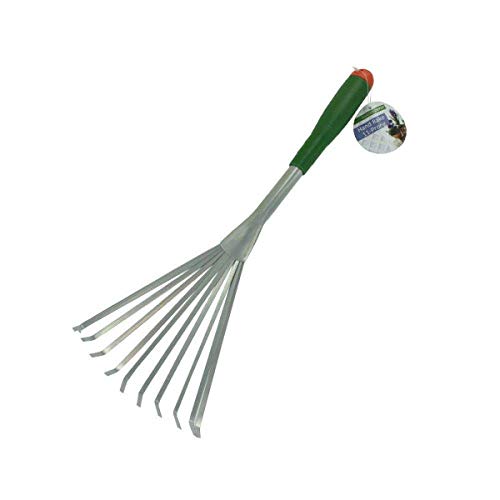
Garden Depot Hand Rake

Msstoodun 2 Pack Small Hand Rake

LA ZINNIA 23.2-Inch Leaf Rake

Rocklin 22-Inch Leveling Rake

Rocklin 30-Inch Leveling Rake

Rocklin 48-Inch Leveling Rake
Meet The Standout Selections
Precision work around flowers and compact planters calls for a smaller tool than a full-size lawn rake. The Fiskars Xact Hand Rake uses a stainless steel head and flexible tines, meaning the teeth can bend while gathering debris without being intended to remain permanently curved. That balance makes it useful for loose soil, mulch, and leaves in confined beds.
I favor this model for gardeners who repeatedly move between flowerbeds and shrub lines. Its weighted SoftGrip handle offers several grip positions, which can reduce wrist strain during longer sessions, and the hang hole keeps it convenient beside a shed wall. The honest read is that this is a precise bed tool rather than a broad lawn cleaner.
What Earns Its Place
- Stainless steel construction provides rust resistance for repeated outdoor use.
- Flexible tines work in confined spaces where a larger head cannot fit.
- Multiple handle positions improve control around flowers and edging.
- The weighted grip feels more balanced than a plain plastic handle.
Points To Note
- The small head requires extra passes for broad patches of leaves.
- Storage space is limited, although the hang hole helps.
Key Specs
Made For
This rake suits flowerbed caretakers, container gardeners, and anyone who needs controlled raking between established plants.
A Better Fit Elsewhere
Gardeners working only in narrow spaces may prefer the lighter Garden Depot Hand Rake for simple debris pickup.
The Garden Depot Hand Rake takes a simple approach to a common problem: reaching between shrubs without disturbing nearby stems. Its narrow head and 11 spaced prongs can collect loose leaves and light debris from flowerbeds, while the 16.5-inch length keeps the working end close to the hand. That makes it a straightforward choice for quick, repetitive cleanup.
Compared with the Fiskars Xact Hand Rake, this model offers fewer material and grip features, but its lightweight plastic construction may suit casual maintenance better. I would choose it for a small bed, balcony garden, or limited storage area where simple operation matters more than handling refinements.
Standout Benefits
- The slim head reaches between closely spaced bushes and shrubs.
- A grooved plastic handle provides a straightforward grip.
Small Caveats
- Eleven prongs gather less material than a wide lawn rake.
- The plastic handle offers less grip variation than the Fiskars model.
- Its 6.25-inch width requires additional passes in wider beds.
Best Suited To
This rake fits casual gardeners handling light debris in small flowerbeds and spaces between established shrubs.
Where Another Pick Suits Better
Gardeners handling dense soil or extended sessions may prefer the Fiskars Xact Hand Rake for its weighted grip and steel tines.
Two compact rakes solve a small but persistent storage problem: one tool gets buried under other equipment while the second is still needed. The Msstoodun set includes two mini rakes for flowerbeds, raised beds, lawn edges, and leaf collection. Their steel tines provide more substance than the all-plastic Garden Depot model without taking up the space of wide leveling rakes.
I see the set as especially useful for a shared garden, a two-section yard, or a household that keeps tools in separate sheds. A soft non-slip grip improves control during leaf pickup and soil loosening, while the hanging holes make both rakes accessible. Two rakes mean twice the storage points, but that is a fair exchange for keeping essential tools within reach.
Notable Upsides
- Two rakes support separate work areas or shared access.
- Steel tines handle leaves, mulch, clippings, and loose soil.
- The non-slip grip supports controlled work around plants.
- A compact head reaches raised-bed corners and lawn edges.
- Built-in hanging holes simplify storage.
Practical Considerations
- Two tools require two hanging points in a crowded shed.
- Steel tines need wiping after damp soil work to remain clean.
Right Fit For
This set suits shared gardens, divided yards, and households that want a spare rake close to another outdoor work area.
Consider Something Else When
Single-rake households with very limited storage may find the Garden Depot Hand Rake easier to organize.
Leaf cleanup across a medium lawn calls for more head width than a hand rake can offer. The LA ZINNIA model combines a 23.2-inch head with 24 tines, spreading the work across a broader sweep. Unlike the compact hand rakes, its three-section handle adjusts from 33 to 66.5 inches to accommodate different working heights and storage arrangements.
I would use this rake for gathering fallen leaves, grass clippings, mulch, and small debris around an open yard. The high-carbon steel construction gives the tines greater resistance to bending under moderate pressure, while the spiral joint allows tool-free assembly. The trade-off is reduced maneuverability inside narrow flowerbeds.
Reasons It Performs
- The wide, 24-tine head covers open lawn areas efficiently.
- Handle adjustment supports both extended reaches and compact setups.
- High-carbon steel adds resistance to flexing and breakage.
Where It May Fall Short
- The broad head is awkward between dense shrubs.
- Assembly and disassembly add steps to a quick cleanup.
Feature Snapshot
Who Should Grab It
This model fits homeowners with medium lawns who gather leaves regularly and value a broad, adjustable sweep.
Reach For A Different Pick When
Gardeners focused on small flowerbeds may prefer the Fiskars Xact Hand Rake for easier control around plants.
Lawn leveling is a different task from gathering leaves, and this Rocklin model is built around that distinction. Its 22-inch head offers enough width to move topsoil, sand, compost, or dirt across small patches while remaining manageable near corners and narrow lawn strips. The 78-inch handle keeps the working end elevated during these repair projects.
Compared with the LA ZINNIA leaf rake, this tool presents a broader leveling surface instead of a set of narrow gathering tines. I favor it for focused backyard repairs where control matters more than sweeping an entire lawn. The long handle does require suitable storage room, even though the compact head helps in confined work areas.
Everyday Perks
- The 22-inch head handles small patches and narrow strips.
- The 78-inch handle reduces repeated bending during repairs.
Details To Watch
- Large sections of lawn require more passes than a 30-inch head.
- Its leveling shape is less useful for gathering loose leaves.
- The long handle needs a suitable storage position.
The Right Fit
This rake suits homeowners repairing small lawn depressions, bare patches, and confined areas where a compact head is easier to control.
Another Choice May Suit
Gardeners spreading amendments over a larger lawn may prefer the Rocklin 30-Inch Leveling Rake for broader coverage.
A 30-inch head offers a practical middle ground for residential lawn repairs. The Rocklin 30-Inch Leveling Rake spreads soil, sand, compost, and topdressing, meaning it distributes amendments evenly across worn turf. Its center-mounted plate is designed to stay close to the ground, which supports controlled leveling around garden edges and low spots.
Compared with the 22-inch Rocklin model, this rake covers more ground without approaching the bulk of the 48-inch version. I think it is the most sensible match for a typical residential lawn, especially where patch repairs and seasonal maintenance both occur. The stainless steel construction and 78-inch handle suit prolonged outdoor work.
Noteworthy Benefits
- The 30-inch head balances coverage and maneuverability.
- A center-mounted plate supports close-to-ground leveling.
- The long handle reduces bending during lawn work.
- Stainless steel construction suits outdoor yard use.
A Few Limitations
- The head is less suitable for narrow flowerbeds and tight corners.
At A Glance
Built With In Mind
This rake fits residential homeowners handling lawn patches, topdressing, soil blending, and uneven backyard turf.
Swap It Out When
Small-space gardeners may find the Rocklin 22-Inch Leveling Rake easier to maneuver around tight yard sections.
Large lawn repairs demand a head that can cover meaningful ground without requiring a new pass over every strip. The Rocklin 48-Inch Leveling Rake brings a 48-inch head to that task, helping spread soil, sand, compost, or topsoil across wide sections. The 78-inch handle also supports a more upright stance during larger projects.
Compared with the 30-inch Rocklin model, this version reduces the number of passes across an open yard but demands more maneuvering room. I would select it for extensive leveling work, broad uneven areas, and properties where efficient coverage comes first. In confined spaces, the smaller 22-inch model remains easier to handle.
Useful Highlights
- The 48-inch head covers broad sections efficiently.
- Wide coverage reduces repeated passes over open turf.
- The long handle supports a more upright working position.
Trade-Offs To Consider
- The broad head is difficult to position in narrow corners.
- Storage requires enough room for the wide head and long handle.
Core Details
Whose Shelf It Belongs On
This rake belongs with property owners handling large lawns, broad soil repairs, and extensive topdressing projects.
Where A Sibling Pick Shines
Gardeners working around small lawn patches may prefer the Rocklin 30-Inch Leveling Rake for easier positioning.
Match Each Rake to the Work Ahead
Head size determines the work
A narrow head offers control around shrubs, while a broad head covers open lawns with fewer passes. I consider the 22- and 23.2-inch models appropriate for beds and medium yards, while the 30- and 48-inch rakes suit increasingly large leveling areas. Head size alone does not define the task, since leaf gathering and soil leveling favor different shapes.
Tines and leveling surfaces serve different purposes
Flexible tines gather leaves and loose debris without disturbing nearby plants. A leveling surface is built to drag and distribute material across turf, making it useful for low spots, bare patches, and topsoil work. A rake intended for one task can disappoint when expected to handle the other.
Handle length affects comfort and storage
Long handles reduce bending during lawn work but need more space to hang or stand upright. Adjustable handles offer a compromise for people who move between detailed tasks and broad sweeps. Grooved or soft grips can improve control, although the handle shape remains more important during extended work than during a quick cleanup.
Two-rake sets need two storage locations
A pair solves access problems in divided yards or shared gardens. It also requires enough hanging space for both tools, so shed organization deserves consideration before adding one to a crowded tool wall.
Practical Checks Before Checkout
Mistakes Worth Dodging
The most common mistake is judging a rake solely by its width. A broad head that cannot fit between shrubs is less useful in a flowerbed, while a narrow rake may require many passes across a lawn. I also check the intended job first, since debris collection and soil leveling need different rake designs.
What Separates Premium From Basic
Steel construction, adjustable handles, and wider working surfaces often support heavier or more extensive jobs. The extra construction is worthwhile for a large lawn or frequent use, but it adds bulk and storage demands. A basic hand rake remains sensible for light, localized cleanup.
Frequently Asked Questions for Grass Rakes
Is a wide rake always better for leaves?
No. A wide head covers open lawns faster, but a narrow rake provides better control between shrubs and flowers. The best fit depends on the amount of debris and the amount of maneuvering room available.
Are lawn-leveling rakes suitable for gathering leaves?
They work best for distributing soil, sand, compost, and topsoil across uneven areas. Narrow gathering tines are more suitable for lifting loose leaves from beds and paths.
What handle length is comfortable for lawn work?
A longer handle helps reduce bending during broad projects, while shorter or adjustable handles help with close work and compact storage. Personal height and the size of the work area matter more than one universal length.
Is a stainless steel rake better for outdoor use?
Stainless steel provides corrosion resistance, which is useful around damp soil and changing weather. Steel tines still need sensible care, especially after collecting wet debris.
Should a grass rake set have two rakes?
A two-rake set is useful for separate garden sections or shared tool access. A single rake is more convenient for small sheds and households that perform most work in one area.
Final Thoughts
I would match small hand rakes to flowerbeds, the adjustable LA ZINNIA model to general leaf cleanup, and the Rocklin models to increasingly large leveling projects. Head width, tine design, handle length, and storage space make each option useful in a different setting. The right grass rake is the one that handles the recurring yard task without becoming awkward to store or control.
