

Aphids clustered beneath a tomato leaf can turn a small garden problem into a weekly chore, while spider mites and fungus gnats often demand a different approach. I’ve organized these options by plant type, application method, and pest coverage, so home gardeners can match the right treatment to the problem without overmixing products.
A Side-By-Side Look

Grower’s Ally Crop Defender 3 Concentrate
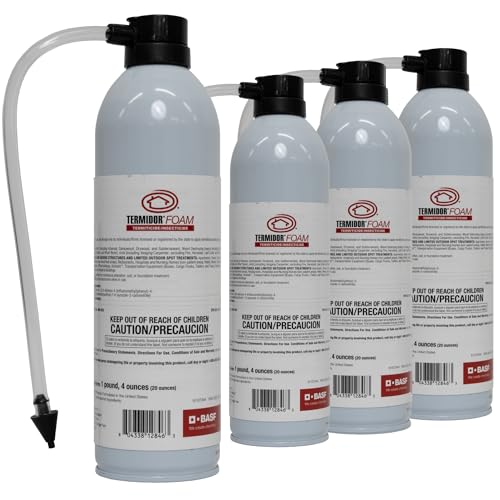
BASF Termidor Foam 20 oz 4 Pack

BASF Alpine WSG Soluble Granules

Fertilome 11205 Tree & Shrub Drench

Martin’s Pen Poultry Spray 32 oz

Smart Grower Neem and Peppermint Oil Spray

EcoVenger Garden Insect Control 16 oz
More Details On Our Top Picks
I consider Crop Defender 3 the most versatile vegetable-garden option in this group because one formula addresses insects, mites, powdery mildew, and their eggs. Its botanical oils and built-in surfactant, a substance that helps the spray spread across foliage, make it useful for weekly programs on indoor or outdoor crops.
The 1-quart concentrate makes up to 100 gallons, which gives a gardener more coverage than a small ready-to-use bottle. EcoVenger Garden Insect Control 16 oz offers named contact targets, but Crop Defender 3 fits broader crop routines involving flowering plants and greenhouses.
Reasons It Performs
- One concentrate covers mites, aphids, thrips, whitefly-like soft-bodied pests, powdery mildew, and eggs.
- The broad garden and greenhouse coverage suits growers managing several crops at once.
- Application is designed for weekly use through clones, vegetative growth, and flowering.
- A large 100-gallon mixing capacity reduces the need for repeated concentrate purchases.
Practical Considerations
- Accurate dilution matters, so the label remains the essential reference for mixing and timing.
- Weekly use may demand more attention than the longer-lasting systemic approach offered by Fertilome 11205.
Key Specs
Made For
I recommend Crop Defender 3 to vegetable growers, greenhouse operators, and gardeners managing mixed pest and disease pressure.
A Better Fit Elsewhere
EcoVenger Garden Insect Control 16 oz suits gardeners wanting a ready-to-use spray with a specifically listed set of plant pests.
Termidor Foam serves a completely different purpose from the plant-focused picks here. I value it for structural pest situations involving termites, carpenter ants, and other wood-associated insects, particularly where damage is hidden inside walls, decks, or utility areas.
The ready-to-use aerosol produces foam that expands roughly 30 times after application, carrying fipronil into voids and galleries without the disruption of a whole-structure fumigation. BASF Alpine WSG also works through non-repellent active ingredients, but its water-soluble granules suit different placement and dilution needs.
A Strong Showing
- Expanding foam reaches cracks, galleries, wall voids, and nests.
- The four-can pack supports repeated spot applications around a property.
- Foam application works around wood elements, fencing, poles, and tree voids.
- Non-repellent fipronil targets termites through contact and ingestion.
Honest Caveats
- Structural applications require careful placement and attention to the label.
- State restrictions may apply, so local requirements deserve a check before purchase.
- This is not a foliar garden spray for vegetables, flowers, or houseplants.
Who It Suits Best
I would consider Termidor Foam for homeowners and pest professionals addressing concealed termite or wood-boring insect activity in permitted structures.
Consider Something Else When
Grower’s Ally Crop Defender 3 Concentrate is the closer fit for edible crops and greenhouse plants rather than structural wood pests.
Alpine WSG appeals to me because one water-soluble format can handle indoor, outdoor, and off-structure pest needs. A soluble granule dissolves into the application water, which offers flexible placement around buildings and vegetation without turning the product into a bulky ready-to-use sprayer.
Its 40% dinotefuran formulation is non-pyrethroid and non-repellent. “Non-repellent” matters because the insect is not driven away from the treated area, although the exact application rate and listed pests must still come from the label.
What Works In Its Favor
- Water-soluble granules provide flexible dilution and application options.
- Non-repellent active ingredient supports treatment at the insect source.
- The same format serves indoor, outdoor, and off-structure settings.
- Granules avoid the eye and leaf contact associated with a concentrated spray format.
Points To Keep In Mind
- Accurate dilution and target-site placement require close label attention.
- The broad application setting does not mean every garden pest appears on the label.
Feature Snapshot
The Right Fit
I favor Alpine WSG for experienced gardeners seeking one flexible pesticide format for several labeled pest-control locations.
Where A Sibling Pick Shines
Grower’s Ally Crop Defender 3 Concentrate offers more explicit crop and disease coverage for vegetable growers.
Tree & Shrub Drench makes sense for a gardener who prefers seasonal care over frequent foliar spraying. Its systemic action means the active ingredient enters the plant and moves within its structure, offering protection from listed insects such as aphids and psyllids.
The label allows one annual application, with early spring or early fall recommended for best results. That timing requirement distinguishes it from EcoVenger Garden Insect Control 16 oz, which works through direct contact on the plant surface.
What Stands Out
- Systemic movement reaches pests beyond the outer leaf surface.
- One annual application can suit a planned spring or fall maintenance routine.
- The liquid concentrate is intended for established outdoor trees and shrubs.
- Protection is stated for up to 12 months after application.
Things That May Matter
- The narrow tree-and-shrub focus excludes vegetables and most houseplants.
- Timing around early spring or early fall is important for the intended seasonal use.
Essential Details
Built With In Mind
I recommend Fertilome 11205 to homeowners caring for ornamental trees or shrubs and preferring a once-a-year systemic program.
Not Your Match When
Grower’s Ally Crop Defender 3 Concentrate fits indoor crops, greenhouses, and weekly foliar routines better.
Martin’s Pen Poultry Spray is the narrow choice here for lice and mites around chickens, roosts, and poultry housing. It is a ready-to-use aerosol, which removes the measuring and dilution step that concentrates such as Alpine WSG require.
The 32-ounce container provides enough volume for repeated coop applications without the small-bottle format common to many household sprays. Its permethrin-based formula targets poultry pests rather than aphids, mites, and mildew on ornamental plants.
The Value In It
- Ready-to-use format simplifies routine coop care.
- The formula is specifically labeled for lice and mites on poultry and housing.
- A quart container supports several application points around a coop.
Trade Offs
- Its pest list is too limited for general garden use.
- Aerosol application requires attention to ventilation and label directions.
Quick Facts
Whose Shelf It Belongs On
I would keep Martin’s Pen Poultry Spray with small-scale chicken keepers who need a dedicated product for lice or mites in poultry housing.
Another Choice May Suit
EcoVenger Garden Insect Control 16 oz serves mixed plant collections rather than livestock housing.
This spray presents itself more like a plant wash than a narrowly labeled garden insecticide. I see that distinction as useful for routine leaf maintenance: neem oil supplies the plant-care base, while peppermint oil adds a second botanical ingredient and a noticeable scent.
Its indoor-and-outdoor positioning suits houseplant shelves, containers, and garden foliage. Compared with Crop Defender 3 Concentrate, however, its role appears centered on cleaning and leaf condition rather than a clearly defined fungicide and mite program.
Where It Helps
- Neem oil supports routine plant and leaf care.
- Peppermint oil gives the formula a distinctive aromatic profile.
- One spray format serves indoor and outdoor foliage.
Details To Watch
- The product information emphasizes plant washing more than a named pest spectrum.
- Coverage, dilution, and application timing should come directly from the label.
- Its garden positioning is less specific than EcoVenger’s listed aphid, mealybug, mite, and gnat coverage.
Made For
I favor Smart Grower Neem and Peppermint Oil Spray for plant collectors focused on routine leaf washing and plant appearance.
Reach For A Different Pick When
EcoVenger Garden Insect Control 16 oz fits a gardener who needs direct contact action against specifically named plant pests.
EcoVenger brings the clearest list of familiar houseplant and garden pests to this group: aphids, mealybugs, spider mites, gnats, and eggs. I find that direct labeling useful when a quick inspection reveals one of those common problems across mixed indoor and outdoor plants.
The spray works on contact and comes ready to use. Delicate shoots and newly sprouted plant parts can be diluted according to the label, which gives the formula a little more flexibility than treating every plant surface the same way.
Noteworthy Benefits
- The target list gives shoppers several familiar pests to compare against.
- Contact action suits visible pest clusters on leaves and stems.
- The ready-to-use bottle simplifies isolated plant applications.
- Indoor and outdoor use covers houseplants, containers, and garden beds.
- Egg coverage extends the product’s stated role beyond visible insects.
Small Caveats
- Delicate growth requires label-directed dilution.
- The 16-ounce size may need replenishment during a broad outdoor program.
Feature Overview
Best Suited To
I recommend EcoVenger Garden Insect Control 16 oz to plant keepers dealing with a clearly identified common pest and wanting ready-to-use application.
Swap It Out When
Grower’s Ally Crop Defender 3 Concentrate suits larger crop programs needing weekly coverage across insects, mites, and powdery mildew.
Picking the Right Formula for the Job
Match the Pest Before the Bottle
I start by identifying the pest and its location. Aphids gather around tender shoots, spider mites favor leaf undersides, and fungus gnats appear around damp growing media. EcoVenger Garden Insect Control 16 oz names several familiar plant pests, while Crop Defender 3 adds fungal coverage and mite targets.
Decide Between Contact and Systemic Action
Contact sprays work where the insect is visible or where the labeled plant surface can be reached. Systemic products enter the plant and distribute within its structure, making Fertilome 11205 Tree & Shrub Drench more suitable for established ornamental trees and shrubs than small vegetable crops.
Consider the Application Setting
A ready-to-use aerosol or pump spray reduces preparation, while a concentrate or soluble granule gives more control over dilution. Crop Defender 3 makes up to 100 gallons, Alpine WSG fits flexible indoor and outdoor placement, and Martin’s Pen Poultry Spray concentrates on poultry housing rather than garden foliage.
Check the Label Before Mixing
Active ingredients, dilution rates, application sites, and harvest or re-entry intervals vary by product. I treat the label as the controlling document, especially around food crops, flowering plants, children, pets, and water sources.
Common Garden Pesticide Decisions
Mistakes Worth Dodging
Choosing by bottle color or product name alone can lead to the wrong pest coverage. I would first identify the plant, locate the insects, and compare that finding with the label before deciding between a concentrate, soluble granule, and ready-to-use spray.
Why The Extra Money Goes
Higher-volume concentrates may reduce packaging waste and support larger gardens, while specialty foams or systemic tree treatments solve problems ordinary foliar sprays do not address. The useful upgrade is the one tied to a specific application need, not simply a larger container.
Frequently Asked Questions
Which Garden Insecticide Works Best for Vegetable Gardens?
Grower’s Ally Crop Defender 3 Concentrate offers the broadest crop-oriented coverage here, with listed targets including aphids, thrips, mites, powdery mildew, and eggs. The product label still determines the correct dilution, timing, and harvest schedule.
Is a Concentrate Better Than a Ready-to-Use Spray?
A concentrate is more economical for repeated or large-area use, while a ready-to-use spray suits isolated plants and small jobs. I favor concentrates for established routines and ready-to-use products for convenience.
What Is the Difference Between Systemic and Contact Insecticides?
A systemic insecticide moves into the plant, while a contact insecticide works directly on the pest or treated surface. Fertilome 11205 provides systemic action for trees and shrubs, whereas EcoVenger uses contact action on listed plant pests.
Which Option Handles Termites Around a Deck?
BASF Termidor Foam 20 oz 4 Pack is designed for termites and other wood-associated insects in structural voids, galleries, decks, and similar areas. Structural pest applications require careful label compliance and attention to local restrictions.
Can Garden Insecticide Be Used Around Children and Pets?
Product labels define the permitted uses, timing, and precautions for households with children and pets. I would follow those directions exactly and keep people and animals away from the treated area for the stated period.
Final Verdict
The best fit depends on the crop, pest, and application method rather than a single universal formula. Crop Defender 3 leads for broad garden programs, EcoVenger fits ready-to-use plant care, Fertilome handles trees and shrubs, and Termidor Foam addresses structural wood pests. Reading the label before mixing remains the simplest way to keep the application useful and properly timed.
