

Powdery mildew spreads quickly across roses, flowers, shrubs, and dense garden beds, especially in warm, humid conditions where leaves receive little airflow. I focus on products suited to that real-world problem, with clear guidance on application method, plant coverage, and the trade-offs that affect routine garden care. Two entries address separate pest and weed problems, so I explain exactly where they belong without stretching the category.
A Closer Look At The Lineup

BioAdvanced 2-in-1 Moss and Algae Killer 32 oz

Bonide Rose Shield Systemic Drench 40 oz

Monterey Fungi-Max Fungicide 16 oz

QUALLI-PRO Strobe 50WG Systemic Fungicide

Atticus Gravex 20EW Fungicide 16 oz

Atticus Talak Bifenthrin Concentrate 1 Gal
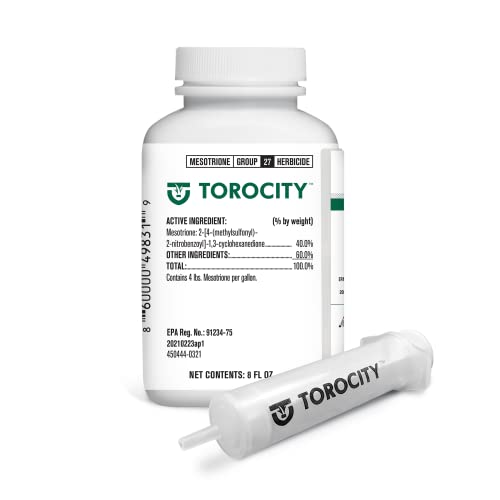
Atticus Torocity Mesotrione Herbicide 8 oz
More Details On Our Top Picks
A ready-to-spray format makes this option easier to deploy than the concentrated mixes elsewhere in the lineup. Its broad outdoor use covers roofs, patios, decks, driveways, mulch, lawns, and buildings, including areas where mildew grows alongside moss, algae, and lichen.
For most homeowners dealing with green growth on hard surfaces, the practical benefit is a single product for cleaning and disease control. The 32-ounce container covers up to 500 square feet, although that figure represents the stated treated area rather than a guarantee of even coverage on every textured surface.
Noteworthy Benefits
- Ready-to-use spraying removes the need to measure and dilute a concentrate.
- Controls mildew, mold, moss, algae, and lichen across varied outdoor surfaces.
- The broad surface list suits seasonal cleanup around paths, roofs, and gardens.
- Protection for several months reduces the need for frequent repeat applications.
Points To Keep In Mind
- Dead moss must be physically removed after it turns yellow and brown.
- This broad cleaner suits outdoor areas rather than a focused routine on delicate flowering plants.
Feature Snapshot
Right Fit For
Homeowners dealing with mildew, moss, or algae around patios, roofs, decks, lawns, and other outdoor surfaces will find this the most direct fit.
A Better Fit Elsewhere
Gardeners focused on powdery mildew on roses and flower beds will find Monterey Fungi-Max Fungicide 16 oz more closely aligned with their needs.
Bonide stands apart with a soil application rather than a foliar spray. The concentrate is mixed with water and poured around the plant base or sprinkled over flowerbeds, while systemic action means the active ingredients travel from the roots into the plant’s foliage.
That method works well for a concentrated rose bed or mixed collection of azaleas, camellias, and shrubs. I consider it especially useful for gardeners who want combined insect and fungal control without handling a sprayer, though the label and pollinator restrictions deserve careful attention.
Advantages To Know
- Soil application offers an alternative to spraying plant leaves directly.
- Controls powdery mildew, black spot, rust, aphids, Japanese beetles, and borers.
- Stated protection lasts up to six weeks when used on a six-week schedule.
- One 40-ounce container treats up to 20 roses.
Worth Noting
- Application while bees are foraging creates a risk to pollinators.
- The product requires measured dilution before it is poured or sprinkled.
Technical Highlights
Who It Suits Best
Rose growers and flower-bed maintainers who value soil-based application and combined fungal and insect control will appreciate this option.
Where Another Pick Shines
Gardeners managing a larger landscape with varied plant species may prefer Monterey Fungi-Max Fungicide 16 oz for its broader outdoor plant coverage.
Monterey Fungi-Max brings the broadest plant range in this group. Its label covers roses, flowers, ornamentals, shrubs, trees, lawns, fruit and nut trees, berries, and vegetables, making it practical for a mixed garden rather than a single rose bed.
The product also addresses several fungal problems beyond powdery mildew, including rust, leaf spot, anthracnose, crown rot, and red thread. I favor it for gardeners who want one container to manage multiple disease pressures, provided a spray tank and careful dilution are acceptable.
A Favorable Mix
- Controls powdery mildew plus numerous other common fungal diseases.
- Works across ornamental, lawn, fruit, nut, berry, and vegetable plants.
- Systemic action distributes protection beyond the point of application.
- One application provides up to two weeks of stated protection.
- The included measuring spoon supports more consistent dilution.
Small Caveats
- Application requires dilution and a spray tank, adding work compared with a soil drench.
Feature Rundown
Made For
Home gardeners tending mixed ornamental and edible plantings will get more versatility from this product than from the rose-specific Bonide Rose Shield Systemic Drench 40 oz.
Consider Something Else When
Gardeners who only want a ready-to-spray cleaner for roofs, patios, and decks will find BioAdvanced 2-in-1 Moss and Algae Killer 32 oz easier to use.
QUALLI-PRO Strobe 50WG is aimed at structured spray programs rather than a single spot-treatment approach. It can be applied as a foliar spray, meaning the liquid is directed onto leaves, or included in a tank mix with other registered products for a broader management plan.
Its use sites extend from lawns and ornamentals to parks, athletic fields, institutional grounds, and commercial landscapes. For home gardeners, that professional range signals considerable flexibility, though the label requirements and program-based approach add complexity compared with Monterey Fungi-Max Fungicide 16 oz.
A Strong Showing
- Absorbed through leaves, crowns, and roots for several application routes.
- Fits into alternating spray programs or compatible tank mixes.
- Suits lawns, ornamentals, turf facilities, parks, and managed landscapes.
Practical Considerations
- Its program-based use may be excessive for a small garden with one affected rose.
- Tank mixing requires attention to label compatibility and application instructions.
Best Suited To
Experienced gardeners maintaining large lawns, institutional grounds, or mixed managed landscapes will find its flexible spray-program use most valuable.
Another Choice May Suit
Novice rose growers seeking a straightforward soil drench will find Bonide Rose Shield Systemic Drench 40 oz easier to incorporate into a home flower bed.
Atticus Gravex 20EW centers on myclobutanil, an active ingredient used for broad-spectrum fungal control. Curative action addresses fungal problems already present, while preventive activity supports plants against later infection, giving it relevance in gardens where outbreaks recur across multiple plant types.
Unlike Bonide Rose Shield Systemic Drench 40 oz, this concentrate is centered on fungal management rather than a combined insect-and-disease formula. That makes it a sensible first consideration for a dedicated mildew problem, although the label determines the exact plants, dilution, and application interval.
The Case For It
- Provides both curative and preventive fungal control.
- Myclobutanil supports broad-spectrum use rather than a single disease focus.
- The 16-ounce concentrate suits a measured garden application.
- Can address recurring fungal pressure in mixed ornamental plantings.
Possible Compromises
- Concentrated products require accurate measuring and label-directed dilution.
- It lacks the stated insect-control coverage of Bonide Rose Shield Systemic Drench 40 oz.
Core Details
Who Will Love This
Experienced home gardeners dealing with recurring fungal problems across ornamentals will appreciate the broad-spectrum concentrate and dual control approach.
Look Elsewhere When
Gardeners managing only powdery mildew on roses will get a more specialized application from Bonide Rose Shield Systemic Drench 40 oz.
Atticus Talak 7.9% is an insecticide rather than a fungicide, so it does not belong in a mildew-control program. Its relevance comes from addressing a separate garden concern: insects in indoor or outdoor settings, with a water-based concentrate that dries clear and leaves no visible residue.
The one-gallon container is practical for repeated applications or larger areas, while bifenthrin provides the active insect-control component. I would keep it on a separate shelf from the mildew products in this lineup and read the label for every permitted site and target insect.
Useful Strengths
- One formula serves both indoor and outdoor insect-control settings.
- The water-based concentrate dries clear without a visible residue.
- A one-gallon container supports a larger routine than a small bottle.
Where It May Fall Short
- It does not control powdery mildew or other fungal diseases.
- The one-gallon size requires suitable dilution, mixing, and storage arrangements.
Whose Shelf It Belongs On
Gardeners managing insects around indoor plants and outdoor spaces will find this useful beside, rather than in place of, a dedicated fungicide.
Reach For A Different Pick When
Gardeners whose priority is powdery mildew will find Monterey Fungi-Max Fungicide 16 oz substantially more relevant to the task.
Torocity is a lawn herbicide, not a treatment for powdery mildew. Mesotrione provides control for susceptible weeds in both newly seeded and established turf, and the product supports application before weeds emerge as well as after visible growth appears.
I include it because weed management and disease management often share the same lawn, but they should not share the same product shelf. The 8-ounce concentrate is compact, though accurate dilution and strict adherence to the turf label remain essential because the target is vegetation rather than fungal infection.
Positive Takeaways
- Controls susceptible weeds in newly seeded and established turf.
- Supports application both before and after weeds become visible.
Factors To Consider
- It does not address powdery mildew on turf, flowers, or ornamental plants.
- The concentrate requires careful measurement and lawn-specific application guidance.
- Herbicide and fungicide storage should be clearly separated to avoid mix-ups.
Built With In Mind
Home lawn maintainers dealing with susceptible weeds in new seedings or established grass will find this more relevant than the fungal products.
Swap It Out When
Gardeners facing powdery mildew on roses, flowers, or shrubs should choose Monterey Fungi-Max Fungicide 16 oz instead.
What Matters Before Buying a Mildew Fungicide
Match The Plant
The plant and disease on the label need to match the actual problem. A product listed for roses may not cover vegetables, turf, shrubs, or fruiting plants, so I check every intended plant before choosing a concentrate. Monterey Fungi-Max Fungicide 16 oz covers the widest visible range, while Bonide Rose Shield Systemic Drench 40 oz centers on roses, flowers, azaleas, camellias, and shrubs.
Choose The Application Method
Foliar spraying reaches leaf surfaces, while a soil drench enters through the root zone and moves into the plant. I consider spray equipment, plant density, and watering schedules before choosing. A ready-to-spray cleaner suits broad outdoor cleanup, while concentrated products offer more control over dosage.
Check The Timing And Interval
Early intervention is often easier than managing a dense, established outbreak. Several products specify application at the first sign of disease, while the stated protection intervals range from up to two weeks to up to six weeks. I use those intervals to build a schedule, while keeping every label restriction and pollinator warning in view.
Separate Similar Garden Problems
An insecticide controls insects, while a herbicide controls susceptible vegetation. Neither addresses fungal disease, so Atticus Talak Bifenthrin Concentrate 1 Gal and Atticus Torocity Mesotrione Herbicide 8 oz require separate storage and care from the mildew choices. Keeping categories distinct makes routine garden management less confusing.
Avoiding Mistakes in Plant Disease Control
Mistakes Worth Dodging
The most consequential error is selecting a product by its general purpose without checking the listed plants and diseases. I also avoid treating mildew as a problem that disappears on contact, since label-directed timing and coverage matter. Concentrates demand accurate dilution, and pollinator warnings deserve attention before every application.
What Separates Premium From Basic
The extra spend may reflect broader plant coverage, longer protection, a measured application system, or concentrated ingredients that allow multiple treatments from one container. The upgrade is worthwhile for a large mixed garden, while a small rose bed may be better served by a simpler, specialized drench. The label remains more useful than package size alone.
Frequently Asked Questions
How do I choose a fungicide for powdery mildew?
I start by confirming that the label lists the affected plant and powdery mildew, then compare application method and protection interval. A broad garden may justify a multi-plant formula, while a small rose bed may suit a specialized drench.
Is a soil drench better than a foliar spray?
A soil drench works through the root zone and suits gardeners avoiding direct leaf spraying. A foliar spray reaches foliage directly and may fit plants already showing visible disease, subject to the label.
Can one fungicide control several diseases?
Some products list several fungal diseases, including powdery mildew, rust, leaf spot, anthracnose, and black spot. I verify each listed disease and plant on the label rather than assuming broad coverage.
When should a fungicide be applied?
Early application at the first visible signs generally works best for keeping the problem limited. I follow the label for timing, dilution, and repeat intervals rather than waiting until foliage is heavily affected.
Can the same product handle insects and mildew?
Only some garden products combine insect and fungal control. I keep dedicated insecticides and fungicides separate because an insect-control concentrate has no useful role in a mildew program.
Final Thoughts
For a home rose bed, Bonide Rose Shield Systemic Drench 40 oz offers a soil-based approach, while Monterey Fungi-Max Fungicide 16 oz fits broader mixed plantings. Atticus Gravex 20EW Fungicide 16 oz serves gardeners who want a concentrated, broad-spectrum fungal option, and BioAdvanced 2-in-1 Moss and Algae Killer 32 oz suits mildew appearing alongside moss or algae on outdoor surfaces. Matching the label to the plant and the problem remains the most important first step.
