

A succulent collection can look healthy one day and show soft spots, dark basal leaves, or fuzzy patches the next. I focus on products that address root and foliar disease, while separating them from soil treatments, insecticides, and herbicides that solve different problems.
The Lineup, Simplified

Phyton 27 2 Oz. Fungicide

Monterey Copper Fungicide

Monterey Garden Phos

Gravex 20EW Myclobutanil

Organo Republic Mycorrhizal Fungi Soil Inoculant 4 oz, 100,000 Propagules

Atticus Talak Bifenthrin 1 Gal
Atticus Torocity 8 oz
More Details On Our Top Picks
Phyton 27 stands apart through its true systemic action, meaning the plant absorbs the formula and distributes it beyond the sprayed area. That distinction matters in a dense succulent pot where a foliar spray may leave lower leaves and roots untouched. I consider it the most relevant choice here for disease affecting both the crown and roots, subject to label clearance for the specific succulent.
Its use window also spans propagation through harvest, which makes it practical for growers working with rooted cuttings, young plants, and mature specimens. Compared with Monterey Copper Fungicide, Phyton offers broader movement through the plant, while the copper product emphasizes foliar spraying and soil drenching. The 2-ounce package may require careful storage and planning during larger jobs.
A Few Highlights
- Systemic movement reaches plant tissue beyond direct spray contact.
- Addresses both root and foliar disease concerns in one formula.
- Supports use from propagation through the harvest period.
- Low phytotoxicity risk is stated when directions are followed.
- Compatibility with most IPM programs and biocontrols suits mixed growing systems.
Practical Considerations
- The label should explicitly allow the intended succulent and crop group.
- A small 2-ounce format calls for careful measurement and storage.
Key Specs
Who It Suits Best
I favor Phyton 27 for experienced succulent growers managing root and foliar disease across multiple growth stages.
A Better Fit Elsewhere
Monterey Copper Fungicide suits home gardeners wanting a simpler preventive spray or soil drench.
Monterey Copper Fungicide is the most approachable option for a home collection where routine foliar spraying and occasional soil drenching are preferred. The formula is intended as preventive disease control rather than a curative response, so timing and plant compatibility deserve attention. For a small patio setup, the included 16-ounce package and spoon make measured mixing easier.
The label covers citrus, fruit, vegetables, nuts, and ornamental plants, but that broad list does not automatically settle succulent suitability. I would check the plant section and dilution directions before adding it to a succulent shelf. Unlike Phyton 27, this formula does not move systemically through plant tissue.
Standout Benefits
- Supports foliar spraying and soil-drench routines in one product.
- Designed for residential garden use under labeled precautions.
- Mix-and-apply format suits routine home maintenance.
Honest Caveats
- Its role is preventive rather than curative for active disease.
- Succulent compatibility must be confirmed in the label.
- Mixed solution requires correct dilution and prompt disposal.
Quick Facts
Made For
This formula fits home gardeners focused on early disease defense and straightforward application methods.
Consider Something Else When
Phyton 27 2 Oz. Fungicide serves growers needing systemic movement into root and foliar tissue.
Monterey Garden Phos is built around a narrower disease list than the broad-purpose products in this lineup. Its label names root rot, downy mildew, Phytophthora, pythium, fire blight, and diseases associated with sudden oak death. That makes it a strong candidate for collections facing specific root or moisture-related problems, provided the relevant succulent appears on the label.
Three application routes are available: a soil drench, foliar spray, or basal bark application. Compared with Monterey Copper Fungicide, Garden Phos can be used before and after disease symptoms appear, while the copper product remains primarily preventive. The pack contains two 16-ounce bottles, giving a little more volume for multiple plants.
Benefits That Matter
- Directly addresses several named root and foliar diseases.
- Works as both a preventive and curative spray.
- Offers soil, foliage, and basal-bark application options.
- Two 16-ounce bottles suit multi-container collections.
Trade-Offs To Consider
- Disease and plant compatibility need to match the label.
- Multiple application methods require accurate mixing and coverage.
Feature Snapshot
Right Fit
I recommend Garden Phos for growers managing named root rot, pythium, or downy mildew issues in labeled plants.
Reach For A Different Pick When
Phyton 27 2 Oz. Fungicide better serves growers seeking broad systemic movement across the plant.
Gravex 20EW centers on myclobutanil, an active ingredient used for controlling fungal problems in ornamental plants, turf, and other compatible crops. The 16-ounce concentrate may appeal to growers who already understand dilution and protective application practices. For a first-time succulent grower, the concentrated format carries more responsibility than a ready-to-use garden spray.
The product can be used before and after active fungal issues appear, according to its listed role. That differs from Monterey Copper Fungicide, whose emphasis is preventive care. I see Gravex as a specialist option for established routines, with the plant label serving as the decisive compatibility check.
Everyday Advantages
- Myclobutanil concentrate offers focused fungal control.
- Supports both preventive and curative application timing.
Points To Keep In Mind
- Accurate dilution and application are essential with a concentrate.
- The 16-ounce package needs controlled storage away from heat and children.
- Succulent names and tolerances should appear on the label.
Core Details
Built With In Mind
Gravex 20EW fits experienced growers seeking a concentrated myclobutanil option for labeled ornamental plants.
Swap It Out When
Monterey Copper Fungicide is easier for home gardeners prioritizing a straightforward preventive routine.
Organo Republic Mycorrhizal Fungi is a soil inoculant, not a fungicide, so I would not count it as a direct response to an established fungal disease. It introduces beneficial fungi associated with plant roots and is better suited to supporting root activity during planting and soil preparation. That distinction keeps the product from being confused with Monterey Garden Phos or Phyton 27.
The 4-ounce pack carries 100,000 propagules and is listed as an OMRI fertilizer. Its value depends on using it where root-zone biology and soil improvement matter, rather than expecting a foliar effect. I see it as complementary care for new succulent divisions, container refreshes, and depleted potting mixes.
Everyday Perks
- Introduces beneficial fungi into the root zone.
- The 4-ounce pack contains 100,000 propagules.
- Supports soil biology during planting and repotting.
Small Caveats
- It does not directly control listed fungal diseases.
- Container volume and planting medium should guide the application rate.
Who Will Love This
This inoculant appeals to organic-minded succulent growers preparing new containers or restoring depleted potting soil.
Another Choice May Suit
Monterey Garden Phos suits growers whose priority is direct control of named root and foliar diseases.
Atticus Talak is an insecticide rather than a disease-control product, making it a poor match for fungal spots or root rot on succulents. Its value appears in a separate part of plant care: controlling insects in indoor and outdoor settings. The one-gallon concentrate may suit larger mixed plant areas, but small succulent shelves can leave a significant amount unused.
The formula contains 7.9% bifenthrin in a water-based base and dries clear. Compared with the copper and systemic products here, Talak addresses pests rather than pathogens, so labeling and diagnosis need to come first. I would not select it for a succulent disease simply because insects are occasionally found near damaged foliage.
The Good Stuff
- Water-based concentrate works in indoor and outdoor settings.
- The clear-drying formula suits spaces where visible residue matters.
Less Ideal Details
- It does not address fungal diseases affecting succulents.
- The one-gallon size may be excessive for a small collection.
- Accurate dilution and careful storage are necessary for a concentrate.
Technical Highlights
Whose Shelf It Belongs On
Talak fits growers managing insect pests across larger indoor and outdoor plant collections.
Not Your Match When
Phyton 27 2 Oz. Fungicide serves growers seeking direct control of succulent root and foliar diseases.
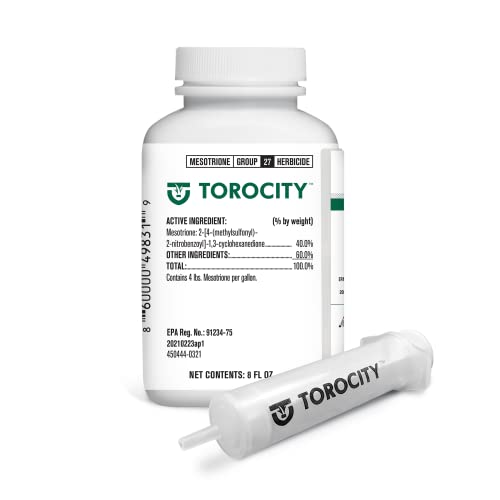
Atticus Torocity is a mesotrione herbicide for turf, not a product for diseased succulents. Mesotrione controls broadleaf and grassy weeds in newly seeded and established lawns, which explains its place in an outdoor plant-care assortment. I would keep it away from succulent pots and mixed containers unless the label explicitly permits the surrounding plant species.
The concentrate contains 40% mesotrione and can be used before or after weeds appear, depending on the labeled timing. Compared with Monterey Copper Fungicide, Torocity targets unwanted vegetation rather than fungal pathogens. Its place in this roundup is as a clearly separate weed-control product, not a viable fungicide choice.
Where It Delivers
- Concentrated mesotrione supports turf weed-control routines.
- Works in newly seeded and established lawn settings.
- Offers application timing before and after weeds emerge.
Where It May Fall Short
- It does not control fungal diseases on succulents.
- Herbicide use near desirable mixed plantings requires careful label review.
Best Suited To
Torocity fits lawn and turf managers focused on broadleaf and grassy weed control.
Look Elsewhere When
Monterey Copper Fungicide is the more relevant option for early disease defense around home plants.
Matching the Formula to the Plant Problem
Confirm the Succulent Appears on the Label
Plant names vary between labels, and a broad reference to ornamentals may still leave room for uncertainty. I check the label for the specific succulent, its intended use, and any restrictions on combining it with other plant-care products. That step separates a plausible treatment from one that is actually appropriate for the pot.
Decide Between Root Delivery and Foliage
A soil drench places the formula near the root zone, while a foliar spray wets leaves and stems. Systemic products add another layer by moving through the plant after uptake. For damp media, basal rot, or lower-canopy problems, root-focused delivery usually deserves closer consideration, but the label remains the deciding factor.
Match Product Purpose to the Problem
Fungicides address fungal disease, mycorrhizal inoculants support root-zone biology, insecticides manage insects, and herbicides control unwanted vegetation. I avoid using one category to cover another simply because the plant is unhealthy. A correct diagnosis saves both the succulent and the product budget.
Read Mixing and Timing Directions
Concentrates require accurate dilution, while ready-to-use products still need the right coverage and storage. I pay attention to the labeled application interval, the amount of water required, and whether runoff is acceptable. Following those details is especially important in dense arrangements where leaves remain wet for extended periods.
Making the Right Plant-Care Call
Mistakes Worth Dodging
The most common mistake is assuming every product labeled for plants belongs in a succulent shelf. Fungicides, insecticides, herbicides, and soil inoculants each have a different purpose. Another common error is ignoring the crop section, dilution rate, or compatible application method on the label.
What Separates Premium From Basic
A higher-cost option may provide a concentrate that stretches across multiple plants, a broader application system, or a larger package for a substantial collection. The extra cost makes sense when the label matches the problem and the volume will be used. For a handful of pots, a smaller, clearly labeled product may be the more sensible purchase.
Frequently Asked Questions
Which product is most relevant for root rot in succulents?
Monterey Garden Phos is the closest fit because root rot appears explicitly in its disease list. I would still confirm that the intended succulent is included before applying it.
Can Monterey Copper Fungicide be used on succulents?
Only the label can confirm that the intended succulent is included. Its foliar and soil-drench methods are convenient, but the product remains preventive rather than curative.
Is Organo Republic Mycorrhizal Fungi a fungicide?
No, it is a soil inoculant that introduces beneficial fungi around roots. It supports soil biology but does not directly control the fungal diseases listed by the other products.
Will Atticus Talak control fungal spots on succulents?
No, Talak contains bifenthrin for insect control. Phyton 27 or a labeled copper fungicide is the more relevant category for a fungal diagnosis.
Should systemic or soil-applied disease control be selected?
Systemic movement is useful for problems extending beyond sprayed surfaces, while soil application focuses on the root zone. The disease location and the product label should determine the choice.
Final Verdict
Phyton 27 2 Oz. Fungicide offers the strongest match for systemic disease management, while Monterey Garden Phos and Monterey Copper Fungicide cover more specific or preventive needs. The remaining products belong in insect, weed, or soil-care routines rather than a succulent disease program. Reading the label before opening any container is the most important step.
